
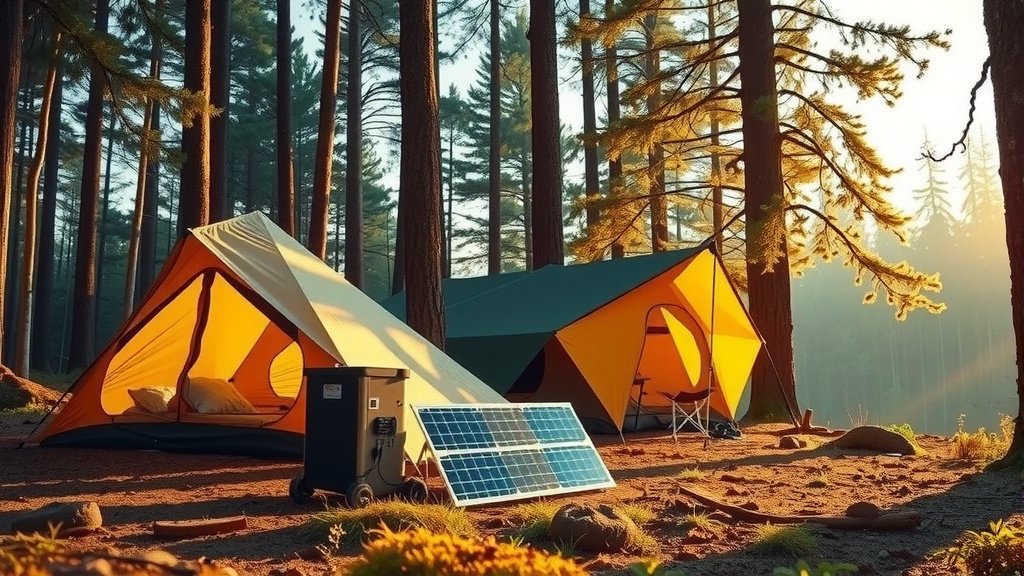
For weekend camping, you need a power station with 500-1000Wh capacity to run essentials like lights, phones, and a small cooler for 2-3 days.
Your camping capacity needs depend on what devices you’ll power, how many people you’re camping with, and how long you’ll stay off-grid.
Quick Capacity Calculator for Your Camping Trip
Let me help you figure this out fast. Think about your camping style first. Are you a minimalist who just needs phone charging? Or do you want to bring a portable fridge and laptop?
Here’s what I found from camping power experts: most people underestimate their needs by about 30%. You don’t want to run out of juice on day two.
Basic Weekend Camper (1-2 nights)
You’ll need around 300-500Wh for basic gear. This covers phone charging, LED lanterns, and maybe a small fan.
Your phone uses about 10-15Wh per full charge. LED lights use 5-10Wh per hour. A small USB fan runs on 15-25Wh per hour.
Comfort Camper (2-4 nights)
Go for 800-1200Wh capacity. You’ll want extras like a portable fridge, laptop charging, and camera gear.
A 12V cooler can eat 40-60Wh per hour. That adds up fast over multiple days.
Extended Off-Grid (5+ nights)
You need 1500Wh or more, plus solar panels for recharging. Long trips mean more device cycles and backup power.
What Devices Will You Actually Use?
Be honest with yourself here. I researched common camping power draws and found most people bring way more than they think.
Essential Devices and Their Power Needs
| Device | Power Draw | Daily Usage (Wh) |
|---|---|---|
| Smartphone charging | 10-15W | 15-20Wh |
| LED lantern | 5-10W | 20-40Wh |
| Portable fan | 15-25W | 120-200Wh |
| 12V cooler | 40-60W | 480-720Wh |
| Laptop charging | 45-65W | 90-130Wh |
High-Power Devices That Drain Fast
Some gear will eat your battery faster than you expect. Portable fridges are the biggest power hogs. They can use 500-700Wh per day in hot weather.
Electric kettles and coffee makers need huge power bursts. A 1000W kettle can drain 100Wh in just 6 minutes of use.
CPAP Machines for Medical Needs
If you need a CPAP machine, plan for 150-300Wh per night. This alone pushes you into the 1000Wh+ category for weekend trips.
Group Size Makes a Big Difference
Solo camping? Your power needs stay pretty low. But each extra person adds devices and charging needs.
Solo Camper Power Planning
You can get by with 200-400Wh for basic comfort. One phone, simple lighting, and maybe a small fan.
Couples and Small Groups
Double your phone charging needs. Add extra lighting for camp setup. Plan for 600-900Wh minimum.
Family Camping Power Needs
Kids mean tablets, gaming devices, and extra charging cables. Families often need 1000-1500Wh just for electronics.
From what I read in family camping forums, parents underestimate kid device usage by a lot. Bring extra capacity.
Weather and Season Impact Your Needs
Hot summer camping means fans and coolers working overtime. Cold weather camping needs heated gear and more lighting.
Summer Camping Power Draws
Portable fridges work harder in 90°F heat. Fans run longer. You drink more, so you need that cooler running.
Research shows coolers can use 50% more power in extreme heat compared to mild weather.
Winter and Cold Weather
Lithium batteries lose capacity in cold temps. A 1000Wh power station might only give you 700-800Wh when it’s freezing.
Heated blankets and clothing draw 30-60W continuously. That adds up over long winter nights.
Safety Margins and Backup Power
Never plan to use 100% of your battery capacity. You want a safety cushion for emergencies.
The 80% Rule for Camping
Only plan to use 80% of your rated capacity. This protects your battery and gives emergency backup.
If you calculated 400Wh of daily needs, buy a 500Wh power station minimum. Better yet, go with 600-700Wh for comfort.
Emergency Power Reserve
Always keep 20% capacity for true emergencies. Phone calls, emergency lighting, or medical device power.
Solar Charging Changes Everything
Adding solar panels lets you extend trips with smaller battery banks. But solar has limits too.
Solar Panel Recharge Rates
A 100W solar panel gives you roughly 400-500Wh on a perfect sunny day. Cloudy days cut that in half.
You can’t count on perfect solar weather. Plan your base capacity assuming no solar backup.
Matching Solar to Your Power Station
For weekend trips, 100-200W of solar panels work well with 800-1000Wh power stations.
Extended camping needs 300W+ of solar to keep larger batteries topped off.
Common Capacity Mistakes to Avoid
I found that new campers make the same capacity errors over and over. Learn from their mistakes.
Underestimating Vampire Loads
Devices draw power even when “off.” Your cooler’s control panel, power station displays, and USB ports all create small drains.
These vampire loads can eat 50-100Wh per day without you noticing.
Forgetting About Inefficiency
Power conversion isn’t 100% efficient. Inverters lose 10-15% of power as heat during AC conversion.
Charging your laptop through AC uses more battery than direct DC charging when possible.
Real-World Capacity Examples
Let me break down actual camping scenarios I researched from outdoor forums and expert recommendations.
Minimalist Weekend Trip
Two people, two nights, basic gear only. Phone charging, LED lights, small radio.
Total daily needs: 60-80Wh. Trip total: 120-160Wh. Recommended capacity: 300-400Wh power station.
Comfort Family Camping
Four people, three nights, with portable fridge and entertainment devices.
Daily usage breakdown: Fridge 600Wh, phones 60Wh, lights 40Wh, fan 150Wh, misc 100Wh. Daily total: 950Wh.
Trip needs: 2850Wh total. You’d need a 1500Wh+ power station with solar charging.
Work-From-Anywhere Camping
Remote work while camping adds laptop charging, mobile hotspots, and longer device usage.
Plan for 200-300Wh daily just for work gear on top of regular camping needs.
Choosing the Right Capacity Size
Most camping power stations come in standard sizes. Pick the one that fits your calculated needs plus safety margin.
Popular Camping Power Station Sizes
- 300-500Wh: Solo or minimalist weekend camping
- 600-800Wh: Couples, basic comfort gear, 2-3 days
- 1000-1200Wh: Small families, portable fridges, longer trips
- 1500Wh+: Extended camping, high-power devices, groups
Weight vs. Capacity Trade-offs
Bigger batteries weigh more. A 1000Wh power station typically weighs 20-30 pounds.
Consider how you’ll transport your gear. Car camping allows bigger units. Backpacking limits you to smaller, lighter options.
Conclusion
Your ideal camping power station capacity depends on your devices, group size, trip length, and comfort level. Start by listing every device you’ll bring and its daily power usage.
Most weekend campers do well with 500-800Wh capacity plus 100W solar panel. Extended trips and families need 1000Wh or more. Always add 20-30% safety margin to your calculations.
Remember that power management matters as much as capacity. Use DC charging when possible, run efficient LED lights, and don’t leave devices plugged in unnecessarily.
How long will a 1000Wh power station last while camping?
A 1000Wh power station typically lasts 2-4 days of moderate camping use, depending on your devices. Light usage (phones, LEDs) can stretch it to 5+ days, while running a portable fridge might drain it in 24-36 hours.
Can I run a camping heater off a portable power station?
Most camping heaters use too much power for portable stations. Electric heaters draw 500-1500W continuously, which would drain even large power stations in 1-3 hours. Propane or battery-powered heated clothing work better for warmth.
Do I need different capacity for RV camping vs tent camping?
RV camping typically needs more capacity since RVs have built-in appliances, water pumps, and larger lighting systems. Tent camping focuses on personal devices and portable gear, usually requiring 30-50% less total capacity.
How much extra capacity should I add for solar panel inefficiency?
Add 40-60% extra capacity beyond your daily usage when relying on solar. Cloud cover, panel angle, and seasonal sun variations significantly reduce solar charging efficiency compared to ideal laboratory conditions.
What happens if I completely drain my camping power station?
Most quality power stations have built-in protection to prevent complete discharge, but regularly draining to 0% can reduce battery lifespan. Aim to recharge when you hit 20-30% remaining capacity to maintain optimal battery health.
