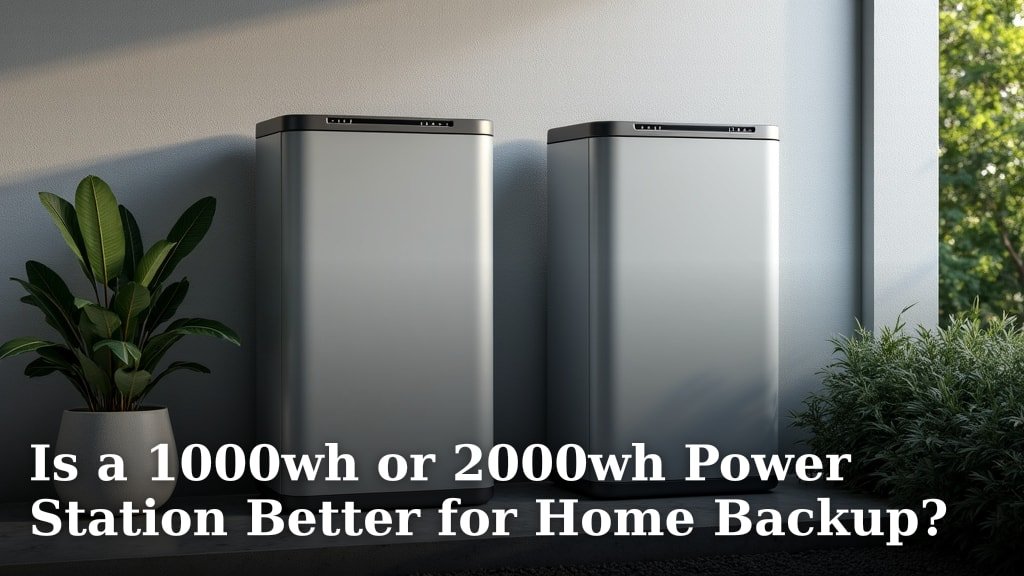
For most homes, a 2000Wh power station is usually better for home backup than a 1000Wh unit. It offers twice the power capacity, meaning longer run times for essential appliances during an outage.
Choosing the right size depends on your specific needs and what you want to power. A 1000Wh station might cover basic lights and charging, but a 2000Wh unit handles more, like a refrigerator. We found that peace of mind often comes with more capacity.
- 2000Wh offers more backup time.
- 1000Wh is good for small, basic needs.
- Consider what appliances you want to run.
- Higher capacity provides greater flexibility.
- It’s about balancing cost and backup duration.
Ready to figure out which capacity truly fits your home? Let’s walk through the details of each option, helping you make the best decision for your family.
Choosing Your Power Station: 1000Wh vs. 2000Wh
When you’re facing a power outage, having a reliable backup is key. We’ll help you decide if a 1000Wh or 2000Wh power station is the right fit for your home. It all comes down to what you need to power and for how long.
Understanding Watt-Hours (Wh) and Why They Matter
Think of Watt-hours (Wh) as the “fuel tank” of your power station. It tells you how much energy it can store. The more Wh, the longer your devices can run. A 1000Wh unit can store 1000 Watt-hours of energy. A 2000Wh unit stores twice that amount.
This number is crucial for home backup. It helps you calculate run times. For example, a 100-watt appliance would run for 10 hours on a 1000Wh station (1000 Wh / 100 W = 10 hours). Simple math helps you plan.
The 1000Wh Power Station: For Basic Needs and Short Outages
A 1000Wh power station is a great entry-level option. It’s often more portable and lighter. If you just need to keep essential communication and lighting going, this could be your ideal choice.
What Can a 1000Wh Unit Power?
With a 1000Wh station, you can handle the basics. We found it’s perfect for charging phones, laptops, and tablets. You can also run some LED lights to keep your home from being completely dark. It keeps you connected.
- Multiple phone charges (8-10 times)
- Laptop usage (5-8 hours)
- LED light bulbs (30-50 hours for a 10W bulb)
- Small fan (10-15 hours)
- Medical devices like a CPAP machine (6-10 hours, depending on settings)
If your goal is just to weather a short outage, this size provides peace of mind. It covers the most critical, low-power items.
Benefits of a 1000Wh Station
The main upsides are portability and cost. They are typically easier to move around. They also come with a lower price tag. This makes them accessible for many households.
We found that for apartments or small homes, a 1000Wh unit is often sufficient. It prevents major disruptions without a huge investment. Think of it as a strong emergency kit component.
The 2000Wh Power Station: Extended Backup and More Appliances
Stepping up to a 2000Wh power station gives you significantly more flexibility and run time. This is where you start to get into powering larger appliances. It provides a much more comfortable experience during an outage.
What Can a 2000Wh Unit Power?
This capacity lets you run more than just electronics. You can keep a refrigerator going for a good while. This is a game-changer for many families, preventing food spoilage. It really helps maintain a sense of normalcy.
- Refrigerator (10-20 hours, depending on efficiency and use)
- Television (15-25 hours)
- Microwave (short bursts)
- Coffee maker (1-2 large pots)
- Multiple essential devices simultaneously
We’ve seen that a 2000Wh unit is often the sweet spot. It balances capacity with still being somewhat portable. It’s a versatile power solution for common home needs.
Benefits of a 2000Wh Station
The biggest benefit is extended run time and appliance versatility. You won’t have to cycle appliances as often. You can keep your food cold and your family entertained. This reduces stress during an emergency.
Many homeowners find that the extra capacity is worth the investment. It provides greater independence from the grid. This is especially true if you live in an area prone to longer outages.
Comparing 1000Wh vs. 2000Wh for Home Use
Let’s put them side-by-side. The choice isn’t just about size; it’s about matching the tool to your specific job. We want you to feel confident in your decision. What do you truly need?
Key Differences: Power, Run Time, and Cost
The most obvious difference is the amount of power stored. This directly impacts how long you can run your devices. Naturally, more capacity means a higher cost. We found this to be consistent across brands.
Consider your most critical needs first. Do you have medications needing refrigeration? Do you work from home and need continuous laptop power? These questions guide your choice.
| Feature | 1000Wh Power Station | 2000Wh Power Station |
|---|---|---|
| Typical Use | Basic charging, lights, small electronics | Refrigerator, TV, multiple devices, longer outages |
| Refrigerator Run Time | ~5-10 hours (limited) | ~10-20 hours (reliable backup) |
| Portability | Very portable, lighter | Portable, but heavier |
| Average Cost | Lower price point | Higher price point |
| Peace of Mind | Good for short outages | Excellent for extended outages |
This table gives you a quick visual comparison. We aim to show you the trade-offs clearly. It’s about finding your balance.
When is a 1000Wh Power Station Enough?
A 1000Wh unit is enough if your outages are infrequent and short. If you mainly need to charge phones and keep a few lights on, it’s perfect. It’s also ideal if you’re on a tighter budget.
We often recommend this size for campers or those living in small spaces. It’s easy to store and deploy quickly. It’s your basic safety net.
When to Upgrade to a 2000Wh Power Station
You should consider a 2000Wh station if you anticipate longer power disruptions. If keeping your refrigerator running is a priority, this is the way to go. It offers much greater resilience.
For families with medical devices, or those who simply value more comfort, the larger capacity is often preferred. We’ve seen that the added flexibility significantly reduces stress. It’s an investment in preparedness.
Making Your Decision: A Checklist
To help you choose, think about these factors. Your ideal power station will align with your specific needs. What matters most to you during a power outage?
Your Home Backup Power Checklist
Use this quick list to guide your thoughts. It will help clarify your priorities.
- What appliances are essential? (List them out, fridge, CPAP, TV?)
- How long do outages typically last in your area? (Hours? Days?)
- What is your budget for a power station? (Costs vary significantly.)
- How important is portability for you? (Will you move it often?)
- Do you need to run multiple devices at once? (Simultaneous power is key.)
- Is preventing food spoilage a top priority? (Refrigeration needs more power.)
By answering these questions, you’ll naturally lean towards one option. We want you to feel empowered in your choice. It’s about preparing effectively.
Conclusion
Choosing between a 1000Wh and 2000Wh power station for home backup boils down to your personal needs and priorities. We’ve seen that a 1000Wh unit is excellent for basic, short-term outages, keeping communication and essential lighting active. However, for true comfort and the ability to power larger appliances like a refrigerator, a 2000Wh station provides far greater peace of mind and resilience.
Consider the typical duration of outages in your area and the appliances you simply cannot live without. By using our checklist, you can confidently select the power station that best secures your home and family when the grid goes down. Your preparedness starts with this informed decision.
Frequently Asked Questions
Can I connect two 1000Wh power stations to double the capacity?
Generally, no. Most power stations are not designed to be chained together to increase their capacity. Always check the manufacturer’s specifications. Attempting to connect them improperly could be unsafe and damage the units.
How long do these power stations typically last before needing replacement?
The lifespan of a power station, particularly its battery, is measured in charge cycles. We found most modern units with LiFePO4 batteries offer 2,500 to 3,500 cycles before degrading to 80% capacity. This can translate to many years of reliable use if cared for properly.
Do I need a transfer switch to use a power station for home backup?
For most portable power stations, you do not need a transfer switch. You simply plug your appliances directly into the power station. A transfer switch is typically required for larger, more permanently installed home generators to safely connect them to your home’s electrical panel.
Can I charge a 1000Wh or 2000Wh power station with solar panels?
Yes, most 1000Wh and 2000Wh power stations are designed with solar charging capabilities. You’ll need compatible solar panels and the correct adapter cables. This allows you to replenish your power station’s energy during an extended outage, making your backup solution even more robust.
What’s the main disadvantage of a 2000Wh power station compared to a 1000Wh unit?
The primary disadvantages of a 2000Wh power station are its higher cost and increased weight. While more capable, it will be significantly more expensive than a 1000Wh unit and less portable. You’ll need to balance these factors against your need for extended power and appliance support.