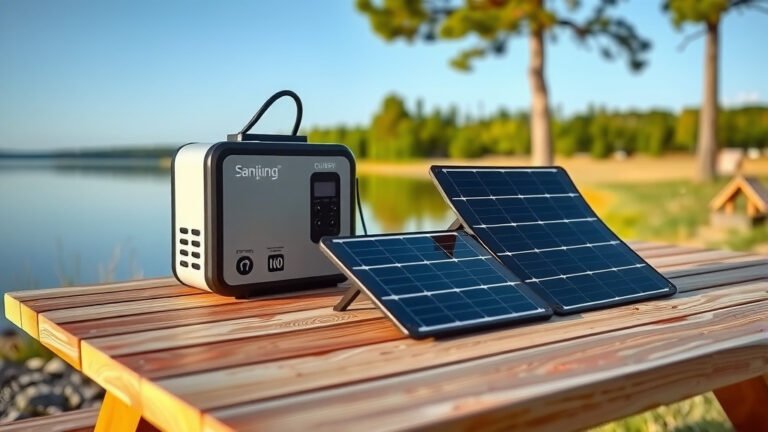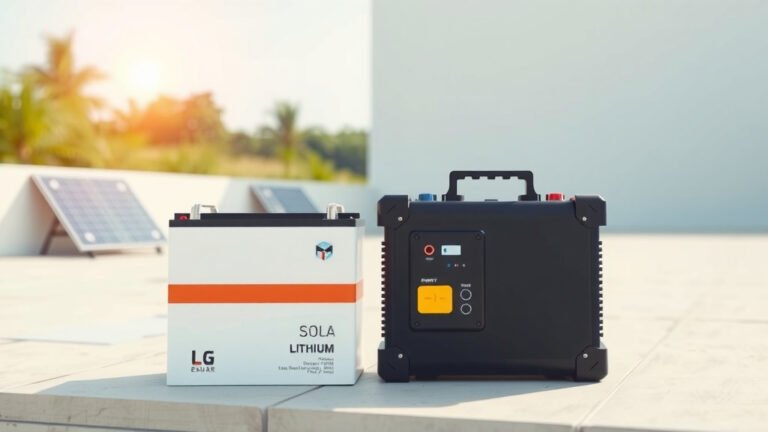

For camping, choosing between Jackery and EcoFlow depends on your priorities. We found that EcoFlow generally offers more power and faster charging. Jackery often wins on portability and a slightly lower price point, making it great for lighter use.
You’re looking for a reliable power source for your outdoor adventures, right? Many campers need to charge phones, run small appliances, or even power medical devices. Both brands are popular for their portable power stations. We found that your ideal choice will depend on your specific camping style and power needs.
- EcoFlow often provides more wattage and quicker charging.
- Jackery typically offers better portability and value.
- Consider what you’ll power and for how long.
- Think about your budget and how often you’ll use it.
- Both brands are top contenders in portable power.
Let’s dive into a direct comparison to help you decide which brand is the best fit for your next camping trip.
Jackery Versus EcoFlow: Which Power Station Suits Your Camping Style?
Deciding between Jackery and EcoFlow often comes down to your specific power needs and how you plan to camp. Both brands offer excellent portable power stations, but they cater to slightly different user profiles. We found that EcoFlow generally wins on raw power and charging speed, while Jackery often offers a more budget-friendly and compact option.
Power Output and Capacity: How Much Juice Do You Really Need?
When you’re out camping, understanding power output and capacity is key. Power output, measured in watts, tells you what devices your power station can run. Capacity, measured in watt-hours (Wh), tells you how long it can run them. Don’t confuse the two; a high-wattage device will drain a battery with low capacity very quickly. We found that EcoFlow generally offers higher continuous output and larger capacities across its product lines.
Continuous Wattage: Running Your Essential Appliances
EcoFlow typically provides power stations with higher continuous wattage. This means you can run more power-hungry appliances, like a mini-fridge, a coffee maker, or even some small power tools. For example, some EcoFlow Delta series models offer 1800W or even 3600W continuous output. Jackery models, while still powerful, often top out in the 1000W to 2000W range for their similar-sized units. If you plan to bring anything beyond basic electronics, EcoFlow might be a better fit.
Consider your personal cooking habits. Do you rely on a small electric griddle or just a hot plate? These can draw a lot of power. We’ve seen campers struggle when their power station can’t handle the initial surge of a toaster oven. Checking the wattage of your most demanding appliance is a smart first step.
Battery Capacity: Powering Through the Weekend
EcoFlow also tends to offer larger battery capacities. Their Delta Pro, for instance, boasts a massive 3600Wh capacity, expandable even further. Jackery’s Explorer line offers capacities up to 2000Wh or 3000Wh for their largest units. If you’re planning a longer trip, or if you need to power medical equipment overnight, a higher capacity EcoFlow unit could provide more peace of mind. For casual weekend trips with just a few devices, a Jackery unit with 1000Wh might be perfectly adequate and more portable.
Charging Speed and Methods: Get Back to Full Power Faster
Nobody wants to wait forever for their power station to recharge. We found that EcoFlow generally leads the pack in terms of charging speed. They’ve made it a significant selling point, and for good reason.
AC Wall Charging: The Quickest Option
EcoFlow’s X-Stream technology allows for incredibly fast AC wall charging. Many of their units can go from 0% to 80% in about an hour, and to full in 1.5 to 2 hours. This is a huge advantage if you have limited time between adventures or access to an outlet. Jackery units, while still efficient, typically take longer to fully charge from a wall outlet, often 4-8 hours depending on the model. This difference can be a deal-breaker if you’re frequently on the go or need a quick turnaround.
Solar Charging Efficiency: Harnessing the Sun
Both brands offer excellent solar charging capabilities. They both have their own solar panels that integrate well with their power stations. We found that EcoFlow’s MPPT (Maximum Power Point Tracking) controllers are often slightly more efficient, helping you get the most out of your solar panels even in less-than-ideal conditions. However, Jackery’s solar panels are highly regarded for their durability and ease of use. If you plan to rely heavily on solar power, investing in quality panels from either brand is a must (National Renewable Energy Laboratory). If you plan to rely heavily on solar power, our guide explains how many solar panels you need to charge a power station.
Consider the total wattage of solar panels you plan to use. More panels equal faster charging, but also more bulk. Both companies provide clear guides on how many panels their units can support.
Portability and Durability: Carrying Your Power
Camping often involves moving gear. How easy is your power station to carry, and can it withstand the bumps and scrapes of outdoor life? We found that Jackery often has an edge in portability for comparable power levels, while both brands offer robust designs.
Weight and Size: Easy to Haul Around
Jackery power stations are often praised for their compact size and lighter weight, especially in the mid-range capacities. Their classic “lunchbox” design with a sturdy handle makes them easy to grab and go. EcoFlow units, particularly the higher-capacity Delta series, can be noticeably heavier and bulkier. While they often have integrated handles, their larger footprint might be a concern if trunk space or carrying distance is limited. If you’re backpacking or have limited space in a smaller vehicle, Jackery might be the more appealing option.
Build Quality: Withstanding the Elements
Both brands construct their power stations with durable materials designed for outdoor use. They generally feature strong plastic casings that can handle minor impacts. However, neither is truly waterproof, so you’ll want to protect them from heavy rain. We haven’t found a significant difference in overall ruggedness between the two, but always remember to keep them dry and clean for optimal performance.
Price and Value: Getting the Most for Your Dollar
Budget is almost always a factor. We found that Jackery often presents a more budget-friendly entry point, while EcoFlow’s higher price often reflects its advanced features and greater power capabilities.
Generally, you’ll find Jackery units priced slightly lower than comparable EcoFlow models, especially in the mid-range capacity. This makes Jackery a very attractive option for campers who need reliable power but don’t require the absolute fastest charging or highest wattage. EcoFlow’s higher price point is usually justified by its superior output, faster charging, and sometimes more advanced app integration.
Consider the total cost of ownership. Do you need extra batteries? How much do the solar panels cost? Sometimes a seemingly more expensive unit offers better long-term value if it perfectly meets your needs without needing expensive add-ons later.
User Experience and Features: Simplicity vs. Advanced Control
How easy is it to use the power station? And what extra bells and whistles do they offer?
Display and Controls: At-a-Glance Information
Both brands feature clear, easy-to-read LCD screens that display important information like remaining battery life, input/output wattage, and charge status. Jackery’s interface is often simpler and more straightforward, which some users prefer for its ease of use. EcoFlow’s displays can be a bit more detailed, sometimes showing estimated run times for connected devices, which can be very helpful for power management.
App Integration and Smart Features
EcoFlow generally offers more robust app integration. Their smartphone app allows you to monitor and control your power station remotely, check charging status, adjust settings, and even update firmware. This can be very convenient, especially if your power station is tucked away. Jackery’s app functionality is often more basic or not available on all models. If you enjoy smart home technology and want remote control, EcoFlow has a clear advantage here.
Which is Right for Your Camping Adventures? A Quick Guide
We’ve broken down the key differences, but let’s make it actionable for you. Think about your typical camping trip.
| Feature | Jackery Strengths | EcoFlow Strengths |
|---|---|---|
| Power Output | Good for essential electronics | Higher for power-hungry appliances |
| Battery Capacity | Ample for short trips (1-2 days) | Larger for extended use or critical loads |
| Charging Speed | Decent AC, good solar | Industry-leading AC, efficient solar |
| Portability | Often lighter & more compact | Can be heavier/bulkier for high capacity |
| Price | Generally more affordable | Higher price, more advanced features |
| User Experience | Simple, intuitive interface | Advanced app control, detailed display |
Checklist: Choosing Your Ideal Portable Power Station
Before you make your final decision, ask yourself these questions:
- What devices will you power (wattage of each)?
- How long do you need power (total watt-hours)?
- How quickly do you need to recharge the unit?
- Is portability (weight/size) a major concern?
- What is your budget for the power station?
- Do you want advanced app control or a simple interface?
By answering these, you’ll likely find that one brand emerges as the clear winner for your specific needs. We found that there’s no single “better” option, only the better option for you.
Conclusion
Choosing between Jackery and EcoFlow truly comes down to your personal camping style and power demands. We found that if you prioritize maximum power output, lightning-fast charging, and advanced app control, EcoFlow is often the superior choice. However, if portability, a slightly lower price point, and a simpler user experience are more important for your casual weekend trips, then Jackery will serve you wonderfully.
There’s no single “best” option. Carefully review your specific needs from our checklist. Once you know what matters most to you, you’ll easily identify which brand will best power your next outdoor adventure.
Frequently Asked Questions
Is EcoFlow more durable than Jackery for camping?
We found both brands offer good build quality with durable plastic casings suitable for outdoor use. Neither is fully waterproof, so you’ll need to protect them from heavy rain. We haven’t seen a significant difference in their general ruggedness.
Can I run a small refrigerator with a Jackery power station?
It depends on the specific Jackery model and your refrigerator’s wattage. Some larger Jackery models can power a mini-fridge, but EcoFlow generally offers higher continuous wattage, making it a more reliable choice for power-hungry appliances like refrigerators.
Do Jackery and EcoFlow use the same type of batteries?
Both brands primarily use lithium-ion batteries. However, some newer EcoFlow models are transitioning to LiFePO4 (lithium iron phosphate) batteries, which offer a longer lifespan and improved safety compared to traditional lithium-ion.
Which brand is better for charging devices via USB during camping?
Both Jackery and EcoFlow power stations come equipped with multiple USB ports, including USB-A and USB-C, perfect for charging phones, tablets, and headlamps. You’ll find similar excellent performance for USB charging from either brand.
Are Jackery and EcoFlow power stations noisy when operating?
Portable power stations from both brands are generally very quiet, especially compared to gas generators. They use internal fans for cooling, which can make a low humming sound, particularly when drawing high power or during fast charging. This noise is typically minimal and unlikely to disturb your camping experience.