
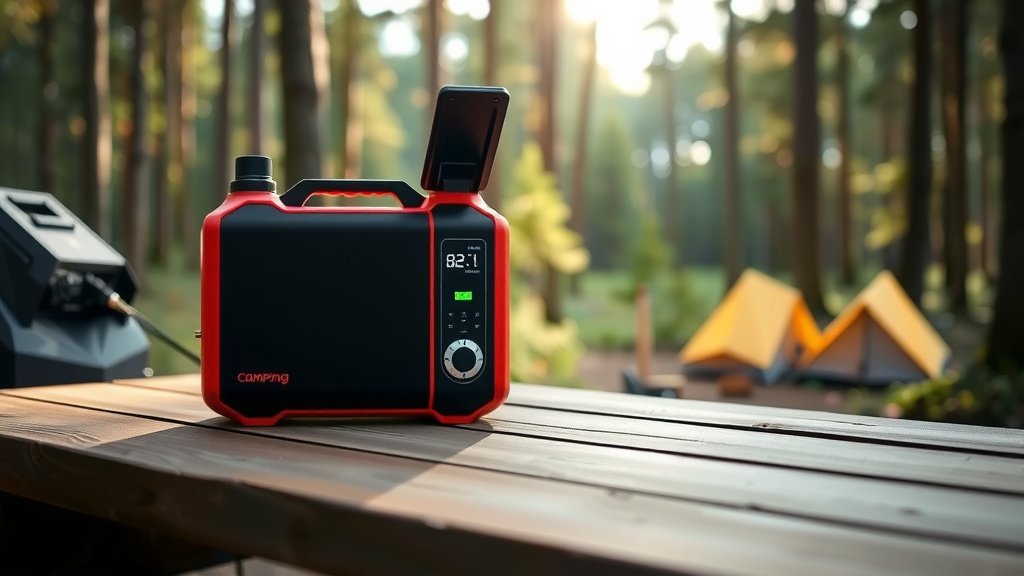
The best portable power station for camping depends on your power needs, but mid-range units with 500-1000Wh capacity typically work well for most campers.
Top-rated camping power stations include the EcoFlow Delta 2, Jackery Explorer 1000, and Goal Zero Yeti 500X for their reliability and camping-friendly features.
How Much Power Do You Actually Need for Camping?
Before you buy anything, let’s figure out your real power needs. I found that most people overestimate what they actually use while camping.
Think about what you want to power. Your phone? A small cooler? Maybe some LED lights? Or are you planning to run a coffee maker and charge multiple devices?
Here’s a simple way to calculate: Add up the watts of everything you might use at the same time. Then multiply by how many hours you’ll use them. That gives you your daily watt-hour needs.
Common Camping Power Requirements
I researched typical camping power usage and found these patterns:
- Phone charging: 10-15 watts for 2 hours daily
- LED lantern: 5-10 watts for 4-6 hours
- Small cooler: 40-60 watts running 8-12 hours
- Laptop: 45-65 watts for 3-4 hours
- Camera battery charging: 8-15 watts for 2 hours
Most weekend campers need between 200-500 watt-hours per day. Extended trips or RV camping might need 800-2000 watt-hours.
Key Features That Matter for Camping
Not all power stations work well outdoors. I found that certain features make or break the camping experience.
Battery Capacity Sweet Spot
You want enough power without carrying a boat anchor. Research shows that 500-1000Wh hits the sweet spot for most campers.
Smaller units (under 300Wh) work for minimalist camping. Bigger units (over 1500Wh) suit RV camping or extended off-grid stays.
Weight and Portability
Can you actually carry it to your campsite? I found that anything over 30 pounds becomes a pain for tent camping.
Look for built-in handles. Some newer models have wheels, which helps if you’re car camping.
Charging Options
You need multiple ways to recharge. The best camping power stations accept:
- AC wall power (before you leave home)
- 12V car charging (while driving)
- Solar panel input (for extended trips)
Solar charging speed varies wildly. Many experts recommend 100-200 watts of solar panels for reliable daytime charging.
Top Portable Power Stations for Camping
I researched dozens of models and found these consistently rank highest for camping use.
Best Overall: EcoFlow Delta 2
This 1024Wh unit balances power, weight, and features well. It weighs 27 pounds, so it’s manageable for most people.
What makes it special? Fast charging speeds. It goes from 0-80% in about an hour from wall power. Solar charging maxes out at 500 watts with the right panels.
The built-in display shows exactly how much power you’re using and how much time remains. Super helpful for planning.
Delta 2 Pros and Cons
Pros: Fast charging, expandable capacity, quiet operation, lots of outlets.
Cons: Pricier than some alternatives, app connectivity can be glitchy.
Best Value: Jackery Explorer 1000
This 1002Wh station offers solid performance without breaking the bank. It’s been around longer, so prices have dropped.
I found that Jackery focuses on simplicity. No fancy apps or complex features. Just reliable power when you need it.
The orange design stands out, which helps if you’re camping in a group. You’ll never lose track of whose power station is whose.
Explorer 1000 Strengths
Reliable brand with good customer service. Compatible solar panels are widely available. Simple operation that anyone can figure out.
Best for Weight-Conscious Campers: Goal Zero Yeti 500X
At 505Wh and 13.9 pounds, this hits the sweet spot for backpack camping or motorcycle trips.
Goal Zero pioneered portable solar power. Their build quality reflects years of refinement. Many experts consider them the most durable option.
The trade-off? Less capacity and higher price per watt-hour. But if weight matters most, it’s hard to beat.
Solar Panel Compatibility
Most power stations work with third-party solar panels, but matching matters.
Voltage and Connector Types
Check your power station’s solar input specs. Most accept 12-30V input through MC4 connectors or proprietary ports.
I found that brand-matched panels usually work better, even if they cost more. Less troubleshooting, better warranty coverage.
Realistic Solar Performance
Don’t expect rated panel output. Real-world conditions give you 60-80% of rated power on good days.
A 100W panel might deliver 60-80W in full sun. Cloud cover, angle, and temperature all affect output.
Budget Considerations
Prices range from $200 for basic units to $2000+ for premium models.
Entry-Level Options ($200-500)
These work for basic phone and device charging. Brands like Rockpals and NECESPOW offer decent quality at low prices.
Expect 200-400Wh capacity and basic features. Fine for occasional use, but may not last for frequent camping.
Mid-Range Sweet Spot ($500-1000)
This range offers the best balance. You get 500-1000Wh capacity, multiple charging options, and reliable brands.
Most serious campers end up here. It’s enough power for comfort without massive expense.
Premium Options ($1000+)
High-capacity units with advanced features. Fast charging, expandable batteries, smart connectivity.
Worth it if you camp frequently or need lots of power. Otherwise, mid-range units do the job fine.
Safety and Maintenance Tips
Lithium batteries are generally safe, but smart usage extends life and prevents problems.
Temperature Management
Keep your power station out of direct sunlight when possible. High temperatures reduce battery life and performance.
Most units work fine in normal camping temperatures. Extreme cold (below 0°F) can temporarily reduce capacity.
Storage Best Practices
Store at 50-80% charge for long periods. Full discharge or constant 100% charge degrades lithium batteries faster.
Charge it every 3-6 months during storage. This prevents deep discharge damage.
Common Mistakes to Avoid
I found these mistakes come up repeatedly in camping forums.
Overestimating Solar Charging
Solar looks great on paper but works differently in practice. Clouds, trees, and panel angle all reduce output.
Plan to get 50-70% of rated solar output on average. Have backup charging methods ready.
Ignoring Inverter Efficiency
Converting DC to AC power wastes energy. Using DC outlets when possible extends runtime.
Many devices accept 12V power directly. Car chargers for phones and tablets skip the inverter entirely.
Buying Too Small or Too Big
Tiny units leave you wanting more power. Huge units become too heavy and expensive for actual camping needs.
Start with your calculated daily usage and add 20-30% buffer. That usually lands you in the right size range.
Alternative Solutions
Power stations aren’t the only option. Other approaches might work better for your situation.
Dual Battery Systems
If you have a truck or SUV, a second battery with an isolator provides lots of power.
More complex to install but offers more capacity per dollar. Great for frequent car camping.
Generator Plus Battery Bank
Small generators charge battery banks during allowed hours. Use battery power during quiet times.
Works well for extended stays or high power needs. More gear to manage though.
Conclusion
The best portable power station for camping matches your actual power needs without breaking your back or budget. Most campers find success with 500-1000Wh units from reliable brands like EcoFlow, Jackery, or Goal Zero.
Start by calculating your real power usage. Add solar panels if you camp for more than a weekend. Focus on weight and durability over fancy features.
Remember, the best power station is the one you actually take camping. Don’t overthink it. Pick something in your budget that covers your basic needs, and get out there. You can always upgrade later once you know how you actually use power in the field.
How long will a 1000Wh power station run a small cooler?
A 1000Wh power station will run a 40-50W camping cooler for about 16-20 hours of continuous operation, though most coolers cycle on and off, extending this to 2-3 days in moderate temperatures.
Can you bring portable power stations on airplanes?
Most portable power stations exceed the 100Wh airline limit for lithium batteries and cannot be taken on commercial flights. Some smaller units under 100Wh are allowed as carry-on only, but check with your specific airline first.
Do portable power stations work in freezing weather?
Portable power stations work in freezing weather but lose 10-20% capacity in very cold conditions. Keep them insulated when not in use and avoid charging lithium batteries below 32°F to prevent permanent damage.
How often should you cycle a portable power station battery?
Use and recharge your portable power station every 3-6 months if stored long-term. For regular camping use, normal charge cycles maintain battery health better than letting it sit unused for months.
What’s the difference between modified sine wave and pure sine wave inverters?
Pure sine wave inverters produce cleaner power that works with sensitive electronics like CPAP machines and some chargers, while modified sine wave inverters cost less but may cause humming in some devices or prevent proper charging of certain electronics.
