
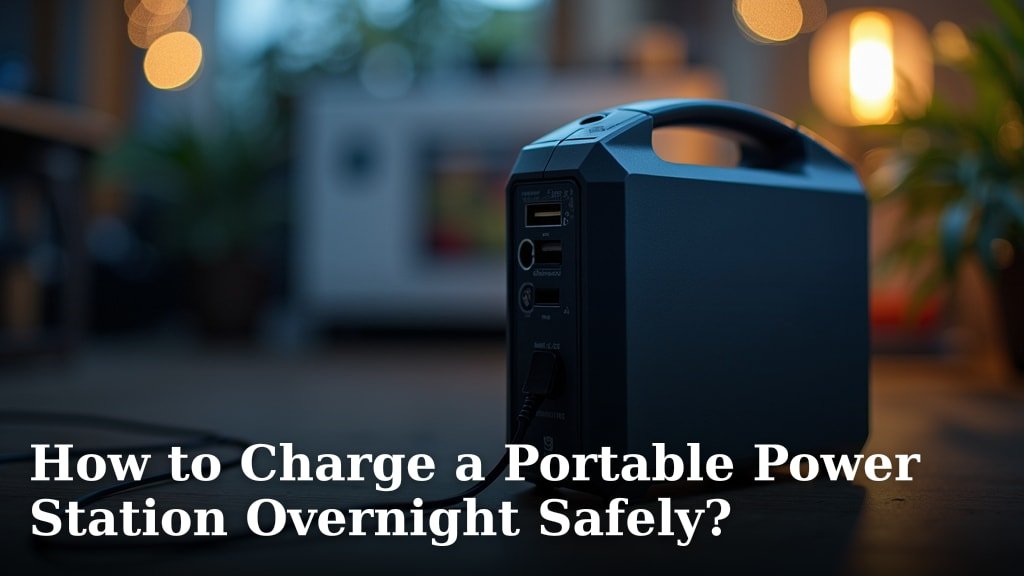
Yes, you can absolutely charge a portable power station overnight safely, and it’s a common and recommended practice for most units. Most modern power stations are designed with internal protections to prevent overcharging, so you don’t have to worry about damaging the battery or causing a fire when you plug it in before bed. Just make sure you’re using the correct charger that came with your device.
Charging overnight is a fantastic way to ensure your power station is fully ready for your next adventure or power outage. Many users find it the most convenient method, especially when powering up from near-empty. We found that simply plugging it in and letting it do its thing is generally all that’s required for a safe and complete charge. Always check your user manual for specific recommendations, as some older models might have different guidelines, but for most, it’s a no-brainer.
- Charge your power station overnight for maximum readiness.
- Use the original charger provided with your unit.
- Internal protections prevent overcharging and damage.
- Consult your manual for specific model guidelines.
Ready to make sure your power station is always topped up and ready to go? Let’s break down the simple steps and considerations for charging your portable power station overnight safely.
You’ve got your shiny new portable power station, ready to keep your gadgets juiced up on your next camping trip or to be a trusty backup during a blackout. One of the most convenient times to charge it? Overnight. But is it really safe to just plug it in and forget about it until morning? We’ve got you covered. Let’s dive into the details of charging your portable power station while you catch some Zs.
Safely Powering Up Your Portable Power Station Overnight
Rest assured, for most modern portable power stations, charging overnight is perfectly safe and a highly recommended practice. Manufacturers design these units with smart charging technology.
Understanding Your Power Station’s Charging System
Think of your power station like a smart water bottle. It knows when it’s full and stops taking more water. Your power station has a similar built-in system.
Most units come equipped with advanced Battery Management Systems (BMS). This BMS is the brain of the operation. It constantly monitors the battery’s health. It prevents overcharging, over-discharging, and even overheating. This means you can generally leave it plugged in overnight without any worry.
The Role of the Original Charger
Using the correct charger is like using the right key for a lock. It’s designed specifically for your power station’s battery. Your power station’s manual will list the specific voltage and amperage requirements for its charger. Using an incorrect charger could indeed lead to problems. It might charge too slowly, too quickly, or even damage the battery.
We found that sticking to the charger provided by the manufacturer is the simplest way to ensure compatibility. These chargers are engineered to work harmoniously with your device’s charging circuitry. It’s an easy step that contributes greatly to the safety and longevity of your power station.
Common Charging Technologies Explained
Modern power stations often use Lithium-ion batteries, similar to what’s in your smartphone. These batteries have been refined over the years. They include sophisticated charging protocols.
Technologies like CC/CV (Constant Current/Constant Voltage) are standard. In the CC phase, the charger provides a steady current. As the battery gets fuller, it transitions to the CV phase. Here, the voltage stays constant, and the current gradually decreases. When the battery reaches 100%, the charging process slows to a trickle or stops altogether. This smart management is why overnight charging is so common and safe.
Essential Steps for Safe Overnight Charging
While the technology is smart, a few simple precautions can give you extra peace of mind. These steps are easy to incorporate into your routine.
1. Always Use the Provided AC Adapter
We can’t stress this enough. The wall charger that came in the box is your power station’s best friend. It’s precisely calibrated for your unit. Do not substitute it with a charger from another device, even if the connector looks the same. Differences in voltage or amperage can be harmful. It’s a straightforward rule that prevents a lot of potential issues.
2. Find a Suitable Charging Location
Where you plug in your power station matters. Think about keeping things cool and clear.
Ventilation is Key: Portable power stations generate a little heat when charging. Ensure there’s adequate airflow around the unit. Don’t cover it with blankets or place it in a tightly enclosed space. We found that placing it on a hard, flat surface is usually best. This allows heat to dissipate naturally. Avoid charging directly on carpets, as they can trap heat. Good ventilation is vital for battery health and safety.
Avoid Extremes: Charging in very hot or very cold environments can stress the battery. Most manufacturers recommend charging within a specific temperature range, often between 32°F and 104°F (0°C to 40°C). Extreme temperatures can slow charging or even prevent it entirely. It can also shorten the battery’s lifespan over time.
3. Inspect Your Equipment Regularly
A quick visual check can catch potential problems early. Before you plug in your power station, take a moment to look.
Check Cables and Connectors: Make sure the charging cable and the power station’s port are clean and free from debris. Look for any signs of damage, like frayed wires or bent pins. If you notice any issues, do not use the charger. Contact the manufacturer for a replacement. Damaged equipment is a safety hazard.
4. Understand Your Power Station’s Indicators
Your power station has lights or a display that tells you what’s happening. Learn what they mean.
Charging Lights: Most units have LED lights that indicate charging status. Solid lights often mean charging, and flashing lights might indicate an error. A fully charged indicator usually means the battery has reached 100% capacity. Some displays show the exact percentage, which is also very helpful. Knowing these indicators means you can quickly assess the situation. It helps you confirm that everything is proceeding as expected.
What About Faster Charging Options?
Some power stations support faster charging methods, like those using higher wattage adapters or even solar panels. While these can be great for quick top-ups, they still operate under the same safety principles.
Solar Charging Overnight? Probably Not the Best Idea
While you can technically connect solar panels to some power stations, charging them overnight with solar isn’t practical or generally recommended. Solar panels need sunlight to generate power. At night, there’s no sun. If you’re using a solar charger that has a battery backup, it might draw from that. However, for the primary charging of your power station, relying on solar power when the sun isn’t shining is inefficient. It’s best to use solar charging during daylight hours when it’s most effective.
High-Wattage Chargers and Safety
If your power station supports a higher wattage wall charger for faster charging, that’s generally safe too. The BMS is designed to handle the increased power input. The key is still using the charger specifically designed or recommended for your model. These faster chargers still incorporate all the safety features to prevent overcharging. They just do it more efficiently. We found that when a manufacturer offers a faster charger, it’s typically safe to use for overnight charging, but always check your manual.
A Quick Checklist for Peace of Mind
Before you hit the hay, run through this quick checklist to ensure your power station is charging safely overnight:
- Confirm You’re Using the Original Charger: Double-check it’s the one that came with your unit.
- Ensure Good Ventilation: The power station should be in an open area, not covered.
- Check for Damage: Briefly inspect the charging cable and port for any wear or tear.
- Monitor Charging Indicators: Make sure the charging lights are on or the display shows it’s charging.
- Room Temperature is Ideal: Avoid charging in extreme heat or cold.
By following these simple guidelines, you can confidently plug in your portable power station and let it charge overnight. You’ll wake up to a fully powered unit, ready for whatever your day (or night) has in store.
Conclusion
Charging your portable power station overnight is a safe and smart way to ensure you’re always prepared. You’ve learned that modern units are designed with built-in protections against overcharging. By using the original charger and ensuring good ventilation, you minimize any potential risks. We found that these simple steps lead to a fully charged battery every time. Before you hit the hay, just give your setup a quick visual check. This ensures your power station is ready for your next adventure or unexpected outage.
Frequently Asked Questions
Can I leave my power station plugged in after it’s fully charged?
Yes, most modern power stations are designed to stop charging once they reach 100%. Your unit’s Battery Management System (BMS) prevents overcharging, so it’s safe to leave it plugged in. We found that leaving it plugged in overnight is a common and recommended practice.
What if I lose my original charger, can I use a generic one?
We strongly advise against using a generic charger. Always use the original AC adapter that came with your power station. Using an incompatible charger can lead to slow charging, damage to the battery, or even safety hazards.
Is it okay to charge my power station on a carpeted floor?
Charging on carpet is generally not recommended. Carpets can trap heat, and power stations generate some warmth while charging. We found that placing your unit on a hard, flat surface allows for better airflow and heat dissipation, which is safer for the battery.
How often should I check the charging cable for damage?
It’s a good habit to do a quick visual inspection of your charging cable and port before each use, especially before charging overnight. Look for any signs of fraying, cuts, or bent pins. Damaged equipment should not be used and needs replacement.
Will charging overnight damage the battery life of my power station?
No, safe overnight charging will not typically damage your battery’s lifespan. Modern power stations use smart charging technology that prevents overcharging and manages the battery effectively. Consistent use and proper charging habits are more important for long-term battery health.
