
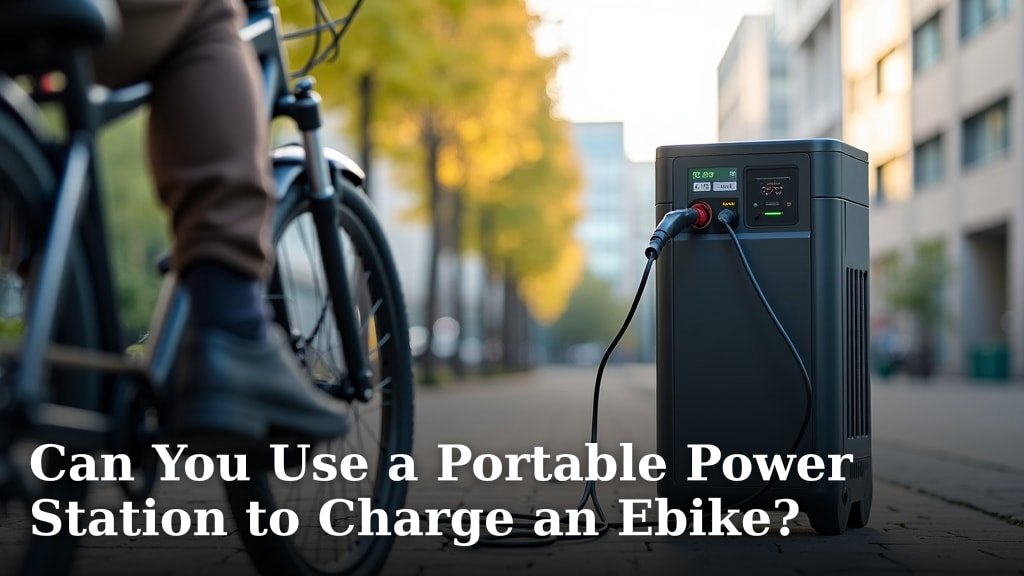
Yes, you absolutely can use a portable power station to charge your ebike, and it’s often a lifesaver on longer rides. Many modern power stations have enough wattage to efficiently recharge your ebike’s battery when you’re far from a wall outlet. Just be sure to check the power output of your station against your ebike’s charger requirements.
This opens up a whole new world of adventure for ebike riders. Imagine extending your trips and exploring more remote areas without worrying about running out of juice. We found that this setup is surprisingly practical for weekend warriors and avid cyclists alike. It’s a flexible way to keep your ride powered up.
- Yes, you can charge ebikes with portable power stations.
- Check the power output of your station.
- Ensure it matches your ebike charger’s needs.
- It’s a great solution for charging away from home.
Let’s walk through exactly how you can make this happen and what you’ll need to consider before you head out on your next adventure.
Powering Your Ebike Adventures with Portable Stations
Yes, you can absolutely use a portable power station to charge your ebike! It’s a fantastic solution for extending your rides. Many modern power stations have enough power. They can recharge your ebike’s battery when you’re far from a standard wall outlet. Always double-check the power output of your station. Make sure it meets your ebike charger’s requirements.
This setup opens up new possibilities for ebike riders. Imagine longer trips and exploring remote areas. You won’t have to worry about running out of battery. We found this to be surprisingly practical for both casual and avid cyclists. It offers a flexible way to keep your ride powered up.
Understanding Your Ebike’s Power Needs
Before you connect anything, it’s vital to understand what your ebike needs. Ebikes have different battery sizes and charging times. Some have small batteries that charge quickly. Others have larger ones that take several hours. Knowing these details helps you choose the right power station. Before you connect anything, it’s vital to understand what your ebike needs.
What is Your Ebike Charger’s Wattage?
The most important number is your ebike charger’s wattage. This tells you how much power it draws. You can usually find this information on the charger itself. Look for a label that says “Input” or “AC Input.” It will list volts (V) and amps (A). To find the wattage, multiply volts by amps (V x A = W).
For example, if your charger says 120V and 2A, its wattage is 240W (120V * 2A = 240W). Some chargers might also directly state the wattage. You need a power station that can provide at least this much wattage continuously.
Ebike Battery Capacity (Amp-Hours – Ah)
While not directly for charging, the battery’s amp-hours (Ah) gives you an idea of how much power it holds. A higher Ah means a larger battery. This also means it will take longer to charge. You can often find the Ah rating on the battery itself or in your ebike’s manual.
Understanding your battery’s capacity helps you estimate how many charges you can get from your power station. It’s like knowing how much gas your car’s tank holds. This information is useful for planning longer trips.
Choosing the Right Portable Power Station
Not all power stations are created equal. You need one with enough juice and the right outputs. Think of it like picking a water bottle for a long hike. You need one that’s big enough and easy to drink from.
Wattage Output: The Most Critical Factor
This is where you need to pay close attention. Your power station must be able to output enough watts to match or exceed your ebike charger’s draw. Many portable power stations have a listed “continuous output” wattage. This is the power they can supply steadily.
You also want to check the “surge output.” This is the maximum power the station can provide for short bursts. Most ebike chargers don’t need a huge surge, but it’s good to have some buffer. We found that a station with at least 300W continuous output is usually sufficient for most common ebike chargers. For larger ebikes, you might need 500W or more.
Capacity (Watt-Hours – Wh): How Many Charges?
The power station’s capacity is measured in watt-hours (Wh). This tells you how much total energy it can store. A higher Wh number means it can power your ebike charger for longer. Or, it can provide more charges.
Let’s say your ebike charger draws 240W. A 500Wh power station could theoretically run that charger for about two hours (500Wh / 240W ≈ 2.08 hours). This might give you a partial charge or even a full charge, depending on your ebike battery size and the charger’s efficiency.
Available Ports and Connectors
Most power stations have several types of output ports. You’ll typically find AC outlets (like your home wall sockets), USB-A ports, and USB-C ports. Your ebike charger will likely use a standard AC plug.
Make sure the power station has the right kind of AC outlet. It should be grounded if your charger requires it. Some newer stations also have USB-C PD (Power Delivery) ports. These can be very fast for charging smaller electronics, but usually not powerful enough for an ebike charger.
| Feature | Why It Matters for Ebike Charging | What to Look For |
|---|---|---|
| Continuous Wattage | Must meet or exceed your ebike charger’s draw (V x A). | At least 300W, preferably 500W+ for common ebikes. |
| Capacity (Wh) | Determines how long you can charge or how many charges you get. | Higher Wh means more charges; 300Wh is a good start, 500Wh+ is better for longer trips. |
| AC Outlets | Needs to accept your ebike charger’s plug. | Standard grounded AC outlets are usually required. Check outlet type. |
| Portability | You’ll be carrying it, so weight and size are factors. | Balance capacity with manageable weight for your travel style. |
How to Connect and Charge Your Ebike
Once you have the right gear, connecting is usually straightforward. It’s much like plugging anything into a wall socket.
Step-by-Step Charging Process
- Ensure Power Station is Charged: First, make sure your portable power station has plenty of battery life. You don’t want to run out of power while trying to charge your ebike.
- Connect Ebike Charger: Plug your ebike’s AC charger into one of the power station’s AC outlets.
- Plug Charger into Ebike: Connect the other end of the charger to your ebike’s battery or charging port.
- Turn On Power Station: Switch on the AC output on your power station.
- Monitor Charging: Keep an eye on both the power station’s display and your ebike’s charging indicator. You should see the charging light come on your ebike.
Tips for Efficient Charging
To get the most out of your power station, follow these tips. Efficiency matters when you’re off the grid.
- Charge when Cool: Try to charge your ebike battery when it’s not too hot or too cold. Extreme temperatures can slow down charging.
- Minimize Power Station Usage: While charging your ebike, avoid running other high-power devices from the same power station. This ensures maximum power goes to your ebike.
- Charge During Downtime: The best time to charge is often when you’re resting, like during a lunch break or overnight at a campsite.
- Consider Solar Charging: If you’re on an extended trip, you might be able to recharge the power station itself using solar panels. This is a great way to stay powered indefinitely.
Potential Challenges and How to Overcome Them
While this setup is fantastic, there can be a few hurdles. Being prepared helps you enjoy your ride.
Power Station Not Providing Enough Power
If your ebike isn’t charging or is charging very slowly, the power station might not be powerful enough. Double-check the wattage requirements of your charger against the power station’s continuous output. Some power stations might also have an “eco mode” that limits output. Make sure this is turned off.
Charging Time and Efficiency Losses
Remember that charging an ebike battery takes time. It’s not instant. Also, there are always some energy losses when converting power. The actual charging time might be longer than you expect. We found that a 500Wh power station might give you about 40-60% charge on a typical ebike battery.
Weight and Portability Considerations
Portable power stations can be heavy. A larger capacity station can weigh 15-30 pounds or more. If you’re carrying it on your ebike, this can affect your ride. Consider how you’ll transport it. Some riders use panniers or trailers.
For shorter trips or if you don’t need a full charge, a smaller, lighter power station might be sufficient. Always balance the need for power with the convenience of carrying it. We recommend trying it out before a big trip.
What You’ll Need for the Trip: A Quick Checklist
Here’s a handy list of what to pack for a successful ebike charging adventure:
- Portable Power Station (with sufficient wattage and capacity)
- Your Ebike’s Original Charger
- All Necessary Cables and Connectors
- A Reliable Ebike Battery
- Your Ebike!
- (Optional) Solar Panels for recharging the power station
Conclusion
You’ve learned that using a portable power station to charge your ebike is definitely possible and a fantastic way to extend your adventures. The key is understanding both your ebike’s power needs and your power station’s capabilities. Always check the wattage output and capacity to ensure compatibility. With the right setup, you can enjoy longer rides and explore more remote locations without battery anxiety. Before your next big ride, do a quick check of your gear to make sure you have everything you need for a powered-up journey.
Frequently Asked Questions
How many times can a portable power station charge an ebike battery?
This depends on the capacity of your power station (measured in Wh) and the size of your ebike’s battery. A larger power station and a smaller ebike battery will yield more charges. We found that a 500Wh station might provide around 40-60% charge for a typical ebike battery.
Can I charge my ebike directly from a solar panel?
While you can’t typically charge an ebike directly from most solar panels, you can use solar panels to recharge your portable power station. This allows you to then use the power station to charge your ebike, effectively using solar energy for your ride. If you’re on an extended trip, you might be able to recharge your portable power station using solar panels.
What happens if my power station’s wattage is lower than my ebike charger?
If the power station’s continuous wattage output is less than what your ebike charger requires, it likely won’t charge your ebike at all, or it may charge extremely slowly. Some power stations might also shut down to protect themselves if they detect an overload.
Is it safe to charge my ebike in different weather conditions using a power station?
It’s best to charge your ebike battery when it’s at a moderate temperature. Extreme heat or cold can affect charging speed and battery health. Always keep your power station and ebike charger protected from direct rain or excessive moisture.
Can I use a smaller power station for a short trip or emergency charge?
Yes, absolutely! For a quick top-up or an emergency charge, a smaller, lighter power station can be perfectly adequate. Just ensure its wattage output is sufficient for your charger, even if its overall capacity is lower.
