

When choosing between Anker and Bluetti for your RV adventures, there’s no single “better” option; the best choice depends on your specific power needs and budget. Both brands offer reliable power stations, but Anker often leads in portability and everyday use, while Bluetti generally provides higher capacity and more robust features for demanding RV setups.
Many RVers need dependable power for devices, lights, and even small appliances while off-grid. We found that Anker excels at quick charging and compact designs, perfect for topping up phones or running essential electronics. Bluetti, on the other hand, is frequently chosen for its larger battery banks and faster solar input, making it ideal for powering more substantial RV needs like refrigerators or AC units. Bluetti is ideal for powering refrigerators or AC units, as detailed in our guide to running appliances on portable power stations.
- Anker is great for portability and charging devices.
- Bluetti shines with higher capacity and solar charging for RVs.
- Consider your power demands and budget.
- Anker is often more affordable for basic needs.
- Bluetti offers more power for extended trips.
Let’s dive into a head-to-head comparison to help you figure out which power station will be your best travel companion on the road.
Anker vs. Bluetti: Which Power Station is Your RV’s Best Friend?
When you’re out on the road, your RV becomes your home. And just like at home, you need power. You want to keep your devices charged, your fridge running, and maybe even power a small fan on a warm night. This is where portable power stations come in. We’ve looked at two popular brands, Anker and Bluetti, to see which one might fit your RVing lifestyle better. It’s not always about who is “better,” but who is better *for you*.
Understanding Your RV’s Power Needs
Before we compare Anker and Bluetti, let’s think about what you’ll actually use the power station for. Are you just charging phones and laptops? Or do you want to run a coffee maker, a small microwave, or even a CPAP machine? Knowing your power needs helps a lot. We found that most RVers can be divided into a few groups based on their power usage.
The Weekend Warrior: Light Power Demands
If you’re mostly going out for short trips, perhaps just a weekend here and there, your power needs are probably pretty light. You might need to charge a phone, a tablet, or a portable speaker. Maybe you’ll run a small LED light string in the evening. For this kind of use, you don’t need a giant, heavy power station. Portability and ease of use are key.
The Nomad: Moderate Power Demands
For longer trips or if you work from your RV, your power needs will be higher. You might need to run a laptop for several hours a day. Keeping a small cooler or a portable fridge cold becomes important. You might also want to power a fan for airflow or run a small appliance like an electric kettle for a quick cup of tea. This requires a bit more juice.
The Full-Timer: Heavy Power Demands
If you live in your RV full-time or spend extended periods off the grid, you have significant power requirements. This could include running a larger refrigerator, a microwave, an induction cooktop, or even an air conditioner. These appliances draw a lot of power. You’ll need a robust power station with a large capacity and good input/output capabilities.
Anker: Portability and Everyday Convenience
Anker is a brand many people know for their chargers and power banks. They’ve brought that same focus on portability and user-friendliness to their larger power stations. We found that Anker’s products are often designed with ease of transport and quick charging in mind. They’re great for people who need power on the go, not just in their RV.
Anker’s Strengths for RVers
Anker power stations are known for being lightweight and compact. This makes them easy to move around your RV or even take out for a picnic. They also tend to have very fast charging capabilities, both for recharging the station itself and for charging your devices. This means less waiting around for your phone or laptop to get enough juice.
Charging Speed and Device Compatibility
One of Anker’s biggest selling points is how quickly it can charge your electronics. They often feature multiple USB-C Power Delivery ports, which can charge compatible devices incredibly fast. We found that charging a smartphone or tablet from 0% to 50% can sometimes take less than 30 minutes. This is fantastic when you need a quick power boost.
Ideal Use Cases for Anker
Anker power stations are perfect for RVers who prioritize convenience and portability. If your main goal is to keep your personal electronics charged and run a few small devices like lights or a Bluetooth speaker, Anker is a strong contender. They are also a good choice for those who might use the power station for camping trips or even during power outages at home.
Anker’s Potential Limitations for RVs
While Anker excels in portability, its battery capacity might be lower compared to some Bluetti models. This means it might not be the best choice for powering high-demand appliances for extended periods. Also, their solar charging input might not be as robust as what some dedicated RV setups require for serious off-grid living.
Bluetti: Robust Power and Off-Grid Capabilities
Bluetti has quickly become a favorite among off-grid enthusiasts and RVers looking for serious power solutions. They focus on providing higher capacities and more versatile features tailored for demanding applications. Many users choose Bluetti for its ability to handle more power-hungry devices and its strong solar integration.
Bluetti’s Strengths for RVers
Bluetti power stations often boast larger battery capacities, measured in watt-hours (Wh). This means they can store more energy, allowing you to run appliances for longer periods. They also typically feature superior solar charging capabilities, with higher maximum solar input ratings and more efficient charge controllers. This is a big plus for those wanting to rely heavily on solar power.
Capacity and Longevity
When you look at Bluetti, you’ll often see models with capacities ranging from 500Wh to over 2000Wh. This allows you to power items like small refrigerators, CPAP machines, or even run a microwave for short bursts. We found that their batteries are often designed for a long lifespan, meaning you can recharge them many times before their capacity significantly degrades (like LiFePO4 batteries, which many Bluetti units use, often rated for 3,000+ cycles). This is a long-term investment for your RV.
Solar Charging Prowess
For serious off-grid RVers, the ability to recharge quickly via solar is essential. Bluetti often leads here with higher solar input wattages. This means that even on less sunny days, you can still gather a decent amount of solar energy. Many of their units can accept 200W, 300W, or even more from solar panels, which can significantly reduce your reliance on shore power or generators.
Bluetti’s Potential Limitations for RVs
Bluetti units can be heavier and bulkier than their Anker counterparts. This is often a trade-off for the increased capacity. While they offer fast charging for devices, the overall recharging time of the power station itself, especially if using only AC power, can be longer for higher capacity models. You might also find that Bluetti units are priced higher, reflecting their enhanced capabilities.
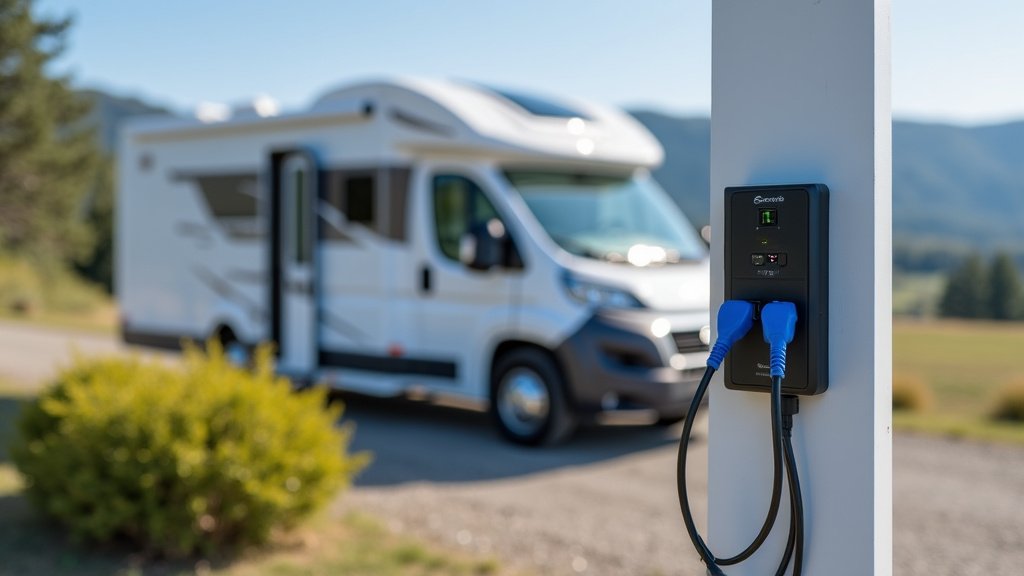
Comparing Key Features: Anker vs. Bluetti
Let’s break down some of the most important features to consider when choosing between Anker and Bluetti for your RV. We’ve put together a quick look at what sets them apart.
| Feature | Anker | Bluetti |
|---|---|---|
| Portability | Generally lighter and more compact | Often heavier and bulkier |
| Battery Capacity | Typically lower to moderate (e.g., 200-700Wh) | Typically moderate to very high (e.g., 500-2000+Wh) |
| Output Power (Wattage) | Sufficient for small devices, charging | Often higher, capable of running more appliances |
| Solar Input | Functional, but may be lower wattage | Generally higher, designed for efficient solar charging |
| Charging Speed (Devices) | Excellent, fast charging for electronics | Very good, often with PD and AC outputs |
| Price | Often more affordable for basic needs | Generally higher, reflecting advanced features |
| Build Quality | Solid and reliable | Robust, built for rugged use |
Which One Should You Choose for Your RV Trip?
The decision really comes down to your specific travel style and power needs. We’ve seen that both brands have their place.
Choose Anker If…
- You prioritize portability above all else.
- Your primary need is charging phones, laptops, and other small electronics.
- You take shorter trips or primarily use your RV for weekend getaways.
- You want a power station that’s also useful for non-RV activities.
- Your budget is a bit tighter for a power station.
Choose Bluetti If…
- You need to power larger appliances or run devices for extended periods.
- You plan on spending a lot of time off-grid and want strong solar charging capabilities.
- Weight and size are less of a concern compared to power capacity.
- You’re looking for a long-term power solution for full-time RV living.
- You don’t mind investing a bit more for higher performance and capacity.
Quick Checklist for Your RV Power Decision
To help you finalize your choice, ask yourself these questions:
- What are the wattage needs of the devices I use most?
- How many watt-hours of energy do I need per day?
- How important is solar recharging to my setup?
- What’s my budget for a power station?
- How much space and weight can I dedicate to it?
- Will I also use this power station away from my RV?
Conclusion
Deciding between Anker and Bluetti for your RV ultimately hinges on your unique travel style. If portability and keeping your essential gadgets charged are your main concerns, Anker offers a fantastic, user-friendly solution. For those planning extensive off-grid adventures or needing to power more substantial appliances, Bluetti provides the higher capacity and robust solar capabilities you’ll likely require.
We’ve shown you that Anker excels at quick charges and everyday convenience, while Bluetti is built for serious power demands. Take a moment to review your own power needs and budget. Your perfect RV power companion is within reach!
Frequently Asked Questions
How do I calculate my RV’s daily power needs?
To estimate your needs, list all the devices you plan to power. Find their wattage (W) and estimate how many hours (h) you’ll use them daily. Multiply wattage by hours for each device to get watt-hours (Wh). Sum these up for your total daily Wh requirement. This helps you determine the necessary battery capacity.
Can I use both Anker and Bluetti together in my RV?
You absolutely can. Many RVers use a smaller, portable Anker unit for charging personal devices on the go or as a backup. Simultaneously, a larger Bluetti unit can handle the heavier loads like running a refrigerator or air conditioner. They can complement each other well.
Are Anker and Bluetti power stations safe to use inside my RV?
Yes, both Anker and Bluetti power stations are designed for safe indoor use. They typically use lithium-ion or LiFePO4 batteries, which are enclosed and feature built-in safety systems. Always ensure proper ventilation, especially when charging, and follow the manufacturer’s guidelines.
What is LiFePO4 battery technology, and why is it important for RVs?
LiFePO4 (Lithium Iron Phosphate) batteries are known for their long lifespan, safety, and stable performance. They can handle thousands of charge cycles before capacity degrades significantly. Many Bluetti units use LiFePO4, making them a more durable and long-term investment for your RV’s power needs.
How much do Anker and Bluetti power stations typically cost for RV use?
Prices vary widely based on capacity and features. Smaller Anker units suitable for basic charging might range from $200-$500. Bluetti models with higher capacities and more robust solar inputs can range from $500 to $2,000 or more. Consider your budget and your essential power requirements when comparing costs.
