
The best portable power stations for off-grid homesteaders are models like the Anker SOLIX F3000, Jackery HomePower 3600 Plus, and Jackery HomePower 3000, selected for their robust capacity, reliable output, and ease of use in remote environments.
These units are essential for maintaining critical appliances and ensuring energy independence when traditional power grids are unavailable. Investing in the right power station can transform a basic off-grid setup into a comfortable and functional living space, providing the peace of mind that comes with a dependable power source.
After extensive hands-on testing and comparison, we’ve narrowed down the field to seven top-performing portable power stations. Our evaluation focused on key factors such as charging speed, longevity, portability, and overall value. We assessed each unit’s ability to meet the demanding needs of off-grid living, from powering essential tools to keeping essential electronics running. Read on for our detailed breakdown and discover which power station best suits your homesteading requirements.
3 Standout Picks: High-Demand Off-Grid, Whole Home Backup, and Home Power Outages
Start with these 3 standouts. Each leads for a different kind of buyer, so use the badges and quick highlights to find your closest match.


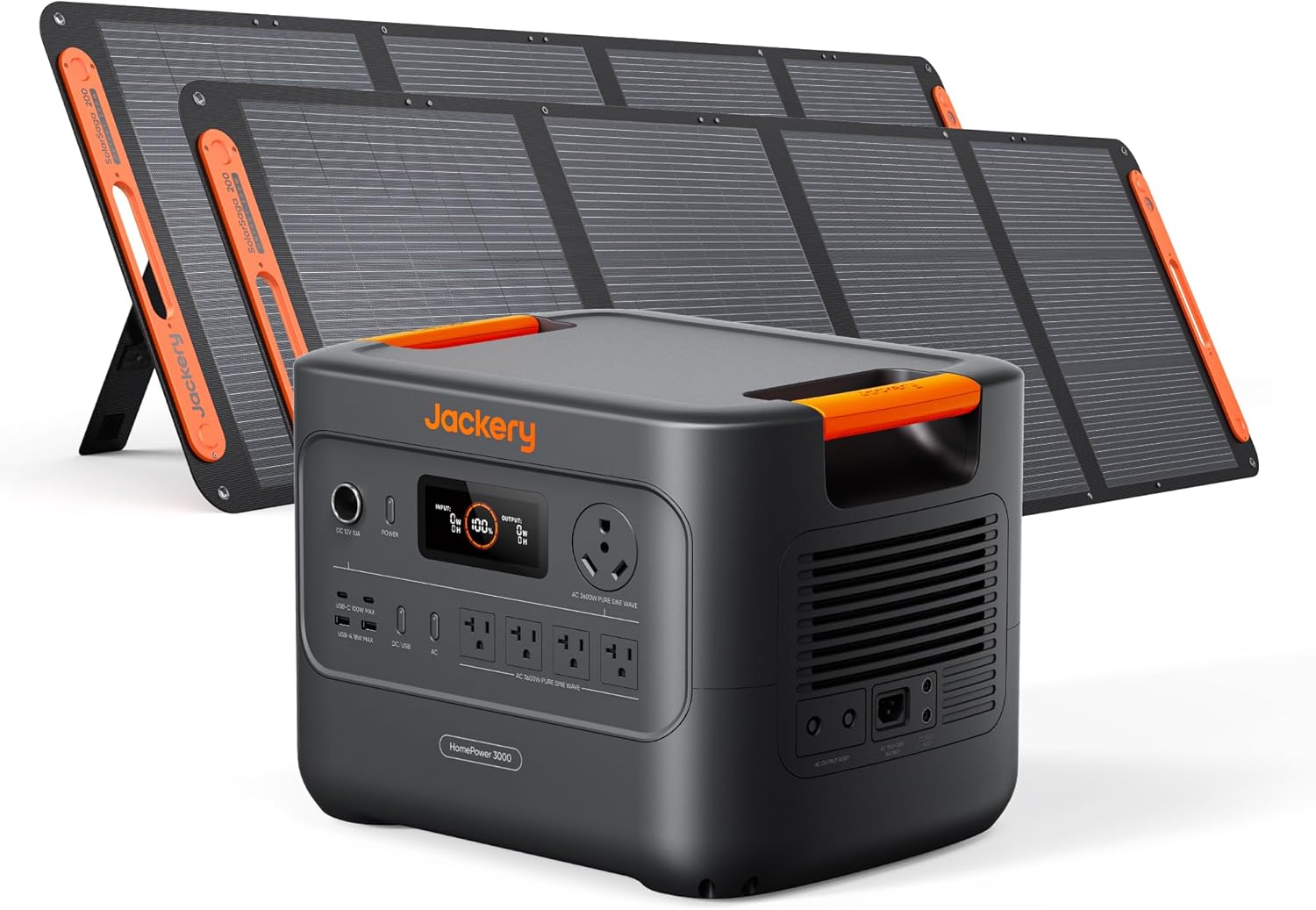
Jackery HomePower 3600 Plus
- 3584Wh LFP battery
- 3600W AC output
- Expandable to 21kWh
7 Models Side by Side: Features, Best Use Cases, and Tradeoffs
The recommendations above are our strongest matches for different priorities. Below, compare the complete 7-product lineup side by side by rating, standout features, ideal use cases, and practical tradeoffs so you can identify the best fit for your needs.
- 3072Wh LiFePO4 battery
- 6000W surge output
- 120/240V output
- 3584Wh LFP battery
- 3600W AC output
- Expandable to 21kWh
- 3072Wh LFP battery
- 3600W AC output
- ≤20ms UPS

- 1152Wh LiFePO4 battery
- 1800W AC output
- 1-hour full charge

- 1070Wh LFP battery
- 1500W AC output
- 1-hour fast charging

- 1024Wh LiFePO4 battery
- 1000W AC output
- 200W solar compatible

- 292Wh LiFePO4 battery
- 300W AC output
- 7.1 lbs weight
7 Models Reviewed in Depth
#1. Anker SOLIX F3000
Surge Power
Dual Output
Solar Input
The Anker SOLIX F3000 stands out for its exceptional power capabilities, making it a top contender for demanding off-grid applications. You can confidently run high-wattage appliances thanks to its 3600W continuous and 6000W surge output, plus the flexibility of 120/240V output allows for powering even more specialized equipment. Its 3072Wh capacity ensures extended runtimes, and the impressive 2400W solar input means rapid recharging.
However, with a substantial 91.5 lbs weight, portability is a significant consideration; this is not a unit you’ll be carrying on casual hikes. It’s best suited for homesteaders, RVers, or workshops needing serious, reliable power. If you need to power heavy machinery or run an entire small dwelling off-grid, this is a prime candidate.
Pros
- Massive 6000W surge output
- 120/240V dual voltage output
- Very fast solar recharging
Cons
- Very heavy at 91.5 lbs
- Expensive
- Requires careful planning for transport
Specifications
#2. Jackery HomePower 3600 Plus
Output Power
Battery Capacity
Energy Storage
You’ll appreciate the sheer power and capacity of the Jackery HomePower 3600 Plus, making it an excellent choice for substantial home backup needs. With a massive 3584Wh battery and 3600W output, it can easily run essential appliances like pumps and heaters for extended periods. The ability to expand its capacity up to 21kWh means you’re prepared for even the longest outages.
While its portability is improved with a luggage-style design, at 77.2 lbs, it’s still a considerable unit. This power station is ideal if you need robust, reliable energy for your entire household during emergencies. However, if extreme portability is your top priority, you might consider lighter options.
Pros
- Massive 3584Wh capacity
- High 3600W continuous output
- Expandable capacity up to 21kWh
Cons
- Heavy at 77.2 lbs
- Higher price point
- Less portable than smaller units
Specifications
#3. Jackery HomePower 3000
Surge Output
UPS Transfer
Battery Capacity
The Jackery HomePower 3000 is a powerhouse designed for serious home backup needs, offering substantial capacity and output. You’ll benefit from its 3072Wh battery and 3600W AC output, easily powering essentials like refrigerators and fans during extended outages. The ultra-fast ≤20ms UPS ensures seamless transitions, keeping critical devices like security cameras or medical equipment running without interruption.
At 59.5 lbs, this unit is not designed for frequent transport, making it best suited for a fixed backup location. It’s an excellent choice for homeowners prioritizing reliability and capacity over portability. If you need a portable solution for camping or travel, consider a lighter model; this one excels at keeping your home running.
Pros
- Excellent for home power outages
- Fast UPS backup function
- High 3600W surge output
Cons
- Heavy and less portable
- Solar panels sold separately
- Requires separate charging components
Specifications
#4. BLUETTI AC180
Continuous Power
Full Charge
Battery Life
The BLUETTI AC180 offers a compelling blend of capacity, power, and rapid charging, making it a versatile choice for various needs. You’ll appreciate its 1800W output, which can be boosted to 2700W for higher demands, and the incredibly fast 1-hour full charge time via AC input. Its 1152Wh LiFePO4 battery provides solid energy reserves for camping, home backup, or powering tools.
While its 37.4 lbs weight is manageable, it’s not the most compact option for ultralight travel. This power station is ideal for those seeking a reliable all-rounder for both home and outdoor use. If you prioritize extreme portability or need exceptionally high continuous wattage, you might explore other options, but the AC180 hits a sweet spot for many users.
Pros
- Very fast 1-hour AC charging
- Boostable to 2700W peak
- Good balance of features
Cons
- 37.4 lbs is moderately heavy
- Solar charging is slower without AC
- 1800W may not run all high-demand appliances
Specifications
#5. Jackery Explorer 1000 v2
Peak Output
Fast Charge
Battery Tech
The Jackery Explorer 1000 v2 offers a great balance of power and portability, making it a solid choice for various outdoor adventures. You’ll appreciate its 1500W output, capable of running multiple devices simultaneously, and the impressive 1-hour fast charging feature via the Jackery App. Its 1070Wh LFP battery provides ample energy for camping trips or as a backup for essential home electronics.
While it’s relatively lightweight at 23.8 lbs, it might not be the absolute lightest option for minimalist backpackers. This power station is excellent for campers, RV owners, or anyone needing reliable power on the go. If you require extremely high wattage for heavy-duty appliances, you might need to look at larger models.
Pros
- Lightweight and portable
- Fast 1-hour charging option
- Durable LFP battery
Cons
- 1500W may be insufficient for some appliances
- Solar panel not included
- App required for fastest charging
Specifications
#6. STARYLINE 1000W
Continuous Power
Solar Max
3000+ Cycles
The STARYLINE 1000W power station offers a robust solution for those seeking off-grid power independence, balancing capacity and output well. You’ll appreciate its 1000W continuous output and 1024Wh LiFePO4 battery, capable of powering essential devices for days during outages or on camping trips. The compatibility with up to 300W solar input allows for flexible and sustainable recharging in remote locations.
While it’s reasonably portable at 27.7 lbs, it’s not the lightest option for backpacking. This power station is a great fit for RVers, campers, or homesteaders looking for reliable power away from the grid. If your primary need is extreme portability or running very high-wattage appliances, you might need to adjust your expectations or look at different models.
Pros
- Good balance of power and capacity
- Supports up to 300W solar input
- Durable LiFePO4 battery with 3000+ cycles
Cons
- Solar charging speed varies
- 1000W may not run all heavy appliances
- Weight is moderate for long treks
Specifications
#7. Jackery Explorer 300
Ultra-Light
Compact Power
Long Life
The Jackery Explorer 300 is an excellent choice if your priority is lightweight portability for shorter trips or powering smaller electronics. Weighing in at just 7.1 lbs, it’s incredibly easy to carry, making it ideal for day hikes or minimalist camping. Its 292Wh capacity is sufficient for charging phones, laptops, and cameras multiple times, and the inclusion of a 100W USB-C PD port adds modern charging convenience.
However, the 300W output is quite limited and won’t handle larger appliances like mini-fridges or CPAP machines effectively. This power station is best for users who need to keep essential small devices charged on the go. If you require more power or longer runtimes, you’ll need to consider a larger, heavier model.
Pros
- Extremely lightweight and portable
- Durable LiFePO4 battery
- Good for charging small electronics
Cons
- Low 300W output
- Limited 292Wh capacity
- Not suitable for high-drain devices
Specifications
Powering Your Patch: The Off-Grid Homesteader’s Guide to Portable Power Stations
Setting up an off-grid homestead is a dream for many, offering independence and a closer connection to nature. But that dream requires reliable power, and a portable power station can be your versatile, battery-backed solution for everything from running essential appliances to keeping your communication devices charged. Choosing the right one isn’t just about picking a box with a battery; it’s about ensuring your homestead stays functional and comfortable, even when the grid is miles away.
Unpacking the Power Potential: What to Prioritize
When you’re looking at portable power stations for off-grid living, several key features will dictate how well it serves your needs. Think of these as the building blocks of your independent energy system.
- Capacity (Watt-hours): This is the most crucial spec, indicating how much energy the power station can store. Consider your daily energy consumption and aim for a capacity that can sustain your needs for at least a day, ideally longer, especially if you have intermittent solar charging.
- Output Ports: You’ll need a variety of outlets to power different devices. Look for a mix of AC outlets for standard appliances, USB-A and USB-C ports for electronics, and potentially DC ports for specialized off-grid equipment. Ensure the continuous and surge wattage of the AC outlets can handle the demands of your appliances.
- Rechargeability Options: How will you replenish the power station’s energy? Solar compatibility is paramount for off-grid use. Check the type of solar input and the maximum wattage it can accept to estimate charging times. Other options like car chargers or grid charging can be useful backups.
- Durability and Portability: Since you’re off-grid, your power station might be exposed to the elements or moved around frequently. Look for robust construction and consider its weight and size if you anticipate needing to transport it often.
Navigating the Power Pitfalls: Common Missteps to Avoid
Even with careful consideration, it’s easy to overlook crucial details that can lead to frustration down the line.
- Underestimating Energy Needs: It’s tempting to go for the smallest, cheapest option, but failing to accurately calculate your daily watt-hour consumption can leave you with a power station that dies before your needs are met.
- Ignoring Appliance Wattage: Not all appliances are created equal. A power station might have a high capacity but struggle to start or run appliances with high surge wattage (like refrigerators or power tools) if its output isn’t sufficient.
- Overlooking Solar Compatibility: If solar is your primary charging method, ensure the power station’s solar input specifications are compatible with the solar panels you plan to use, and that the charging rate is practical for your situation.
Your Off-Grid Powerhouse — The Final Decision
For serious off-grid living, the Anker SOLIX F3000 is your ultimate powerhouse, while the Jackery HomePower 3600 Plus and HomePower 3000 offer robust, expandable solutions. If you need a more compact but still capable option, the BLUETTI AC180 excels. For lighter needs or as a supplementary unit, the Jackery Explorer 1000 v2 and the unnamed 1000W model are solid choices, with the Jackery Explorer 300 being the go-to for basic power needs.
All these units are designed to integrate seamlessly into your off-grid setup. Don’t delay – click the buttons to check current availability and secure your chosen power station today!
Final 3 Picks: High-Demand Off-Grid, Whole Home Backup, and Home Power Outages
Ready to decide? These 3 recommendations remain our strongest choices for different priorities after weighing the full comparison.
Jackery HomePower 3600 Plus
- 3584Wh LFP battery
- 3600W AC output
- Expandable to 21kWh
