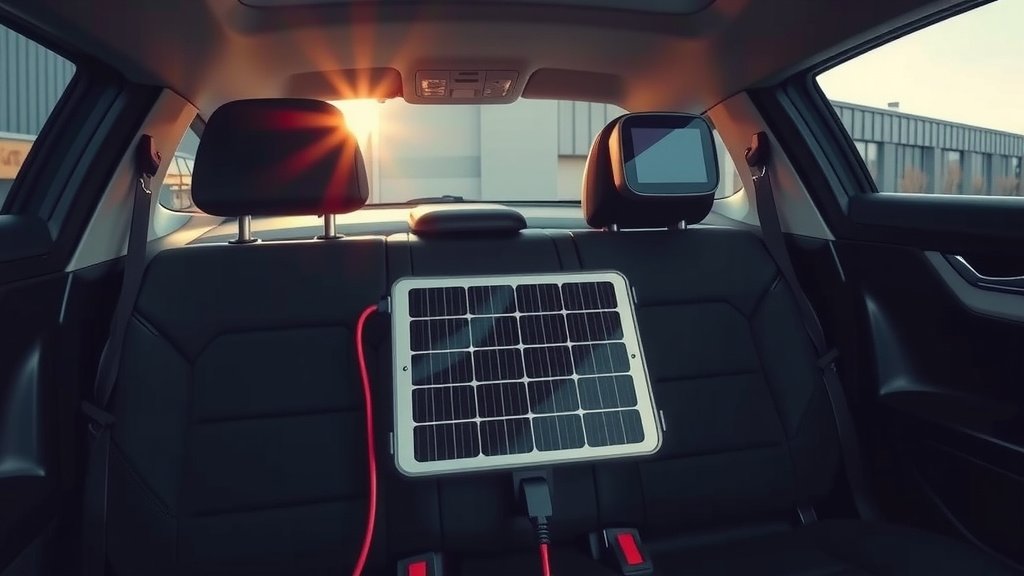
Yes, you can charge a solar generator in your car using your vehicle’s 12V outlet, though it will be slower than wall charging. Most solar generators come with car charging cables that plug into your cigarette lighter or power outlet.
Car charging typically takes 6-12 hours to fully charge a solar generator, depending on the battery size and your car’s power output. This method works great for road trips when you need backup power on the go.
How Car Charging Works for Solar Generators
Your car’s 12V outlet delivers power through a DC-to-DC connection. When you plug in your solar generator, it converts your car’s electrical current to charge its internal battery.
Most cars provide 120-180 watts through their 12V outlets. This means smaller solar generators (under 500Wh) charge reasonably fast, while larger units take much longer.
What You Need to Get Started
You’ll need a car charging cable that fits your specific solar generator model. Many manufacturers include this cable in the box, but you can buy one separately if needed.
Check that your car’s outlet can handle the power draw. Most modern vehicles handle this fine, but older cars might have lower limits.
Safety Considerations While Charging
Never charge while your engine is off for extended periods. You risk draining your car battery completely.
Keep your engine running or use this method only during drives. Your alternator needs to be working to replace the power you’re using.
Charging Speed and Time Expectations
Car charging is the slowest method for powering up your solar generator. But it’s still useful when you’re traveling and have no other options.
Small Solar Generators (Under 300Wh)
These compact units charge in 3-6 hours from your car. They’re perfect for phones, tablets, and small devices during camping trips.
Examples include portable power banks and mini solar generators. They draw less power and won’t strain your car’s electrical system.
Medium Solar Generators (300-1000Wh)
Expect 6-10 hours of charging time for mid-size units. These can power laptops, lights, and small appliances for a day or two.
Many people find this sweet spot works well for weekend camping or emergency backup power needs.
Large Solar Generators (Over 1000Wh)
Big units take 10-15+ hours to charge fully from your car. That’s a long road trip worth of charging time.
You might want to combine car charging with other methods for these larger systems. Use your car to top off the battery rather than full charging.
Different Types of Car Outlets and Their Limits
Not all car outlets are created equal. Understanding your vehicle’s setup helps you charge more effectively.
Standard 12V Cigarette Lighter Outlets
Most cars have at least one 12V outlet that puts out 10-15 amps. That gives you about 120-180 watts of charging power.
These outlets often shut off when you turn off the ignition. Perfect for safety, but it means you need the engine running.
Always-On Power Outlets
Some vehicles have outlets that stay powered even when the car is off. Use these carefully to avoid draining your car battery.
I found that many newer trucks and SUVs include these for powering accessories while camping.
Higher-Power Outlets in Modern Vehicles
Some cars now include 400W or higher power outlets. These charge your solar generator much faster than standard 12V outlets.
Electric vehicles and hybrid cars often have the most powerful outlets since they’re designed for high electrical loads.
Step-by-Step Car Charging Process
Getting started is straightforward once you have the right cable. Here’s exactly what to do.
Before You Start Charging
Make sure your solar generator is turned off. This prevents any power surges when you plug in.
Check that your car’s outlet is clean and free of debris. A poor connection can cause charging problems.
Connecting Your Solar Generator
Plug the car charging cable into your solar generator first. Then connect the other end to your car’s 12V outlet.
Turn on your car or at least put it in accessory mode. You’ll see charging indicators light up on your solar generator.
Monitoring the Charging Process
Most solar generators show charging status on their display. You’ll see input wattage and estimated time remaining.
Don’t worry if the charging speed varies slightly. Your car’s voltage can fluctuate based on engine RPM and electrical load.
Comparing Car Charging to Other Methods
Car charging fills a specific niche in your power management strategy. Here’s how it stacks up against other options.
| Charging Method | Speed | Convenience | Best For |
|---|---|---|---|
| Wall Outlet (AC) | Fastest | High at home | Daily charging |
| Solar Panels | Varies by sun | Great outdoors | Off-grid living |
| Car Charging | Slow but steady | Good while driving | Road trips |
When Car Charging Makes the Most Sense
You’re driving long distances and want to arrive with full power. Your solar generator charges while you cover miles.
You’re car camping without access to electrical hookups. Your vehicle becomes a mobile charging station.
When to Choose Other Methods Instead
At home, wall charging is always faster and more efficient. Save car charging for when you’re actually mobile.
If you have good sun exposure, solar panels often provide more power than your car can. Plus they don’t drain fuel.
Tips for More Efficient Car Charging
A few simple tricks can help you get the most out of car charging sessions.
Keep Your Engine Running
Your alternator produces the cleanest, most consistent power when the engine runs at normal speed. Idling works but highway driving is even better.
This also prevents you from accidentally draining your car’s starting battery.
Turn Off Unnecessary Electrical Loads
Air conditioning, heated seats, and sound systems all compete for the same electrical power. Turn them off to maximize charging speed.
You don’t need to drive in silence, but every bit of power helps when you’re trying to charge quickly.
Charge During Long Drives
Start charging when you begin a long drive rather than short trips around town. Extended charging sessions are more efficient.
Road trips are perfect for this. You can arrive at your destination with a fully charged solar generator.
Common Problems and Solutions
Car charging usually works smoothly, but you might run into a few issues along the way.
Charging Stops Unexpectedly
Your car might have automatic shutoffs to protect the electrical system. This happens more often with larger solar generators that draw lots of power.
Try charging in shorter sessions or when the engine is running at higher RPM. Highway driving often solves this problem.
Slow Charging Speeds
Older cars or vehicles with smaller alternators provide less charging power. There’s not much you can do except be patient.
Consider upgrading your car’s electrical system if you plan to do this regularly. A higher-output alternator can help.
Car Battery Drain Issues
If you accidentally drain your car battery, you’ll need jumper cables or a jump starter. Always keep the engine running during charging sessions.
Some people install dual battery systems for serious car camping. This gives you dedicated power for accessories.
Best Practices for Road Trip Charging
Planning ahead makes car charging much more effective during travel.
Start With a Partially Charged Generator
Don’t leave home with a completely dead solar generator. Charge it to 50% or more before your trip starts.
This gives you immediate power when you arrive, even if car charging doesn’t complete the full cycle.
Plan Charging Sessions Around Driving Time
Long highway stretches are perfect for charging sessions. Stop-and-go city driving provides less consistent power.
Many people start charging when they hit the interstate and let it run for hours at highway speeds.
Overnight Charging Considerations
Never leave your solar generator charging overnight unless your car has a dedicated camping electrical system. You’ll wake up to a dead battery.
If you must charge while parked, set a timer and check every few hours. Better safe than sorry.
Choosing the Right Solar Generator for Car Charging
Some solar generators work better with car charging than others. Here’s what to look for.
Battery Size vs Charging Time
Smaller batteries charge completely during typical driving sessions. Larger ones might only get a partial charge.
Think about your real needs. Do you need massive capacity, or would a smaller unit that charges quickly work better?
Multiple Charging Input Options
The best solar generators accept power from multiple sources simultaneously. You can combine car charging with solar panels for faster results.
Look for units that handle 12V car input plus solar panel input at the same time.
Conclusion
Charging your solar generator in your car opens up new possibilities for portable power. While it’s slower than wall charging, it perfectly fits the mobile lifestyle of camping, road trips, and off-grid adventures.
The key is managing your expectations and planning accordingly. Start with a partially charged unit, keep your engine running, and think of car charging as a convenient way to maintain power rather than the primary charging method. With the right approach, your vehicle becomes a mobile power station that keeps your solar generator ready for action wherever your travels take you.
Can I charge my solar generator while driving without hurting my car?
Yes, charging while driving is actually ideal because your alternator easily handles the load and provides clean, consistent power. This method won’t harm your car’s electrical system when done properly with the engine running.
How much gas does it use to charge a solar generator in my car?
The additional fuel cost is minimal since your engine was already running for driving. Research shows that charging adds roughly the equivalent of running your air conditioning, so expect maybe an extra 0.1-0.2 gallons per hour of charging.
What happens if I try to charge when my car is turned off?
Your solar generator will draw power from your car’s starting battery, which can drain it completely in 2-4 hours depending on battery size. Always keep the engine running or you risk being stranded with a dead car battery.
Do electric cars charge solar generators faster than gas cars?
Many electric vehicles have higher-power 12V outlets or even 120V AC outlets that charge solar generators much faster than traditional cars. Some EVs can provide 400+ watts compared to the 120-180 watts from standard car outlets.
Can I use an inverter to charge my solar generator faster from my car?
Using an inverter to convert 12V DC to 120V AC and then back to DC through your generator’s AC charger is inefficient and often slower than direct 12V charging. Stick with the direct car charging cable for better efficiency and speed.