
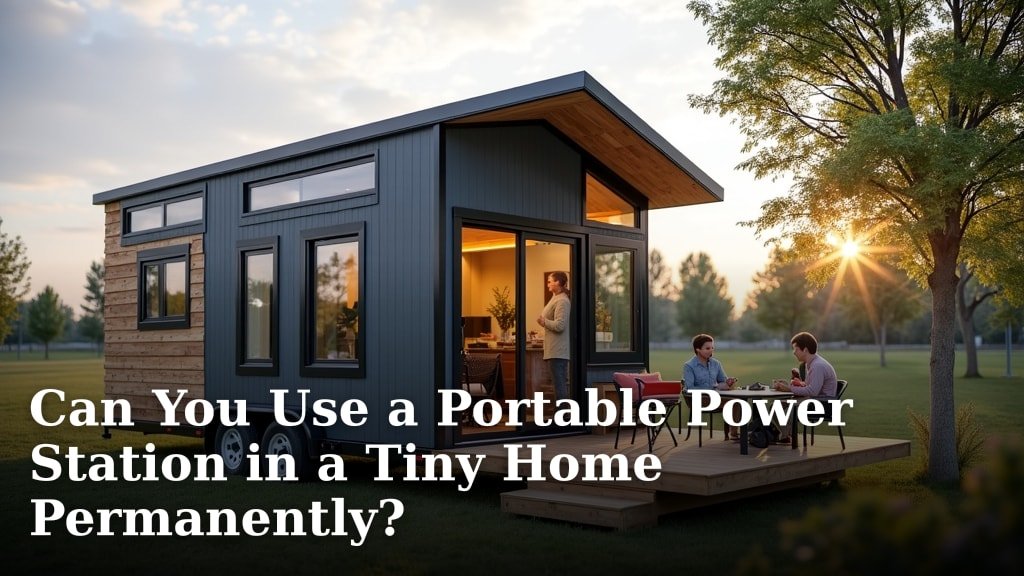
Yes, you can absolutely use a portable power station in a tiny home permanently, but with a few important considerations to ensure it’s the right solution for your needs. These versatile units can act as your primary off-grid power source or a reliable backup, offering flexibility and independence for your compact living space.
When thinking about a tiny home’s power, it’s easy to get overwhelmed. You want reliable energy without the hefty price tag of traditional setups. Portable power stations offer a cleaner, quieter alternative to noisy generators and can be a cost-effective way to keep your lights on and appliances running.
- Portable power stations can be used permanently in tiny homes.
- They offer a cleaner, quieter power alternative.
- Consider your energy needs carefully before choosing a unit.
- Charging methods and battery capacity are key factors.
- Proper placement and ventilation are important for safety.
Let’s walk through exactly how portable power stations can work for your tiny home and what you need to think about to make it a success.
Powering Your Tiny Home with Portable Stations: A Permanent Solution?
Yes, you absolutely can use a portable power station as a permanent power source for your tiny home. Think of it as a modern, flexible take on off-grid living. These units offer a clean, quiet, and often more affordable way to keep your essential appliances running. Many tiny home dwellers have found them to be a fantastic alternative to traditional generators or complex solar setups, especially for those starting out.
The key is understanding your power needs and how a portable station fits into that picture. It’s not just about plugging things in; it’s about creating a sustainable energy system that works for you. We’ve found that with the right planning, these units can provide reliable power day in and day out. Let’s break down what makes them a viable permanent option and what you need to consider.
Understanding Portable Power Station Basics for Tiny Homes
A portable power station is essentially a large rechargeable battery with built-in inverters and outlets. It stores energy and then delivers it to your devices, much like your home’s electrical panel, but in a self-contained unit. For tiny homes, this means you can have electricity without a permanent grid connection or noisy gasoline generators.
They typically come with various output ports, including AC outlets for standard appliances, USB-A and USB-C ports for electronics, and DC ports for other devices. This versatility makes them incredibly useful for a wide range of needs in a compact living space. Many models are designed for ease of use, with digital displays showing remaining battery life and power draw.
Key Components to Consider
When looking at a power station for permanent use, two main factors stand out: capacity and output. Capacity, measured in watt-hours (Wh), tells you how much energy the battery can store. Output, measured in watts (W), indicates how much power it can deliver at any given moment and how much it can handle continuously.
- Capacity (Wh): This determines how long you can run your devices. More Wh means longer runtimes.
- Output (W): This determines which appliances you can power. High-wattage appliances need more output.
- Ports: Ensure it has the right types and number of outlets for your gadgets.
- Battery Chemistry: Lithium-ion batteries (like LiFePO4) are generally preferred for longevity and safety.
Battery Capacity: How Much Do You Really Need?
Figuring out your daily energy consumption is the first step. You’ll want to list all the appliances you plan to run and their wattage. Then, estimate how many hours per day you’ll use each one. Multiply the wattage by the hours for each appliance to get its watt-hours per day. Sum these up for your total daily need.
For example, if your laptop uses 50W and you use it for 4 hours, that’s 200Wh. If your lights use 10W and are on for 5 hours, that’s 50Wh. Add up all these numbers for your daily total. Many experts suggest having a buffer, so aim for a power station with a capacity at least 20-30% higher than your calculated daily need. We found that a generous buffer prevents frequent recharging and potential strain on the battery.
Wattage Output: Can It Handle Your Appliances?
This is where many people run into issues. A power station might have a large capacity, but if its wattage output isn’t high enough, it won’t run appliances that require a significant surge of power to start. This is particularly true for refrigerators, microwaves, or power tools. Check the surge output to ensure it can handle appliances that require a significant power burst to start.
Check the continuous output and the surge output. Continuous output is the power it can deliver consistently. Surge output is the higher burst of power it can handle for a short time, usually needed to start motors. Ensure the surge wattage meets or exceeds the surge requirement of your largest appliance. For tiny homes, we often see people prioritizing efficiency with smaller appliances to stay within the power station’s limits.
Charging Your Portable Power Station Permanently
A permanent setup means you need a reliable way to recharge your power station. This is where solar panels and other methods come into play. The most common and sustainable method for tiny homes is solar charging. A reliable way to recharge your power station permanently is through compatible solar panels.
Solar Charging: The Off-Grid Favorite
Most portable power stations can be charged via solar panels. You’ll need to purchase compatible solar panels separately. The number of panels and their wattage will determine how quickly your power station recharges. On a sunny day, you can often replenish a significant portion of the battery’s capacity.
Consider the placement of your solar panels. Optimal sun exposure is key. You’ll want to position them where they receive direct sunlight for the longest part of the day, free from shade. Many tiny homes mount these on their roofs or use portable, ground-based arrays that can be adjusted for the sun’s position throughout the year.
We found that calculating your solar charging needs involves estimating your daily power consumption and then determining how much solar input you’ll need to compensate for it, factoring in inefficiencies and less-than-ideal weather. For a permanent setup, it’s wise to oversize your solar array slightly to ensure you can keep up, especially during shorter winter days.
Other Recharging Methods
While solar is ideal for off-grid living, other methods can supplement your charging. You can recharge your power station from a standard wall outlet when you have access to grid power, such as at a friend’s house or a campground. Many units also support charging via a car’s 12V outlet while you’re driving, which can be a useful top-up method.
For a permanent setup, relying solely on grid charging might defeat the purpose of off-grid independence. However, having these as backup options provides peace of mind. Some advanced systems can even integrate with a generator for emergency power needs.
Placement and Safety Considerations
Where you place your power station matters for both convenience and safety. These units contain batteries that can generate heat when in use or charging. Proper ventilation is a must.
Ventilation is Non-Negotiable
Portable power stations, especially when under heavy load, can get warm. They often have built-in fans to help with cooling. It’s important to ensure these fans aren’t obstructed. Avoid placing your power station in enclosed cabinets or tight spaces with no airflow.
Many manufacturers recommend leaving at least several inches of clearance around the unit. This allows air to circulate freely, preventing overheating. Overheating can reduce the battery’s lifespan and, in extreme cases, pose a fire risk. Always refer to the manufacturer’s guidelines for specific clearance requirements.
Environmental Factors
Keep your power station away from extreme temperatures. While they are designed to operate in a range of conditions, excessive heat or cold can impact performance and longevity. Extreme cold can reduce battery capacity temporarily, while extreme heat can cause permanent damage.
Also, keep the unit away from moisture and direct sunlight. Water damage can be catastrophic, and prolonged exposure to direct sun can heat the unit beyond its optimal operating temperature. Many tiny home dwellers find a designated corner or shelf within their living space works well, provided it meets ventilation needs. We found that a dry, temperate location is best for long-term reliability.
Choosing the Right Power Station for Permanent Use
Selecting a power station for permanent tiny home living requires careful calculation. It’s not a one-size-fits-all situation. Think about your must-have appliances and how often you use them.
Consider a unit with a LiFePO4 (Lithium Iron Phosphate) battery. These are known for their longer lifespan, typically lasting for thousands of charge cycles, and improved safety features compared to other lithium-ion chemistries. This is a significant advantage for a unit you plan to use daily for years to come.
Here’s a quick checklist to guide your decision:
- Calculate your total daily watt-hour (Wh) energy needs accurately.
- Determine the peak wattage (surge) required by your largest appliance.
- Prioritize power stations with LiFePO4 battery chemistry for durability.
- Ensure adequate AC output wattage for your essential appliances.
- Look for multiple charging input options, especially MPPT solar charge controllers.
- Check for safety certifications (like UL listing) for peace of mind.
By approaching this decision methodically, you can find a portable power station that will serve as a dependable and sustainable energy hub for your tiny home for years to come.
Conclusion
You’ve learned that using a portable power station permanently in your tiny home is absolutely achievable. It offers a clean and flexible power solution. The key is understanding your specific energy needs and selecting a unit with sufficient capacity and output. We’ve seen that reliable charging, especially through solar, is vital for ongoing independence. By focusing on proper placement and safety, you can ensure your power station serves as a dependable energy hub for years. Your next step is to calculate your daily watt-hours and start researching models that fit your lifestyle and budget.
Frequently Asked Questions
How many portable power stations would I need for a tiny home?
For most tiny homes, one well-sized portable power station should suffice. The critical factor is matching its capacity and output to your daily energy consumption and the wattage needs of your appliances. You might consider a second unit only if you have very high energy demands or want extensive backup redundancy.
Can I run high-wattage appliances like a microwave or electric heater permanently?
Running high-wattage appliances like microwaves or electric heaters permanently can be challenging. These devices draw a lot of power, requiring a station with a very high surge and continuous output. We recommend checking the appliance’s wattage and ensuring it’s well within the power station’s capabilities, or opting for more energy-efficient alternatives.
What kind of solar panels are best for permanently charging a power station in a tiny home?
For permanent tiny home use, consider solar panels with an MPPT (Maximum Power Point Tracking) charge controller. This technology optimizes power output from the panels, especially in varying light conditions. Look for panels with a total wattage that can sufficiently replenish your power station’s daily usage, accounting for less sunny days.
How do I know if my power station is overheating?
Most power stations have built-in fans and safety features to prevent overheating. You’ll usually know it’s getting too hot if the fans are running constantly at high speed, the unit feels excessively warm to the touch, or you receive a warning on its display. Ensure you maintain adequate clearance around the unit for proper airflow to prevent this.
Is it safe to keep a portable power station running 24/7 in my tiny home?
Yes, it is generally safe to keep a portable power station running 24/7 in your tiny home, provided it’s placed correctly and has proper ventilation. Modern units are designed with safety features to prevent overcharging and overheating. Always follow the manufacturer’s instructions for use and placement to ensure optimal safety and longevity.
