
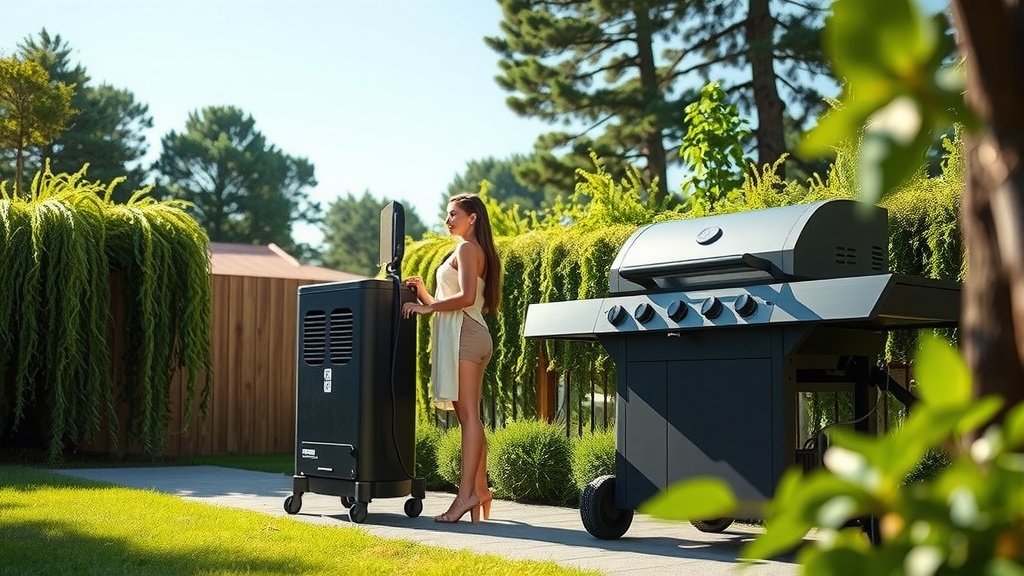
Yes, most portable power stations can run an electric grill, but you need to match the power station’s wattage capacity with your grill’s power requirements.
Electric grills typically need 1,500-2,500 watts of continuous power, so you’ll want a portable power station with at least that much output capacity for reliable grilling.
What Makes an Electric Grill Work with Portable Power?
Your electric grill needs steady power to heat up and maintain temperature. Think of it like running a small space heater – it draws consistent electricity the entire time you’re cooking.
The key numbers you need to know are watts and watt-hours. Watts tell you how much power flows right now. Watt-hours tell you how long that power will last.
Power Requirements by Grill Type
Small indoor grills usually need 1,000-1,500 watts. Medium outdoor electric grills want 1,500-2,000 watts. Large outdoor models can demand 2,000-2,500 watts or more.
Check your grill’s label or manual for the exact wattage. This number determines what size power station you’ll need.
Choosing the Right Power Station Size
You want a power station that can handle your grill’s watts with room to spare. Going too small means your grill won’t heat properly or might shut off completely.
Small Grills (1,000-1,500 Watts)
A 1,500-2,000 watt power station works well here. You’ll get about 1-2 hours of grilling time from most units in this range.
This covers compact indoor grills and small patio models. Perfect for cooking burgers or grilled vegetables for 2-4 people.
Medium Grills (1,500-2,000 Watts)
Look for a 2,000-2,500 watt power station. These typically have larger battery banks too, giving you 1.5-3 hours of cooking time.
This range handles most standard outdoor electric grills. You can cook for 4-6 people without running out of power mid-meal.
Large Grills (2,000+ Watts)
You need a heavy-duty power station with 2,500+ watts output. These units cost more but can run big grills for family gatherings.
Some large grills pull 3,000+ watts. Make sure your power station can actually deliver that much continuous power.
How Long Will Your Power Last?
This depends on your power station’s battery capacity and your grill’s power draw. The math is simple: divide battery capacity by grill watts.
Real-World Runtime Examples
A 1,500Wh power station running a 1,500-watt grill gives you about 1 hour of cooking time. A 2,000Wh unit with the same grill extends that to 1.3 hours.
Remember, you lose some power to conversion inefficiency. Expect about 85-90% of the theoretical runtime in real use.
Factors That Affect Runtime
Cold weather reduces battery capacity. High heat settings drain power faster. Frequent lid opening makes the grill work harder to maintain temperature.
Your power station’s age matters too. Older batteries hold less charge than when they were new.
Best Power Station Features for Grilling
Not all power stations work equally well with electric grills. Some features make a big difference in your grilling experience.
Pure Sine Wave Output
Your electric grill’s heating elements prefer clean power. Pure sine wave power stations deliver smooth electricity that won’t cause problems.
Modified sine wave units might work but can cause humming, reduced efficiency, or early component failure in some grills.
Multiple AC Outlets
You might want to run other devices while grilling. Extra outlets let you power lights, a small fan, or music without unplugging your grill.
Fast Charging Options
Solar charging lets you extend grilling time on sunny days. Car charging helps during camping trips. Wall charging gets you ready for the next cookout.
Display and Monitoring
A good display shows remaining battery life and current power draw. This helps you plan your cooking time and avoid unexpected shutdowns.
Safety Tips for Grill and Power Station Use
Combining electricity with outdoor cooking needs extra attention to safety. These precautions keep you and your equipment safe.
Location and Setup
Keep your power station on a stable, level surface away from the grill’s heat. Hot surfaces can damage the battery and electronics inside.
Protect both units from rain and moisture. Even “weather-resistant” models shouldn’t get soaked.
Electrical Safety
Use heavy-duty extension cords if needed. Thin cords can overheat with high-power grills. Check all connections before starting to cook.
Never run cords through water or wet grass. Keep everything dry and elevated if possible.
Ventilation Requirements
Power stations need airflow to stay cool under heavy loads. Don’t put them in enclosed spaces or cover the ventilation ports.
Your electric grill still produces heat and steam. Use it in well-ventilated areas just like any cooking appliance.
Cost Considerations
Running an electric grill on battery power costs more upfront than plugging into the wall. But the freedom to grill anywhere makes it worthwhile for many people.
Initial Investment
Expect to spend $1,000-$3,000 for a power station that handles most electric grills. Higher capacity units with more features cost more.
Compare this to installing electrical outlets in remote areas of your yard. The power station often wins for flexibility and convenience.
Operating Costs
Charging your power station from the wall costs pennies per use. Solar charging reduces even those small costs once you recover the panel investment.
| Power Station Size | Grill Compatibility | Typical Runtime | Price Range |
|---|---|---|---|
| 1,500W | Small grills only | 1-2 hours | $800-$1,500 |
| 2,000W | Most standard grills | 1.5-3 hours | $1,200-$2,000 |
| 2,500W+ | All electric grills | 2-4 hours | $1,800-$3,500 |
Common Problems and Solutions
Even with the right setup, you might run into issues. Most problems have simple fixes once you know what to look for.
Grill Won’t Heat Up Properly
Your power station might not deliver enough watts for the grill’s needs. Check if the power station’s output matches your grill’s requirements.
Low battery can also cause weak performance. Charge your power station fully before each grilling session.
Power Station Shuts Off
Overheating protection might kick in if the unit gets too hot. Move it to a cooler spot with better airflow.
Overload protection triggers when you exceed the power station’s capacity. Use a smaller grill or upgrade your power station.
Battery Drains Too Fast
Cold weather reduces battery performance. Warm up your power station indoors before outdoor use in winter.
Old batteries lose capacity over time. If your power station is several years old, shorter runtimes become normal.
Alternatives to Consider
Electric grills aren’t your only option for portable outdoor cooking. Other methods might work better for your situation.
Propane Grills
Gas grills don’t need electricity at all. They heat up faster and run longer than most electric setups on battery power.
You can’t run out of “battery” in the middle of cooking. Just swap propane tanks when one runs empty.
Pellet Grills with Power Stations
Pellet grills use much less electricity than electric grills. They only need power for the fan and control electronics.
A small power station can run a pellet grill for 8-12 hours. You get great flavor with minimal battery drain.
Hybrid Cooking Methods
Start food on a gas grill, then finish with electric accessories powered by your station. This gives you flexibility without huge power demands.
Conclusion
Your portable power station can definitely run an electric grill when you match the power requirements correctly. Focus on getting enough watts and watt-hours for your specific grill and cooking needs.
Small grills work great with mid-range power stations. Large grills need serious battery capacity and high output ratings. Either way, you’ll enjoy the freedom to grill anywhere without hunting for electrical outlets.
Consider your budget, typical cooking times, and portability needs when choosing. The right combination gives you years of flexible outdoor cooking wherever you want to set up.
Can I run multiple appliances with my grill on one power station?
It depends on your power station’s total capacity and the combined wattage of all devices. Add up all the watts you want to use simultaneously and make sure it stays under your power station’s output limit. Most units can handle a grill plus small accessories like lights or a phone charger.
Do I need special extension cords for high-power grills?
Yes, use heavy-duty outdoor extension cords rated for at least 15 amps. Thin household cords can overheat and create fire hazards with high-wattage grills. Keep cord runs as short as possible to prevent voltage drops that reduce grill performance.
How do I know when my power station battery is getting low?
Most power stations have digital displays showing remaining battery percentage or estimated runtime. Some models beep or flash warnings when power drops to 20% or 10%. Watch these indicators and have backup plans ready for longer cooking sessions.
Can cold weather affect my power station’s ability to run an electric grill?
Cold temperatures reduce lithium battery capacity by 20-40%. Your power station will run for shorter periods and might shut down in extreme cold. Keep the unit warm before use and consider bringing it indoors between grilling sessions during winter.
What happens if my grill draws more power than my station can provide?
The power station’s overload protection will shut off power to prevent damage. Your grill will stop heating immediately. You’ll need either a more powerful power station or a lower-wattage grill to avoid this problem. Check specifications carefully before purchasing.
