
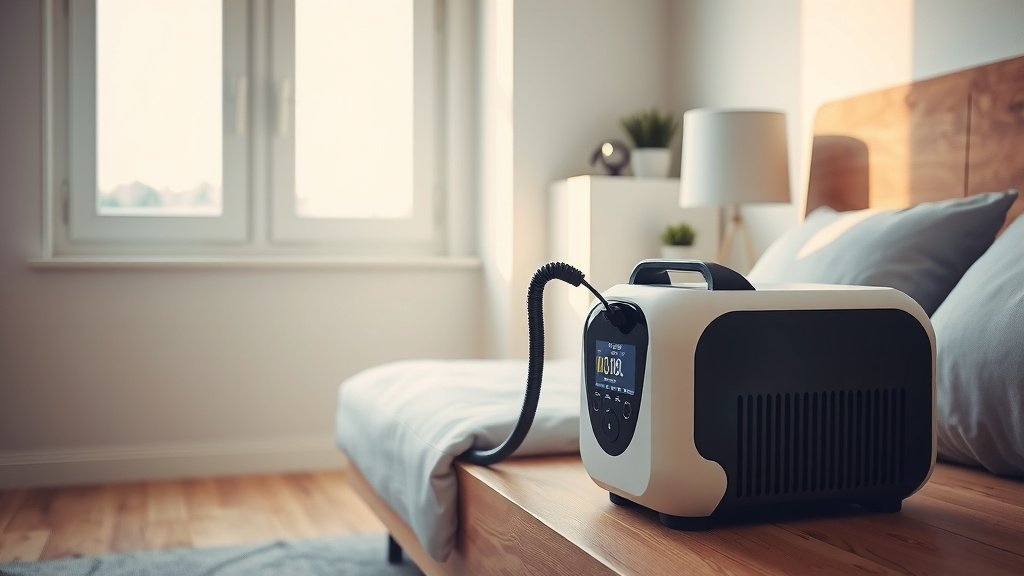
To use a solar generator for your CPAP machine, you need a generator with at least 100-150 watts output and enough battery capacity to power your device for 7-8 hours of sleep.
Most CPAP machines use 30-60 watts of power, so a 300-500Wh solar generator will provide one full night of backup power for your sleep therapy needs.
Why Use a Solar Generator for Your CPAP Machine?
Power outages don’t care about your sleep schedule. When the grid fails, your CPAP therapy stops too. That’s where solar generators shine.
Solar generators offer clean, quiet backup power for your CPAP machine. No gas fumes. No engine noise. Just silent energy storage that keeps your breathing therapy running all night.
I found that many CPAP users worry about camping trips or power emergencies. A solar generator solves both problems with one device.
Benefits Over Traditional Gas Generators
Gas generators create carbon monoxide. You can’t run them indoors safely. Solar generators have zero emissions and work anywhere.
Your CPAP machine needs steady, clean power. Gas generators produce power spikes that can damage sensitive electronics. Solar generators deliver smooth electricity like wall outlets.
Understanding Your CPAP Power Requirements
Before buying any solar generator, you need to know your CPAP’s power appetite. This step matters more than anything else.
How Much Power Does Your CPAP Use?
Most CPAP machines use between 30-60 watts during operation. But several factors change this number:
- Pressure settings (higher pressure = more power)
- Heated humidifier (adds 10-15 watts)
- Heated tubing (adds another 10-15 watts)
- Machine age and efficiency
Check your CPAP’s power adapter or manual for exact wattage. You’ll see something like “65W” or “2.5A at 24V.”
Calculating Your Nightly Power Needs
Here’s the math you need. Take your CPAP’s watts and multiply by 8 hours of sleep.
Example: 50-watt CPAP × 8 hours = 400 watt-hours (Wh) per night.
Add 20% extra for efficiency losses. So you’d need about 480Wh of battery capacity minimum.
Special Considerations for Different CPAP Types
Basic CPAP machines use the least power. BiPAP and APAP machines often need more energy because they adjust pressure automatically.
Travel CPAP machines typically use less power than full-size units. If you’re planning camping trips, consider a travel model.
Choosing the Right Solar Generator Size
Solar generators come in different sizes. Too small won’t last the night. Too big costs extra money you don’t need to spend.
Small Solar Generators (150-300Wh)
These work for basic CPAP machines without humidifiers. You’ll get 4-6 hours of runtime typically.
Good for short naps or emergency backup. Not ideal for full nights unless your CPAP uses very little power.
Medium Solar Generators (300-600Wh)
This size handles most CPAP setups for one full night. Even with humidifiers and heated tubing, you should get 7-8 hours.
I found this range offers the best balance of capacity and portability for most people.
Large Solar Generators (600Wh+)
These provide multiple nights of CPAP power or can run additional devices. Great for extended camping or frequent power outages.
The extra capacity gives peace of mind but adds weight and cost.
Step-by-Step Setup Process
Setting up your solar generator for CPAP use takes just a few minutes once you know the process.
What You’ll Need
- Solar generator with enough capacity
- DC-to-DC cable (if your CPAP supports 12V)
- AC inverter cable (comes with most generators)
- Your CPAP machine and accessories
Connection Method 1: DC Power (Most Efficient)
Many CPAP machines can run on 12V or 24V DC power directly from the battery. This skips the inverter and saves energy.
Check if your CPAP has a DC input port. It might be hidden under a cover panel.
Buy the right DC cable for your CPAP model. Connect it to your solar generator’s 12V outlet. Your machine should power on normally.
Why DC Power Works Better
DC connections avoid energy losses from converting battery power to AC, then back to DC inside your CPAP. You can gain 10-15% more runtime this way.
Connection Method 2: AC Power (Universal Option)
If your CPAP doesn’t support DC input, use the AC outlets on your solar generator. Just plug in your normal power adapter.
This method works with any CPAP machine but uses slightly more battery power due to inverter losses.
Maximizing Your Runtime
Want to squeeze every minute from your solar generator? These tips help extend your CPAP’s operating time.
Adjust Your CPAP Settings
Work with your doctor to find the lowest effective pressure setting. Lower pressure uses less power.
Turn off heated humidification if possible. The humidifier tank often uses more power than the CPAP motor itself.
Use Smart Power Management
Some CPAP machines have “airplane mode” or “battery mode” settings. These reduce power consumption automatically.
Disable Wi-Fi and Bluetooth features if your machine has them. Wireless radios drain extra power for no benefit during outages.
Temperature Considerations
Cold temperatures reduce battery performance. Keep your solar generator at room temperature when possible.
Hot weather can trigger thermal protection in some generators. Provide shade and airflow around the unit.
Charging Your Solar Generator
Solar generators need power input to stay charged. You have several options for keeping the battery topped off.
Solar Panel Charging
Most solar generators include solar panels or work with separate panel kits. Expect 4-8 hours of good sunlight to fully recharge a medium-sized unit.
Position panels facing south with no shade for best results. Even partial shade can cut charging speed dramatically.
Wall Outlet Charging
Plug your generator into regular wall outlets when available. This usually takes 3-6 hours for a full charge.
Charge during the day if you expect nighttime power outages. Keep the battery at 80-100% when not in active use.
Car Charging Options
Many generators charge from 12V car outlets while driving. This works great for road trips or mobile use.
Car charging typically takes longer than wall charging but provides options when camping or traveling.
Safety Tips and Precautions
Solar generators are generally safe, but a few precautions keep you and your equipment protected.
Ventilation Requirements
Solar generators produce some heat during operation. Don’t cover air vents or place in enclosed spaces without airflow.
Unlike gas generators, you can safely use solar generators indoors. Just avoid blocking cooling fans.
Battery Care and Maintenance
Lithium batteries last longer when kept between 20-80% charge. Avoid completely draining the battery regularly.
Store your generator with 50-60% charge if not using for extended periods. Check and top off every 3-6 months.
Temperature Storage Limits
Don’t leave solar generators in hot cars or freezing garages. Extreme temperatures damage battery cells permanently.
I found that many warranty claims come from temperature damage that could be avoided with proper storage.
Troubleshooting Common Issues
Sometimes things don’t work perfectly right away. Here are solutions to typical problems.
CPAP Won’t Turn On
Check all connections first. Make sure the solar generator is turned on and has battery charge remaining.
Verify voltage compatibility. Some CPAP machines need exactly 12V or 24V DC input to function properly.
Generator Shuts Off During Night
This usually means insufficient battery capacity for your power needs. Calculate your actual usage and compare to generator capacity.
Cold weather reduces battery performance. Bring the generator to room temperature if possible.
Shorter Runtime Than Expected
Check for power-hungry accessories like heated humidifiers. Turn off unnecessary features to extend operation time.
Old batteries hold less charge than when new. Consider replacement if your generator is several years old.
Cost Considerations and Value
Solar generators cost more upfront than gas generators. But they offer long-term value through free solar charging and minimal maintenance.
Budget Options vs Premium Models
Entry-level solar generators start around $200-400 for CPAP-suitable capacity. Premium models with more features cost $800-1500.
I found that mid-range options often provide the best value for most CPAP users. You get reliable performance without paying for unused features.
Long-Term Savings
Solar charging costs nothing after your initial investment. Gas generators need fuel, oil changes, and regular maintenance.
Quality solar generators last 5-10 years with proper care. That makes the cost per use quite reasonable for regular CPAP users.
Popular Solar Generator Models for CPAP
From my research, several generator models work well for CPAP applications. Here are features to look for:
| Capacity Range | Best For | Runtime Estimate | Weight Range |
|---|---|---|---|
| 200-400Wh | Basic CPAP, no humidifier | 6-10 hours | 5-15 lbs |
| 400-600Wh | CPAP with humidifier | 8-12 hours | 12-25 lbs |
| 600-1000Wh | Multiple nights or extra devices | 12-20 hours | 20-40 lbs |
Key Features to Look For
Pure sine wave inverters work best with medical devices like CPAP machines. Modified sine wave can cause problems or damage.
Multiple charging options give you flexibility. Look for solar, AC, and car charging capabilities.
LCD displays help monitor battery level and power usage. This information helps plan your power budget.
Conclusion
Using a solar generator for your CPAP machine gives you freedom from power outages and opens up camping possibilities. The key is matching generator capacity to your CPAP’s power needs.
Start by calculating your nightly power requirements. Add 20% buffer for safety. Choose a generator with at least that much battery capacity.
DC connections save power when available. AC connections work universally. Both methods provide reliable backup power for your sleep therapy.
Solar generators cost more initially than gas alternatives. But they offer quiet, clean operation with minimal ongoing costs. For CPAP users who value reliability and convenience, they’re often worth the investment.
How long will a 500Wh solar generator run my CPAP machine?
A 500Wh generator typically runs a standard CPAP machine for 8-12 hours, depending on your pressure settings and whether you use a heated humidifier. Basic CPAP machines without humidifiers can run even longer.
Can I charge my solar generator while using it for CPAP?
Yes, most solar generators support pass-through charging. You can plug in solar panels or wall chargers while your CPAP runs. This extends your runtime indefinitely as long as input power meets or exceeds your CPAP’s consumption.
Do I need a pure sine wave inverter for my CPAP machine?
Yes, CPAP machines work best with pure sine wave power. Modified sine wave inverters can cause motor noise, reduced efficiency, or even damage to sensitive electronics in your CPAP device.
Will cold weather affect my solar generator’s ability to power my CPAP?
Cold temperatures reduce lithium battery capacity by 10-20%. Your generator might provide shorter runtime in freezing conditions. Bring the unit indoors or insulate it when possible during winter use.
How often should I charge my solar generator if I use it for CPAP backup?
Check and charge your solar generator monthly if used for emergency backup only. For regular use, charge after each CPAP session or when the battery drops below 20%. Keeping batteries between 20-80% charge extends their lifespan.
