
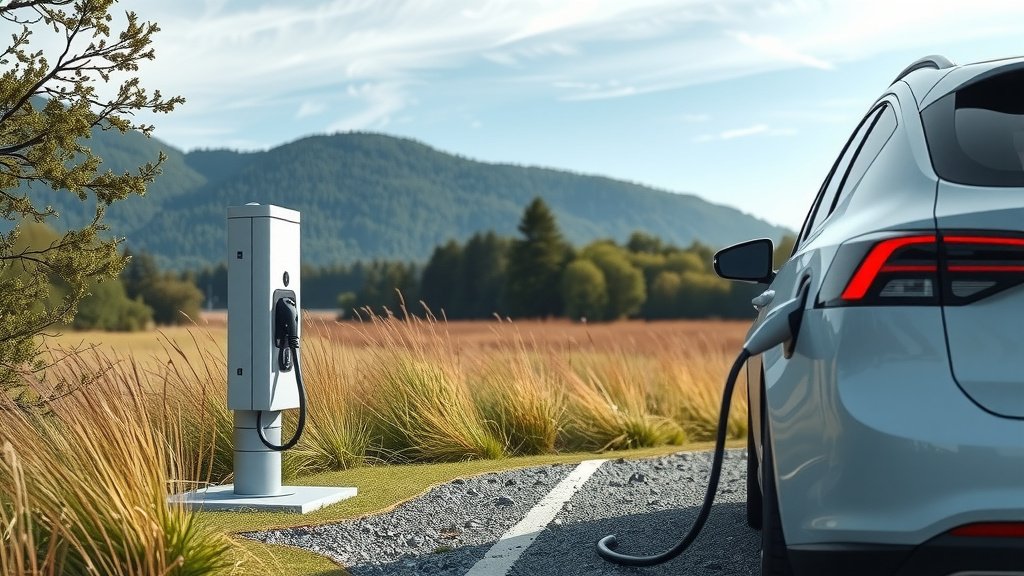
Yes, a portable power station can charge an electric car, but it is typically a very slow process best suited for emergency top-offs rather than full charges.
Most portable power stations provide Level 1 charging speeds, similar to a standard wall outlet, meaning hours or even days are needed for a significant range boost for your electric car.
- TL;DR:
- Portable power stations can charge electric vehicles, but very slowly, like a standard home outlet.
- They are best for emergencies, like getting a few extra miles to reach a charging station.
- A large portable power station might add 2-4 miles of range per hour of charging.
- Don’t expect a full charge; their capacity is usually too small for an EV’s massive battery.
- Always use your EV’s Level 1 charging cable and ensure the power station can handle the load safely.
Can Portable Power Station Charge Electric Car?
Yes, you absolutely can use a portable power station to charge your electric car. Think of it as a helpful, albeit slow, pit stop when you are in a pinch.
It’s important to understand the practical limitations before you rely on one for routine charging.
Understanding the Power Gap
Electric cars need a lot of power to charge their large batteries. A typical EV battery can range from 40 kWh to over 100 kWh.
Most portable power stations, while powerful for appliances, offer capacities in the 500 Wh to 2000 Wh range. That’s a big difference, wouldn’t you say?
EV Charging Levels at a Glance
When you talk about EV charging, you usually hear about different “levels.” Let’s break them down simply:
- Level 1 Charging: This is the slowest method. It uses a standard 120V household outlet. It adds about 2-5 miles of range per hour. Most portable power stations fall into this category.
- Level 2 Charging: Much faster, using 240V outlets, similar to what a clothes dryer uses. It can add 20-50 miles of range per hour. Portable power stations typically don’t support this directly.
- DC Fast Charging: The quickest option, often found at public stations. It can give you an 80% charge in under an hour. This is far beyond what any portable power station can deliver.
How Portable Power Stations Can Connect to Your EV
To charge your EV with a portable power station, you’ll mainly use your car’s Level 1 charging cable. This cable has a standard three-prong plug that fits into your power station’s AC outlet.
It’s like plugging any other appliance into the portable power station, but the “appliance” here is your car.
Using Your EV’s Level 1 Charger
Most electric vehicles come with a Level 1 charging cable, also known as a trickle charger or “convenience charger.” This cable is designed to draw a modest amount of power.
You simply plug your car’s Level 1 charger into one of the AC outlets on your portable power station. Easy peasy!
The Realities of Charging Speed
Here’s where expectations meet reality. Since most portable power stations mimic a Level 1 outlet, charging will be slow. Very slow.
You might gain 2-4 miles of range for every hour your car is plugged into a capable portable power station. Imagine watching paint dry – it’s similar.
| Charging Method | Typical Power Output | Approximate Miles of Range Added Per Hour | Practicality for Portable Power Stations |
|---|---|---|---|
| Level 1 (Standard Wall Outlet / Portable Power Station) | 1.2 – 1.8 kW | 2 – 5 miles | Most common and practical option. |
| Level 2 (Dedicated EV Charger) | 3.3 – 11 kW | 20 – 50 miles | Not directly supported by portable power stations. |
| DC Fast Charging | 50 – 350 kW | 100+ miles (in 30 mins) | Not supported by portable power stations. |
Capacity Matters: How Much Power Do You Need?
Portable power stations are rated in Watt-hours (Wh) or kilowatt-hours (kWh). An average EV battery is many times larger than even the biggest portable power stations.
For example, a 1000 Wh (1 kWh) portable power station might give a 60 kWh EV battery about 1.6% of a full charge. That’s just a tiny sip of juice for your car.
What About Larger Portable Power Stations?
Some portable power stations boast capacities of 2000 Wh (2 kWh) or even 3000 Wh (3 kWh). These can indeed give your EV a bit more range.
A 2 kWh station might add 8-10 miles to your EV in a few hours. Still not a full tank, but perhaps enough to reach the next charging spot.
Is it Practical for Everyday Use?
For daily charging, absolutely not. The time it takes and the strain on the power station make it impractical. Your home wall outlet is often just as effective and much more convenient.
We found that for routine charging, a dedicated Level 2 home charger is the best way to go, according to many EV owner surveys.
When a Portable Power Station Makes Sense for Your EV
While not a primary charging solution, a portable power station can be a lifesaver in specific scenarios:
- Emergency Top-Off: If you’re on a road trip and find yourself unexpectedly low on battery far from a charger, a power station can provide those critical few miles.
- Remote Locations: Camping or off-grid adventures where you might need to charge your EV very slowly overnight to keep essential systems running or to move it a short distance.
- Power Outages: If your home power goes out, and you urgently need to move your EV, a portable power station could offer a small boost.
Checklist: When to Consider a Portable Power Station for EV Charging
- Are you in a remote area with no charging infrastructure?
- Do you need just a few miles to reach the nearest public charger?
- Are you experiencing a power outage at home?
- Is your EV stranded and needs a minimal charge to move?
- Are you okay with extremely slow charging speeds?
Important Factors to Consider Before You Buy
If you are considering a portable power station for EV charging, keep these points in mind:
- Output Power (Watts): Ensure the AC output is at least 1500W to effectively handle your EV’s Level 1 charger, which often draws 1200-1800W.
- Battery Capacity (Wh): The bigger, the better. Look for 1500 Wh or more if you want any noticeable range increase.
- Port Availability: Does it have enough AC outlets and the right type for your EV charger?
- Battery Chemistry: Lithium iron phosphate (LiFePO4) batteries are often more durable and offer more charge cycles, giving you better long-term value.
Safety First, Always!
Always prioritize safety. Make sure your portable power station has overload protection built-in. Use only the charging cable that came with your EV.
Never try to bypass safety features or use unapproved adapters. Many experts agree that following manufacturer guidelines protects both you and your vehicle.
Solar Generators: A Step Up?
A “solar generator” is essentially a portable power station bundled with solar panels. This setup can charge your EV using sunlight, giving you a truly off-grid solution.
While still slow, continuous solar input means you could potentially extend your charging time without draining the grid, which is pretty neat.
The Future of EV Charging on the Go
As EV technology advances, we might see specialized, higher-power portable charging solutions. For now, portable power stations offer a niche, emergency charging option.
They are a fantastic tool for versatility, providing power for many devices, with EV charging being a bonus feature rather than their primary role.
Conclusion
So, can a portable power station charge an electric car? Yes, it absolutely can. Think of it as a trusty friend offering a helpful hand, but not a replacement for your regular charging routine.
It’s perfect for those “just in case” moments or when you need a little extra juice far from a charging station. Always understand its limitations and prioritize safety for a smooth and successful experience.
What is the most efficient portable power station for EV charging?
The “most efficient” portable power station for EV charging will be one with the highest AC output wattage (ideally 1500W+) and largest battery capacity (2000 Wh or more). Efficiency also depends on its ability to maintain stable voltage and convert power with minimal loss, a feature found in models with pure sine wave inverters.
How many miles can a 2000 Wh portable power station add to an EV?
A 2000 Wh portable power station can typically add about 6-8 miles of range to an electric vehicle. This estimation depends on your EV’s specific energy consumption, but it’s a general guideline for what you might expect.
Is it safe to charge an EV with a portable power station?
Yes, it is generally safe to charge an EV with a portable power station, provided you use your car’s original Level 1 charging cable and the power station has proper safety features like overload protection and pure sine wave output. Always ensure the power station’s output matches or exceeds the EV charger’s power draw.
Can I use a portable power station to rapid charge my electric car?
No, you cannot use a standard portable power station to rapid charge your electric car. Rapid charging (Level 2 or DC Fast Charging) requires significantly higher power output and specialized charging infrastructure that portable power stations are not designed to provide. They only offer Level 1 speeds.
Are there portable power stations specifically designed for EV charging?
While most portable power stations are versatile, some newer, higher-capacity models are being marketed with EV charging capabilities in mind. These often feature very large battery capacities (e.g., 3 kWh or more) and robust AC outputs. However, they still operate at Level 1 charging speeds for EVs, or sometimes a very slow Level 2 if an adapter is used with a very high output power station and compatible EV charging cable (not typical for most).
