
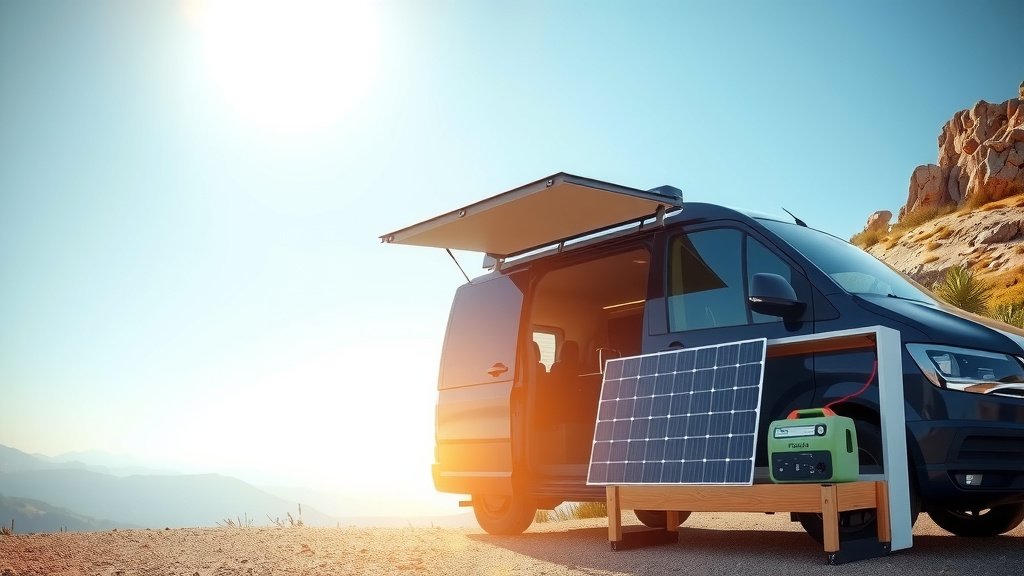
To use a solar generator for your van conversion, you essentially connect solar panels to the generator, which then stores energy in its internal battery, allowing you to power your van’s appliances and devices wherever you go.
This setup provides a reliable, eco-friendly, and independent power source, making your van life truly off-grid capable and comfortable.
TL;DR: Ready to power your van life with sunshine? Here’s the quick rundown:
- Choose a solar generator with enough capacity for your needs.
- Install solar panels securely on your van’s roof.
- Connect panels to your generator and wire it to your van’s electrical system.
- Enjoy reliable, quiet, and emission-free power for all your adventures.
- Manage your power usage and keep your panels clean for best results.
How To Use Solar Generator For Van Conversion?
Using a solar generator in your van conversion means harnessing the sun’s power to run your life on the road. It’s like having a miniature, mobile power grid right inside your vehicle.
You connect solar panels to a portable power station – that’s your “solar generator” – and it stores the energy. Then, you plug your lights, fridge, laptop, and more directly into the generator.
Why Go Solar in Your Van?
Thinking about a van conversion? Adding a solar generator can truly change your travel experience. Imagine having power for your coffee maker even when parked deep in the wilderness.
We found that going solar offers incredible freedom. You won’t depend on campgrounds with electrical hookups. It’s also quiet, clean, and often more cost-effective long-term than running a gas generator (Environmental Protection Agency).
Picking the Right Solar Generator
Choosing the best solar generator is your first big step. It’s like picking the heart of your van’s electrical system. You want something reliable and powerful enough for your specific needs.
Many experts suggest thinking about your daily power consumption first. What appliances will you run? How long will you run them? This helps determine the right generator size.
Understanding Wattage and Capacity
Solar generators are rated by their battery capacity (Watt-hours or Wh) and output power (Watts). A higher Wh means more stored energy for longer use. Higher Watts means it can handle more powerful appliances.
For example, a small fridge might draw 50 watts. If you run it for 12 hours, you need 600 Wh of capacity. But you also need enough output wattage to start it, which might be higher (Industry standards).
Battery Type Matters
Most modern solar generators use lithium-ion batteries, often LiFePO4 (lithium iron phosphate). We found that LiFePO4 batteries offer a longer lifespan and better safety than older lithium types.
They can also handle more charge cycles. This means your investment lasts longer, which is pretty great for van life.
The Essential Components of Your Van’s Solar Setup
Your solar generator is the central piece, but it works with other vital parts. Understanding these components makes the installation process much clearer.
It’s not just a generator; it’s a whole system working together to keep you powered up.
| Component | What It Does | Why It’s Important |
|---|---|---|
| Solar Panels | Capture sunlight and convert it into electricity. | The power source; no panels, no solar energy. |
| Solar Generator (Portable Power Station) | Stores the energy from panels and converts it for use. | The battery, inverter, and charge controller all in one. |
| Cables and Connectors | Link panels to the generator and generator to appliances. | Ensure safe and efficient power flow. |
| Mounting Hardware | Secures solar panels to your van’s roof. | Keeps panels safe and stable, especially while driving. |
Installation Steps: Bringing Your Solar Power to Life
Ready to get your hands a little dirty? Installing your solar generator system doesn’t have to be overwhelming. Many people find it a rewarding DIY project.
It’s about taking it one step at a time, making sure each piece fits correctly. Safety and proper connections are key here (RVIA guidelines).
Mounting Your Solar Panels
First, secure your solar panels to the van’s roof. You can use specialized mounting brackets that screw into the roof. Always seal any screw holes thoroughly to prevent leaks.
Many van builders recommend flexible panels for curved roofs. Others prefer rigid panels for efficiency. Position them where they’ll get the most sun.
Connecting to Your Generator
Next, run the solar panel cables to your solar generator. Most generators have specific input ports for solar panels. Pay attention to positive and negative connections.
Many generators use MC4 connectors, which are weatherproof and easy to use. Just plug them in! It’s often a straightforward process.
Wiring Your Van for Appliances
Your solar generator becomes the central hub. You’ll plug your van’s appliances directly into its AC outlets or USB ports. For permanent installations, you might wire an AC distribution panel to the generator’s AC output.
This lets you use standard wall outlets throughout your van. Always use appropriate wire gauges for your loads to prevent overheating.
Powering Your Van Life: What Can You Run?
The beauty of a solar generator is the versatility it offers. What can you power in your new mobile home?
- Mini-fridge or cooler
- Laptop and phone chargers
- LED lights
- Water pump for your sink
- Small kitchen appliances like a blender or coffee maker
- Fan or small heater (use sparingly)
Maximizing Your Solar Efficiency
You want to get the most out of your solar setup, right? A few simple habits can greatly improve your system’s performance.
It’s about being smart with your resources, just like managing water in a small tank.
Here’s a quick checklist to keep your solar flowing strong:
- Park in sunny spots whenever possible.
- Keep your solar panels clean; dust and dirt reduce efficiency.
- Monitor your generator’s charge levels regularly.
- Avoid running high-power appliances simultaneously.
- Angle your panels if they are adjustable to catch more direct sunlight.
- Turn off lights and appliances when not in use.
Common Challenges and Simple Solutions
Van life isn’t always sunshine and rainbows, but neither are the challenges insurmountable. With solar, you might hit a few snags.
But don’t worry, there are easy ways around them.
Weather Woes
Cloudy days or long stretches of rain can limit solar production. What then? You might find your battery running low.
Many experts suggest having a backup charging method. This could be charging your generator from your van’s alternator while driving, or even a small, efficient gas generator for emergencies.
Storage Solutions
Sometimes you need to store your solar generator when not in use, perhaps over winter. Proper storage keeps the battery healthy.
We found that most manufacturers recommend storing solar generators partially charged (around 50-80%) in a cool, dry place. Check the manual for specific instructions for your model.
Conclusion
Using a solar generator for your van conversion truly opens up a world of adventure and independence. It’s an investment that pays off in freedom, convenience, and a lighter footprint on our planet. By choosing the right equipment, installing it thoughtfully, and managing your power wisely, you can enjoy all the comforts of home, no matter where the road takes you. So, embrace the sun, hit the road, and enjoy your powered-up van life!
How many solar panels do I need for a van conversion?
The number of solar panels you need depends on your daily power consumption (Watt-hours) and available roof space. A typical van setup often uses 200-400 watts of solar panels. Calculate your daily energy needs first, then size your panels to meet or exceed that amount, considering less-than-ideal sunlight conditions.
Can a solar generator power an air conditioner in a van?
Powering a full-sized air conditioner with a standard portable solar generator can be challenging. AC units draw a lot of power. You would need a very large solar generator (high Wh capacity) and significant solar panel wattage to run one for any length of time. Smaller 12V RV-specific AC units might be more feasible, but even those require substantial power.
How long does it take for a solar generator to charge from solar panels?
The charging time for a solar generator depends on its battery capacity, the wattage of your solar panels, and the intensity of the sunlight. For example, a 1000Wh generator with 200W of panels in ideal sunlight might charge in about 5-8 hours. Less sunlight means longer charging times. We always factor in variability.
Do I need a separate inverter if I have a solar generator?
No, a portable solar generator includes an integrated inverter. This means it can convert the DC power stored in its battery into the AC power needed for most household appliances. That’s one of its main benefits – an all-in-one power solution.
Is a solar generator better than a custom-built battery system for a van?
Both have merits. A solar generator is an all-in-one, plug-and-play solution, often easier to install, portable, and good for simpler setups. A custom-built battery system, using separate components like a battery, inverter, and charge controller, offers more customization, scalability, and can be designed for higher power needs. Many van builders consider their long-term power goals when making this choice (RV Lifestyle publications).
