
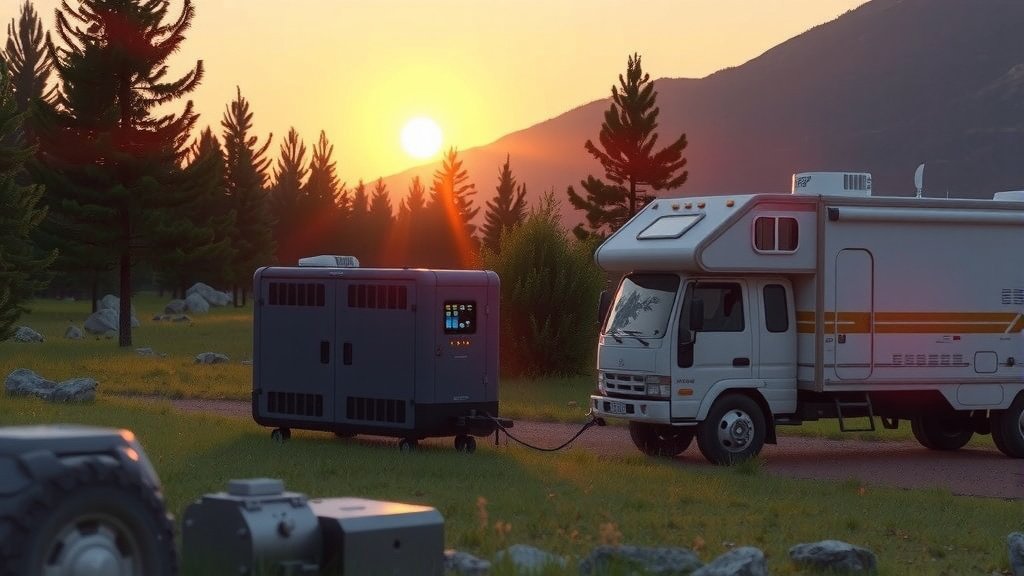
The best portable power station for truck camping is one that balances sufficient power capacity with portability, ruggedness, and diverse output ports to charge all your essential devices.
To choose the ideal portable power station for truck camping, consider models with LiFePO4 batteries for longevity, at least 500Wh capacity, and solar input capabilities.
TL;DR: Here’s the quick rundown for your truck camping power needs:
- Match your power station’s capacity to your camping gear’s total wattage.
- Look for a variety of outlets: AC, DC, and USB are all important.
- Solar charging compatibility extends your off-grid adventures greatly.
- Prioritize durable designs and safe LiFePO4 battery chemistry.
- Consider the unit’s weight and size for easy packing in your truck.
What Is Best Portable Power Station For Truck Camping?
A portable power station for truck camping is essentially a large, rechargeable battery pack with multiple outlets that can power your electronics and small appliances while you are away from traditional power sources. It acts like a quiet, clean generator, perfect for the great outdoors.
Why Do You Need Power on Your Truck Camping Trips?
Imagine being out under the stars, your truck parked in a scenic spot, but your phone is dead. Or perhaps your mini-fridge stops chilling your snacks. A portable power station makes sure you can keep your essentials running, turning a good trip into a great one. It’s about comfort and convenience.
From charging your camera batteries to running a small coffee maker, these devices are a camper’s best friend. We found that many campers rely on them for everything from safety lights to medical devices (CDC). You are truly prepared for anything.
Beyond the Campsite: Everyday Use
Your power station isn’t just for camping. Think of power outages at home or tailgating events. It’s a versatile tool for emergencies and fun times alike. This makes your investment even more worthwhile, offering peace of mind year-round.
Understanding Your Power Needs: A Simple Checklist
Before you buy, let’s figure out what you’ll power. This helps you select the right size. Just jot down what you plan to bring along:
-
Smartphones and tablets: For navigation and entertainment.
-
Laptops: For remote work or watching movies.
-
Portable fridge/cooler: Keeping food fresh is a must.
-
LED lights: Essential for visibility after dark.
-
Camera batteries: Capturing those stunning views.
-
Small appliances: Like a fan, coffee maker, or CPAP machine.
Knowing your typical power consumption helps you find a station that won’t leave you stranded. You want enough juice for your adventures.
Key Features to Look For in Your Portable Power Station
Choosing the right power station can feel like a puzzle. But don’t worry, we’ll break it down. You want something that meets your specific needs without being overkill or underpowered. It’s all about finding that sweet spot for your truck camping.
Battery Capacity: How Much Juice Do You Really Need?
Capacity is measured in Watt-hours (Wh) or Kilowatt-hours (kWh). A higher number means more power and longer runtimes. For most truck campers, we found that 500Wh to 1000Wh is a great starting point. This can run a fridge for hours or charge many devices.
If you plan extended trips or use high-wattage appliances, you might need more. Consider your total daily power draw, then add a buffer. You don’t want to run out of power when you need it most.
Output Ports: Connecting All Your Gadgets
Your power station should have a variety of ports. This ensures compatibility with all your devices. Look for standard AC outlets, USB-A and USB-C ports, and a 12V DC car port. The more options, the better. You will likely use them all.
Many experts say having at least two AC outlets is ideal for truck camping. This lets you power a mini-fridge and charge a laptop simultaneously. The right port selection makes managing your devices simple.
Charging Options: Staying Powered Off-Grid
How you recharge your power station is just as important as its output. Most units can charge from a wall outlet, your truck’s 12V port, or solar panels. We found that solar charging is a game-changer for extended stays. It offers true freedom from outlets.
Solar Charging: Your Renewable Energy Friend
Pairing your power station with solar panels offers an eco-friendly way to recharge. Look for a unit with a high solar input wattage. This means it can charge faster. You’ll want to ensure the power station is compatible with panels you might use. It’s a sustainable choice for campers.
Battery Type: LiFePO4 vs. Lithium-Ion
There are two main battery types you’ll encounter. Lithium-ion is common, but LiFePO4 (Lithium Iron Phosphate) is increasingly popular for camping. LiFePO4 offers more charge cycles and better safety. It also performs well in wider temperature ranges.
Here’s a quick comparison:
| Feature | LiFePO4 (LFP) | Lithium-Ion (NMC/NCA) |
|---|---|---|
| Lifespan (Cycles) | 3,000 – 6,000+ | 500 – 1,000 |
| Safety | Very stable, low fire risk | Higher risk under stress |
| Weight | Slightly heavier | Lighter |
| Cost | Often higher initially | Generally lower initially |
| Performance in Cold | Better | Degrades more quickly |
Many experts recommend LiFePO4 for its durability and long-term value. It’s a smart choice if you plan on frequent use.
Durability and Portability: Built for the Road
Your power station will live in your truck and at campsites. So, it needs to be tough. Look for a sturdy exterior, perhaps with reinforced corners. A comfortable handle is also important for moving it around. You want it to withstand bumps and scrapes.
Consider the unit’s weight and size. Will it fit easily in your truck bed or cab? You want a balance between power and portability. A heavy unit can be a hassle, but a tiny one might lack the power you need. Find the right fit for your adventures.
Top Considerations When Choosing Your Camping Companion
Beyond the technical specs, think about how you’ll actually use the power station. These practical points often make the biggest difference in your camping experience. It’s about making your life easier out on the road.
Budget: Finding the Right Balance
Portable power stations vary widely in price. While it’s tempting to go for the cheapest option, remember that quality and capacity usually come at a higher cost. Invest in a reputable brand to ensure reliability and safety. It’s often better to spend a little more for peace of mind.
Consider it an investment in your camping comfort and safety. You are buying freedom from reliance on grid power. The right power station can truly make a difference to your trip.
Noise Levels: Quiet Comfort in Nature
Unlike gas generators, portable power stations are generally quiet. But some have cooling fans that can get noisy under heavy load. If silence is important to you, especially when sleeping, check reviews for noise complaints. You want to enjoy the sounds of nature, not a fan.
Safety Features: Protecting Your Gear and Yourself
A good power station will have built-in safety features. Look for protections against overcharge, over-discharge, over-current, and short circuits. These features protect both the power station and your connected devices. You want to feel secure while using it.
Many manufacturers also include a Battery Management System (BMS) for optimal performance and safety. Research often connects robust safety features with reliable long-term use (NIH). This is a non-negotiable aspect of any good unit.
Conclusion
Choosing the best portable power station for truck camping is about understanding your specific power needs and matching them with a unit’s features. Focus on capacity, diverse output ports, flexible charging options like solar, and durable LiFePO4 batteries. By considering these points, you will find a reliable companion that keeps your truck camping adventures powered and enjoyable. Happy travels, and may your batteries always be full!
How much capacity do I need for a portable fridge in my truck?
For a portable fridge, you typically need at least a 500Wh portable power station. Most fridges draw between 40-60 watts, so a 500Wh unit could run a 50W fridge for roughly 8-10 hours, depending on its efficiency and ambient temperature. Many campers find 500-1000Wh to be ideal.
Can I charge my portable power station while driving?
Yes, most portable power stations can be charged via your truck’s 12V cigarette lighter port while you drive. This is an excellent way to top up the battery between campsites. Just ensure you use the correct cable and don’t overload your truck’s power system.
Are portable power stations safe to use inside my truck?
Absolutely. Unlike gas generators, portable power stations produce no fumes, making them safe for indoor use, including inside your truck or tent. Just ensure proper ventilation if the unit has cooling fans, especially if it’s working hard.
How long do portable power stations typically last?
The lifespan depends on the battery type. Lithium-ion batteries often last 500-1000 charge cycles before significant degradation. LiFePO4 batteries are much more durable, lasting 3,000 to over 6,000 cycles. With good care, a quality unit can last many years.
Do I need a separate solar charge controller for my portable power station?
No, most portable power stations come with a built-in solar charge controller. You simply connect compatible solar panels directly to the power station’s solar input port. Always check the manufacturer’s specifications for recommended panel voltage and wattage to ensure compatibility.
