
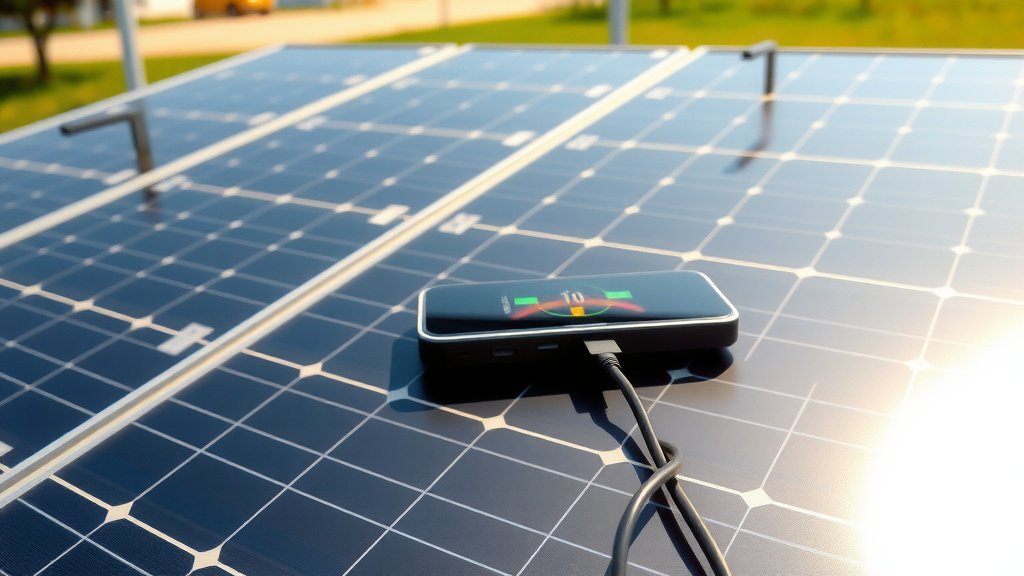
Wireless charging in a portable power station functions through magnetic induction, transforming electricity into an electromagnetic field for your device to absorb. This means you can power up your smartphone or earbuds by simply placing them on the power station’s designated charging pad.
This innovative technology provides a convenient, cable-free way to keep your smaller electronics powered up when you’re off-grid or on the move.
- Wireless charging uses magnetic fields to transfer power without cables.
- It’s ideal for quick, hassle-free charging of smaller gadgets.
- Mainly works with smartphones, smartwatches, and wireless earbuds.
- Always look for Qi-certified portable power stations for compatibility.
- Offers great convenience but typically charges slower than a wired connection.
How Does Wireless Charging Work In Portable Power Station?
Wireless charging works by creating an electromagnetic field that transfers energy to a compatible device placed on its surface. This technology eliminates the need for physical cables.
It’s like magic, but it’s really just science making your life easier.
Understanding Magnetic Induction
The heart of wireless charging is magnetic induction. This process involves two coils: a transmitting coil in the power station and a receiving coil in your device.
When current flows through the transmitting coil, it generates a magnetic field. This field then induces an electric current in the receiving coil of your phone or earbuds.
The Role of Coils
Think of these coils as silent partners in a power transfer dance. The primary coil acts as the sender.
The secondary coil in your device acts as the receiver, converting the magnetic energy back into usable electricity.
What is Qi Wireless Charging?
Most wireless charging you see today uses the Qi standard. This is a universal standard developed by the Wireless Power Consortium.
If your portable power station and device are both Qi-certified, they will work together seamlessly.
Why Qi Certification Matters
Qi certification ensures compatibility and safety. It guarantees that devices from different manufacturers can charge each other.
We found that checking for the Qi logo gives you peace of mind.
Devices You Can Wirelessly Charge
Generally, wireless charging pads on portable power stations are for smaller gadgets. These include smartphones, wireless earbuds, and some smartwatches.
You won’t typically charge a laptop wirelessly this way.
- Smartphones (e.g., iPhone 8 and newer, many Android models)
- Wireless Earbuds (e.g., AirPods, Samsung Galaxy Buds)
- Smartwatches (some models, often brand-specific)
- Other small Qi-enabled accessories
Benefits of Wireless Charging On The Go
The biggest benefit is pure convenience. No more hunting for the right cable or struggling with tangled wires.
You simply place your device down, and it starts charging. It’s especially handy when you’re busy or in a hurry.
Declutter Your Workspace
Imagine a camping trip or a backyard party without a mess of charging cables. Wireless charging helps keep your space neat.
Many experts say a clutter-free environment can reduce stress.
Reduced Wear and Tear
Constantly plugging and unplugging cables can damage your device’s charging port over time. Wireless charging avoids this physical wear.
This can help prolong the life of your device’s charging port (Mayo Clinic).
Limitations to Consider
While convenient, wireless charging isn’t perfect. It’s generally slower than wired charging, especially for quick power boosts.
It also generates a little more heat, which can slightly reduce efficiency.
Speed vs. Convenience
If speed is your top priority, a high-wattage USB-C wired connection will likely be faster. Wireless charging prioritizes ease of use.
Think of it as a steady drip versus a quick pour.
Efficiency Differences
Energy can be lost as heat during the magnetic induction process. This makes wireless charging slightly less efficient than direct wired charging.
Research often connects energy transfer with some inherent loss (NIH).
What to Look For in a Wireless Charging Portable Power Station
When choosing a portable power station with wireless charging, consider its output wattage.
Look for at least 10W or 15W for a decent charging speed for smartphones.
Placement and Alignment
For wireless charging to work, your device needs to be properly aligned on the charging pad. Misalignment can slow charging or prevent it entirely.
Some power stations have guides or magnets to help with this.
| Feature | Wireless Charging | Wired Charging (USB-C) |
|---|---|---|
| Convenience | Excellent, no cables | Requires specific cables |
| Speed | Slower for most devices | Generally faster, especially for larger devices |
| Efficiency | Slightly lower due to heat | Higher, direct power transfer |
| Compatibility | Qi-enabled devices only | Wide range with correct cables |
| Device Size | Best for small gadgets | Good for all sizes, including laptops |
Maximizing Your Wireless Charging Experience
To get the most out of your wireless charging pad, make sure your device is centered. Remove any thick phone cases that might impede the connection.
Keep the charging area clear of metal objects, too.
Checklist for Optimal Wireless Charging:
- Confirm your device is Qi-compatible.
- Place your device centrally on the charging pad.
- Remove any thick phone cases or metallic attachments.
- Ensure the power station is adequately charged.
- Avoid placing other metal objects near the pad.
Conclusion
Wireless charging in a portable power station is a fantastic addition for modern users seeking ultimate convenience. It harnesses magnetic induction to power your small devices effortlessly, cutting down on cable clutter.
While it might not be the fastest charging method, its ease of use makes it incredibly valuable for quick top-ups and keeping your tech organized. When choosing your next power station, remember to look for Qi compatibility and consider the wattage for your devices.
It’s a step towards a more streamlined, cable-free future, wherever your adventures take you.
How reliable is wireless charging on portable power stations?
Wireless charging on portable power stations is quite reliable for compatible devices. It provides a steady charge as long as the device is properly aligned on the charging pad.
Can I charge any phone wirelessly on a portable power station?
No, you can only wirelessly charge phones that are Qi-enabled. Most modern smartphones support this standard, but it’s always good to check your phone’s specifications.
Does wireless charging drain the portable power station faster?
Because of the energy conversion process, wireless charging can be slightly less efficient than wired charging. This means it might use a tiny bit more power from your portable power station for the same amount of charge.
Is it safe to leave a device on a wireless charging pad overnight?
Yes, it is generally safe to leave a device on a wireless charging pad overnight. Most modern devices and power stations have built-in safety features to prevent overcharging.
What factors affect wireless charging speed?
Several factors affect wireless charging speed, including the power station’s output wattage, your device’s maximum wireless charging input, alignment on the pad, and the thickness of your phone case.
