
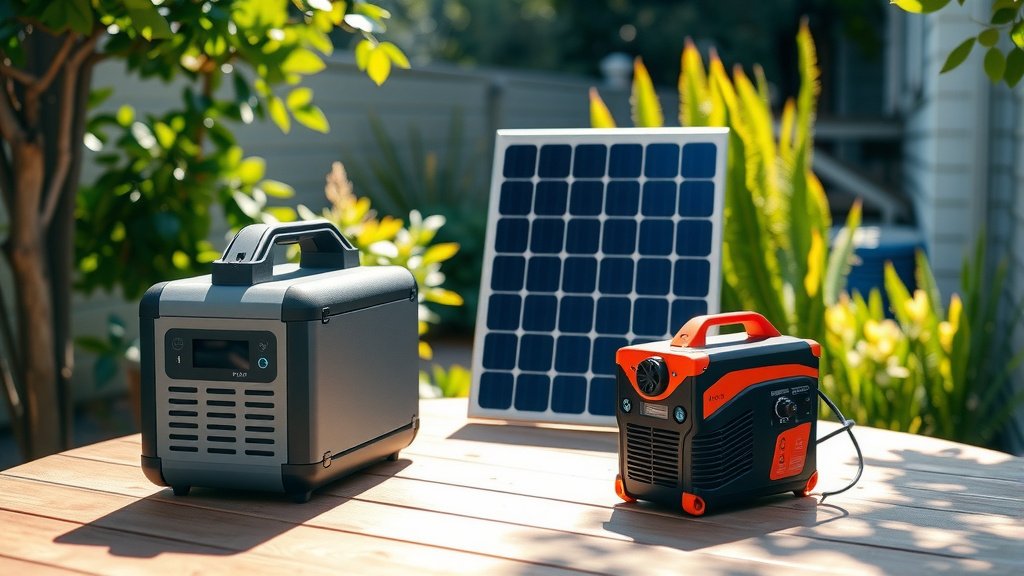
The maintenance cost for a portable power station is typically very low, often close to zero for most users over its lifespan.
Unlike traditional generators, these units have few moving parts, which greatly reduces the need for expensive routine upkeep.
- Maintenance costs for portable power stations are generally minimal or non-existent.
- The main “cost” is your attention to proper charging, storage, and cleaning habits.
- You won’t deal with oil changes, spark plugs, or fuel filters like a gas generator.
- Good care extends battery life, which is the most critical part of your unit.
- Any actual repair costs are usually covered by warranty, or are rare outside of it.
How Much Does Maintenance Cost For Portable Power Station?
You’ll be happy to know that maintenance costs for a portable power station are remarkably low. Most users spend little to no money on maintenance.
Your main investment is simply time and good habits. Think of it more as care rather than traditional servicing.
Why Portable Power Stations Are Low Maintenance
Portable power stations operate very differently from a noisy gas generator. They lack internal combustion engines.
This means no oil changes, no fuel filters to replace, and no spark plugs to clean. We found this design simplifies ownership greatly.
The core components, like the battery cells and inverter, are usually sealed units. You generally don’t open them up for routine service.
Understanding “Maintenance” in This Context
For these devices, “maintenance” largely refers to how you use and store your unit. It’s about protecting the internal battery.
Imagine your smartphone or laptop battery. Do you “maintain” it? Not really, you just charge it correctly and keep it safe.
Your portable power station needs a similar kind of thoughtful care. Many experts agree that proper usage is key.
Minimal Direct Costs
You won’t find yourself buying special fluids or parts for routine upkeep. There are no regular service appointments needed.
The occasional expense might be a replacement charging cable if yours gets damaged. These are generally inexpensive.
Compared to other power solutions, the ongoing cost burden is almost invisible. It’s truly a set-it-and-forget-it kind of device in many ways.
The Hidden “Costs”: Your Time and Good Habits
While monetary costs are low, there’s an investment of your attention. This helps maximize your unit’s lifespan.
Think of it as nurturing a plant rather than repairing a car. Small, consistent efforts yield big results.
Your habits directly impact the longevity and performance. This is where your personal “cost” comes in.
Battery Health is Key
The battery is the heart of your portable power station. Keeping it healthy is your primary maintenance task.
This means avoiding deep discharges often. Try not to let the battery frequently drop below 20% charge.
Also, don’t leave it fully charged for months without use. Aim for a 50-80% charge level for long-term storage.
Many manufacturers’ guidelines recommend these practices for optimal battery life (Industry Best Practices).
Proper Storage Matters
Where you store your power station makes a difference. Extreme temperatures are its enemy.
Keep it in a cool, dry place away from direct sunlight. An insulated garage or closet is often ideal.
Research indicates that extreme heat or cold can degrade battery capacity over time (Battery Technology Insights).
Comparing Costs: Portable Power Station vs. Gas Generator
Let’s put this into perspective. Consider the ongoing expenses of a traditional gas generator.
The difference is stark when you look at the whole picture. Your wallet will certainly feel the impact.
Here’s a quick comparison of potential maintenance costs and tasks:
| Maintenance Aspect | Portable Power Station | Gas Generator |
|---|---|---|
| Oil Changes | None | Regularly needed (e.g., every 50-100 hours) |
| Spark Plugs | None | Inspected, cleaned, or replaced regularly |
| Air Filter | None (usually) | Cleaned or replaced often |
| Fuel Filter | None | Replaced periodically |
| Fuel Stabilizer | None | Needed for fuel storage |
| Engine Tune-ups | None | Often recommended |
| Cleaning | Wipe exterior | Clean engine, exhaust, fuel system |
| Cost of Parts/Fluids | Near zero | Significant recurring costs |
What About Accessories?
Sometimes you might choose to buy accessories. Maybe a longer solar charging cable or a protective carrying case.
These are additions, not maintenance requirements. They enhance your experience but aren’t necessary for the unit’s core function.
Think of them like phone cases; they’re optional ways to protect your investment.
Rare Repair Scenarios
What if your portable power station stops working? This is typically due to a defect or accidental damage, not lack of maintenance.
Many units come with a good warranty, often 2-5 years. This covers manufacturing flaws without cost to you.
Outside of warranty, a repair might involve replacing a specific component. This is rare and depends on the unit’s design.
We found that user-serviceable parts are uncommon. Most repairs require sending it to a service center.
Extending Your Portable Power Station’s Lifespan
You can significantly impact how long your unit lasts. A little care goes a long way here.
Treating your power station well minimizes any potential future issues. It’s about being a responsible owner.
Consider this checklist to keep your portable power station happy and healthy:
- Store it in a cool, dry place.
- Avoid extremely hot or cold environments.
- Keep it charged between 50-80% for long-term storage.
- Don’t fully drain the battery too often.
- Clean the exterior regularly with a soft, dry cloth.
- Keep ports free of dust and debris.
- Avoid dropping or subjecting it to harsh impacts.
The Real Value Proposition
The minimal maintenance cost is a major benefit of portable power stations. It simplifies your life.
You save money on fuel, parts, and professional servicing. Your time is also freed up for other things.
This makes these units a smart, low-hassle investment for emergency backup or outdoor adventures.
Conclusion
So, how much does maintenance cost for a portable power station? The answer is usually very little, if anything at all. Your focus should be on consistent, mindful use and proper storage rather than scheduled service. By following simple care routines, you ensure your portable power station remains a reliable, cost-effective power source for years to come. It’s an investment that truly pays you back in convenience and peace of mind.
How often do I need to charge a portable power station?
You should aim to charge your portable power station every 3-6 months if it’s in storage, keeping its charge level between 50-80%. Avoid leaving it fully discharged or fully charged for extended periods to protect battery health.
Can I use a portable power station in the rain?
Most portable power stations are not waterproof and should not be used in the rain or wet conditions. Check your specific model’s IP rating; if it’s not rated for water resistance, keep it dry to prevent damage.
Is it okay to leave my portable power station plugged in all the time?
Many modern portable power stations have advanced battery management systems that prevent overcharging. However, for optimal battery longevity, many experts recommend not keeping it plugged in 24/7. Refer to your manufacturer’s specific guidelines.
What should I do if my portable power station gets hot?
It’s normal for portable power stations to get warm during heavy use or charging. If it feels excessively hot or you notice a burning smell, disconnect it immediately and contact the manufacturer’s support. Ensure it has good ventilation during operation.
Do portable power stations lose charge when not in use?
Yes, all batteries experience a phenomenon called “self-discharge,” meaning they slowly lose charge even when not in use. The rate varies by battery chemistry and model, but it’s why periodic recharging during storage is important.
