
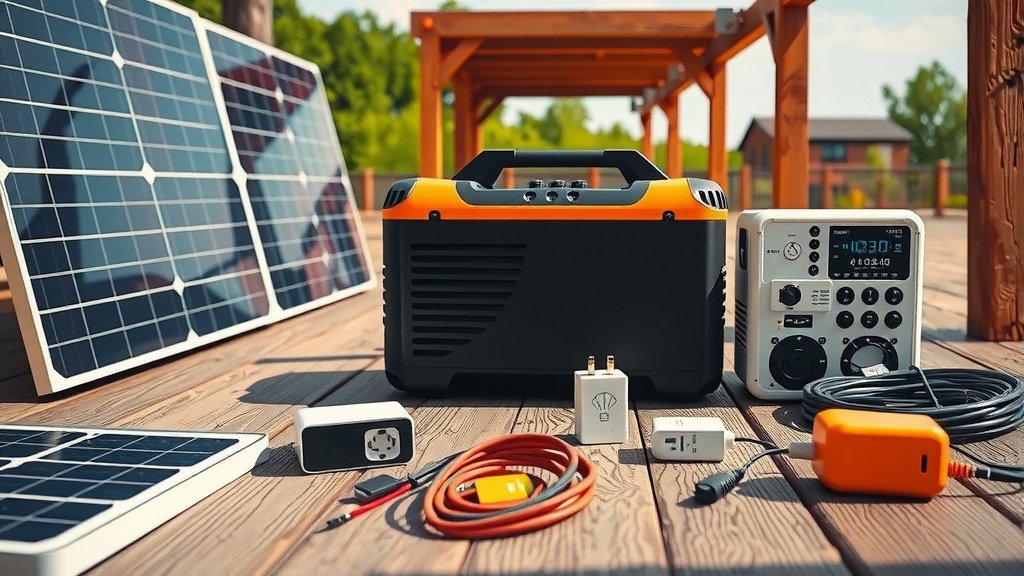
Essential solar generator accessories include robust solar panels, appropriate connection cables, various adapters, and surge protectors. These items are crucial for efficient power generation, safe operation, and expanding the capabilities of your system for different uses.
To optimize your solar generator setup, you will primarily need accessories for solar panel connectivity, power distribution, and overall system protection. Investing in the right supporting equipment ensures you get the most out of your clean energy source, whether for home backup or outdoor adventures.
- Solar generators require specific accessories for optimal function and versatility.
- Key items include correct cables, various adapters, and parallel kits for expanded power.
- Safety equipment such as surge protectors is very important for device protection.
- Consider battery expansion packs for longer power duration and increased capacity.
- Proper storage and cleaning accessories help maintain your system’s longevity.
What Accessories Are Needed For Solar Generator?
When you invest in a solar generator, you are getting the core power unit. However, a truly functional and versatile system relies on a selection of accessories. Think of it like a puzzle; each piece helps you get the most out of your clean energy machine.
Powering Up Your Solar Generator: The Solar Panel Essentials
Your solar generator is only as good as its solar input. While some units come bundled with panels, often you will want specific types or additional ones. We found that the right panels make a big difference in charging speed (Energy.gov).
Connecting Your Panels: Cables and Connectors
Solar panels need a way to send power to your generator. This means you will need **reliable cables and connectors**. MC4 connectors are very common for linking panels to each other or to the generator itself. Always check your generator’s input port type.
Sometimes you need an adapter cable, like an MC4 to DC 8mm or MC4 to Anderson connector. These ensure compatibility if your panel’s output does not match your generator’s input directly. **Compatibility is key** here, preventing frustration.
Getting More Power: Parallel Cables and Adapters
Want to charge faster or with more panels? Parallel cables allow you to link multiple solar panels together. This boosts the total wattage output, sending more power to your generator. Many experts say this is how you **speed up charging significantly**.
Check your generator’s specifications to see if it supports parallel charging. Not all units can handle multiple panels. When it does, using a parallel adapter ensures all panels work together efficiently, maximizing your **solar harvest**. We found this setup works wonders for faster recharges.
Extending Your Reach: Essential Cables and Adapters
Solar generators are about freedom, but that freedom often requires reaching your devices. You will need a variety of cables to connect different gadgets. This is where your everyday power needs meet your portable energy source.
For AC Devices: Heavy-Duty Extension Cords
When powering larger appliances, a **heavy-duty extension cord** is a must. These cords allow you to place your generator in a safe, outdoor spot while still using your devices indoors. Just make sure the cord can handle the wattage of your appliances.
Using undersized cords can cause overheating and inefficiency. We found that a good quality, thicker gauge cord **protects both your devices and generator**. It is a small investment that prevents big problems.
USB Power: Diverse USB Cables
Almost everyone has USB-powered devices: phones, tablets, smartwatches. Your solar generator likely has USB-A and USB-C ports. Having a variety of **USB cables** (Type-A to C, Type-C to C, Lightning) means you can charge everything. Don’t get caught without the right one.
Consider carrying a few spares, too. Cables can get lost or damaged, especially outdoors. Having extra USB cords ensures your **communication devices stay charged** no matter what.
Boosting Capacity: Battery Expansion Packs
Sometimes you need more power than your base generator offers. This is where battery expansion packs shine. These are external batteries that connect to your main unit, **significantly extending its runtime**.
How They Work: Seamless Integration
Expansion batteries typically connect via a specific port on your solar generator. They act as an extra reservoir of power. Many manufacturers design these to be **plug-and-play**, making them easy to attach when you need more juice. Research often connects these packs with greater self-sufficiency (Consumer Reports).
If you plan on multi-day trips or need longer backup power, an expansion pack is a wise addition. It gives you the flexibility to **adapt your power supply** to your needs. This means less worry about running out of power.
Protecting Your Investment: Safety First
Your solar generator is a valuable tool. Protecting it and the devices you connect to it is important. Safety accessories provide peace of mind and help prolong the life of your equipment.
Guarding Against Spikes: Surge Protectors
Just like with grid power, electrical surges can happen. A **good quality surge protector** placed between your solar generator and sensitive electronics can prevent damage. This is especially true for laptops, medical devices, or home entertainment systems.
It is an inexpensive way to **safeguard your costly devices**. We found that many people overlook this simple step. Don’t make that mistake when relying on portable power.
Securing Your Setup: Grounding and Locks
Some larger solar generators or sensitive electronics may benefit from proper grounding. While many portable units are designed for safe operation without external grounding, always check your specific model’s manual. A **grounding rod and clamp** could be important in certain setups.
For security against theft, especially if your generator is left unattended, consider a **security cable and lock**. These simple devices can deter opportunistic thieves. Protecting your investment goes beyond just electrical safety.
Keeping It Clean and Organized: Maintenance & Storage
Longevity for your solar generator means proper care. This includes keeping it clean, storing it correctly, and having the right tools for organization.
Cleaning Supplies for Panels
Dirty solar panels are less efficient. Dust, pollen, and grime can reduce power output. A **soft brush, microfiber cloths, and mild, non-abrasive cleaning solution** are essential. Keep your panels sparkling for optimal performance.
Regular cleaning, particularly after dusty conditions, helps maintain peak charging efficiency. It’s a simple task that has a **big impact on power generation**. Many experts agree on the benefits of clean panels.
Carrying Cases and Covers
When transporting your generator, a **durable carrying case or bag** protects it from bumps and scratches. For storage, a cover can shield it from dust and moisture. These accessories keep your unit looking good and functioning well for longer.
A good case often has compartments for cables and smaller accessories. This keeps everything organized and ready to go. You will appreciate the **convenience and protection** these items offer.
Mobile Solutions: Carts and Trolleys
Solar generators can be heavy, especially larger models or those with expansion batteries. A **utility cart or foldable trolley** makes moving your setup much easier. Save your back and streamline transportation.
This is particularly useful if you are moving the generator from storage to an outdoor charging spot regularly. We found that a simple cart can **greatly improve portability** and ease of use. It transforms a heavy lift into a simple roll.
The Checklist for Your Solar Generator Setup
To make sure you have everything you need, here’s a quick checklist of **recommended accessories** for your solar generator:
- Compatible MC4 or other **panel connection cables**
- **Adapter cables** (e.g., MC4 to DC 8mm, Anderson)
- **Parallel connection cables** (if expanding panels)
- **Heavy-duty extension cords** for AC devices
- Variety of **USB charging cables** (A, C, Lightning)
- Matching **battery expansion pack** (if desired)
- **Surge protector** for sensitive electronics
- **Security cable and lock**
- **Panel cleaning kit** (brush, cloth, solution)
- **Protective carrying case** or cover
- **Foldable utility cart** or trolley (for heavy units)
Choosing the Right Accessories for Your Needs
Your ideal accessory list depends on how you plan to use your solar generator. Are you camping, preparing for power outages, or working remotely? Each scenario might require a slightly different focus. **Prioritize based on your primary use.**
Consider the environment you’ll be in. Dusty areas mean more cleaning. Remote locations might push you towards battery expansion. Think about the devices you need to power. **Matching accessories to your lifestyle** makes all the difference.
Conclusion
Equipping your solar generator with the right accessories transforms it from a basic power unit into a versatile, reliable energy solution. From ensuring efficient solar charging with proper cables to protecting your valuable electronics with surge protectors, each accessory plays a part. Thinking ahead about your needs and making smart additions will help you **maximize your solar investment**. So, take stock, plan wisely, and enjoy the freedom of portable, clean power!
Can I use any solar panel with my solar generator?
Not always. Solar generators have specific input voltage and connector types. You need to match the panel’s output voltage to your generator’s accepted range and ensure the connectors are compatible, or use an adapter cable. Always check your generator’s manual.
How do I know if I need a battery expansion pack?
You need a battery expansion pack if you consistently find yourself running out of power before your generator can recharge, or if you plan longer trips/outages. It is ideal for extending runtime when you need power for more hours without direct sunlight or frequent recharges.
Are surge protectors really necessary with a solar generator?
Yes, surge protectors are highly recommended. While solar generators often have built-in safety features, an external surge protector adds an extra layer of defense for your sensitive electronics against unexpected power spikes or fluctuations, much like with grid power.
What is the most common cable type for connecting solar panels?
The MC4 connector is the most common type for connecting solar panels. Many panels and even some generators use MC4, or they come with adapters to convert MC4 to another common input type like DC 8mm or Anderson connectors.
How often should I clean my solar panels?
The frequency depends on your environment. In dusty, pollen-heavy, or coastal areas, cleaning every few weeks or monthly might be beneficial. In cleaner environments, quarterly cleaning could suffice. A simple visual inspection will usually tell you if they are dirty.
