
Yes, you absolutely can run a fridge on a portable power station, making it a great solution for emergencies or off-grid adventures. We found that most modern power stations can handle the power demands of many refrigerators, but you’ll need the right setup.
Keeping your food cold when the power goes out or when you’re camping is a big deal. A reliable portable power station means you won’t have to worry about spoiled groceries or warm drinks. It offers peace of mind and convenience in many situations.
- Portable power stations can run fridges.
- Matching power station size to your fridge is key.
- Look at wattage and battery capacity.
- Great for outages, camping, and RVs.
- Not all fridges or power stations are a perfect match.
Ready to keep your cool? Let’s dive into exactly what you need to know to make sure your fridge stays powered up with a portable power station.
Powering Your Fridge with a Portable Power Station
You can absolutely use a portable power station to run your refrigerator. This setup is a lifesaver during power outages or when you’re off-grid. But it’s not just about plugging it in. You need to pick the right power station for your specific fridge.
Understanding Your Fridge’s Power Needs
Before buying a power station, you need to know how much power your fridge uses. Refrigerators have two main power ratings: starting wattage and running wattage. The starting wattage, also called surge wattage, is much higher. It’s the brief burst of power needed when the compressor first kicks on. Running wattage is the power it uses constantly once it’s running smoothly.
You can usually find these numbers on a sticker inside your fridge or on its back. Look for watts (W) or amps (A) and volts (V). If you only see amps and volts, multiply them to get watts (W = A x V).
Why Starting Wattage Matters Most
Imagine pushing a heavy car. It takes a lot more force to get it moving than to keep it rolling. A fridge’s compressor is similar. It needs a big surge of power to start. Your power station must be able to handle this initial surge. If it can’t, it will simply shut down.
Most refrigerators will have a running wattage between 100-200 watts. Their starting wattage can be anywhere from 800-1200 watts, sometimes even higher. This surge capability is a crucial factor when selecting your power station.
Average Fridge Wattage Examples
We did some research and found general wattage estimates for common fridge types. Keep in mind, these are averages. Your specific model may vary.
| Fridge Type | Running Wattage (W) | Starting/Surge Wattage (W) |
|---|---|---|
| Mini Fridge | 50-80 W | 200-400 W |
| Compact Fridge | 80-150 W | 400-800 W |
| Standard Refrigerator (15-20 cu ft) | 100-200 W | 800-1200 W |
| Large Side-by-Side/French Door | 150-250 W | 1000-1500 W |
As you can see, even a small mini-fridge needs a decent surge to start. Always check your fridge’s label for the most accurate numbers.
Choosing the Right Portable Power Station
Now that you know your fridge’s power demands, let’s talk about picking the perfect power station. It needs to meet two main criteria: enough output power and sufficient battery capacity.
Output Power (Wattage Rating)
The power station’s output wattage rating tells you how much power it can deliver at any given moment. This number must be higher than your fridge’s starting wattage. If your fridge needs 1000W to start, your power station should have an output of at least 1000W, preferably a bit more for a buffer.
Many portable power stations advertise a continuous output wattage and a separate surge wattage. Make sure the surge wattage capability of the power station exceeds your fridge’s starting wattage. This is where many people make mistakes.
Battery Capacity (Watt-Hours)
Once your fridge is running, it will draw its running wattage. The battery capacity, measured in watt-hours (Wh), determines how long the power station can keep your fridge running. Think of it like the gas tank in a car. A bigger tank means you can drive longer.
To estimate how long your power station will run your fridge, you’ll need to do a little math. Let’s say your fridge runs at 150 watts, but it only runs about 30% of the time to maintain temperature. This is a common estimate, though it varies. So, it effectively uses (150 W * 0.30) = 45 watts on average over time.
If your power station has a 1000 Wh battery, it could theoretically run your fridge for 1000 Wh / 45 W = approximately 22 hours. Always factor in some efficiency loss, so realistically, you might get closer to 18-20 hours.
Inverter Type: Pure Sine Wave is Best
Most modern portable power stations come with a built-in inverter. This changes the DC power from the battery into AC power that your fridge uses. There are two main types: modified sine wave and pure sine wave. We always recommend a pure sine wave inverter for refrigerators and other sensitive electronics.
A pure sine wave inverter produces cleaner, smoother power, just like the electricity from your wall outlets. Modified sine wave inverters produce a choppier waveform. While some older, less sensitive appliances might tolerate it, running a fridge on a modified sine wave inverter can potentially shorten its lifespan or cause it to run less efficiently (U.S. Department of Energy).
Setting Up Your Fridge with a Power Station
You’ve got your power station and your fridge. Now what? Getting them connected correctly is straightforward, but a few tips can help you maximize efficiency and keep your food cold longer.
Maximizing Fridge Efficiency
Even with the right power station, you want to get the most out of every watt-hour. A few simple tricks can help your fridge sip power instead of gulping it.
- Pre-cool your fridge: If possible, cool your fridge on wall power before switching to the power station. It takes more energy to cool warm food and air than to maintain a cold temperature.
- Fill it up: A full fridge stays colder longer. If your fridge isn’t full of food, fill empty spaces with water bottles or ice packs. This reduces the amount of cold air that escapes when the door opens.
- Limit door openings: Every time you open the fridge door, cold air rushes out and warm air rushes in. Try to plan what you need and grab it all at once.
- Check door seals: Make sure your fridge door seals are tight. A loose seal lets cold air escape constantly, wasting precious battery life.
- Keep it in a cool place: If your fridge is in a hot garage or direct sunlight, it will work much harder to stay cool. Move it to the coolest spot available if you can.
Practical Considerations and Safety
When dealing with electricity and appliances, safety is always first. Follow these simple guidelines.
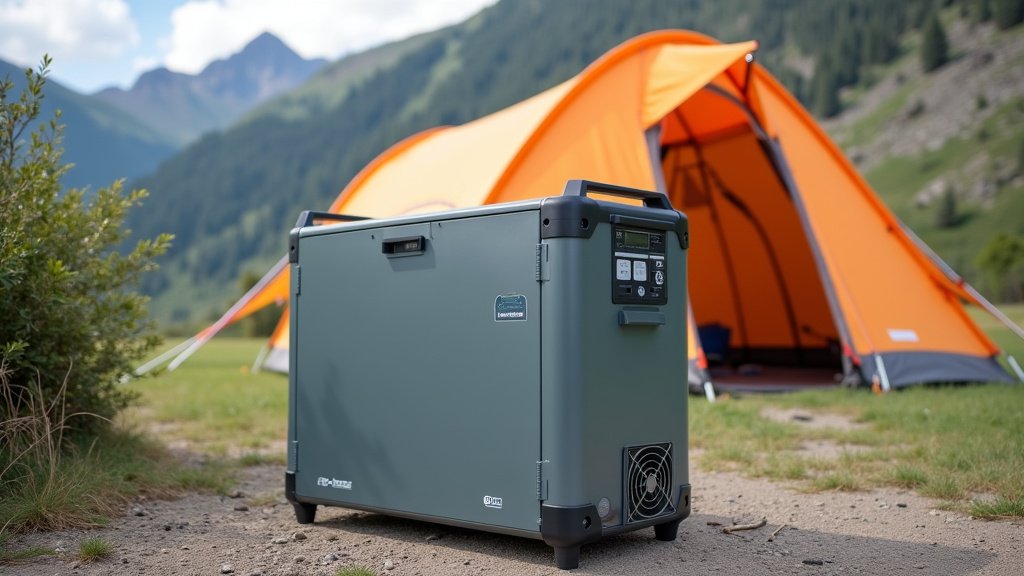
- Ventilation: Ensure your power station has plenty of airflow. They can generate heat, especially when under load. Don’t cover it or place it in an enclosed space.
- Charging: Keep your power station charged! It’s like having a full gas tank before a long trip. Charge it regularly, even if it’s just sitting in storage, to extend its battery life.
- Avoid daisy-chaining: Don’t plug multiple extension cords or power strips into your power station. Plug your fridge directly into the power station’s AC outlet.
- Weather protection: If using outdoors, protect your power station from rain, direct sunlight, and extreme temperatures.
- Monitor performance: Keep an eye on your power station’s display. Most will show real-time power draw and remaining battery life. This helps you manage your usage.
We found that portable power stations are generally safe to use when following manufacturer instructions. Always refer to your specific power station’s manual for detailed safety information.
Ready to Get Started? Your Fridge Power Checklist
Before you commit to a portable power station for your fridge, here’s a quick checklist to ensure you’re making the best choice:
- Know your fridge’s running wattage.
- Know your fridge’s starting (surge) wattage.
- Choose a power station with an output wattage greater than your fridge’s starting wattage.
- Select a power station with enough watt-hours (Wh) capacity for your desired run time.
- Ensure the power station has a pure sine wave inverter.
- Consider how you’ll recharge the power station (solar, car, wall outlet).
By following these steps, you’ll be well-prepared to keep your fridge running and your food fresh, no matter the circumstances.
Conclusion
You’ve seen that powering your fridge with a portable power station is definitely achievable. By understanding your fridge’s specific wattage needs and carefully choosing a power station with the right output and capacity, you can ensure your food stays cold during emergencies or off-grid adventures. Remember to prioritize pure sine wave inverters for optimal performance and efficiency. Use our tips to maximize your fridge’s run time and always keep safety in mind. Now you’re equipped to make an informed decision and keep things chilling, wherever you are!
Frequently Asked Questions
Can a small portable power station run a mini-fridge?
Yes, many smaller portable power stations can run a mini-fridge. You’ll need to check the mini-fridge’s starting wattage and ensure the power station’s surge output can handle it. Calculate the run time based on the power station’s watt-hours.
How can I make my power station run my fridge longer?
To extend run time, pre-cool your fridge on wall power before switching to the power station. Keep the fridge full, limit door openings, and ensure door seals are tight. Placing the fridge in a cool, shaded area also helps significantly.
Is it bad for my fridge to run on a portable power station?
Not if you use a power station with a pure sine wave inverter. This provides clean power similar to your home outlet. Using a modified sine wave inverter, however, can potentially stress your fridge’s compressor over time.
How often should I charge my portable power station when running a fridge?
You should aim to keep your power station charged as much as possible, ideally before its battery gets critically low. Monitoring the power station’s display for remaining battery life is key. Some can be charged while in use (pass-through charging).
Do portable power stations lose efficiency in very cold or hot weather?
Yes, extreme temperatures can affect a portable power station’s performance and battery life. Very cold weather can reduce battery capacity, while excessive heat can cause the unit to overheat or reduce its overall lifespan. Keep it in a moderate environment when possible.
