
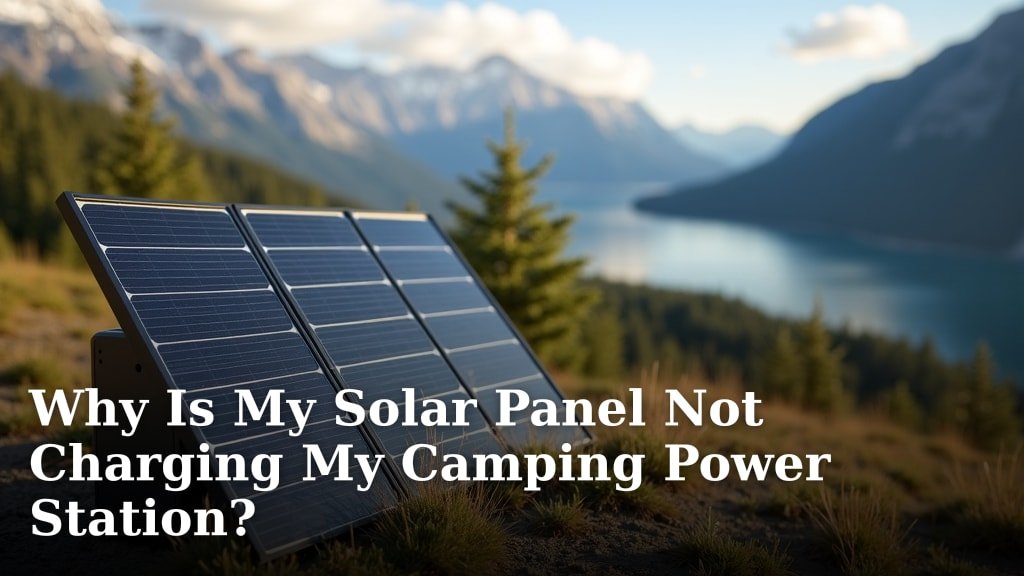
Your solar panel is not charging your camping power station because of common issues like a dirty panel, a bad connection, or a lack of sunlight. It’s often a simple fix once you know what to look for. Don’t worry, we’ll get you powered up again.
You’re probably out camping, expecting your gear to just work, right? It can be super frustrating when your solar panel isn’t performing as expected. We found that most problems stem from preventable causes like shading or incorrect wiring. Let’s figure out what’s going on.
- Dirty panels reduce power.
- Check all cables and connections.
- Angle your panel correctly towards the sun.
- Ensure your power station isn’t full.
- Panel or power station might be faulty.
Below, we break down everything you need to know about why your solar panel isn’t charging your camping power station and how to troubleshoot it, step by step. We’ll help you diagnose the problem and get back to enjoying off-grid power.
Diagnosing Solar Panel Charging Problems
You’re ready for adventure, but your solar panel isn’t cooperating. This section helps you pinpoint exactly why your panel isn’t charging your camping power station. We’ll start with the most common and easiest checks.
Is Your Solar Panel Getting Enough Sunlight?
This might seem obvious, but it’s often the root of the problem. Your solar panel needs direct, unobstructed sunlight to generate its full power. Even partial shading can drastically reduce output.
Shading and Obstructions
A single leaf, a tree branch, or even a cloud can reduce your panel’s efficiency. Think of it like a garden hose; if you kink it, less water comes out. We found that even a 10% shaded area can cut a panel’s power by more than half. Are there any shadows falling across your panel?
Panel Orientation and Angle
Solar panels perform best when they are perpendicular to the sun’s rays. As the sun moves, you might need to adjust your panel’s angle. During midday, a flatter angle might work. In the morning or late afternoon, a steeper angle is usually better. Many experts recommend adjusting your panel every few hours for optimal charging (National Renewable Energy Laboratory).
Time of Day and Weather Conditions
The sun’s intensity varies throughout the day. You’ll get the most power around noon. Early mornings, late afternoons, and cloudy days will naturally produce less energy. Is it a particularly cloudy day? Are you trying to charge early or late?
Checking Your Equipment: Connections and Cables
Even a tiny flaw in your wiring can stop the charge. We often see issues with connections that appear fine but are secretly failing. Let’s make sure everything is snug and clean.
Loose or Damaged Connections
Go through every single connection point. Are all the cables securely plugged into your solar panel and your power station? Wiggle them gently to see if they’re loose. We found that corroded or dirty terminals can also prevent a good electrical flow. Sometimes, simply unplugging and replugging them can fix the issue.
Faulty or Incorrect Cables
Not all cables are created equal. Are you using the correct cable type and gauge for your solar panel and power station? Check for any visible damage on the cable itself – kinks, cuts, or frayed wires. A damaged cable acts like a broken bridge, stopping the electricity from reaching its destination.
Here’s a quick checklist for your cables:
- Are the cables rated for outdoor use?
- Are they the correct gauge (thickness) for your panel’s output?
- Is there any visible damage to the insulation?
- Are the connectors clean and free of rust or dirt?
Is Your Solar Panel Clean?
Dirt, dust, bird droppings, and even pollen can build up on your solar panel’s surface. This acts like a filter, blocking sunlight from reaching the photovoltaic cells. It’s similar to trying to see through a dirty window – the view just isn’t as clear.
We found that even a thin layer of dust can reduce a panel’s output by 10-20% (Energy.gov). A simple wipe-down with a damp cloth can often restore full functionality. Make sure to use clean water and avoid abrasive materials that could scratch the panel.
Power Station Status and Settings
Sometimes, the problem isn’t the solar panel at all. Your camping power station might be preventing the charge for its own reasons.
Battery Full or Overheating
Is your power station already fully charged? Many power stations will stop accepting a charge once they reach 100% to prevent overcharging. Also, check if your power station is getting too hot. Extreme temperatures can trigger safety shutdowns, preventing charging. Try moving it to a cooler, shaded spot.
Input/Output Settings
Does your power station have different input settings or modes? Some power stations have specific settings for solar charging. Double-check your user manual to make sure you haven’t accidentally switched it to an AC input mode or a different charging profile. It’s like trying to fill a gas tank with a diesel pump; the system won’t accept it.
Understanding Solar Panel and Power Station Compatibility
Not all solar panels work with all power stations. This is a common pitfall. Voltage and wattage need to match up correctly, like fitting a lock and key.
Voltage and Wattage Mismatch
Your solar panel needs to provide the correct voltage range for your power station’s input. If the voltage is too low, the power station won’t recognize it. If it’s too high, it could damage the power station. Check your power station’s manual for its acceptable solar input voltage and wattage. Then, compare this to your solar panel’s specifications. A power station might require 12V-24V input, but your panel only puts out 5V; that’s a mismatch.
| Issue | Potential Cause | Troubleshooting Step |
|---|---|---|
| No Charge | Shaded Panel | Move panel to direct sunlight. |
| Slow Charge | Dirty Panel | Clean panel surface. |
| Intermittent Charge | Loose Cable | Secure all connections. |
| No Charge | Wrong Voltage | Check panel & station specs. |
| No Charge | Full Battery | Check power station’s charge level. |
When to Suspect a Faulty Component
You’ve tried everything else, and your panel still isn’t charging. Now it might be time to consider if a component is broken. This is less common, but it does happen.
Faulty Solar Panel
Solar panels are generally durable, but they can fail. Look for any visible damage like cracks in the glass or discoloration under the surface. If you have a multimeter, you can test the panel’s open-circuit voltage (Voc) and short-circuit current (Isc) in direct sunlight. If these readings are significantly lower than the panel’s specifications, your panel might be faulty.
Faulty Charge Controller (if external)
Some solar panels or power stations use an external charge controller. This device regulates the power flowing from the panel to the battery. If the charge controller is faulty, it won’t allow the power to pass through. These can be tricky to test without specialized equipment, but you can try bypassing it (if safe and recommended by your manufacturer) to see if the panel charges directly.
Faulty Power Station Input
The solar input port on your power station could be damaged. You can test this by trying to charge the power station with an AC wall charger. If it charges normally via AC, but not via solar (after all other checks), the solar input port or its internal components might be the problem.
You might need to contact the manufacturer for further diagnostics or repair if you suspect a faulty component. Remember, trying to fix internal electronics yourself can void warranties and be unsafe.
Troubleshooting Checklist to Get You Charging Again
Before you pack up and head home, run through this quick checklist. We’ve seen these simple steps solve most solar charging woes in the field.
- Check for Shade: Ensure your panel has full, direct sunlight.
- Clean the Panel: Wipe off any dirt, dust, or debris.
- Secure All Connections: Firmly plug in every cable.
- Inspect Cables: Look for damage like cuts or kinks.
- Verify Power Station Status: Is it full? Is it overheating?
- Confirm Compatibility: Are the panel voltage and wattage correct for your power station?
Conclusion
Dealing with a solar panel that won’t charge your camping power station can be frustrating, but as we’ve seen, the solution is often simpler than you think. Most issues come down to sunlight, connections, or cleanliness. By systematically checking each potential problem area, you can quickly diagnose and fix the issue.
We found that a little troubleshooting goes a long way in getting your off-grid power back online. Don’t let a minor hiccup derail your adventure. Take these steps, and you’ll be charging reliably again, ready for whatever your camping trip brings.
Frequently Asked Questions
How can I test if my solar panel is working at all?
The simplest way is to check its open-circuit voltage (Voc) with a multimeter. In direct sunlight, connect the multimeter leads to the panel’s positive and negative terminals. The reading should be close to the Voc listed in your panel’s specifications.
Can extreme temperatures affect my solar panel’s charging ability?
Yes, both very hot and very cold temperatures can slightly reduce a solar panel’s efficiency. Extreme heat can lead to voltage drops, and while cold can initially boost voltage, overall output might still be impacted, especially if components like batteries get too cold.
What does it mean if my power station shows “input overload” when connected to solar?
This usually means your solar panel is providing too much voltage or wattage for your power station’s input limits. Check your power station’s manual for its maximum solar input specifications. You might need a different panel or a voltage reducer.
Should I disconnect my solar panel from the power station when not in use?
It’s generally a good practice to disconnect your solar panel if you’re not actively charging or if the power station is fully charged. This prevents any potential parasitic drain or unnecessary wear on components, especially if you’re storing the system long-term.
Why is my solar panel charging very slowly, even in direct sun?
Slow charging can stem from several factors, including partial shading, a dirty panel surface, incompatible voltage/wattage, or even a partially discharged power station that accepts charge slower as it gets fuller. Revisit the cleaning and compatibility checks first.
