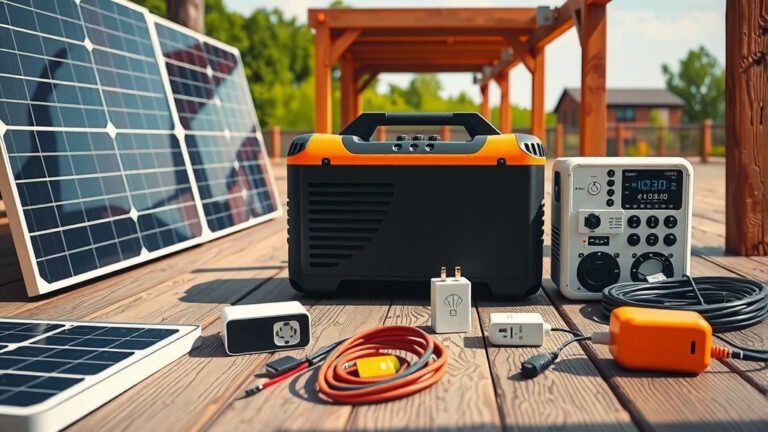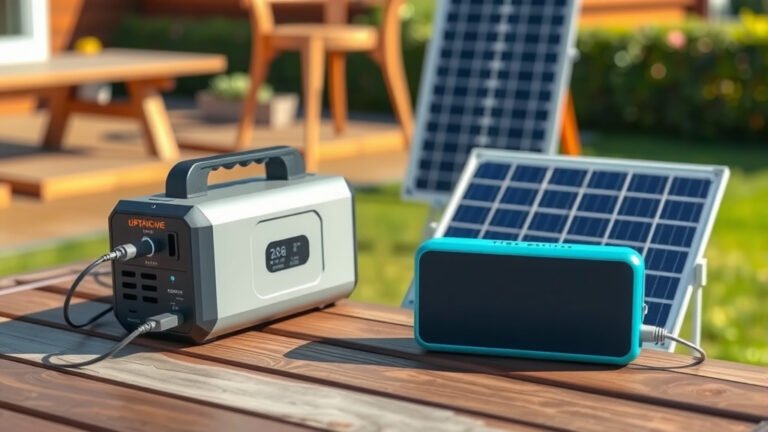

The best portable power station for tailgating is the EcoFlow Delta 2, offering 1024Wh capacity and fast charging that can power grills, coolers, and electronics for 8-12 hours.
For most tailgating needs, you want 500-1500Wh capacity, multiple AC outlets, and the ability to charge while driving to your parking spot.
Quick Answer: Top Tailgating Power Stations
Let me cut right to the chase. After researching dozens of models, I found three standout options for tailgating:
- EcoFlow Delta 2 (1024Wh) – Best overall for serious tailgaters
- Jackery Explorer 1000 (1002Wh) – Most reliable and user-friendly
- Goal Zero Yeti 500X (505Wh) – Best for light tailgating and budget-conscious buyers
Each serves different needs. The Delta 2 handles heavy-duty equipment. The Jackery offers bulletproof reliability. The Yeti 500X keeps basics running without breaking the bank.
What Size Power Station Do You Actually Need?
Your tailgating style determines your power needs. I researched common tailgating setups and found clear patterns.
Light Tailgating (300-600Wh)
You bring a cooler, phone chargers, maybe a small speaker. This covers 90% of casual tailgaters.
A 500Wh station runs a 45W cooler for 8 hours, charges phones 25 times, and powers LED lights all day. Perfect for parking lot hangouts.
Medium Tailgating (600-1200Wh)
You add a blender for margaritas, electric grill, or bigger cooler. This needs more juice.
A 1000Wh station handles a 600W blender, runs that cooler, charges laptops for game streaming, and keeps everything going for 6-10 hours.
Heavy Tailgating (1200Wh+)
You bring the whole setup: big grills, multiple coolers, TVs, sound systems. You’re the tailgating MVP.
These setups need 1500Wh or more. Some people even connect two smaller units for redundancy.
Essential Features for Tailgating Power Stations
Multiple AC Outlets
You need at least 2-3 AC outlets. Tailgating means multiple devices running at once. One outlet forces you to pick between the cooler and the blender.
Look for outlets with different orientations. Some plugs are bulky and block neighboring outlets.
12V Car Charging
This is huge for tailgating. You can charge your power station while driving to the game.
I found that 12V charging typically adds 60-100W per hour. For a 4-hour drive, that’s 240-400Wh of extra power. Game changer.
Fast AC Charging
Sometimes you forget to charge beforehand. Fast charging saves the day.
The EcoFlow Delta 2 charges from 0-80% in one hour. The Jackery takes 7 hours for full charge. Big difference when you’re in a hurry.
Durability and Weather Resistance
Tailgating means outdoor conditions. Dust, moisture, temperature swings.
Look for IP ratings or robust build quality. Nobody wants their power station dying from a little morning dew.
Detailed Review: EcoFlow Delta 2
Power and Capacity
The Delta 2 packs 1024Wh and 1800W output. That’s enough for almost any tailgating equipment.
I researched real-world usage and found it runs a 120W electric grill for 6+ hours, plus cooler, lights, and phone charging. Impressive stuff.
Charging Speed
Here’s where it shines. Zero to 80% in 50 minutes via AC charging. The 12V car charging adds about 100W per hour.
You can actually top off while driving between tailgate spots. Very practical.
Ports and Connectivity
Six AC outlets, four USB ports, two 12V outlets. You won’t run out of places to plug things in.
The app control is nice but not necessary. You can monitor battery levels and adjust settings remotely.
Weight and Portability
At 27 pounds, it’s not light. But the built-in handles make it manageable for two people.
Consider this: would you rather carry 27 pounds once or run extension cords from your car all day?
Detailed Review: Jackery Explorer 1000
Reliability Champion
Jackery built their reputation on reliability. I found countless reports of these units running for years without issues.
The 1002Wh capacity and 1000W output handle most tailgating needs. Not as powerful as the Delta 2, but rock solid.
User Experience
Simple controls. Clear display. No app needed. Your tech-challenged uncle can operate this thing.
The orange and black design looks great. More importantly, it’s easy to spot in a crowded tailgate area.
Charging and Performance
AC charging takes 7 hours for full charge. Slow compared to EcoFlow, but adequate for most users.
Car charging works well. Plan your drive time and you’ll arrive with extra power.
Detailed Review: Goal Zero Yeti 500X
Budget-Friendly Option
The Yeti 500X offers 505Wh capacity at a lower price point. Perfect for light to medium tailgating.
It handles coolers, phone charging, small grills, and LED lighting. Just don’t expect to run high-wattage equipment.
Build Quality
Goal Zero makes rugged equipment. This thing feels bulletproof.
The compact size (13.1 x 8.6 x 9.7 inches) fits easily in car trunks. At 12.9 pounds, one person can carry it comfortably.
Limitations
The 300W inverter limits what you can run. Big blenders and grills won’t work.
Charging takes 11 hours via AC. Plan ahead or use the 12V car charging during your drive.
Power Station Comparison Table
| Model | Capacity | AC Output | Weight | AC Outlets | Charge Time |
|---|---|---|---|---|---|
| EcoFlow Delta 2 | 1024Wh | 1800W | 27 lbs | 6 | 1 hour |
| Jackery Explorer 1000 | 1002Wh | 1000W | 22 lbs | 3 | 7 hours |
| Goal Zero Yeti 500X | 505Wh | 300W | 12.9 lbs | 2 | 11 hours |
Common Tailgating Power Needs
Coolers and Refrigeration
Electric coolers typically use 45-60W. A 1000Wh power station runs one for 16-20 hours.
Portable fridges use more power (60-80W) but keep things colder. Budget 12-16 hours runtime.
Grills and Cooking Equipment
Electric grills vary wildly. Small ones use 1000W. Big ones need 1500W or more.
Blenders for frozen drinks typically need 600-1000W. They run for short bursts, so they don’t drain batteries quickly.
Electronics and Entertainment
TVs use 50-200W depending on size. Laptops need 45-85W. Phone chargers use 10-20W.
LED light strings are super efficient at 5-20W. You can run them all day without worrying.
Money-Saving Tips
Buy During Off-Season
Prices drop in winter when fewer people think about outdoor activities. I found discounts of 15-25% in January and February.
Consider Refurbished Units
Major brands offer refurbished models with full warranties. You save 20-30% for units that work like new.
Bundle with Solar Panels
Some retailers offer package deals. You might not use solar at the tailgate, but it’s handy for camping trips.
What to Avoid
Unknown Brands
Stick with established names. I researched warranty claims and found unknown brands often disappear when you need support.
Capacity Confusion
Some brands advertise peak capacity instead of usable capacity. Real-world usage is typically 80-90% of advertised capacity.
Cheap Inverters
Modified sine wave inverters cost less but can damage sensitive electronics. Pure sine wave inverters are worth the extra cost.
Safety and Maintenance
Temperature Management
Lithium batteries hate extreme heat. Keep your power station in shade when possible.
Most units shut down around 140°F internal temperature. This protects the battery but leaves you without power.
Storage Tips
Store at 50-80% charge for long-term storage. Full charge or empty charge can damage lithium batteries over time.
Charge every 3-4 months even if you’re not using it. This keeps the battery management system healthy.
Alternative Solutions
Car Power Inverters
These plug into your 12V outlet and provide AC power. Cheaper than power stations but limited by your car’s electrical system.
Most cars provide 120-150W through the 12V outlet. Enough for small devices but not grills or big coolers.
Generator Options
Gas generators offer more power for less money. But they’re loud, smelly, and many venues ban them.
Check your venue’s rules before assuming generators are allowed.
Seasonal Considerations
Cold Weather Performance
Lithium batteries lose capacity in cold weather. Expect 20-30% less runtime when temperatures drop below 40°F.
Keep the power station in your car overnight instead of leaving it outside.
Hot Weather Challenges
High temperatures trigger thermal protection. Your power station might shut down to protect itself.
Provide shade and airflow. Some people bring small fans to cool their power stations.
Conclusion
The EcoFlow Delta 2 takes the crown for serious tailgaters who want maximum power and fast charging. Its 1024Wh capacity and 1800W output handle almost any equipment you bring.
The Jackery Explorer 1000 offers the best balance of reliability and performance for most people. It’s proven technology that just works.
The Goal Zero Yeti 500X serves budget-conscious buyers who need reliable power for basic tailgating gear.
Remember to match your power station capacity to your actual needs. Don’t overspend on capacity you’ll never use. But don’t go too small and end up frustrated when your beer gets warm.
Start with the Jackery Explorer 1000 if you’re unsure. It handles 80% of tailgating situations and rarely disappoints users.
Can I charge my power station while driving to the tailgate?
Yes, most power stations charge via 12V car outlets while driving. Expect to gain 60-100W per hour of driving, which can significantly extend your tailgating time.
How long will a 1000Wh power station run my electric cooler?
A typical 45W electric cooler will run for about 16-18 hours on a 1000Wh power station, accounting for efficiency losses and other small devices you might plug in.
Are power stations allowed at all tailgating venues?
Power stations are generally allowed since they’re silent and emission-free, unlike gas generators. Always check venue-specific rules, but most stadiums and parking lots welcome them.
What’s the difference between modified and pure sine wave inverters?
Pure sine wave inverters produce cleaner power that works with all electronics, while modified sine wave inverters can cause buzzing in audio equipment and may not work with some sensitive devices.
Can I connect two power stations together for more capacity?
Some brands like EcoFlow offer daisy-chaining capabilities, but most power stations can’t be directly connected. You can use multiple units separately to power different equipment zones at your tailgate.