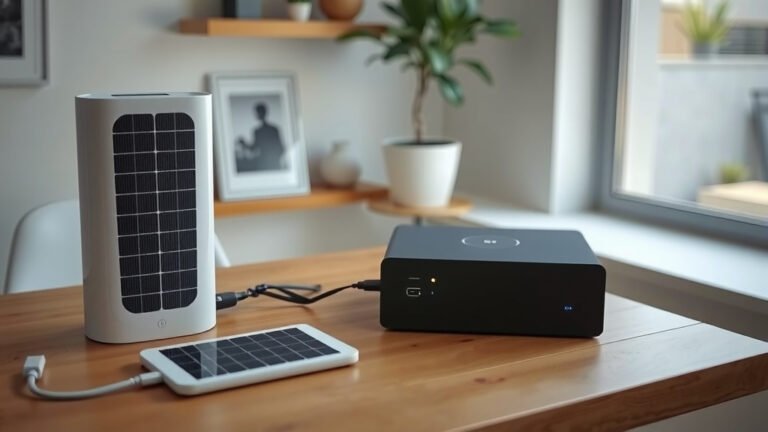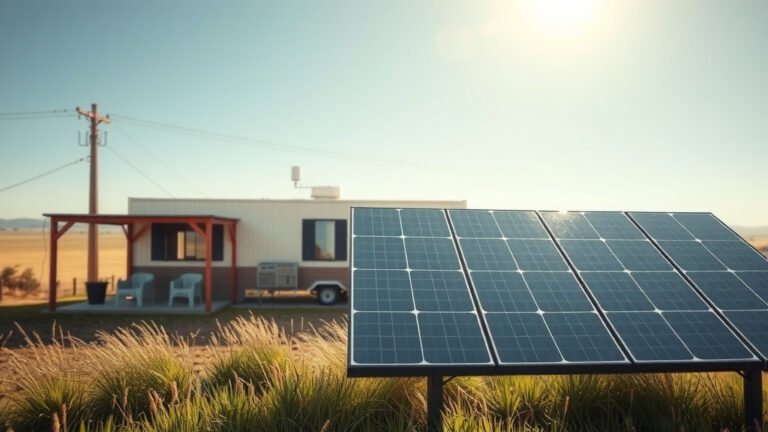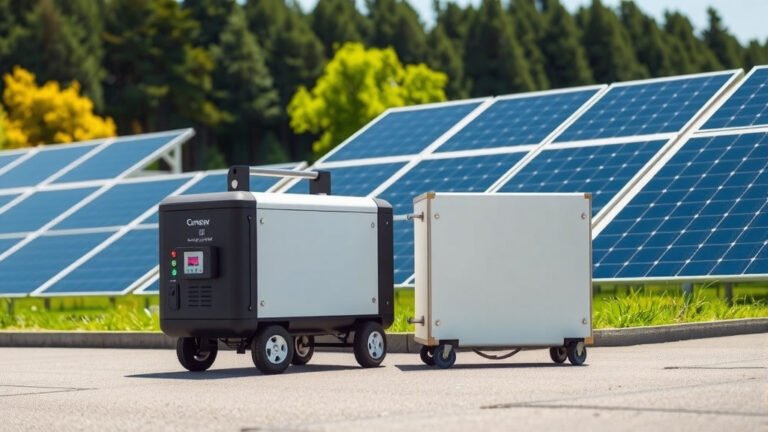
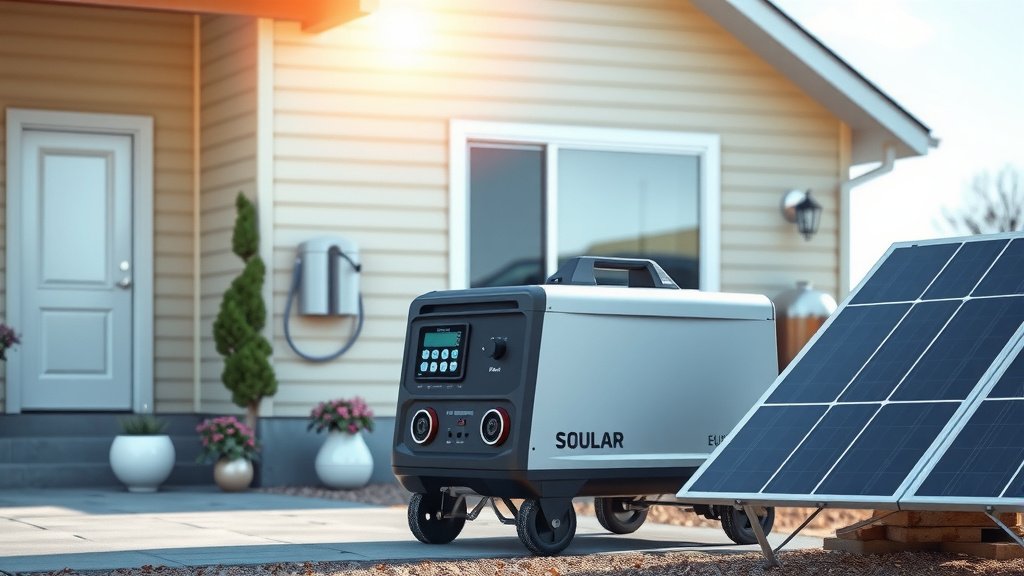
A solar generator can power a house partially or fully depending on your energy needs and the generator’s capacity. Most portable solar generators handle essential devices and small homes, while whole-house backup requires larger systems with 3000+ watts.
Your average home uses 30 kWh per day, but you can reduce this significantly by running only necessities during power outages.
What Size Solar Generator Do You Need?
The answer depends on what you want to power. Think of it like packing for a trip – you need different sized suitcases for different adventures.
I researched typical home energy usage and found that most families can get by with much less power during emergencies. You don’t need to run everything at once.
Essential Appliances Only
For basic needs, you’ll want to power:
- Refrigerator (150-800 watts)
- LED lights (10-20 watts each)
- Phone chargers (5-20 watts)
- WiFi router (10-20 watts)
- Small TV (50-200 watts)
A 1000-2000 watt solar generator handles this list comfortably for most homes.
Adding Comfort Items
Want more comfort? You’ll need extra capacity for:
- Microwave (700-1200 watts)
- Coffee maker (600-1200 watts)
- Space heater (750-1500 watts)
- Washer/dryer (1500-3000 watts)
Now you’re looking at 3000+ watt systems with larger battery banks.
How Long Will It Run Your House?
Runtime depends on your battery capacity and power draw. It’s basic math, but let me break it down simply.
From what I read, most people get confused by watt-hours versus watts. Here’s the easy way to think about it.
The Simple Runtime Formula
Battery capacity (watt-hours) ÷ Your power use (watts) = Runtime (hours)
Example: You have a 2000Wh battery. You’re using 500 watts total. You get 4 hours of runtime.
Real-World Runtime Examples
I found online that typical scenarios work out like this:
- 1000Wh system + 200W load = 5 hours
- 2000Wh system + 400W load = 5 hours
- 5000Wh system + 1000W load = 5 hours
Notice the pattern? More battery means you can either run more devices or run them longer.
Types of Solar Generators for Homes
Not all solar generators work the same way. You’ve got portable units and whole-house systems.
Portable Solar Generators
These are the grab-and-go options. Usually 500-3000 watts with built-in batteries.
Perfect for camping, RVs, or emergency backup. You can move them around your house as needed.
Pros of Portable Units
- Easy setup – just plug and play
- Can take them anywhere
- Lower upfront cost
- No installation required
Cons of Portable Units
- Limited battery capacity
- Slower solar charging
- Can’t power whole house
- Need manual switching
Whole-House Solar Generator Systems
These are permanent installations with large battery banks and automatic switching.
Think of them as your home’s backup power plant. When grid power fails, they kick in automatically.
Benefits of Whole-House Systems
- Power your entire home
- Automatic operation
- Large battery storage
- Professional installation
Drawbacks to Consider
- High upfront cost ($10,000+)
- Complex installation
- Permits and inspections
- Cannot relocate
Solar Panel Requirements
Your solar panels need to keep up with your power use and recharge your batteries.
I came across research showing that most people underestimate how many panels they need.
Matching Panels to Battery Size
A good rule: your solar array should recharge your battery in 6-8 hours of sunlight.
| Battery Size | Recommended Solar Panels | Recharge Time |
|---|---|---|
| 1000Wh | 200-400W | 4-6 hours |
| 2000Wh | 400-600W | 5-7 hours |
| 5000Wh | 800-1200W | 6-8 hours |
Weather Impact on Charging
Cloudy days cut your solar output by 50-80%. Plan for this.
Many experts say you should size your system for worst-case weather, not perfect sunny days.
Cost Breakdown
Let’s talk money. Solar generators aren’t cheap, but they’re getting more affordable.
Portable Solar Generator Costs
- Small units (500-1000W): $500-1,500
- Medium units (1000-2000W): $1,500-3,000
- Large portable (2000W+): $3,000-6,000
Whole-House System Costs
Professional installations run much higher:
- Basic system (5-10kWh): $10,000-20,000
- Full backup (15-20kWh): $20,000-35,000
- Premium setup (25kWh+): $35,000-50,000
These prices include batteries, inverters, installation, and permits.
Can You Go Completely Off-Grid?
Yes, but it requires careful planning and realistic expectations about your lifestyle.
From what I read, successful off-grid living means using 50-70% less electricity than typical grid-connected homes.
What Off-Grid Really Means
You’ll need to change how you use energy. No more running the dishwasher, dryer, and air conditioner at the same time.
Think of it as energy budgeting. You have a daily allowance, and you need to spend it wisely.
Off-Grid System Requirements
I heard from experts that successful off-grid homes typically have:
- 15-30kWh battery storage
- 3,000-8,000 watts of solar panels
- Energy-efficient appliances
- Backup generator for emergencies
Limitations You Should Know
Solar generators aren’t perfect. Let me share the honest challenges you’ll face.
Power-Hungry Appliances
Some appliances just don’t work well with solar generators:
- Central air conditioning (3,000-5,000 watts)
- Electric water heaters (3,000-4,500 watts)
- Electric dryers (2,000-5,000 watts)
- Electric stoves (2,000-3,000 watts per burner)
These devices drain batteries fast and need huge inverters.
Weather Dependency
Solar panels don’t work well in bad weather. Winter can be especially challenging.
Research shows that December solar production can be 60-70% lower than July in northern climates.
Initial Learning Curve
You’ll need to learn energy management. Which devices can run together? When should you charge batteries?
It’s not hard, but it’s different from grid power where you flip switches without thinking.
Tips for Maximum Efficiency
Want to get the most from your solar generator? Here are strategies that actually work.
Use Energy-Efficient Appliances
LED lights use 75% less energy than old bulbs. Energy Star appliances can cut usage by 20-50%.
I researched and found that switching to efficient devices is often cheaper than buying bigger batteries.
Time Your Usage Right
Run high-power devices during peak sun hours when panels are charging your batteries.
Do laundry at noon, not midnight. Your future self will thank you when batteries last longer.
Monitor Your System
Most modern solar generators have apps that show energy usage. Use them!
You’ll quickly learn which devices are energy hogs and adjust accordingly.
Conclusion
A solar generator can definitely power your house, but success depends on matching the system to your needs and expectations. Small portable units work great for essential devices during outages, while whole-house systems can keep everything running but cost significantly more.
The key is being realistic about your power needs and willing to adjust your energy habits. Start by calculating what you actually need to power, not what you want to power. Many families find that 80% of their comfort comes from 20% of their normal electricity usage.
Whether you choose a portable unit for emergencies or invest in a full off-grid system, solar generators offer real energy independence. Just remember that the best system is one you can afford and will actually use.
How many solar panels do I need to power my house with a solar generator?
You typically need 15-25 solar panels (300W each) to power an average home, totaling 4,500-7,500 watts. This assumes 25-30 kWh daily usage and 4-6 peak sun hours. Smaller homes or energy-efficient setups might only need 8-12 panels.
What appliances should I avoid running on a solar generator?
Avoid electric water heaters, central air conditioning, electric dryers, and electric stoves. These appliances use 2,000-5,000 watts and drain batteries quickly. Focus on LED lights, refrigerators, electronics, and small appliances that use under 1,000 watts each.
How long do solar generator batteries last?
Lithium batteries in solar generators typically last 2,000-6,000 charge cycles, which equals 5-15 years depending on usage. Lead-acid batteries last 500-1,200 cycles or 2-5 years. Battery lifespan depends on depth of discharge, temperature, and maintenance.
Can I add more batteries to my solar generator later?
Some solar generators allow battery expansion through additional battery packs or modules. Check your specific model’s compatibility before purchasing. Portable units often have limited expansion options, while whole-house systems usually support additional battery banks.
Do solar generators work during winter or cloudy weather?
Solar generators work in winter and cloudy weather but produce 30-70% less power. Snow can block panels completely. Plan for reduced charging capacity and consider backup charging methods like AC wall outlets or car charging during extended bad weather periods.