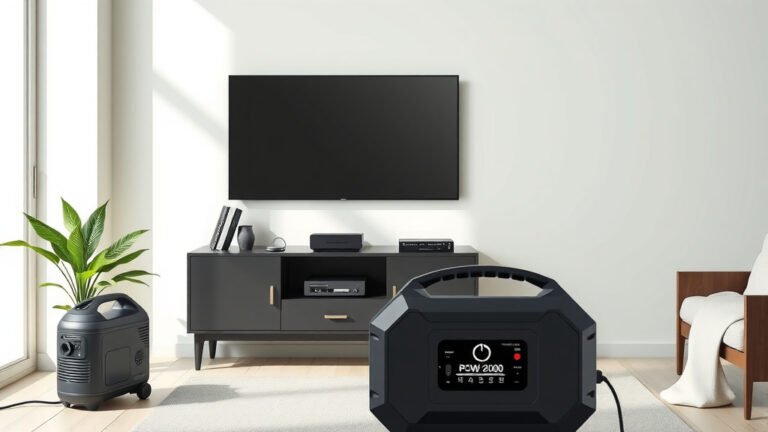

To calculate the cost per watt of a portable power station, you divide its total purchase price by its watt-hour (Wh) capacity. This simple calculation helps you compare the true value of different models.
Understanding the cost per watt of a portable power station reveals how much you’re paying for each unit of stored energy, guiding you to a smarter purchase decision.
- TL;DR: Divide the power station’s price by its watt-hour capacity to get cost per watt.
- TL;DR: This metric helps you compare the energy value of different power stations fairly.
- TL;DR: Aim for a lower cost per watt, but balance it with features and battery quality.
- TL;DR: Factors like battery type (LiFePO4) and brand affect this cost.
- TL;DR: It’s a key step to finding the best portable power station for your needs.
Thinking about investing in a portable power station? Perhaps you’re tired of losing power during outages, or you just want to power your gadgets on an outdoor adventure. It’s an exciting thought, isn’t it?
But when you start shopping, you’ll quickly notice something. There are so many options out there! Prices vary widely, and so do the specs. How do you cut through the noise and find the best value?
That’s where understanding the cost per watt-hour comes in handy. It’s like finding the price per ounce at the grocery store. This simple calculation helps you make a truly informed choice. Are you ready to dive in?
How To Calculate Cost Per Watt Of Portable Power Station?
You calculate the cost per watt of a portable power station by taking its total retail price and dividing it by its stored energy capacity in watt-hours (Wh).
Why Cost Per Watt Matters to You
Imagine you’re buying a car. You wouldn’t just look at the total price, would you? You’d consider things like miles per gallon or horsepower. Similarly, with a portable power station, the total price doesn’t tell the whole story.
The cost per watt-hour is your fuel efficiency rating for stored power. It helps you see how much you’re actually paying for each unit of electricity you can store and use. This is crucial for smart budgeting.
Without this metric, you might accidentally buy a more expensive unit that offers less actual power storage. Don’t let that happen to your wallet!
The Simple Formula Explained
Let’s get straight to the math. Don’t worry, it’s super easy. Here’s the formula:
Cost Per Watt-Hour = Total Price (in $) / Watt-Hour (Wh) Capacity
That’s it! Just two numbers you need to find. You can usually find the total price right on the product page. The watt-hour (Wh) capacity will be clearly listed in the product specifications.
Finding the Watt-Hour (Wh) Capacity
The watt-hour capacity is the most important number here. It tells you how much energy the power station can hold. Think of it as the size of its “fuel tank.”
Most manufacturers list this prominently. For example, you might see “500Wh” or “2000Wh” in the product name or description. Always look for the Wh number.
Let’s Do an Example Together
Okay, let’s try a real-world example to make this super clear. Imagine you’re looking at two different portable power stations:
Power Station A:
- Price: $500
- Capacity: 500Wh
Power Station B:
- Price: $1,200
- Capacity: 1000Wh
Which one is the better deal per watt-hour?
Calculating for Power Station A
Cost Per Watt-Hour (A) = $500 / 500Wh = $1.00 per Wh
Calculating for Power Station B
Cost Per Watt-Hour (B) = $1,200 / 1000Wh = $1.20 per Wh
Looking at these numbers, Power Station A gives you more stored energy for your dollar, costing $1.00 per Wh compared to Power Station B’s $1.20 per Wh. This calculation really helps clarify value!
What’s a “Good” Cost Per Watt-Hour?
Now that you know how to calculate it, you might be asking: “What’s a good number to aim for?” We found that a good general range for the cost per watt-hour often falls between $0.80 and $1.50. However, this is just a starting point.
Many experts say that premium features or advanced battery types, like LiFePO4, can push the cost higher. Don’t automatically rule out a higher number if the unit offers other benefits (EnergySage, 2023).
Factors Affecting Cost Per Watt-Hour
Just like cars, not all power stations are created equal. Several factors can influence that final cost per watt-hour figure. Being aware of these helps you justify a higher price point if it offers real value.
Battery Chemistry Matters
The type of battery inside is a big one. Lithium Iron Phosphate (LiFePO4) batteries are gaining popularity. They offer more charge cycles and a longer lifespan than traditional Lithium-ion (NMC) batteries (Green Mountain Power). You might pay a bit more upfront for a LiFePO4 unit, but it could save you money in the long run.
Brand and Build Quality
Reputable brands often have higher costs per watt-hour, and for good reason. They invest in better components, more rigorous testing, and offer stronger warranties. You’re often paying for reliability and peace of mind.
Output Power and Port Selection
A power station with higher AC output wattage (meaning it can run bigger appliances) or a wide variety of ports (USB-C PD, 12V DC, etc.) might have a slightly higher cost per watt-hour. These added features bring more versatility.
Inverter Quality and Efficiency
The inverter converts the battery’s DC power to usable AC power. A high-quality pure sine wave inverter is often more expensive but provides cleaner power, which is safer for sensitive electronics. This can slightly impact the overall value proposition.
Benefits of Calculating Cost Per Watt-Hour
Knowing this number isn’t just about saving money today. It helps you make a better long-term decision. Here are some key benefits you’ll experience:
- You can directly compare different models, even with varying capacities and price tags.
- It reveals the true cost of stored energy, not just the sticker price.
- You can identify overpriced units and find genuine bargains.
- It helps you budget more effectively for your power needs.
- You gain confidence in your purchase, knowing you’ve done your research.
Comparing Portable Power Stations: A Quick Look
Let’s put some hypothetical units into a table to see how the cost per watt-hour really helps you compare. Remember, these are example prices and capacities.
| Model Name | Price | Capacity (Wh) | Cost Per Wh ($) | Battery Type |
|---|---|---|---|---|
| AdventureFlow 500 | $450 | 500 | $0.90 | Li-ion (NMC) |
| PowerNest 1000 | $1100 | 1000 | $1.10 | LiFePO4 |
| EcoJuice 750 | $675 | 750 | $0.90 | Li-ion (NMC) |
| EndurancePro 2000 | $2200 | 2000 | $1.10 | LiFePO4 |
As you can see, two units might have the same cost per Wh, but different battery types. This table helps you visualize the trade-offs clearly. For example, you might pay slightly more per Wh for a LiFePO4 battery, knowing it offers a longer lifespan.
Beyond Cost Per Watt: What Else to Consider
While cost per watt-hour is a fantastic starting point, it’s not the only factor. Your specific needs will always play a significant role. Think of it as one piece of a larger puzzle. You wouldn’t buy a car just because it has great MPG, right?
Here’s a quick checklist to guide your final decision:
- Output Power (Watts): Can it power your devices and appliances?
- Portability: Is it light enough to carry where you need it?
- Charging Speed: How fast does it recharge, especially from solar?
- Expandability: Can you add extra batteries later?
- Warranty: What kind of guarantee does the manufacturer offer?
- Solar Input: How many watts of solar can it handle?
These extra considerations help ensure the power station fits your lifestyle perfectly. It’s all about finding the right balance of price, performance, and features for your unique situation.
Conclusion
Calculating the cost per watt-hour of a portable power station is a powerful tool in your shopping arsenal. It empowers you to see past the flashy marketing and understand the true value of the energy you’re buying. By dividing the price by the watt-hour capacity, you gain a clear, comparable metric.
While a lower cost per watt is often desirable, remember to weigh it against other important factors like battery type, brand reputation, and specific features. You’re not just buying a battery; you’re investing in reliable power for your home, adventures, or work. Use this calculation, consider your needs, and you’ll make a choice you’ll be happy with for years to come.
What is the difference between watt-hours and watts?
Watts (W) measure the rate at which power is being used or delivered at a specific moment, like how fast a car is going. Watt-hours (Wh) measure the total amount of energy consumed or stored over a period, similar to the distance a car travels on a full tank.
Does a higher cost per watt-hour always mean a better power station?
Not necessarily. A higher cost per watt-hour might indicate premium features, a more durable battery type like LiFePO4, or a higher-quality build from a reputable brand. It’s important to look at the overall value, not just this single metric.
How important is the battery type for the lifespan of a power station?
Battery type is extremely important for lifespan. LiFePO4 batteries generally offer significantly more charge cycles (2,500-3,500+) compared to traditional Li-ion (NMC) batteries (500-800+), meaning they last much longer before their capacity degrades. This difference impacts the long-term cost of ownership.
Can I use cost per watt-hour to compare power stations from different brands?
Absolutely! That’s one of its primary benefits. By converting different models to a standard “cost per unit of energy,” you can objectively compare value across various brands, sizes, and price points. It helps level the playing field.
Should I always choose the power station with the lowest cost per watt-hour?
Not always. While it’s a great indicator of value, prioritizing only the lowest cost per watt-hour might mean sacrificing other features vital to you, such as faster charging, a wider range of output ports, higher peak output, or a longer-lasting LiFePO4 battery. Consider it as one key factor among several in your decision-making process.