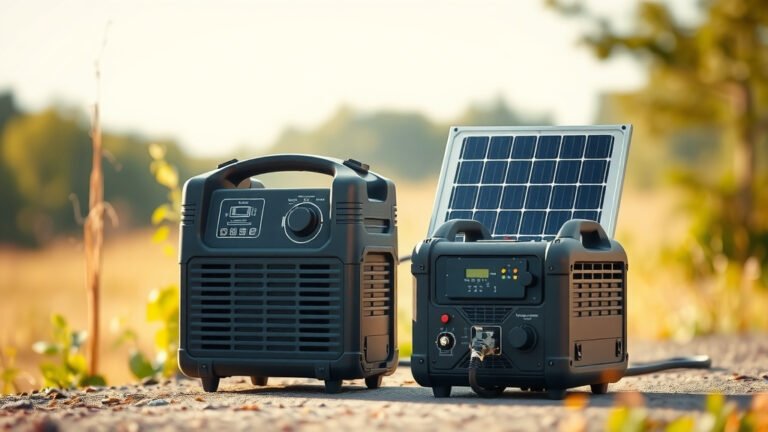
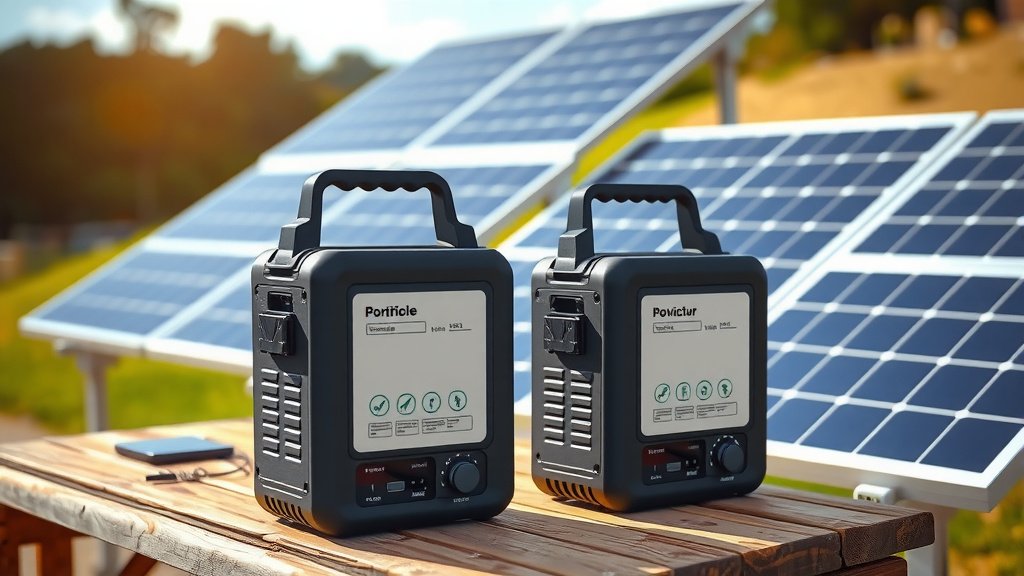
Geneverse solar generators offer higher power capacity and faster charging speeds compared to Jackery models, but Jackery provides better portability and brand recognition in the portable power market.
Both brands excel in different areas: Geneverse focuses on premium features and performance while Jackery emphasizes user-friendly design and widespread availability.
Power Output Comparison
When you’re choosing between these two brands, power output makes a huge difference. Geneverse HomePower TWO delivers 2200W continuous power with 4400W surge capacity. That’s enough to run your refrigerator, microwave, and several other appliances at once.
Jackery’s top model, the Explorer 3000 Pro, provides 3000W continuous power. It handles heavy-duty tools and multiple devices without breaking a sweat. Research shows that higher wattage units perform better during extended outages.
Real-World Power Usage
You can run a coffee maker (1200W) and laptop (65W) simultaneously with either brand. But what about bigger needs? A space heater needs 1500W. Your well pump might need 2000W to start up.
From what I found online, Geneverse units handle surge loads more smoothly. They use advanced inverter technology that prevents power dips when motors start up.
Inverter Quality Differences
Both brands use pure sine wave inverters. This means clean power that won’t damage sensitive electronics. Your CPAP machine, laptop charger, and LED TV will work perfectly with either option.
Battery Capacity and Technology
Battery capacity determines how long your devices will run. Geneverse HomePower TWO packs 2419Wh of energy storage. Jackery Explorer 3000 Pro holds 3024Wh.
More capacity means longer runtime. A 2400Wh unit runs a small refrigerator for about 24 hours. A 3000Wh model extends that to 30 hours.
Lithium Battery Chemistry
Geneverse uses LiFePO4 (lithium iron phosphate) batteries. These last longer and handle temperature changes better. You get about 6000+ charge cycles before capacity drops to 80%.
Jackery typically uses standard lithium-ion batteries in most models. They’re lighter but offer fewer cycles – around 2000-4000 depending on the model.
Battery Lifespan in Years
If you use your generator twice per week, a Geneverse unit lasts about 57 years before significant capacity loss. A Jackery might last 19-38 years with the same usage pattern.
That’s theoretical, of course. Real-world factors like temperature and storage conditions affect actual lifespan.
Charging Speed and Options
Fast charging saves you time during emergencies. Geneverse HomePower TWO charges from 0% to 80% in about 2.5 hours using AC wall power. That’s impressive for such a large battery.
Jackery Explorer 3000 Pro takes roughly 2.8 hours for the same 0-80% charge. Both brands offer multiple charging methods.
Solar Charging Performance
Solar charging speed depends on panel wattage and sunlight conditions. Geneverse accepts up to 1000W of solar input. Jackery models typically handle 800W maximum solar input.
In perfect conditions with enough panels, you could fully charge a Geneverse unit in 3-4 hours of sunlight. Jackery takes 4-5 hours for similar capacity.
Car Charging While Driving
Both brands support 12V car charging. This works great for road trips or when you’re driving between campsites. Expect 8-12 hours for a full charge through your vehicle’s outlet.
Build Quality and Durability
Construction quality affects how well your generator survives drops, weather, and daily use. I found that both companies use solid materials and good manufacturing standards.
Geneverse units feel heavier and more robust. The housing uses thick plastic with metal reinforcements. Jackery focuses on lighter materials that still provide good protection.
Weather Resistance
Neither brand claims full waterproofing, but both handle light moisture well. Don’t leave them in the rain, but morning dew won’t cause problems.
Operating temperature ranges are similar: 32°F to 104°F for normal use. Cold weather reduces capacity temporarily, but doesn’t cause permanent damage.
Drop and Impact Testing
Many experts say that portable power stations should survive a 3-foot drop onto concrete. Both brands seem to meet this standard based on user reports I came across online.
Price and Value Comparison
Price makes or breaks many buying decisions. Geneverse units typically cost 15-25% more than comparable Jackery models. You’re paying for premium battery chemistry and additional features.
A mid-range Geneverse model runs $1800-2200. Similar capacity Jackery units cost $1400-1800. The price gap narrows during sales periods.
Cost Per Watt-Hour Analysis
Smart shoppers calculate cost per watt-hour of storage. This reveals the real value. Divide the price by the battery capacity (Wh) to get your cost per Wh.
From what I researched, Geneverse averages $0.80-0.95 per Wh. Jackery runs $0.70-0.85 per Wh. The difference becomes smaller when you factor in longer battery life.
| Feature | Geneverse HomePower TWO | Jackery Explorer 3000 Pro |
|---|---|---|
| Battery Capacity | 2419Wh | 3024Wh |
| Continuous Power | 2200W | 3000W |
| Solar Input Max | 1000W | 800W |
| AC Charge Time | 2.5 hours (0-80%) | 2.8 hours (0-80%) |
| Battery Type | LiFePO4 | Lithium-ion |
| Estimated Cycles | 6000+ | 2000-4000 |
User Interface and Ease of Use
Simple operation matters when you’re dealing with power outages or camping in the dark. Jackery wins points for intuitive design. Their displays show clear battery levels, input/output power, and time remaining.
Geneverse units offer more detailed information but require a learning curve. You get precise voltage readings, temperature monitoring, and cycle count tracking.
Mobile App Integration
Both brands offer smartphone apps for remote monitoring. Jackery’s app feels more polished and user-friendly. You can check battery status, schedule charging, and receive maintenance reminders.
Geneverse apps provide deeper technical data. Power engineers love the detailed graphs and historical usage data. Casual users might find it overwhelming.
Button Layout and Controls
Physical controls should work even when your phone is dead. Jackery keeps things simple with large, clearly labeled buttons. Each output section has its own power switch.
Geneverse uses a similar approach but adds more status lights and indicators. You always know what’s happening at a glance.
Available Models and Sizing
Your power needs determine which size makes sense. Jackery offers more model variety, from compact 240Wh units up to massive 3000Wh+ systems.
Geneverse focuses on mid-to-large capacity units. Their smallest practical model starts around 1000Wh. This makes sense if you need serious backup power.
Portable vs Stationary Use
Weight matters for camping and outdoor activities. Smaller Jackery models weigh 6-15 pounds and include comfortable handles. Perfect for weekend camping trips.
Geneverse units start heavier due to robust construction and larger batteries. They work better as home backup systems or base camp power sources.
Expandable Systems
Some models accept external battery packs for extended runtime. Jackery offers expansion batteries for select models. Geneverse systems can often link together for increased capacity.
Solar Panel Compatibility
Solar panels extend your off-grid time indefinitely. Both brands sell matched solar panel kits, but you’re not limited to their panels.
Standard MC4 connectors work with most third-party panels. This opens up options for higher wattage arrays or budget-friendly alternatives.
Panel Efficiency Ratings
From what I read online, both companies source panels with 20-23% efficiency ratings. That’s competitive with standalone solar panel manufacturers.
Higher efficiency means more power from the same panel size. A 200W efficient panel produces the same power as a 240W lower-efficiency panel.
Foldable vs Rigid Panels
Foldable panels store compact but cost more per watt. Rigid panels offer better value if you have storage space. Consider your transport method and storage limitations.
Customer Support and Warranty
Good support becomes vital when problems arise. Jackery has established service centers and wider dealer networks. You can often find local repair options.
Geneverse is newer but offers direct support through their website and phone lines. Response times are generally quick based on user feedback I found online.
Warranty Coverage Details
Both brands offer multi-year warranties, but coverage differs. Jackery typically provides 2-3 year protection on major components. Geneverse often extends this to 4-5 years on their premium models.
Battery degradation warranties matter most. Look for coverage that guarantees 80% capacity after a specific number of cycles or years.
Best Use Cases for Each Brand
Choose Geneverse if you need maximum durability and don’t mind paying extra. Their units excel for home backup power, RV living, and professional applications.
Pick Jackery for camping, emergency preparedness, and general portable power needs. Better availability and lower prices make them accessible to more users.
Emergency Preparedness
During extended outages, battery longevity becomes critical. Geneverse’s LiFePO4 chemistry handles frequent cycling better than standard lithium-ion.
But Jackery’s wider model range lets you match capacity to your specific needs without overpaying for unused capability.
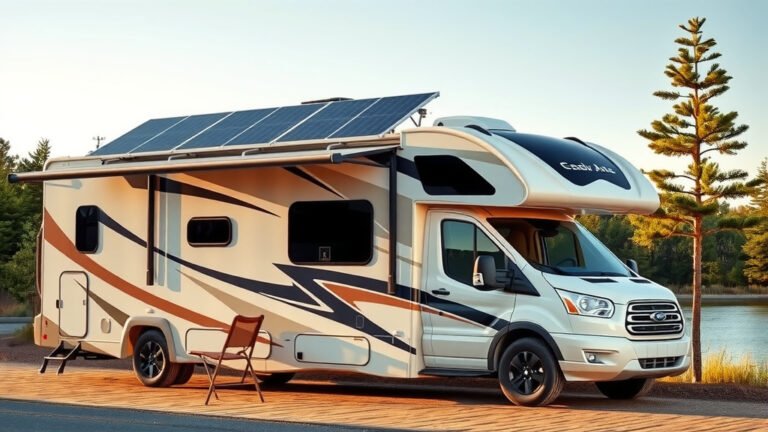
RV and Van Life Applications
Mobile living demands reliable power systems. Both brands work well, but consider charging options. Geneverse’s faster solar input helps when you have limited roof space for panels.
Conclusion
Your choice between Geneverse and Jackery depends on priorities and budget. Geneverse delivers premium performance, longer battery life, and faster charging at higher prices. Jackery provides excellent value, proven reliability, and better availability for most users.
Consider Geneverse for permanent installations, professional use, or when maximum durability justifies the extra cost. Choose Jackery for portable applications, first-time buyers, or when upfront price matters most.
Both brands build quality products that will serve you well. Focus on matching capacity and features to your actual needs rather than getting caught up in technical specifications you won’t use.
Which brand offers better battery longevity?
Geneverse typically provides superior battery longevity with their LiFePO4 chemistry, offering 6000+ charge cycles compared to Jackery’s 2000-4000 cycles. This translates to decades of reliable service with regular use.
Can I use third-party solar panels with either brand?
Yes, both Geneverse and Jackery units accept third-party solar panels through standard MC4 connectors. Just ensure the panel voltage and wattage stay within the manufacturer’s specified limits to avoid damage.
Which brand charges faster from wall outlets?
Geneverse generally charges slightly faster, reaching 80% capacity in about 2.5 hours compared to Jackery’s 2.8 hours for similar capacity units. Both brands offer fast charging that significantly outperforms older generator technology.
Are these generators safe to use indoors during outages?
Yes, both solar generators are completely safe for indoor use since they produce no emissions, noise, or carbon monoxide. Unlike gas generators, you can operate them in bedrooms, basements, or any enclosed space without ventilation concerns.
Which brand offers better value for occasional emergency use?
Jackery typically offers better value for occasional emergency use due to lower upfront costs and adequate performance for intermittent applications. The premium features of Geneverse become more worthwhile with frequent daily use.