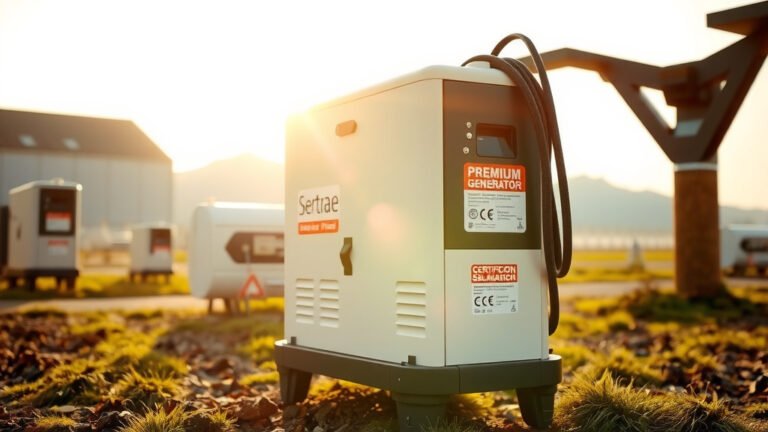
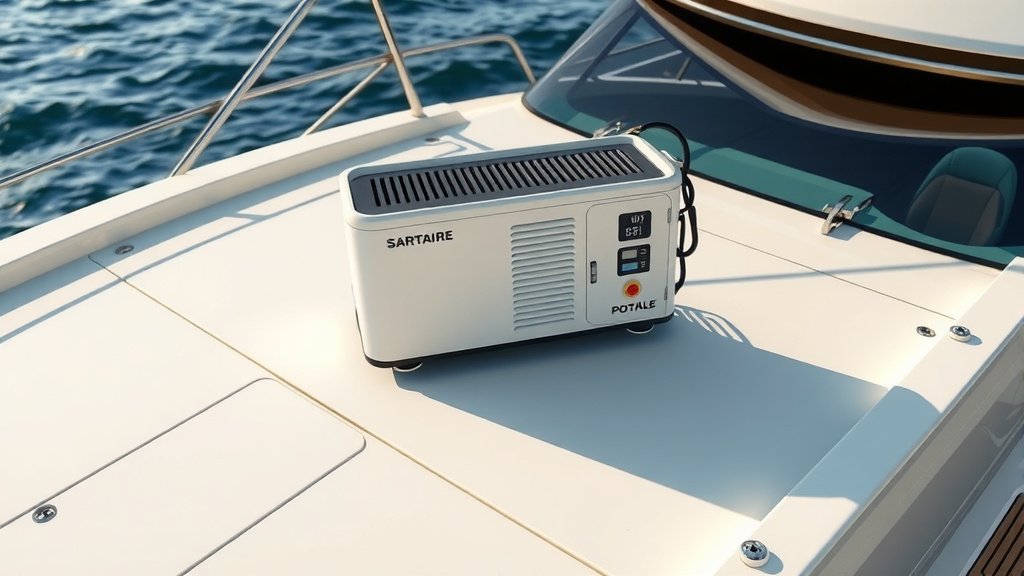
Yes, a portable power station can absolutely work on boats, providing a convenient and quiet power source for many of your onboard electrical needs.
You can power everything from navigation electronics to small kitchen appliances, making your boating experience more comfortable and safe.
- TL;DR:
- Portable power stations are an excellent power solution for boats, offering quiet, fumes-free electricity.
- They can power various devices, from crucial electronics to comfort amenities.
- Key considerations include capacity, ruggedness, waterproofing, and how you plan to recharge it.
- While great for many uses, they might not replace your main boat battery for starting the engine.
- Choosing the right model involves balancing power needs with durability and charging options.
Picture this: you’re out on the water, enjoying the peace, but your phone is dead, or you want to brew some coffee. What do you do? This is where a portable power station comes in. It’s like bringing a silent, powerful wall outlet with you wherever you go.
Many boaters, from weekend warriors to seasoned cruisers, are discovering the incredible convenience these devices offer. They provide a safe, portable source of electricity without the noise or fumes of a traditional generator.
Does Portable Power Station Work In Boats?
Yes, portable power stations work exceptionally well in boats, offering versatile and quiet power for a wide range of devices and applications.
They are a fantastic alternative to noisy gas generators, keeping your vessel powered without disrupting the tranquility of the open water.
Why Portable Power Stations Are Perfect for Your Boat
Think about the peace and quiet you seek on the water. A portable power station lets you maintain that calm. Unlike noisy gas generators, these units operate silently, only humming slightly as they deliver power.
They are also incredibly versatile. Whether you need to charge your phone, run a fishing finder, or even power a small refrigerator, a portable power station handles it with ease.
Powering Essential Marine Electronics
Safety first, right? Your navigation systems, GPS, depth sounder, and communication radios are vital. You can keep these crucial devices running smoothly, even if your boat’s main battery is low.
Many experts emphasize having a backup power source for emergencies (Coast Guard recommendations often highlight reliable power).
Comfort and Convenience Onboard
Who doesn’t love a bit of comfort while boating? You can power small fans on a hot day, keep your camera batteries charged for those perfect sunset photos, or even run a laptop.
We found that many boaters appreciate the ability to enjoy home comforts without complex wiring or installing extra components.
Choosing the Right Power Station for Marine Use
Not all portable power stations are created equal, especially when it comes to the marine environment. You need a unit that can handle the unique challenges of being on the water.
Consider the harsh realities of boat life: salt spray, humidity, and constant motion. Your power station needs to be up to the task.
Capacity and Power Output: What Do You Need?
First, think about what you want to power. A small unit might be fine for charging phones and lights. But if you’re looking to run a mini-fridge or a microwave, you’ll need a much larger capacity.
We recommend listing all the devices you plan to use and their power consumption. This helps you select a unit with sufficient watt-hours (Wh) and wattage output.
Durability and Water Resistance: A Must-Have
This is non-negotiable for boat use. Look for units designed with a rugged casing. Ideally, you want a power station with some level of water resistance.
While few are fully submersible, an IP rating (like IP65) indicates protection against splashing water and dust. This keeps your investment safe from accidental splashes or sea spray.
Recharging Options While You’re Afloat
How will you charge your power station out on the water? This is a key question. Solar panels are a popular choice, offering free, renewable energy.
You can also charge from your boat’s 12V cigarette lighter outlet or directly from shore power if you dock. Many experts say a multi-charging capability is ideal for boaters (Boating Magazine often discusses this).
Safety First: Using Your Power Station on a Boat
Using any electrical device on a boat requires common sense and safety precautions. A portable power station is no different. Always follow the manufacturer’s guidelines.
Secure the unit properly so it doesn’t slide around in choppy waters. Ensure good ventilation, even though these units don’t emit fumes like gas generators.
Protecting Your Investment from the Elements
Even with a water-resistant unit, it’s wise to store your power station in a dry, protected area when not in use. A dry bag or a waterproof storage compartment can add an extra layer of protection.
Regularly inspect cables and connections for any signs of corrosion, especially in a saltwater environment. This helps maintain performance and safety.
Power Station vs. Boat’s Main Battery: Know the Difference
A portable power station is fantastic for auxiliary power, but it’s generally not designed to start your boat’s engine. Your boat’s starter battery is built for that specific high-current task.
Think of your portable power station as a powerful, versatile accessory, not a replacement for your essential marine battery system.
Charging Methods for Your Portable Power Station on a Boat
Having multiple ways to charge your power station provides flexibility and ensures you always have power when you need it. We found that most boaters combine several methods.
This approach gives you peace of mind, knowing you can top up your power station no matter where your marine adventures take you.
| Charging Method | Pros | Cons |
|---|---|---|
| Solar Panels | Renewable, silent, no fuel cost | Relies on sunlight, slower charging |
| Shore Power (AC Outlet) | Fastest charging, reliable at dock | Requires dock access, not for underway |
| Boat’s 12V Outlet (Car Charger) | Charges while underway, convenient | Slower, draws from boat battery |
Checklist for Bringing a Power Station Onboard
Before you cast off, a quick check can save you headaches later. Here’s a simple list to ensure your power station is ready for your boating trip:
- Is the power station fully charged?
- Are all necessary charging cables packed?
- Do you have a suitable solar panel, if planning to use one?
- Is the unit secured to prevent movement?
- Are you aware of its water resistance rating?
Conclusion
Yes, a portable power station is an outstanding addition to almost any boat. It offers silent, clean, and versatile power, significantly enhancing your comfort and safety on the water.
By carefully considering factors like capacity, durability, and charging options, you can select the perfect unit for your marine adventures. With a good power station, your time on the water becomes even more enjoyable, productive, and worry-free.
Frequently Asked Questions About Portable Power Stations and Boats
Can a portable power station run a trolling motor?
Generally, most portable power stations are not designed to directly power a trolling motor for an extended period. Trolling motors require a consistent, high current draw that is better supplied by a dedicated deep-cycle marine battery. While some very large power stations might handle it briefly, they are usually optimized for AC appliances and USB charging, not continuous high-amp DC loads.
How much battery capacity do I need for a weekend boat trip?
For a weekend boat trip, a power station with 500Wh to 1000Wh is often a good starting point. This capacity can comfortably charge phones, run LED lights, power a fan, and potentially run a small portable cooler or fish finder. If you plan to use higher-wattage appliances like a coffee maker or a small microwave, you would need a capacity closer to 1500Wh or more.
Are portable power stations safe around water?
Modern portable power stations are designed with safety in mind, but few are completely waterproof. Look for units with an IP rating (e.g., IP65), which indicates resistance to splashes and dust. Always keep your power station in as dry a location as possible on your boat and protect it from direct exposure to rain or large splashes to ensure its longevity and safe operation (Underwriters Laboratories often certify these devices for safety).
Can I charge a portable power station from my boat’s engine?
Yes, many portable power stations can be charged using your boat’s 12V cigarette lighter outlet, often referred to as a “car charger” input. This allows you to recharge the unit while your boat’s engine is running or when cruising. However, this method is typically slower than shore power and draws energy from your boat’s main battery system, so monitor your boat battery’s charge level.
What are the benefits of using a portable power station over a gas generator on a boat?
The primary benefits are silence, lack of fumes, and ease of use. Portable power stations operate almost silently, preserving the tranquility of your boating experience. They produce no exhaust fumes, making them safer and more pleasant to use in confined spaces. Plus, there’s no need to carry flammable fuel, simplifying your logistics and reducing fire risk.