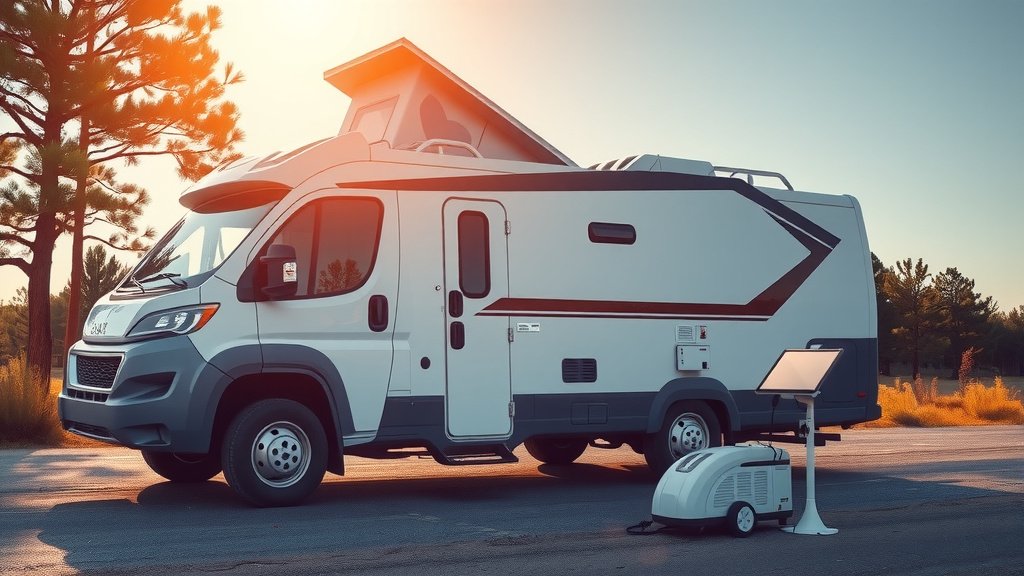
To use a portable power station in your RV, connect it to your electrical panel through a transfer switch or plug devices directly into the station’s outlets.
Most portable power stations work as backup power sources that can run RV appliances for 2-24 hours depending on battery capacity and power usage.
What Size Portable Power Station Do You Need for Your RV?
Your power needs depend on what you want to run. A small coffee maker uses about 600 watts. Your RV fridge might need 150 watts continuously. Air conditioning? That’s the big one at 1,200-1,500 watts.
I found that most RV owners do well with stations between 1,000-3,000 watt-hours (Wh). Here’s a simple way to think about it: add up all the watts you’ll use at once, then multiply by how many hours you need power.
Basic Power Calculations for RV Life
Let’s say you want to run lights (100W), a laptop (60W), and charge phones (20W) for 8 hours. That’s 180 watts × 8 hours = 1,440 watt-hours minimum.
Always add 20% extra capacity. Batteries don’t like being drained completely. Your 1,440 Wh need becomes about 1,800 Wh in real life.
How to Connect Your Portable Power Station
You have two main ways to connect power stations in RVs. The simple way is plugging devices directly into the station. The fancy way involves your RV’s electrical system.
Direct Connection Method
This is the easiest approach. Your power station sits somewhere convenient in your RV. You plug devices straight into its outlets – AC plugs, USB ports, or 12V outlets.
The downside? You can’t power built-in RV systems like ceiling lights or the water pump. But it works great for phones, laptops, small appliances, and fans.
Transfer Switch Integration
A transfer switch lets your power station feed your RV’s electrical panel. When shore power goes out, you flip a switch and your portable station takes over.
This setup needs professional installation. But once it’s done, you can run built-in lights, outlets, and some appliances just like normal.
Installation Safety Notes
Electrical work in RVs can be tricky. I found that most experts recommend hiring a certified RV technician for transfer switch installations. The wiring needs to meet safety codes.
Never try to backfeed power through a regular outlet. That’s dangerous and can damage equipment.
Best Portable Power Stations for RV Use
Not all power stations work well in RVs. You need pure sine wave output for sensitive electronics. Fans and pumps don’t like modified sine waves.
Weight matters too. You’re already dealing with RV weight limits. A 100-pound power station might push you over.
Key Features to Look For
- Pure sine wave inverter (protects your electronics)
- Multiple AC outlets (you’ll need several)
- Fast charging options (solar, 12V, shore power)
- Battery management system (prevents overheating)
- Quiet operation (nobody wants a loud hum all night)
Capacity Sweet Spots
From what I researched, these capacity ranges work for different RV styles:
| RV Type | Recommended Capacity | Typical Runtime |
|---|---|---|
| Small travel trailer | 1,000-2,000 Wh | 8-16 hours basic use |
| Medium motorhome | 2,000-3,000 Wh | 6-12 hours moderate use |
| Large Class A | 3,000+ Wh | 4-8 hours with AC |
Charging Your Power Station on the Road
A dead power station won’t help anyone. You need reliable ways to recharge while traveling or camping.
Solar Charging Setup
Solar panels on your RV roof can charge portable stations during the day. Most stations accept solar input between 12V and 60V.
You’ll need a solar charge controller that matches your station’s input specs. Some stations have controllers built in. Others need external ones.
Solar Panel Sizing
I found that 400-800 watts of solar works well for most RV power stations. That gives you 4-6 hours of full sun charging on good days.
Cloudy weather cuts production by 70-80%. Plan accordingly if you’re heading to overcast areas.
12V Charging While Driving
Your RV’s alternator can charge power stations through 12V outlets. This works great on long driving days.
Most 12V charging is slow – maybe 100-200 watts. A big power station might need 10+ hours to fully charge this way.
DC-DC Charging Solutions
Some RVers install dedicated DC-DC chargers. These pull power directly from your RV’s battery system at higher amperages.
This setup charges faster than regular 12V outlets. But it needs proper wiring and fusing for safety.
Managing Power Consumption in Your RV
Even big power stations run out eventually. Smart power management helps you stay comfortable longer.
High-Draw Appliance Strategies
Air conditioning eats batteries fast. Can you run it for just 2-3 hours to cool down, then use fans?
Electric water heaters are power hogs too. Heat water during peak solar hours, then switch to propane or go without.
Load Balancing Tips
Don’t run everything at once. Stagger high-power activities throughout the day.
Charge laptops and phones during solar peak hours (10 AM to 2 PM). Save battery power for evening lights and fans.
Monitoring Your Power Usage
Many power stations show remaining battery percentage and current draw. Watch these numbers like fuel gauges.
When you hit 20% remaining, start rationing power. Save the last bit for essentials like lights and phone charging.
Safety Considerations for RV Power Stations
Portable power stations are generally safe, but RVs present unique challenges.
Heat Management
RV interiors get hot. Power stations need ventilation to prevent overheating.
Never store them in enclosed compartments without airflow. Many units shut down automatically when they get too hot.
Optimal Placement Spots
I found that many RVers put stations on the floor near vents. This keeps them cool and stable while driving.
Secure them well. A 50-pound station becomes a missile in a sudden stop.
Lithium Battery Precautions
Most modern power stations use lithium batteries. These are safe when handled properly.
Don’t expose them to extreme heat or cold. Avoid physical damage. If a battery swells or smells strange, stop using it immediately.
Common RV Power Station Mistakes
New users make predictable errors. Learning from others saves time and money.
Undersizing Your Station
Many people buy too small initially. They think “I’ll just run a few lights” then realize they want more.
It’s better to buy bigger upfront than upgrade later. You can always use extra capacity.
Overestimating Runtime
Marketing numbers assume perfect conditions. Real-world runtime is usually 70-80% of specifications.
Test your actual usage at home before depending on it for remote camping.
Neglecting Backup Plans
What happens when your power station dies completely? Have backup charging methods ready.
Generator backup, extra 12V chargers, or nearby campgrounds with hookups can save your trip.
Maintenance and Longevity
Proper care extends your power station’s life and keeps it reliable.
Storage Best Practices
Store partially charged (50-70%) in cool, dry places. Full or empty storage hurts lithium batteries over time.
Charge and discharge monthly if you’re not using the station regularly.
Cleaning and Inspection
Keep vents clear of dust and debris. Compressed air works well for cleaning fans and heat sinks.
Check connections and cables regularly. Loose connections create heat and reduce efficiency.
Conclusion
Using a portable power station in your RV opens up amazing camping possibilities. You can stay comfortable in remote locations without generators or hookups.
Start by calculating your actual power needs, then choose a station with 20% extra capacity. Plan your charging strategy around solar panels and 12V charging while driving.
Remember that power management matters as much as battery size. Smart usage patterns help you stay powered longer and enjoy your adventures more.
Take time to practice with your setup at home first. Understanding your system’s limits prevents disappointments on the road.
Can I run my RV air conditioner on a portable power station?
Yes, but only for short periods with large stations (3,000+ Wh). Most RV air conditioners need 1,200-1,500 watts and will drain batteries in 2-4 hours. Consider this for cooling down initially, then switch to fans for longer runtime.
How long does it take to charge a power station with solar panels?
With 400-600 watts of solar panels in full sun, expect 4-8 hours to fully charge most RV-sized power stations. Cloudy weather can extend this to 12+ hours or require multiple days of partial charging.
Will a portable power station damage my RV’s electrical system?
Not if installed properly with a transfer switch. Pure sine wave stations are safe for all RV electronics. Never backfeed power through regular outlets – this can damage your RV’s converter and create safety hazards.
Can I leave my power station plugged in while driving?
Yes, most stations can charge from 12V outlets while driving. Secure the unit well and ensure good ventilation. Some RVers install permanent DC charging connections for faster charging rates than standard 12V outlets provide.
What’s the difference between a power station and RV house batteries?
Power stations are portable, all-in-one units with built-in inverters and charging systems. RV house batteries require separate inverters, charge controllers, and monitoring equipment. Power stations offer convenience while house battery systems provide more customization and capacity.