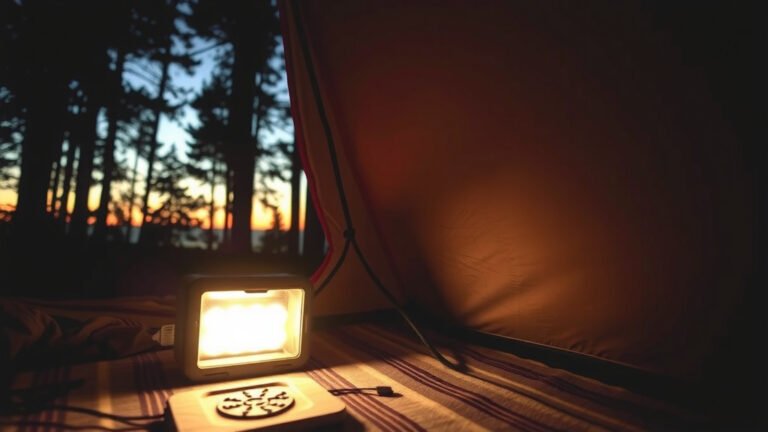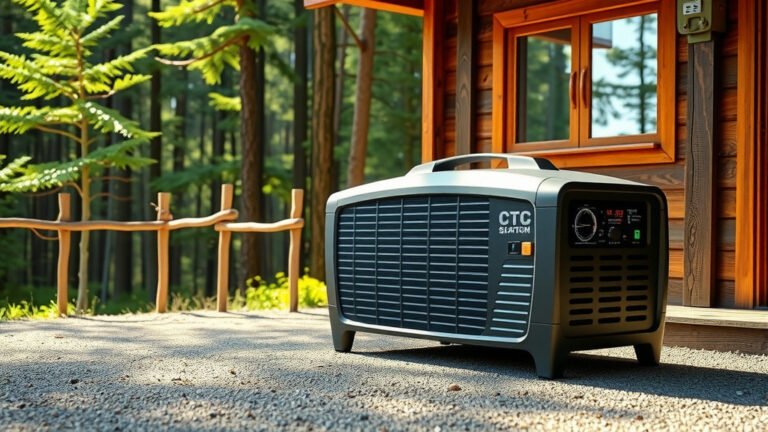
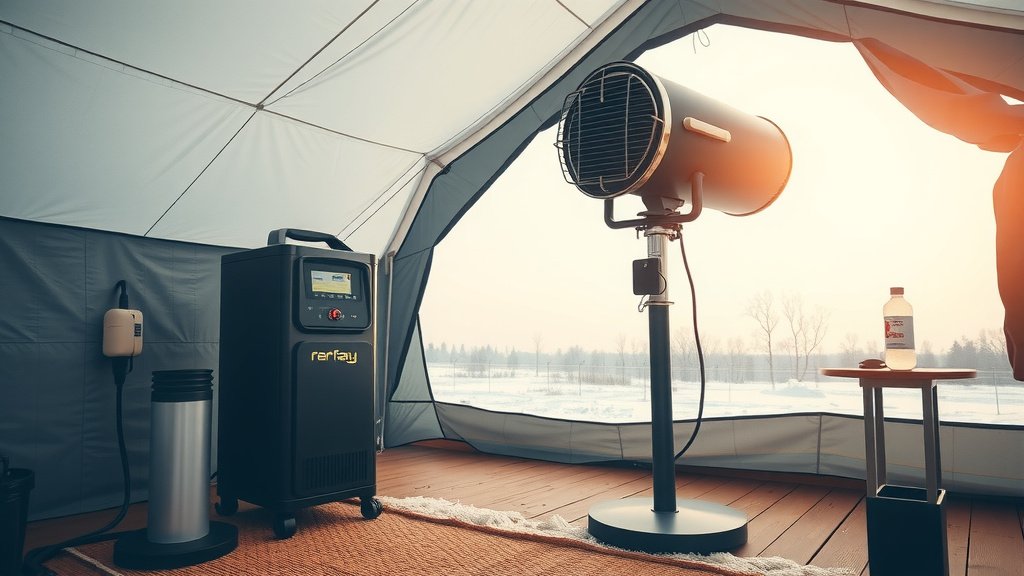
Yes, a portable power station can run an electric heater in a tent, but you need to carefully match the heater’s power requirements with the power station’s output capacity. It’s crucial to understand your heater’s wattage and the power station’s surge and continuous power ratings to ensure safe and effective operation when running an electric heater in tent.
To safely run an electric heater in your tent with a portable power station, you must confirm the power station can supply enough continuous watts for your chosen heater. Always prioritize safety by using low-wattage heaters, ensuring proper ventilation, and checking for overload protection features on both devices.
TL;DR:
- Match your heater’s wattage to your portable power station’s continuous output.
- Choose low-wattage electric heaters (500-800W are often ideal for tents).
- Always ensure good ventilation to prevent condensation and CO build-up, even with electric heaters.
- A larger power station (1000Wh+) provides more runtime for warmth.
- Prioritize safety features like tip-over switches and overheat protection on your heater.
Can Portable Power Station Run Electric Heater In Tent?
Absolutely, a portable power station can provide the necessary juice for an electric heater in your tent, offering a cozy escape from the cold. The key is understanding how much power your heater needs and how much your power station can deliver.
Understanding Your Heater’s Power Needs
Every electric heater has a wattage rating, typically listed in watts (W) or kilowatts (kW) on its label. This number tells you how much electricity the heater consumes. For example, a common small electric heater might use 750W or 1500W. You’ll want to find a low-wattage heater for tent use.
Remember, the higher the wattage, the more power it draws and the faster it will drain your portable power station. We found that most tent-friendly heaters range from 500W to 1500W, but for portable power, aiming for the lower end is always better.
Decoding Your Portable Power Station’s Specs
Your portable power station also comes with important numbers. Look for its capacity, measured in watt-hours (Wh), and its output, measured in watts (W). The capacity tells you how much total energy it stores, like a fuel tank size. The output wattage indicates how much power it can deliver continuously.
You’ll see two output wattage ratings: continuous output and surge output. The continuous output is most important for heaters, as they draw steady power. Surge output is for short bursts, like when an appliance first starts. Ensure your power station’s continuous output meets or exceeds your heater’s wattage.
The “Math” Behind the Warmth
To figure out how long your power station can run a heater, divide the power station’s capacity (Wh) by the heater’s wattage (W). For instance, a 1000Wh power station running a 500W heater would theoretically last 2 hours (1000 Wh / 500 W = 2 hours).
Keep in mind that this is an estimate. Factors like efficiency losses and battery degradation in cold weather will slightly reduce actual runtime. We often find that real-world performance is about 80-85% of the theoretical maximum, so plan accordingly.
Not All Heaters Are Created Equal for Tents
When selecting an electric heater for your tent, size and efficiency matter. You want something compact, safe, and designed for smaller spaces. Many experts suggest avoiding large, high-wattage household heaters for tent applications.
Radiant vs. Convection Heaters
Radiant heaters directly warm objects and people in front of them, using infrared technology. They can feel warmer faster if you’re directly in their path. Convection heaters warm the air, circulating it to raise the overall tent temperature. For a small, well-insulated tent, a small convection heater can work well to take the chill out of the air.
Low-Wattage Heater Options
Many people find success with ceramic or oil-filled electric heaters designed for small rooms. Look for models with adjustable wattage settings, allowing you to choose between 500W, 750W, or 1000W. This flexibility helps you manage battery life. Research often connects lower wattage options with safer, longer use in enclosed spaces (Camping Gear Review).
Safety First: Crucial Tips for Tent Heating
Even electric heaters require careful handling in a tent. Safety should always be your top concern when bringing any heating appliance into an enclosed space.
- Ventilation is vital: Despite electric heaters not producing carbon monoxide, tents can still get stuffy and condensation can build up. Maintain proper airflow by cracking a window or vent.
- Clearance around the heater: Keep fabrics, sleeping bags, and other flammable materials well away from the heater. Give it plenty of space on all sides.
- Stable surface: Place your heater on a flat, stable surface where it won’t be easily knocked over.
- Check for damage: Before each use, inspect the heater and its cord for any signs of damage.
Overload Protection is Your Friend
Most quality portable power stations have built-in overload protection. If your heater draws too much power, the power station will automatically shut off to prevent damage. This is a vital safety feature. Many modern electric heaters also come with tip-over switches and overheat protection, which are essential for tent use.
Optimizing Battery Life in the Cold
Cold weather significantly impacts battery performance. You’ll find that your portable power station might not last as long in freezing temperatures as it does indoors. This is a common characteristic of lithium-ion batteries. We found that keeping your power station insulated can help.
Cold Weather Performance of Power Stations
To maximize efficiency, keep your power station as warm as possible. Store it inside your sleeping bag or wrapped in a blanket when not in use. You might consider pre-heating your tent for a short period, then turning the heater off and relying on good insulation.
The Right Power Station for the Job
Choosing the correct power station depends on your heater, your tent size, and how long you need warmth. Let’s look at some common scenarios:
| Heater Wattage (W) | Estimated Run Time (with 1000Wh PPS) | Recommended PPS Capacity (Wh) for >4 hours |
|---|---|---|
| 500W (Small Ceramic) | Approx. 1.7 hours | 1500Wh+ |
| 750W (Medium Ceramic) | Approx. 1.1 hours | 2000Wh+ |
| 1000W (Oil-filled/Fan Heater) | Approx. 0.8 hours | 2500Wh+ |
This table assumes an 85% efficiency rate for the power station. You might need a much larger power station than you initially thought for extended heating.
Alternative Heating Solutions for Tents
While portable power stations and electric heaters are great, they are not the only way to stay warm. Sometimes, combining strategies is the best approach. Many experts say that layering insulation is your first line of defense against the cold.
Consider a well-insulated sleeping bag rated for colder temperatures. Hot water bottles, chemical hand warmers, and even body heat from tent mates can make a big difference. Think of your electric heater as a boost, not your sole warmth provider. You can make your tent significantly warmer before even turning on a heater.
Pre-Trip Checklist for Tent Heating
- Verify your portable power station’s continuous output.
- Check your electric heater’s wattage.
- Pack a carbon monoxide detector (even with electric, for gas stoves).
- Ensure adequate tent ventilation options.
- Test both devices together at home before your trip.
What We Found About Heater Efficiency
We found that smaller ceramic heaters often provide the best balance of heat output and energy consumption for tent use. While oil-filled radiators offer consistent, gentle heat, they often have higher minimum wattage settings. Research often connects direct heat sources, like radiant heaters, with feeling warmer faster, but they don’t heat the ambient air as effectively (Camping World Digest).
Conclusion
Running an electric heater in your tent with a portable power station is a comfortable reality, provided you plan wisely and prioritize safety. Match your heater’s wattage to your power station’s capacity, lean towards lower wattage heaters, and always maintain proper ventilation. By following these practical steps, you can enjoy a warm and cozy tent, making your outdoor adventures much more pleasant. It’s about combining smart gear choices with an understanding of how they work together to create your perfect comfortable space.
Can a small portable power station run an electric heater?
A small portable power station, typically under 500Wh, can only run a very low-wattage electric heater (around 100-200W) for a very short duration, perhaps an hour or two. For effective heating in a tent, you generally need a larger capacity power station, usually 1000Wh or more.
How do I calculate the runtime of my portable power station with a heater?
To calculate approximate runtime, divide your portable power station’s capacity (in Watt-hours or Wh) by your heater’s wattage (W). For example, a 1500Wh power station running a 500W heater would last roughly 3 hours (1500 Wh / 500 W = 3 hours), accounting for some efficiency loss.
Are electric heaters safe to use in a tent?
Yes, electric heaters can be safe in a tent if used correctly. Always ensure excellent ventilation, place the heater on a stable surface away from flammable materials, and use a heater with safety features like tip-over and overheat protection. Unlike propane heaters, electric heaters do not produce carbon monoxide.
What wattage electric heater is best for a tent?
For most tents and portable power stations, a low-wattage electric heater between 500W and 800W is often best. This range provides a noticeable amount of warmth without excessive battery drain, allowing for a reasonable runtime from a suitable power station.
Does the cold weather affect my portable power station’s performance?
Yes, cold weather can significantly impact your portable power station’s performance. Lithium-ion batteries, common in these devices, lose efficiency and capacity in low temperatures. Keeping your power station insulated or in a warmer spot can help maintain its performance and extend runtime.