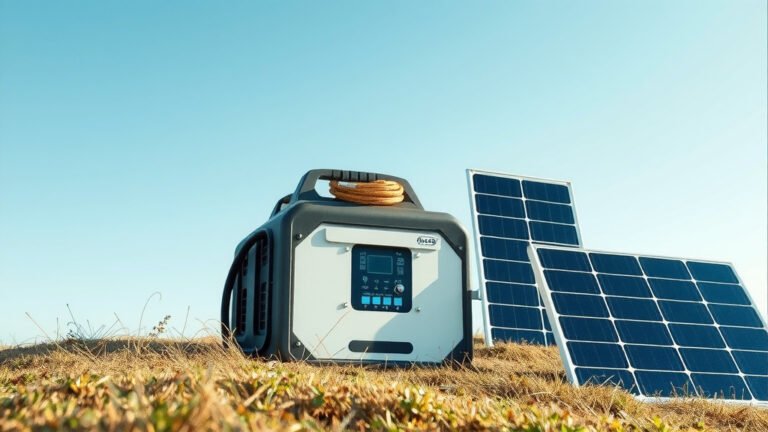
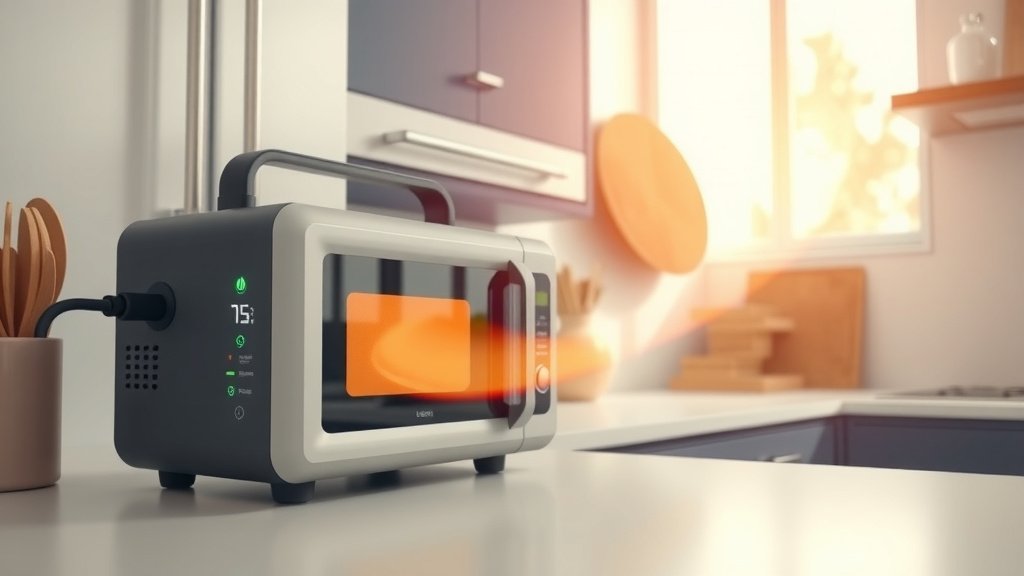
Yes, a portable power station can run a microwave oven, but its ability depends heavily on the power station’s wattage output and the microwave’s power consumption.
To successfully run your microwave, you’ll need a portable power station with a continuous power output higher than your microwave’s wattage requirement.
- Most portable power stations can run small microwaves if their wattage matches.
- Always check your microwave’s power needs and the power station’s continuous output.
- Larger power stations, generally 2000W and above, are often needed for standard household microwaves.
- Remember to consider surge power for the microwave’s initial startup phase.
- The power station’s battery capacity will determine how long you can actually cook.
Can Portable Power Station Run Microwave Oven?
Running a microwave oven with a portable power station is definitely possible. Many people wonder if their go-to cooking appliance will work during a power outage or on a camping trip. The straightforward answer is yes, as long as you have the right equipment.
We found that the key is matching the power station’s output to your microwave’s input. It’s like pairing socks; you need two that fit perfectly to get the job done right.
Understanding Your Microwave’s Power Needs
Before you even think about plugging in, you need to know your microwave’s power appetite. Most microwaves list their wattage on a sticker on the back or inside the door. This number tells you how much electricity it needs to operate.
Often, microwaves require a significant amount of power. Small, compact models might use around 600-800 watts, while standard kitchen microwaves can demand 1000-1500 watts, or even more. We always suggest you **double-check this wattage** first.
What is Continuous vs. Surge Wattage?
When looking at portable power stations, you’ll often see two wattage ratings: continuous and surge. Understanding these is vital for microwave use.
The continuous wattage is the power level the station can consistently supply. This is the number you need to match or exceed your microwave’s operating wattage. It’s like a car’s cruising speed.
Surge wattage refers to the temporary peak power the station can provide for a few seconds. Appliances like microwaves often draw a higher burst of power when they first start up. This momentary surge needs to be within the power station’s surge rating.
Why Continuous Wattage Matters Most
While surge power is important for startup, the continuous wattage is what keeps your food cooking. If your power station’s continuous output is lower than your microwave’s requirement, the microwave simply won’t run, or it might trip the power station’s overload protection. Many experts say that **prioritizing continuous wattage** is crucial.
Always ensure your portable power station has a continuous power output that is at least equal to, or ideally a little higher than, your microwave’s operating wattage. This provides a buffer and helps prevent issues.
Matching Your Power Station to Your Microwave
So, how do you find the perfect match? It’s about knowing both sides of the equation. First, get your microwave’s wattage. Then, look for a portable power station that can handle that load consistently.
Think of it as choosing the right-sized battery for your phone. A tiny battery won’t keep a large smartphone going for long, if at all. The same applies here; **bigger power needs a bigger station**.
Small Microwaves: The Easier Match
If you have a compact or low-wattage microwave, often found in dorm rooms or RVs, you’ll have an easier time. These might only need 600-800 watts. We found that many mid-range portable power stations (1000W-1500W continuous output) can handle these without much fuss.
These smaller units are great for quick reheats or basic cooking tasks. They also tend to **draw less battery power**, meaning longer run times.
Standard Microwaves: A Bigger Challenge
For your typical 1000W-1200W household microwave, you’ll need a more robust portable power station. Research often connects these higher wattage demands with power stations offering 2000W or more in continuous output. This ensures both **startup surge and consistent operation**.
These larger power stations come with a higher price tag and are heavier, but they offer the versatility to run more power-hungry appliances. It’s a trade-off between portability and raw power.
Battery Capacity: How Long Can You Cook?
Wattage tells you if something will run, but battery capacity tells you for how long. Capacity is usually measured in Watt-hours (Wh) or Kilowatt-hours (kWh). A higher Wh rating means your power station can supply power for a longer duration.
To estimate run time, divide the power station’s capacity (Wh) by your microwave’s wattage (W). For example, a 2000Wh power station running a 1000W microwave could theoretically last for 2 hours. However, real-world efficiency losses mean it will be less, so **always factor in some buffer**.
Inverter Type: Pure Sine Wave is Best
Modern sensitive electronics, including most microwaves, prefer pure sine wave inverters. These provide a clean, consistent power output that mimics grid power. Many experts recommend selecting a portable power station with a **pure sine wave inverter**.
Modified sine wave inverters are cheaper but can sometimes cause issues with sensitive appliances, leading to inefficiencies or even damage over time. For your microwave, **stick with pure sine wave** for peace of mind.
Power Station Features to Look For
Beyond wattage and battery capacity, consider other features. Does it have multiple AC outlets? How quickly does it recharge? Does it support solar charging? These elements contribute to the **overall usability and convenience** of the power station.
A clear display showing input/output wattage and remaining battery life is also incredibly helpful. This lets you monitor your power usage and avoid unexpected shutdowns, ensuring you’re always in the know.
Choosing the Right Portable Power Station for Your Microwave
Making the right choice can feel like a maze, but it doesn’t have to be. Here’s a simple guide to help you choose:
| Microwave Type | Typical Wattage | Recommended PPS Continuous Output |
|---|---|---|
| Small (700-800W) | 700-800W | 1000W – 1500W |
| Mid-Size (900-1000W) | 900-1000W | 1500W – 2000W |
| Standard (1100-1200W) | 1100-1200W | 2000W – 2500W+ |
This table offers a general guideline. Remember that **specific models vary**, so always consult the actual product specifications for both your microwave and the power station.
Practical Tips for Running a Microwave on Battery Power
Once you have your setup, here are a few pointers to get the most out out of it:
- Cook in shorter bursts: Instead of one long cook time, try running your microwave for shorter intervals, like 30-60 seconds, then stirring and repeating. This can be easier on the power station.
- Use lower power settings: If your microwave has power level options, choose a lower setting when possible. This reduces the **instantaneous power draw**.
- Check for other loads: Make sure no other high-wattage appliances are running from the same power station simultaneously. A microwave is often a significant load on its own.
- Keep the power station charged: Always start with a fully charged power station. You don’t want to run out of juice halfway through cooking.
- Monitor the display: Pay attention to the power station’s screen. It often shows remaining battery life and power draw, helping you manage usage.
Maximizing Your Power Station’s Lifespan
Proper usage also protects your investment. Avoid regularly pushing your power station to its absolute limits. Consistent overloading can degrade battery health over time. Treat your power station well, and it will **serve you reliably for years**.
Consider the power station’s cooling system. Good ventilation helps prevent overheating, especially when running high-draw appliances like microwaves. Ensure the **vents are clear and unobstructed**.
Safety First: Important Considerations
Working with electricity always requires caution. Always use your portable power station in a well-ventilated area. Never block its cooling vents. Overheating can damage the unit and create safety hazards. Many guidelines point to **proper ventilation as a good first step** (government safety guidelines).
Only use the appropriate cables and accessories provided or recommended by the manufacturer. If you notice any strange smells, smoke, or excessive heat, immediately turn off the power station and disconnect the microwave. Your **safety should always be your top concern**.
The Convenience of Portable Microwave Power
Imagine having hot food whenever and wherever you want it. That’s the real benefit of pairing a microwave with a portable power station. Whether it’s for **emergency preparedness, off-grid living, or simply enjoying a hot meal** at a tailgate, this combination brings immense convenience.
No more cold sandwiches during a blackout! With the right setup, you can enjoy all the comforts of home, even when you’re far away from a wall outlet. It opens up a new world of possibilities for portable cooking.
Conclusion
Running a microwave oven with a portable power station is not only possible but also a fantastic way to enhance your comfort and preparedness. The secret lies in understanding your microwave’s wattage and selecting a power station with adequate continuous output and battery capacity. Always opt for a pure sine wave inverter for optimal performance and appliance protection. By making an informed choice and following a few practical tips, you can enjoy hot meals anywhere, transforming your outdoor adventures or providing peace of mind during power outages. So, go ahead, heat up that coffee or leftovers – your portable power station is ready for the challenge!
Can a 1500W portable power station run a microwave?
A 1500W continuous output portable power station can run smaller microwaves, typically those rated around 700-800 watts. For microwaves needing 1000W or more, a 1500W station might struggle or only manage very short bursts, as it needs to handle both the continuous draw and the initial surge.
How long can a 2000Wh power station run a 1000W microwave?
A 2000Wh power station running a 1000W microwave could theoretically run for about 2 hours (2000Wh / 1000W = 2 hours). However, due to inverter efficiency losses and other factors, expect actual run time to be closer to 1.5-1.8 hours. Short cooking cycles will extend the usable time.
Do all microwaves have the same wattage?
No, microwaves vary significantly in their wattage requirements. Smaller, compact models often range from 600-800 watts, while standard household microwaves typically fall between 900-1200 watts. Always check the specific wattage of your microwave, usually found on its label.
What kind of inverter do I need for a microwave?
You should always choose a portable power station with a pure sine wave inverter if you plan to run a microwave. Pure sine wave inverters provide clean and stable power that is safe for sensitive electronics and ensures optimal microwave performance, preventing potential damage or inefficient operation.
Is it safe to run a microwave from a portable power station indoors?
Yes, it is generally safe to run a microwave from a portable power station indoors, provided the power station itself is designed for indoor use and you ensure proper ventilation. Make sure the power station’s cooling vents are not blocked, and follow all safety guidelines from the manufacturer to prevent overheating.