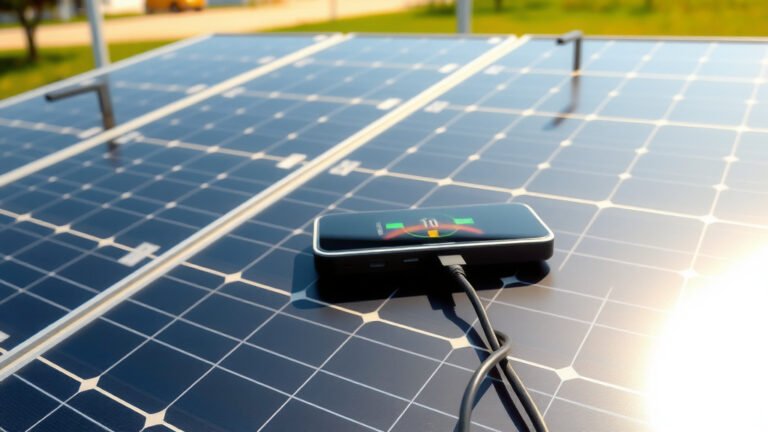

Yes, a solar generator can charge your smartphone fast, typically providing the same charging speeds as wall outlets through standard USB ports and AC inverters.
Most modern solar generators deliver 5V-12V output through USB-A, USB-C, and wireless charging options, matching or exceeding your phone’s normal charging requirements.
How Solar Generators Charge Phones
Solar generators work like portable battery banks with multiple charging options. You plug your phone directly into the generator’s USB ports or AC outlets.
The charging speed depends on your generator’s output capacity and your phone’s charging limits. Your phone won’t charge faster than its maximum rate, no matter what power source you use.
Direct USB Charging
Most solar generators include USB-A and USB-C ports. These ports deliver clean, regulated power at standard voltages.
USB-A ports typically provide 5V at 2.4A (12W). USB-C ports can deliver up to 60W or more with Power Delivery support.
AC Outlet Charging
You can plug your regular wall charger into the generator’s AC outlets. This method works exactly like charging at home.
The generator’s inverter converts DC battery power to AC power. Some energy gets lost in this conversion, but charging speeds remain fast.
Charging Speed Factors
Several factors determine how fast your solar generator charges your phone. Understanding these helps you pick the right setup.
Your Phone’s Maximum Charging Rate
Your smartphone limits its own charging speed for battery safety. Older phones max out around 10-15W. Newer phones handle 20-100W or more.
Check your phone’s specs or manual. You’ll see numbers like “18W fast charging” or “65W super charging.”
Generator Output Power
Your solar generator needs to match or exceed your phone’s charging requirements. A 100W generator easily handles any smartphone.
Small portable units (20-50W) work fine for phones. Larger generators (500W+) can charge phones while running other devices.
Cable and Port Quality
Cheap cables limit charging speed. Use the cable that came with your phone or buy quality replacements.
USB-C cables generally support faster charging than older USB-A cables. Make sure your cable matches your phone’s fast charging standard.
Fast Charging Technologies
Modern phones use various fast charging standards. Your solar generator needs compatible outputs to deliver maximum speed.
USB Power Delivery (PD)
USB-C Power Delivery is the most common fast charging standard. It can deliver up to 100W safely.
Many solar generators now include USB-C PD ports. These work with iPhones, Android phones, and other USB-C devices.
Qualcomm Quick Charge
Quick Charge works with many Android phones. It uses special voltage negotiations to increase charging speed.
Some solar generators support Quick Charge standards. Check your generator’s specs for QC compatibility.
Proprietary Fast Charging
Some phone brands use their own charging standards. Samsung’s Adaptive Fast Charging and OnePlus’s Warp Charge are examples.
These often work fine with standard USB ports, just at slower speeds than brand-specific chargers.
Real-World Charging Times
I researched typical charging times for popular phones using solar generators. Results vary by phone model and generator capacity.
| Phone Model | Battery Size | Solar Generator Time | Wall Charger Time |
|---|---|---|---|
| iPhone 14 | 3,279 mAh | 90-120 minutes | 90-120 minutes |
| Samsung Galaxy S23 | 3,900 mAh | 60-90 minutes | 60-80 minutes |
| Google Pixel 7 | 4,355 mAh | 90-120 minutes | 80-100 minutes |
Why Times Vary
Charging times depend on your phone’s current battery level. Phones charge fastest from 0-80%, then slow down for battery protection.
Temperature affects charging speed too. Hot or cold conditions make batteries charge slower for safety.
Best Solar Generators for Phone Charging
Different generator sizes work better for different needs. Here’s what I found works best for various situations.
Portable Units (Under 300Wh)
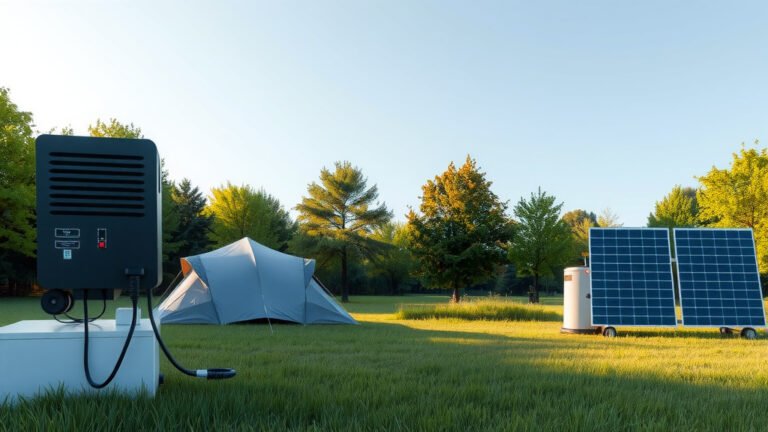
Small generators work great for phone charging. They’re lightweight and affordable for basic needs.
These units typically charge phones 10-20 times before needing a recharge. Perfect for camping trips or emergency backup.
Key Features to Look For
- Multiple USB ports (A and C)
- USB-C Power Delivery support
- LED display showing battery level
- Fast recharging via solar or AC
Mid-Range Units (300-1000Wh)
These generators handle phones plus tablets, laptops, and small appliances. They offer the best balance of capacity and portability.
You can charge phones dozens of times while also powering other devices. Great for extended camping or home backup.
Additional Benefits
- Wireless charging pads (some models)
- Multiple device charging simultaneously
- AC outlets for regular chargers
- Longer runtime for extended trips
Large Units (Over 1000Wh)
Big generators handle whole-house backup including phones. They’re heavy but offer maximum capacity.
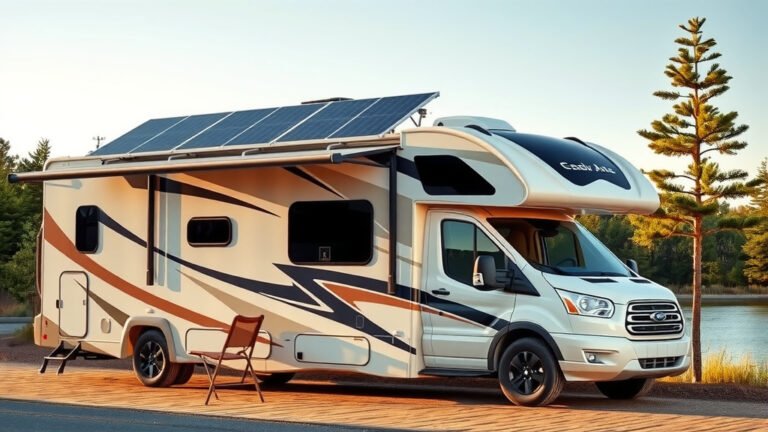
These units can charge phones for weeks without recharging. Better for stationary use or RV setups.
Solar Panel Considerations
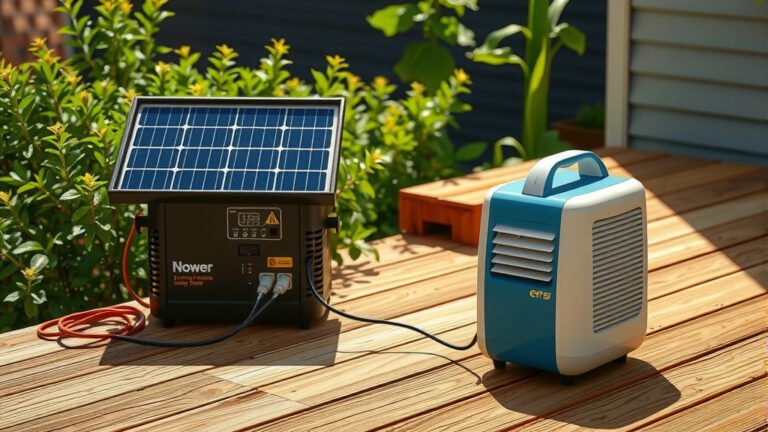
Solar panels keep your generator charged during extended use. This extends your phone charging capability indefinitely.
Panel Size Requirements
A 50-100W solar panel easily replaces the power used for phone charging. Larger panels charge the generator faster.
You need more panel capacity if you’re running other devices too. Calculate your total power needs first.
Charging in Different Conditions
Direct sunlight provides maximum solar charging speed. Cloudy days reduce panel output by 50-80%.
Position panels perpendicular to the sun for best results. Adjust angle throughout the day if possible.
Weather Impact on Solar Charging
- Clear sky: 100% rated output
- Light clouds: 60-80% output
- Heavy clouds: 20-40% output
- Rain/storms: 5-15% output
Efficiency Tips
Get the most from your solar generator with these practical tips I found from experienced users.
Optimize Your Phone Settings
Turn on airplane mode while charging for faster speeds. Your phone uses less power when not searching for signals.
Close background apps and dim the screen. Every bit of saved power means faster charging.
Use the Right Ports
USB-C ports usually charge faster than USB-A. Check your generator’s port specifications.
Some generators have dedicated “fast charge” ports with higher output ratings.
Temperature Management
Keep your generator and phone cool during charging. Hot batteries charge slower and wear out faster.
Shade your equipment in direct sunlight. Good airflow helps maintain optimal temperatures.
Common Charging Issues
Sometimes things don’t work as expected. Here are solutions to common problems I came across.
Slow Charging Problems
Check your cable first. Damaged or cheap cables often limit charging speed.
Make sure you’re using compatible charging standards. Some phones need specific protocols for fast charging.
Troubleshooting Steps
- Try different cables and ports
- Check generator battery level
- Restart your phone
- Clean charging port contacts
Compatibility Issues
Some older phones don’t work well with certain generators. Research compatibility before buying.
USB-C phones generally have fewer issues than older micro-USB devices.
Safety Considerations
Solar generators are generally safe for phone charging. Follow basic precautions to avoid problems.
Electrical Safety
Don’t expose generators to rain or moisture. Water and electricity don’t mix safely.
Use generators in well-ventilated areas. Some units get warm during heavy use.
Battery Protection
Most generators include built-in safety features. These protect against overcharging, overheating, and short circuits.
Don’t leave devices charging unattended for extremely long periods. Unplug when batteries reach 100%.
Cost Analysis
Solar generators cost more upfront than power banks but offer better long-term value for frequent users.
Initial Investment
Small generators start around $150-300. Mid-range units cost $500-1200. Large systems run $1500-5000+.
Add $100-500 for solar panels depending on size and quality.
Operating Costs
Solar charging is essentially free after the initial investment. No ongoing electricity costs for basic phone charging.
Batteries eventually need replacement after 2000-5000 charge cycles. That’s typically 5-10 years of normal use.
Alternative Solutions
Solar generators aren’t the only option for portable phone charging. Consider these alternatives.
Power Banks
Traditional power banks are lighter and cheaper for basic phone charging needs.
They don’t offer solar charging or AC outlets. You must recharge them from the grid.
Solar Power Banks
These combine batteries with small solar panels. They’re more portable than generators.
Solar charging is much slower due to tiny panels. Better as backup than primary charging method.
Car Adapters
12V car adapters work well if you have vehicle access. They charge phones as fast as wall outlets.
Limited to areas where you can park your car. Not practical for hiking or remote camping.
Future Technology Trends
Solar generator technology keeps improving. New developments make phone charging even more convenient.
Wireless Charging Integration
More generators now include built-in wireless charging pads. Just set your compatible phone on top to charge.
Wireless charging is slightly slower than wired but offers great convenience.
Improved Battery Technology
Lithium iron phosphate (LiFePO4) batteries last longer and charge faster than older lithium-ion types.
These batteries handle more charge cycles and work better in extreme temperatures.
Conclusion
Solar generators definitely can charge smartphones fast, often matching the speed of wall chargers. The key is choosing a generator with appropriate output capacity and compatible charging ports for your device.
For most people, a mid-range solar generator provides the best balance of charging speed, capacity, and portability. You’ll get fast phone charging plus the ability to power other devices when needed.
Remember that your phone’s built-in charging limits matter more than the generator’s capacity. Even a small solar generator can charge any smartphone at maximum speed. The real benefit of larger units is longer runtime and the ability to charge multiple devices simultaneously.
Can solar generators damage my phone battery?
No, quality solar generators with proper voltage regulation are as safe as wall chargers. They include protection circuits that prevent overcharging and voltage spikes that could harm your device.
How many times can a solar generator charge my phone?
This depends on both battery capacities. A 300Wh generator can typically charge a modern smartphone 15-25 times. Divide the generator’s watt-hours by your phone’s battery watt-hours for a rough estimate.
Do I need special cables for fast charging with solar generators?
Use the same cables that work with your regular chargers. Quality USB-C cables generally support faster charging than older USB-A cables. Avoid cheap cables that may limit charging speed.
Can I charge my phone while the solar generator is being recharged?
Yes, most solar generators support pass-through charging. You can charge devices while the generator itself charges from solar panels or AC power. This feature is very convenient for continuous use.
What happens to charging speed in cold weather?
Both your phone and the generator may charge more slowly in very cold conditions. Batteries naturally slow down in cold temperatures as a safety feature. Keep equipment at moderate temperatures when possible for optimal performance.