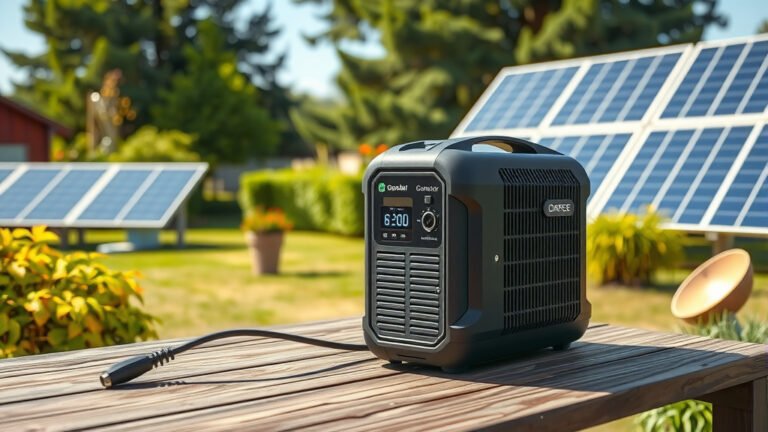
Yes, a solar generator can power an induction cooktop, but its feasibility heavily depends on the generator’s power output and the cooktop’s wattage requirements.
You will need a solar generator with a high continuous wattage output and sufficient battery capacity to handle the induction cooktop’s significant power draw.
- TL;DR: Powering an induction cooktop with a solar generator is possible but requires a very robust unit.
- Induction cooktops demand high wattage, often 1500W-1800W for a single burner.
- Your solar generator needs a matching or higher continuous output and a large battery (2000Wh+).
- Always check your cooktop’s specific power rating and your generator’s specifications.
- Using lower settings on the cooktop can extend your generator’s run time.
Does Solar Generator Work With Induction Cooktop?
You’re wondering if your solar generator can handle the power demands of an induction cooktop, and that’s a smart question to ask.
The straightforward answer is yes, it can, but with some very important considerations about power and capacity.
Understanding Induction Cooktop Power Needs
Induction cooktops are incredibly efficient, but they also draw a lot of power when operating. Think of them like a powerful tool.
A typical single-burner induction cooktop can demand anywhere from 1000 watts (W) to 1800W, sometimes even more, especially on high settings.
This is a significant electrical load, far more than charging a phone or running a light.
Many experts emphasize checking the specific wattage rating of your cooktop before attempting to power it with any generator.
The Heart of the Matter: Your Solar Generator’s Output
Your solar generator’s ability to power an induction cooktop hinges on its inverter’s output capacity.
The inverter is the component that converts the battery’s DC power into the AC power your cooktop needs.
We found that a solar generator must have a continuous output wattage equal to or greater than your cooktop’s demand.
Continuous vs. Peak Power: What’s the Difference?
When you look at generator specs, you will see both continuous (or running) wattage and peak (or surge) wattage.
Continuous wattage is what the generator can reliably supply over a longer period, like when you’re cooking a meal.
Peak wattage is a temporary burst of power, often needed for a few seconds when an appliance first starts up.
For an induction cooktop, the **continuous wattage** is what matters most for sustained operation.
Battery Capacity: How Long Can You Cook?
Even if your generator can handle the wattage, its battery capacity dictates *how long* it can run the cooktop.
Battery capacity is measured in watt-hours (Wh) or kilowatt-hours (kWh).
A larger Wh number means more cooking time before the battery runs dry.
Consider a 1500W induction cooktop. If you have a 2000Wh solar generator, you might get just over an hour of cooking, accounting for efficiency losses.
Calculating Your Cook Time
To estimate run time, divide your generator’s battery capacity (Wh) by your cooktop’s wattage (W).
Then, factor in an efficiency loss, which is usually around 10-20% for the inverter.
For example: (Generator Wh / Appliance W) x 0.85 (for 15% loss) = Estimated Run Time in hours.
Choosing the Right Solar Generator for Induction Cooking
If induction cooking is a priority, you will need to be selective when buying a solar generator.
This isn’t a task for smaller, portable units designed just for charging phones and laptops.
You are looking for a powerhouse.
Look for High Inverter Output
Many experts agree that for a typical single induction burner, a solar generator with at least 1800W continuous output is a good starting point.
For maximum flexibility, aim for 2000W or higher if your budget allows.
This provides a buffer and handles various cooktop models.
Prioritize Large Battery Capacity
A battery capacity of 2000Wh or more is generally recommended for practical induction cooking sessions.
Smaller capacities might only give you enough time to boil water, not prepare a full meal.
Consider how often and how long you plan to cook.
Here’s a quick guide to what you might need:
| Induction Cooktop Wattage | Minimum Generator Continuous Output | Recommended Battery Capacity (Wh) |
|---|---|---|
| 1000W – 1200W | 1200W | 1500Wh+ |
| 1300W – 1500W | 1500W – 1800W | 2000Wh+ |
| 1600W – 1800W | 1800W – 2200W | 2500Wh+ |
Practical Tips for Using Your Setup
Even with a capable solar generator, you can optimize your cooking experience and extend battery life.
Start with Lower Power Settings
Induction cooktops often have many power levels. Using a lower setting draws less wattage from your generator.
You might need to cook a little longer, but you will save significant battery power.
Avoid Other High-Drain Devices
While cooking, try not to run other major appliances off the same generator.
Things like hair dryers, microwaves, or electric kettles can quickly overload your system or drain the battery faster.
Monitor Your Generator’s Display
Most modern solar generators have a display showing current wattage output and remaining battery life.
Keep an eye on this. It gives you a real-time understanding of your power usage.
Here’s a checklist before you cook:
- Confirm your cooktop’s exact wattage.
- Verify your generator’s continuous output.
- Check the generator’s battery level.
- Disconnect other high-wattage devices.
- Plan your cooking duration.
What If Your Generator Isn’t Powerful Enough?
If your current solar generator falls short, do not force it. Overloading it can trigger safety shutdowns or, worse, damage the unit.
You may need to consider upgrading your solar generator or exploring alternative cooking methods for off-grid situations.
Are There Alternatives to Induction Cooktops?
Absolutely! If your solar generator cannot handle an induction cooktop, or if you seek more energy-efficient cooking, you have options.
Propane Stoves and Camp Cookers
These are very popular for camping and off-grid use because they do not rely on electricity at all.
They are incredibly efficient and provide instant heat.
Lower Wattage Electric Options
Consider smaller appliances that draw less power. A 600W electric kettle or a 700W slow cooker is much easier on a solar generator.
Even a low-wattage hot plate (if you can find one that’s truly low) might work for simple tasks.
Conclusion
Powering an induction cooktop with a solar generator is certainly possible, but it requires careful consideration and the right equipment. You will need a robust solar generator with a high continuous wattage output and ample battery capacity to meet the demands of an induction cooktop. Do your research, understand your appliance’s needs, and choose a generator that can truly handle the load. With the right setup, you can enjoy the efficiency of induction cooking even when you are off the grid.
FAQs
How much wattage does an induction cooktop typically use?
A single-burner induction cooktop generally uses between 1000W and 1800W when operating, with larger or dual-burner models requiring even more power.
Can a 1000W solar generator power an induction cooktop?
A 1000W continuous output solar generator is likely too small for most induction cooktops. Most models will exceed this wattage, causing the generator to shut down or fail to operate the cooktop effectively.
How long can a 2000Wh solar generator run a 1500W induction cooktop?
A 2000Wh solar generator could run a 1500W induction cooktop for approximately 1 hour to 1 hour and 15 minutes, depending on inverter efficiency and whether the cooktop is running at full power continuously.
Are there any risks to using an undersized solar generator with an induction cooktop?
Yes, using an undersized generator can lead to frequent overloads and shutdowns, frustration, and potential damage to the generator or cooktop. It is always safer to use a generator that exceeds the appliance’s wattage requirements.
What is the most important spec to check on a solar generator for induction cooking?
The most important specifications to check are the solar generator’s **continuous AC output wattage** and its **battery capacity (Wh)**. These two figures will tell you if it can run the cooktop and for how long.