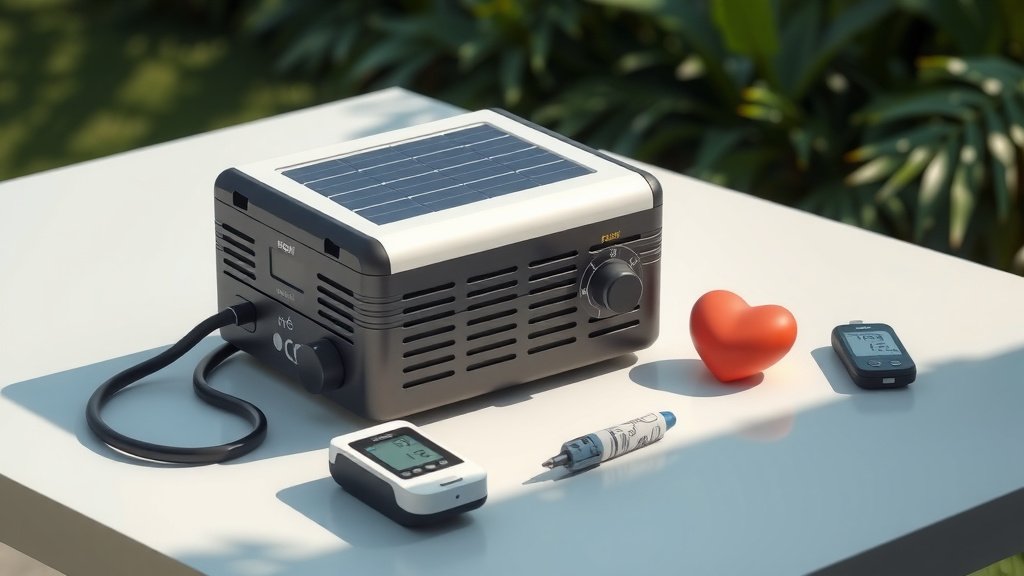
Yes, a solar generator can run many medical devices, but you need to match the device’s power requirements with your generator’s capacity.
The key is checking wattage, runtime needs, and whether your medical equipment requires pure sine wave power output.
What Medical Devices Can Solar Generators Power?
Solar generators work well for most home medical equipment. I researched common devices and found that many fall within typical generator capacity ranges.
You can power devices like CPAP machines, oxygen concentrators, nebulizers, and small medical refrigerators. Blood pressure monitors, glucose meters, and heating pads also work great.
Low-Power Medical Equipment
These devices use minimal power and run for hours on most solar generators:
- CPAP machines (30-60 watts)
- Blood pressure monitors (5-15 watts)
- Glucose meters (2-5 watts)
- Nebulizers (50-100 watts)
- Heating pads (20-50 watts)
Medium-Power Medical Devices
These need more capacity but still work with mid-range generators:
- Oxygen concentrators (300-600 watts)
- Small medical refrigerators (100-200 watts)
- Electric wheelchairs (200-500 watts for charging)
- Hospital beds (100-300 watts)
Power Requirements You Need to Know
Understanding watts and watt-hours makes the difference between success and frustration. Your medical device label shows power consumption in watts.
Continuous vs Surge Power
Some devices need extra power to start up. This surge power can be 2-3 times higher than running power. Your solar generator must handle both.
A CPAP machine might run on 50 watts but need 150 watts to start. Make sure your generator covers the higher number.
Runtime Calculations
Battery capacity tells you how long devices will run. A 1000Wh generator powers a 100-watt device for about 8-10 hours.
Here’s the simple math: Battery capacity ÷ device watts = rough runtime hours. Account for some efficiency loss.
Pure Sine Wave vs Modified Sine Wave
Medical equipment often requires pure sine wave power. This clean power protects sensitive electronics and motors.
Modified sine wave generators cost less but can damage medical devices or make them work poorly. Don’t risk it with life-supporting equipment.
Why Medical Devices Need Clean Power
CPAP machines, oxygen concentrators, and monitors have precise electronic components. Dirty power causes malfunctions, shorter device life, or complete failure.
I found that most quality solar generators now include pure sine wave inverters. Check this feature before buying.
Solar Generator Sizing for Medical Needs
Size your generator based on your most important device plus some backup capacity. Don’t cut it close with medical equipment.
| Generator Size | Best For | Runtime Examples |
|---|---|---|
| 500-1000Wh | CPAP, small devices | CPAP for 10-15 hours |
| 1500-2000Wh | Oxygen concentrator | O2 concentrator for 4-6 hours |
| 3000Wh+ | Multiple devices | Several devices simultaneously |
Adding Solar Panel Capacity
Solar panels recharge your generator during daylight. This extends runtime and provides daily power renewal.
Match panel wattage to your daily power consumption. If you use 500Wh daily, aim for 200-400 watts of solar panels.
CPAP Machines and Solar Generators
CPAP users ask about solar power more than any other medical device. Good news: most generators handle CPAPs easily.
CPAP Power Consumption
Basic CPAP machines use 30-60 watts. Add a heated humidifier and consumption jumps to 90-150 watts.
Skip the humidifier during power outages to double your runtime. Many users find this acceptable for emergency situations.
DC Power Options
Some CPAP machines accept 12V DC power directly. This saves battery by skipping the inverter conversion.
Check if your CPAP has a DC adapter option. Direct DC power can improve efficiency by 10-15%.
Oxygen Concentrators and Power Needs
Oxygen concentrators need significant power – typically 300-600 watts continuously. This challenges smaller generators.
Portable vs Home Concentrators
Portable oxygen concentrators use much less power than home units. Battery-powered portables often charge from solar generators easily.
Home concentrators need larger generators and sufficient solar charging to maintain daily operation.
Backup Oxygen Strategies
Don’t rely solely on solar power for oxygen therapy. Keep backup options like portable tanks or battery-powered concentrators.
Solar generators work great as primary power but medical safety requires redundancy.
Medical Refrigeration Considerations
Insulin, medications, and vaccines need consistent refrigeration. Small medical fridges work well with properly sized solar generators.
Compressor Startup Power
Refrigerator compressors need 3-5 times their running power to start. A 150-watt fridge might need 600 watts briefly.
Your generator’s surge capacity must exceed this startup power. Most quality units handle this automatically.
Temperature Stability
Medical refrigeration requires tight temperature control. Monitor fridge temperatures during solar generator operation.
Consider fridges with battery backup or extra insulation for added medication safety.
Safety Considerations for Medical Use
Using solar generators with medical devices requires extra caution. Lives depend on reliable power.
Regular Testing and Maintenance
Test your solar generator monthly with actual medical devices. Don’t discover problems during emergencies.
Keep generators charged and check battery health regularly. Replace aging batteries before they fail.
Multiple Backup Plans
Solar power should be one part of your medical power plan. Include battery backups, car adapters, and emergency contacts.
Weather can limit solar charging for days. Plan for extended cloudy periods or winter conditions.
Cost Considerations and Insurance
Medical-grade solar generators range from $500 to $5000 depending on capacity and features.
Insurance Coverage Options
Some insurance plans cover backup power for medical equipment. Check with your provider about solar generator coverage.
Medicare sometimes covers power sources for oxygen concentrators and other prescribed devices.
Documentation Requirements
Keep medical prescriptions and power requirement documentation. Insurance companies need proof of medical necessity.
Installation and Setup Tips
Setting up solar generators for medical use requires planning and proper connections.
Location and Ventilation
Place generators in well-ventilated areas away from living spaces. Even lithium units can generate heat during heavy use.
Solar panels need clear southern exposure for maximum charging efficiency.
Cable Management
Use appropriate extension cords rated for your device power. Medical equipment deserves quality connections.
Label all cables and keep spare adapters. Emergency situations aren’t times to hunt for connectors.
Monitoring and Alerts
Modern solar generators include phone apps for remote monitoring. Set up low battery alerts for medical device operation.
Battery Level Warnings
Configure alerts when battery drops to 30% and 10%. This gives time to reduce load or find alternative power.
Some generators automatically shut down at low voltage to protect the battery. Know your unit’s behavior.
Conclusion
Solar generators can absolutely run medical devices when properly sized and configured. The key is matching your specific medical equipment needs with appropriate generator capacity and features.
Start by listing your medical devices and their power requirements. Choose a pure sine wave generator with 50% more capacity than your calculated needs. Don’t forget surge power requirements and always maintain backup plans.
Your health and safety are worth investing in quality equipment and proper planning. Solar generators provide excellent medical device power when you do the homework upfront.
Can I run a CPAP machine all night on a solar generator?
Yes, most 1000Wh or larger solar generators can run a CPAP machine for 8-10 hours without the heated humidifier, or 5-7 hours with humidification enabled.
Do medical devices require special electrical connections with solar generators?
No special connections are needed, but ensure your solar generator provides pure sine wave power output, which most medical devices require for safe operation.
How do I calculate if my solar generator is large enough for my oxygen concentrator?
Divide your generator’s battery capacity by your concentrator’s wattage. A 2000Wh generator running a 400W concentrator provides about 4-5 hours of operation.
Can solar panels charge the generator while it’s powering medical equipment?
Yes, most solar generators can charge and discharge simultaneously, extending runtime during daylight hours and potentially providing indefinite operation with adequate solar panel capacity.
What happens to my medical device if the solar generator battery dies suddenly?
Medical devices will stop working immediately when power cuts off. Always monitor battery levels closely and have backup power sources ready, including car adapters or additional charged generators.