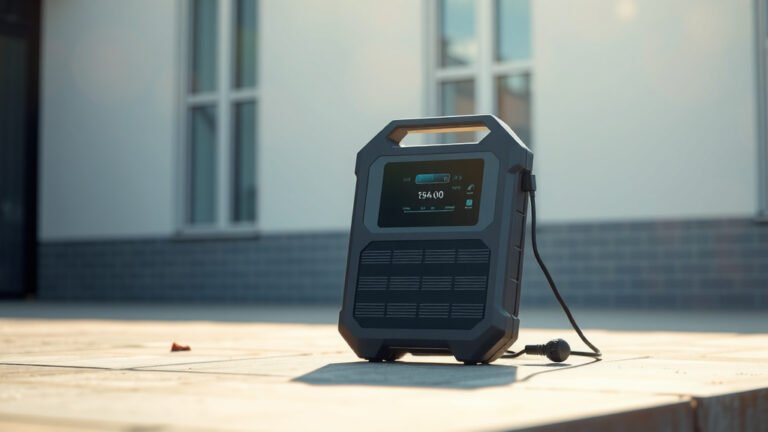
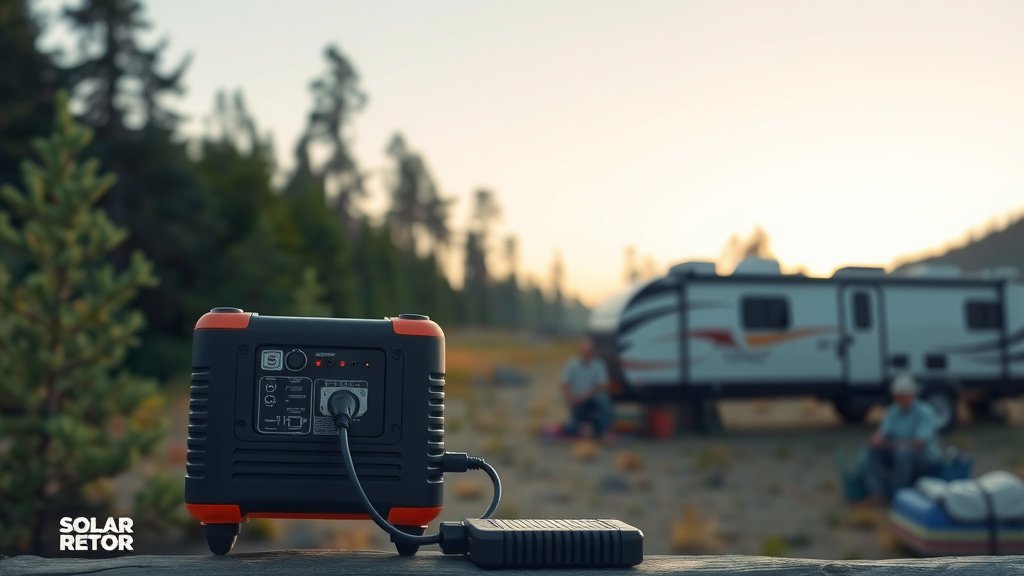
Yes, a solar generator can absolutely run many of your trailer appliances, giving you the freedom to power your adventures off-grid.
The key to successfully powering your trailer appliances with a solar generator lies in understanding your power needs and matching them with the right solar generator system.
TL;DR:
- Solar generators can power many trailer appliances, but not all heavy-duty ones.
- Match your generator’s capacity (wattage and Wh) to your appliance needs.
- Start with a power audit of your trailer to know what you’ll run.
- Prioritize essential appliances and consider energy-efficient alternatives.
- Expandability, portability, and safety features are important when choosing a system.
Can Solar Generator Run Trailer Appliances?
Yes, solar generators are very capable of running many common trailer appliances. They offer a clean, quiet, and renewable way to enjoy comfort while camping or traveling.
You can power things like lights, small kitchen appliances, and even some air conditioners, depending on the generator’s size.
Understanding Solar Generators for Trailer Use
Think of a solar generator as a large, portable battery with an inverter, charging controller, and ports. It captures energy from solar panels, stores it, and then converts it into usable AC power for your appliances.
This setup means you have access to electricity even when you’re far from traditional hookups. It’s like having a mini power plant on wheels!
What’s Inside a Solar Generator?
Inside, you’ll find several important components working together. There’s the battery (often LiFePO4 for durability), the inverter to change DC to AC, and a charge controller to manage power from solar panels.
This integrated design makes them user-friendly and ready for your trailer adventures.
Assessing Your Trailer’s Power Needs
Before you pick a solar generator, you need to know what you plan to power. This is often called a power audit or energy assessment. It helps you avoid overspending or ending up with too little power.
Grab a pen and paper, and let’s figure this out together.
Calculate Appliance Wattage and Run Time
Look at your appliances and find their wattage. This number tells you how much power they draw when running. Some items, like microwaves, have a very high wattage but run for short bursts.
Other items, like a small fan, use less power but might run for many hours. We found that most appliances list their wattage on a sticker or in the user manual.
Example Trailer Appliance Power Demands
Let’s look at some common appliances you might want to run:
- Small lights (LED): 5-15 watts
- Laptop charger: 50-100 watts
- Phone charger: 5-15 watts
- Small fan: 20-50 watts
- Coffee maker: 800-1500 watts (short burst)
- Microwave: 700-1500 watts (short burst)
- Mini-fridge: 60-100 watts (on average, cycles)
- CPAP machine: 30-60 watts
Understanding these numbers will guide your generator choice. Many experts say that knowing your total daily Wh (watt-hours) consumption is the most important step.
Choosing the Right Solar Generator Size
Solar generators come in many sizes. They are typically measured by their continuous wattage output (how much power they can deliver at one time) and their battery capacity in watt-hours (Wh) or kilowatt-hours (kWh).
A higher wattage lets you run more demanding appliances, while higher Wh means you can run them for longer.
Matching Wattage to Your Appliances
If you want to run a coffee maker that needs 1000 watts, your solar generator must have a continuous output of at least 1000 watts. If you add a microwave needing 1200 watts, you’d need a generator with at least 1200 watts of output.
Remember, you usually won’t run everything all at once.
Battery Capacity (Wh) for Longer Runs
The battery capacity determines how long your generator can power your devices. For example, a 1000Wh battery running a 100-watt appliance could theoretically last 10 hours.
However, many factors like temperature and inverter efficiency reduce this slightly. We found that planning for about 80% of the stated capacity is a good rule of thumb.
Solar Panel Pairing for Charging
Your solar generator needs solar panels to recharge its battery. The size and number of panels affect how quickly your generator recharges, especially on sunny days.
More panels mean faster charging, which is great for continuous use.
Optimizing Solar Charging Efficiency
Placing your panels in direct sunlight without shadows is key. Angling them towards the sun also makes a big difference. Many experts suggest portable, foldable solar panels for trailers because they are easy to set up and adjust.
Remember, charging times vary with weather and panel size (NIH).
Common Trailer Appliances and Solar Generator Compatibility
Most small to medium trailer appliances work well with solar generators. Here’s a quick overview:
| Appliance | Typical Wattage | Solar Generator Capability |
|---|---|---|
| Lights (LED) | 5-15W | Excellent |
| Phone/Tablet Charger | 5-15W | Excellent |
| Laptop Charger | 50-100W | Excellent |
| Fan | 20-50W | Good |
| Mini Fridge | 60-100W (avg) | Good (requires larger battery) |
| Coffee Maker | 800-1500W | Good (requires high wattage output) |
| Microwave | 700-1500W | Good (requires high wattage output) |
| Hair Dryer | 1000-1800W | Challenging (high burst power) |
| AC Unit (small) | 600-1500W | Challenging (requires very large system) |
Energy Saving Tips for Trailer Living
To get the most out of your solar generator, consider being more energy-efficient. Every watt you save extends your battery life and reduces the need for constant recharging.
Think of it as stretching your power budget.
Quick Energy-Saving Checklist
- Swap old light bulbs for LED lights.
- Unplug devices when not in use to avoid phantom drain.
- Use a pressure cooker or propane stove instead of electric ones.
- Insulate your trailer better to reduce heating/cooling needs.
- Cook outdoors on a campfire or portable grill when possible.
- Open windows for cooling instead of using AC.
Safety Considerations for Solar Generators
Using any electrical equipment requires a basic understanding of safety. Solar generators are generally very safe, but a few practices will keep you and your trailer safe.
Always follow the manufacturer’s guidelines.
Best Practices for Safe Operation
Keep your generator in a well-ventilated area, away from water. Avoid overloading it by checking appliance wattages. Many models have built-in safety features like overcharge protection and short-circuit protection (UL Standards).
Still, common sense goes a long way.
Conclusion
Yes, a solar generator can absolutely power your trailer appliances, giving you a quiet, clean, and independent power source for your adventures. By taking the time to assess your specific power needs, choosing the right-sized generator, and practicing energy efficiency, you can enjoy all the comforts of home on the road.
Embrace the freedom of off-grid living with a reliable solar setup!
FAQs About Solar Generators and Trailers
Can a solar generator run a trailer’s air conditioner?
Running a trailer’s air conditioner with a solar generator is possible, but it requires a very powerful system. AC units are usually the largest power draw. You would need a solar generator with a high continuous output (1500W+) and a substantial battery capacity (2000Wh or more), plus ample solar panel input for recharging. It’s often the most challenging appliance to power.
How long can a solar generator power a trailer?
The duration a solar generator can power a trailer depends on its battery capacity and your daily energy consumption. A small generator might last a few hours with basic use, while a larger system (2000Wh+) could sustain essential appliances for a day or more, especially with good solar recharging. Knowing your total daily watt-hour usage is key to estimating run time.
Are solar generators quiet enough for campsites?
Yes, solar generators are virtually silent. Unlike traditional gas generators that produce noise and fumes, solar generators operate without any combustion, making them ideal for quiet campsites, national parks, and residential areas where noise is a concern. They provide power without disturbing the peace.
What size solar panels do I need to recharge a solar generator for my trailer?
The size of solar panels you need depends on your generator’s battery capacity and how quickly you want it to recharge. For a typical 1000Wh to 2000Wh solar generator, a 200W to 400W solar panel array is a common starting point. More panels mean faster charging, especially if you have significant daily power consumption or cloudy days.
Can I use a solar generator with my trailer’s existing electrical system?
You can connect a solar generator to your trailer’s existing electrical system, but it often requires specific setup and understanding. Many people use them to power individual appliances directly from the generator’s outlets. For a more integrated solution, some trailer owners connect the solar generator to their trailer’s shore power inlet via an adapter, effectively running the entire 120V AC system from the generator. Always consult an expert if you plan a complex integration.