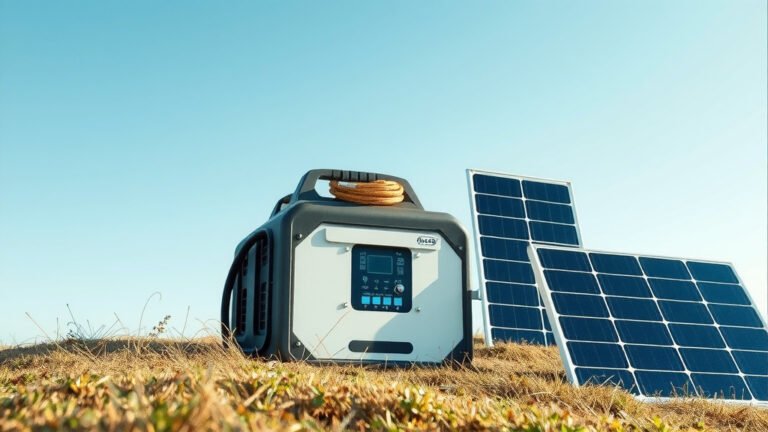

Yes, a solar generator can run appliances in a tiny home, but your power needs and generator capacity must match. Most modern solar generators handle basic appliances like lights, fans, and small electronics easily.
The key is choosing the right size solar generator and managing your power consumption wisely. A 1000-2000 watt solar generator works well for most tiny home setups.
What Appliances Can You Actually Power?
Let me break this down for you. Your solar generator’s watt capacity determines what you can run. Think of it like a water pipe – the bigger the pipe, the more water flows through.
Most tiny home dwellers find success with these common appliances:
- LED lights (5-15 watts each)
- Laptop computers (50-100 watts)
- Phone chargers (10-25 watts)
- Small fans (20-75 watts)
- Coffee makers (800-1200 watts)
- Mini fridges (100-400 watts)
High-Power Appliances You Need to Watch
Some appliances are power hungry beasts. These can drain your solar generator fast:
- Air conditioners (1000-3000+ watts)
- Electric heaters (1500-5000 watts)
- Hair dryers (1000-1875 watts)
- Microwaves (700-1200 watts)
- Electric stoves (2000-5000 watts)
I found through research that many tiny home owners use propane for cooking and heating. This saves precious battery power for other needs.
How Much Solar Generator Capacity Do You Need?
Your daily power consumption tells the whole story. Most tiny homes use between 20-40 kWh per day if fully electric.
But here’s the smart approach. Calculate your actual needs first:
The Simple Power Calculation Method
List every appliance you want to run. Write down its wattage. Multiply by hours of daily use.
Example calculation:
- LED lights: 50 watts × 8 hours = 400 watt-hours
- Laptop: 75 watts × 6 hours = 450 watt-hours
- Mini fridge: 150 watts × 24 hours = 3,600 watt-hours
- Fan: 50 watts × 12 hours = 600 watt-hours
Total daily need: 5,050 watt-hours (about 5 kWh)
Recommended Solar Generator Sizes
Based on what I researched from tiny home communities, here are the sweet spots:
Basic Setup (1000-1500Wh)
Good for lights, electronics, and small appliances. Perfect if you use propane for cooking and heating.
Moderate Setup (2000-3000Wh)
Handles most appliances except air conditioning. Works for year-round living in mild climates.
Full Power Setup (5000Wh+)
Can run almost everything, including some AC units. Best for hot climates or all-electric tiny homes.
Real-World Challenges You’ll Face
Let’s talk about what actually happens when you live this lifestyle. It’s not always sunshine and unlimited power.
Weather Dependencies
Cloudy days cut your solar charging by 60-80%. Winter months in northern areas can be tough.
I came across data showing that solar panels produce 25% less power in winter compared to summer. Plan for this seasonal dip.
Peak Power vs Continuous Power
Your solar generator might handle 2000 watts peak but only 1000 watts continuous. This matters for high-draw appliances.
Running a hair dryer for 10 minutes? Probably fine. Running an electric heater all day? You’ll likely trip the system.
Smart Power Management Strategies
Living off solar power means becoming friends with efficiency. Here are the tricks that work:
Time Your High-Power Use
Run power-hungry appliances during peak sun hours (10 AM – 3 PM). Your batteries charge while you use power.
Many experts recommend this approach. It reduces stress on your battery system.
Use Energy-Efficient Appliances
Swap regular bulbs for LEDs. Choose Energy Star appliances. Every watt saved extends your runtime.
A 12V DC fridge uses 60% less power than a standard AC fridge. These small changes add up big.
DC vs AC Appliances
DC appliances skip the inverter conversion. This saves 10-15% of your power right there.
Look for 12V fans, lights, and fridges. RV supply stores carry tons of these efficient options.
Backup Power Options
What happens when your solar generator runs low? Smart tiny home owners have backup plans.
Generator Charging
Many solar generators accept AC charging from gas generators. This gives you power during extended cloudy periods.
A small 2000-watt gas generator can recharge most solar power stations in 4-8 hours.
Grid Charging When Available
If you park near electrical hookups, charge up whenever possible. Think of it as topping off your tank.
Cost Considerations
Solar generators aren’t cheap. But they can pay for themselves over time.
| Generator Size | Typical Cost | Best For |
|---|---|---|
| 1000Wh | $800-$1,200 | Weekend trips, basic needs |
| 2000Wh | $1,500-$2,500 | Full-time living, moderate use |
| 5000Wh+ | $4,000-$8,000 | High-power needs, AC units |
Long-Term Savings
Compare this to RV park fees ($30-80 per night) or gas generator fuel costs. Solar pays back faster than you think.
I found that full-time RVers save $500-1500 monthly by going solar. The math works out after 2-3 years.
Installation and Setup Tips
Setting up solar power in your tiny home doesn’t require an engineering degree. But do it right the first time.
Placement Matters
Put solar panels where they get maximum sun exposure. Avoid shade from trees, buildings, or your own roof features.
Tilting panels toward the sun increases power by 20-30%. Simple adjustable mounts work great.
Wiring Safety
Use proper gauge wires and fuses. Electrical fires are no joke in small spaces.
Many people hire electricians for the main connections. It’s worth the peace of mind.
Battery Ventilation
Lithium batteries need airflow. Don’t stuff them in sealed compartments.
Some battery types release gases during charging. Good ventilation keeps everyone safe.
Maintenance Requirements
Solar generators need care to keep working well. The good news? It’s pretty simple.
Panel Cleaning
Dirty panels lose 25% efficiency. Clean them monthly with soap and water.
Bird droppings and dust are the biggest culprits. A soft brush and garden hose do the job.
Battery Health
Don’t let lithium batteries sit at 0% charge. This damages them permanently.
Keep them between 20-80% charge when possible. Full cycles occasionally are fine, but not daily.
Common Mistakes to Avoid
I researched what trips up new solar users. Learn from their mistakes:
Underestimating Power Needs
Don’t guess at your consumption. Measure it first. Many people buy systems too small.
Use a kill-a-watt meter on your current appliances. This gives you real numbers to work with.
Ignoring Surge Requirements
Motors and compressors need 2-3 times their running watts to start up. Factor this in.
Your fridge might run on 150 watts but need 450 watts to start. Size your system accordingly.
Seasonal Considerations
Solar power changes with the seasons. Plan for these variations:
Winter Challenges
Shorter days mean less charging time. Snow can cover panels completely.
Many tiny home owners migrate south for winter. Others add extra battery capacity for cloudy periods.
Summer Advantages
Long sunny days give you power surplus. This is when you can run AC units and high-draw appliances freely.
Use summer months to catch up on any battery conditioning cycles too.
Conclusion
A solar generator absolutely can run appliances in your tiny home when you match the system to your needs. The key is realistic planning and smart power management.
Start by calculating your actual power consumption. Choose a generator with 25% extra capacity for safety. Focus on energy-efficient appliances and good backup plans.
Thousands of people live comfortably in solar-powered tiny homes. With the right setup and realistic expectations, you can join them. The freedom and cost savings make the learning curve worthwhile.
Can a 1000W solar generator power a tiny home?
A 1000W solar generator can power basic tiny home needs like lights, electronics, and small appliances. It won’t handle high-draw items like AC units or electric heaters. This size works best when combined with propane for cooking and heating.
How long will a solar generator run my appliances?
Runtime depends on your generator’s battery capacity and appliance power draw. A 2000Wh generator running 200W of appliances lasts about 10 hours. LED lights and small electronics can run for days, while power-hungry appliances drain it quickly.
Do I need multiple solar generators for a tiny home?
Most tiny homes work fine with one properly sized solar generator. Multiple smaller units can provide redundancy and easier portability. Some people prefer this setup for flexibility, but it costs more than one larger system.
What happens when my solar generator runs out of power?
When batteries drain completely, all connected appliances stop working. You’ll need to recharge via solar panels, AC outlet, or gas generator before using appliances again. Always monitor battery levels and have backup charging methods ready.
Can I expand my solar generator system later?
Many solar generators allow expansion with additional solar panels or external batteries. Check your model’s specifications for maximum input limits. Some systems link together for increased capacity. Plan for future growth when choosing your initial setup.