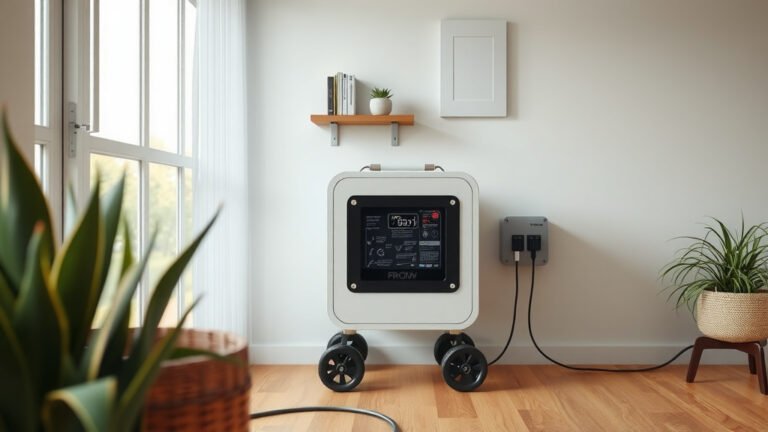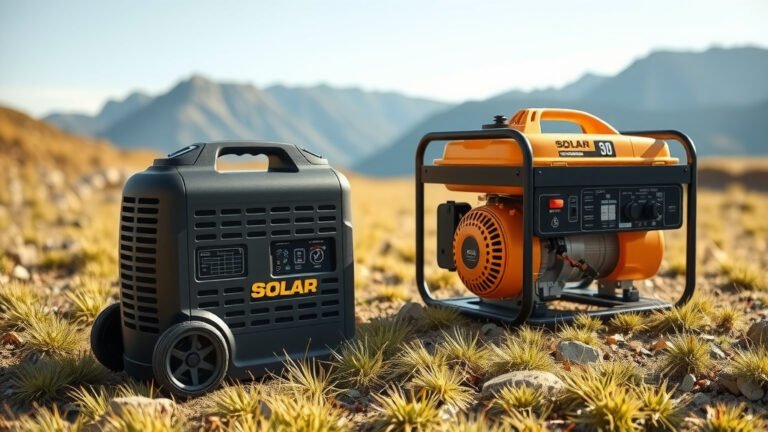

Solar generators can replace traditional generators for most home backup needs, but they work best for smaller appliances and shorter outages.
Your choice depends on your power needs, budget, and how often you lose electricity.
What Makes Solar Generators Different
Think of a solar generator as a big battery pack with solar panels attached. It stores energy from the sun during good weather. When you need power, it gives you clean electricity without noise or fumes.
Traditional generators burn gas or diesel to make electricity on demand. They’re louder and create emissions, but they can run as long as you have fuel.
How Solar Generators Actually Work
Solar panels collect sunlight and turn it into electricity. This power charges a battery inside the generator. When you plug in your devices, the battery sends stored energy through outlets and USB ports.
The whole system stays quiet. No engine noise. No exhaust smell. You can use it indoors safely.
Key Parts You Should Know About
Every solar generator has four main pieces. The solar panels do the collecting. The battery does the storing. An inverter changes the power type your devices need. A charge controller keeps everything safe.
Battery Types Matter
Most solar generators use lithium batteries now. They last longer and weigh less than old lead-acid types. From what I read, lithium batteries can handle 2,000 to 5,000 charge cycles before wearing out.
Power Output Comparison
Here’s where things get real. Traditional generators often produce 3,000 to 8,000 watts continuously. Solar generators usually max out around 1,000 to 3,000 watts.
What does this mean for you? A gas generator can power your whole house during an outage. A solar generator handles your fridge, lights, phone chargers, and maybe a few other things.
Running Time Differences
Gas generators run until the tank empties. Then you add more fuel and keep going. Solar generators run until the battery dies. Then you wait for sun or plug into the wall to recharge.
I found that most portable solar generators give you 8 to 24 hours of power for basic needs. Runtime depends on what you’re powering and battery size.
Recharge Speed Reality Check
Solar panels recharge slowly. Full battery restoration takes 6 to 12 hours of good sunlight. Wall charging is faster but defeats the backup power purpose during outages.
Cost Analysis That Actually Helps
Solar generators cost more upfront. You’ll spend $500 to $3,000 for a decent unit. Comparable gas generators run $300 to $1,500.
But flip the script for ongoing costs. Solar generators need almost no maintenance. No oil changes. No fuel purchases. No tune-ups.
Long-Term Money Math
Gas generators burn through your wallet over time. Fuel costs add up fast during extended outages. Maintenance visits cost money too.
Research shows solar generators pay for themselves after 3 to 7 years if you use them regularly. The break-even point depends on local gas prices and how often you need backup power.
Hidden Costs You Might Miss
Traditional generators need storage space for fuel. They also require annual maintenance to stay reliable. Some areas restrict when you can run them because of noise rules.
Performance in Real Situations
Let’s talk about what happens when the lights actually go out. Solar generators shine during short outages with mild weather. They struggle during week-long blackouts or winter storms.
Your fridge and freezer are the big test. Most solar generators can keep them running for 12 to 48 hours, depending on battery size and outside temperature.
| Appliance | Solar Generator Runtime | Traditional Generator Runtime |
|---|---|---|
| Refrigerator | 12-48 hours | Continuous with fuel |
| LED Lights | 3-7 days | Continuous with fuel |
| Phone Charging | 50-200 charges | Unlimited with fuel |
| TV | 8-20 hours | Continuous with fuel |
Weather Dependency Issues
Here’s the catch many people don’t think about. Solar generators need sun to recharge. Winter storms often bring clouds and short days right when you need power most.
Traditional generators don’t care about weather. Rain or shine, they make electricity as long as fuel flows.
Seasonal Performance Changes
Summer gives you 12 to 14 hours of potential charging time. Winter drops that to 8 to 10 hours. Snow covering panels makes things worse.
Maintenance and Reliability
Solar generators need almost no regular care. Wipe dust off the panels. Check connections once in a while. That’s about it.
Gas generators demand more attention. Oil changes every 100 hours. Air filter cleaning. Spark plug replacement. Fuel system maintenance.
What Actually Breaks
From what I found online, solar generator batteries eventually wear out. This usually takes 10 to 15 years with normal use. Replacement costs vary but expect $200 to $800.
Traditional generators have more moving parts that can fail. Engines need rebuilds. Carburetors get clogged. But parts are widely available and repair shops are common.
Storage Considerations
Solar generators store easily. No fuel degradation problems. No winterization steps. Just keep them in a dry place.
Gas generators need fuel stabilizers for long-term storage. Old gas causes starting problems and engine damage.
Environmental Impact Reality
Solar generators produce zero emissions during use. No carbon monoxide. No air pollution. No contribution to climate change while running.
Traditional generators burn fossil fuels and release exhaust. They’re not terrible for occasional use, but regular operation adds up environmentally.
Manufacturing Footprint
Both types have environmental costs to build. Solar panels require mining and processing. Batteries use lithium and other metals. But these impacts happen once, not continuously.
Who Should Choose Which Option
Solar generators work best if you want quiet, clean backup power for essential items. They’re perfect for people who hate engine noise or live in areas with noise restrictions.
Choose traditional generators if you need to power your whole house or live somewhere with frequent, long outages. They’re also better if sunny weather is rare in your area.
Best Use Cases for Solar
- Urban and suburban backup power needs
- Camping and outdoor activities
- Areas with noise ordinances
- Infrequent, short-duration outages
- Environmentally conscious households
Best Use Cases for Traditional
- Whole-house backup power systems
- Rural areas with extended outages
- High-power tool and equipment needs
- Areas with limited sunlight
- Budget-conscious buyers
The Middle Ground Option
Some people buy both types. A solar generator handles daily needs quietly. A gas generator sits ready for major emergencies. This gives you flexibility but costs more upfront.
Making Your Decision
Start by listing what you absolutely need during a power outage. Add up the watts and hours. This tells you minimum generator size requirements.
Next, think about your local weather patterns and typical outage length. Short, sunny-weather outages favor solar. Long, stormy outages favor traditional generators.
Questions to Ask Yourself
How often does your power go out? What time of year do outages happen most? Do you have south-facing space for solar panels? Can you store gasoline safely?
Your answers point toward the right choice for your situation.
Conclusion
Solar generators can replace traditional generators for many people, but not everyone. They excel at providing clean, quiet backup power for essential needs during shorter outages. Traditional generators still win for whole-house power and extended emergencies.
Your best choice depends on your specific power needs, local weather patterns, and budget. Consider what you actually need to keep running during outages, not what you want to keep running. This realistic approach helps you pick the right generator type and avoid overspending on unnecessary capacity.
Can solar generators work during cloudy weather?
Yes, but they generate much less power. Expect 10-25% of normal output on cloudy days. Heavy clouds can reduce charging to almost nothing, so you’ll rely mainly on stored battery power.
How long do solar generator batteries actually last?
Lithium batteries in solar generators typically last 10-15 years with normal use. They can handle 2,000-5,000 charge cycles before capacity drops significantly. Battery replacement usually costs $200-800 depending on size.
Can I use a solar generator to power my air conditioner?
Most portable solar generators cannot run central air conditioning systems due to high power demands. Some larger units can operate small window AC units for a few hours, but this drains batteries quickly.
Do solar generators work in winter or northern climates?
Solar generators work in winter but with reduced effectiveness. Shorter days and lower sun angles cut charging capacity by 30-60%. Snow covering panels stops charging completely until cleared.
What happens if my solar generator battery dies completely?
Most solar generators protect against complete battery death with built-in cutoffs. If the battery does die completely, you can usually revive it by wall charging or connecting solar panels in good sunlight, though this may take several hours.