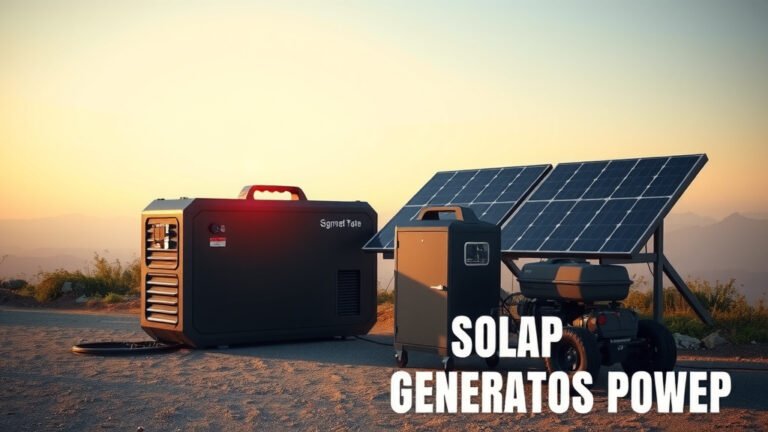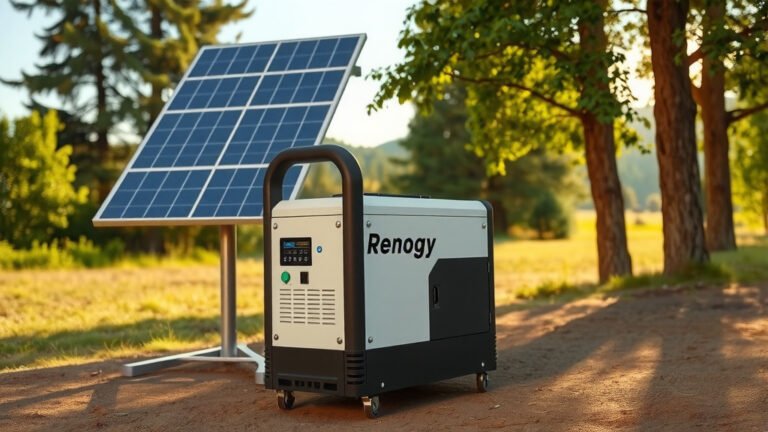
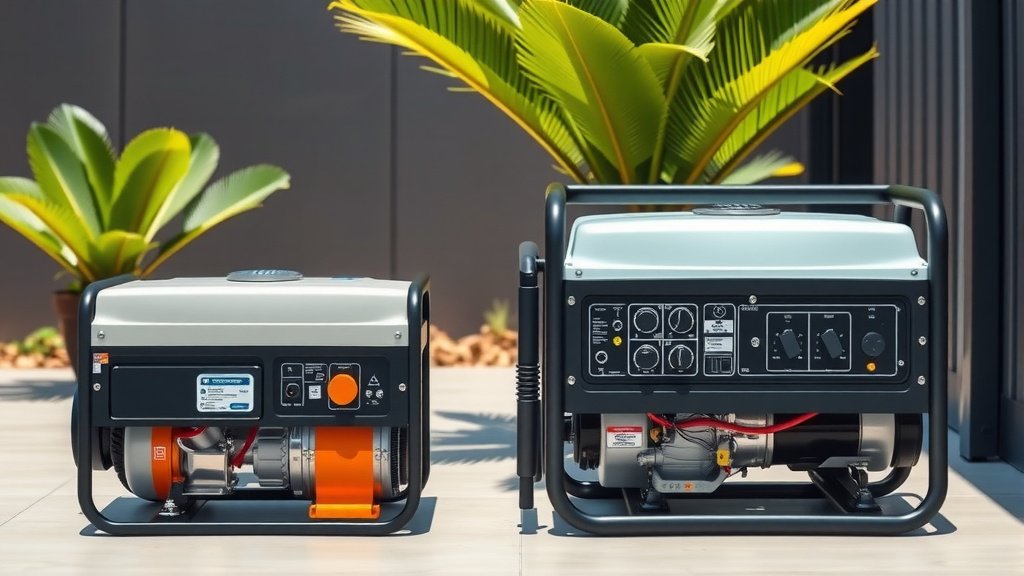
Solar generators cost more upfront but become cheaper than gas generators over time due to zero fuel costs and minimal maintenance needs.
Gas generators have lower purchase prices but require ongoing fuel, oil changes, and repairs that make them more expensive long-term.
Understanding Your Power Generation Options
You’re facing a power outage again. Your neighbor’s gas generator roars to life while you wonder if solar might be the smarter choice. Let’s break down the real costs so you can make the best decision for your wallet and peace of mind.
Both options keep your lights on when the grid fails. But their cost structures work completely differently. Think of gas generators as renting power – you pay every time you use them. Solar generators are more like buying power upfront – higher initial cost but free energy afterward.
Initial Purchase Price Comparison
Gas generators win the sticker price battle hands down. A decent 3,000-watt gas generator costs $400 to $800. Similar-capacity solar generators range from $1,200 to $3,000.
That price gap might make you lean toward gas immediately. But hold on. You’re looking at just one piece of the puzzle. The real question isn’t what you pay today – it’s what you’ll pay over the next five to ten years.
Why Solar Costs More Initially
Solar generators pack expensive lithium batteries and solar panels into portable units. The technology is newer and manufacturing costs remain high. Gas generators use simpler, mass-produced engines that have been around for decades.
I found that many people get sticker shock from solar prices without considering the hidden costs of gas generators. Let me show you what those hidden costs look like.
Ongoing Fuel Costs Tell a Different Story
Here’s where things get interesting. Your gas generator needs fuel every single time you run it. At current gas prices, running a 3,000-watt gas generator costs about $3 to $4 per hour.
Solar generators? Zero fuel costs. Ever. The sun doesn’t send you a bill.
Real-World Fuel Cost Examples
Let’s say you use your generator 50 hours per year (pretty typical for backup power). Your gas costs alone would be:
- Year 1: $150 to $200
- Year 3: $450 to $600
- Year 5: $750 to $1,000
- Year 10: $1,500 to $2,000
Those fuel costs can equal or exceed your original generator purchase price within just a few years. And that’s assuming gas prices don’t rise.
Fuel Storage Challenges
You also need to store gasoline, which degrades over time. Fuel stabilizers help but add more cost. Many people end up wasting gas that sits too long in storage.
Maintenance Costs Add Up Fast
Gas generators are mechanical beasts that need regular care. Oil changes, spark plugs, air filters, and carburetor cleaning are just the basics.
Research shows typical gas generator maintenance runs $100 to $300 per year for moderate use. Solar generators need virtually no maintenance – maybe wiping dust off the solar panels occasionally.
Common Gas Generator Repairs
I came across data showing these frequent repair needs:
- Carburetor problems from old fuel
- Recoil starter failures
- Engine rebuilds after 1,000 to 2,000 hours
- Electrical component replacements
Each repair visit can cost $100 to $500. Solar generators have fewer moving parts, so they break down less often.
Long-Term Cost Analysis
Let’s put it all together with a realistic 10-year comparison. I’ll use a 3,000-watt system with 50 hours of annual use.
| Cost Category | Gas Generator | Solar Generator |
|---|---|---|
| Initial Purchase | $600 | $2,000 |
| Fuel (10 years) | $1,750 | $0 |
| Maintenance (10 years) | $2,000 | $100 |
| Total 10-Year Cost | $4,350 | $2,100 |
The solar generator saves you over $2,000 across ten years. That’s real money back in your pocket.
Break-Even Point
Most people reach the break-even point around year 4 or 5. After that, every hour of solar power is pure savings compared to gas.
Hidden Benefits of Solar Generators
The cost savings don’t stop at fuel and maintenance. Solar generators offer other financial advantages that are harder to quantify but very real.
No Noise Complaints
Gas generators are loud. Really loud. Some neighborhoods restrict their use or limit operating hours. Solar generators run silently, so you can use them anytime without bothering anyone.
Indoor Use Capability
You can safely run solar generators indoors. Gas generators produce deadly carbon monoxide and must stay outside, which limits where and how you can use them.
Lower Insurance Risks
Gas generators create fire hazards from hot surfaces and fuel spills. Some insurance companies offer discounts for solar backup power systems because they’re safer.
When Gas Generators Make More Sense
I don’t want to make this sound one-sided. Gas generators still win in certain situations.
High Power Needs
If you need to run your entire house including air conditioning, gas generators provide more power for less money. Large solar systems that match whole-house gas generators cost $5,000 to $15,000.
Extended Outages
During long cloudy periods, gas generators can run as long as you have fuel. Solar generators need sunny days to recharge or access to AC power.
Immediate Availability
You can buy a gas generator today and use it tonight. Solar generators sometimes have longer shipping times, and you might want to add extra solar panels later.
Regional Factors That Affect Costs
Where you live changes the math. Areas with expensive gas make solar generators more attractive. Regions with cheap natural gas and frequent cloudy weather favor gas generators.
Climate Considerations
Solar generators work best in sunny climates where they can recharge quickly. Cold weather reduces battery capacity, though modern lithium batteries handle temperature changes better than older technologies.
Utility Policies
Some areas offer rebates for solar equipment or battery storage systems. These incentives can reduce your upfront solar costs significantly.
Making the Right Choice for You
Your decision should match your specific needs and usage patterns. Ask yourself these key questions:
- How often will you really use backup power?
- What’s your actual power requirement?
- Do you prioritize upfront savings or long-term value?
- Can you handle gas generator maintenance and storage?
Low-Use Scenarios
If you only need backup power once or twice per year, the higher upfront cost of solar might not pay off quickly enough. Gas could make more sense for very light use.
High-Use Applications
Regular users – like those with frequent outages or off-grid needs – benefit most from solar generators. The fuel savings add up faster with heavy use.
Environmental and Health Factors
Beyond pure economics, solar generators eliminate exhaust fumes and reduce your carbon footprint. Gas generators produce emissions and require fossil fuel consumption.
Many experts now recommend solar for health reasons, especially if you have respiratory issues or live in areas with poor air quality.
Technology Improvements Lower Solar Costs
Solar generator prices continue dropping as battery technology improves and production scales up. Gas generator costs remain fairly stable since the technology is mature.
I found that solar generators from just three years ago cost twice as much for the same capacity. This trend suggests solar will become even more cost-effective over time.
Conclusion
Solar generators cost more upfront but typically save money long-term through eliminated fuel costs and minimal maintenance needs. Gas generators offer lower initial prices but carry ongoing expenses that can double your total investment over ten years.
Your best choice depends on how much power you need and how often you’ll use it. Light, occasional users might prefer gas generators for their low upfront cost. Regular users and those wanting hassle-free backup power will likely save money and gain convenience with solar generators.
The gap continues narrowing as solar technology improves and gas prices rise. For most homeowners seeking reliable backup power, solar generators now offer better long-term value despite their higher purchase price.
Can solar generators power an entire house?
Large solar generators can power essential circuits in most homes, but running everything including air conditioning requires expensive systems costing $10,000 or more. Most people use them for critical items like refrigerators, lights, and electronics.
How long do solar generator batteries last?
Quality lithium batteries in solar generators typically last 2,000 to 4,000 charge cycles, which equals 8 to 15 years of normal use. Battery replacement costs vary but expect to pay $500 to $1,500 depending on capacity.
Do solar generators work during winter?
Solar generators work in winter but charge more slowly due to shorter days and weaker sunlight. Cold weather also reduces battery capacity by 10 to 20 percent, though they still function reliably in freezing temperatures.
Can you charge solar generators with regular electricity?
Yes, most solar generators can charge from wall outlets, car chargers, and solar panels. This flexibility means you’re not completely dependent on sunshine and can prep for outages regardless of weather conditions.
Are solar generators worth it for RV camping?
Solar generators excel for RV use because they’re quiet, can run inside safely, and recharge while driving or parked in sunny spots. The lack of generator hour restrictions at many campgrounds makes them especially valuable for recreational use.