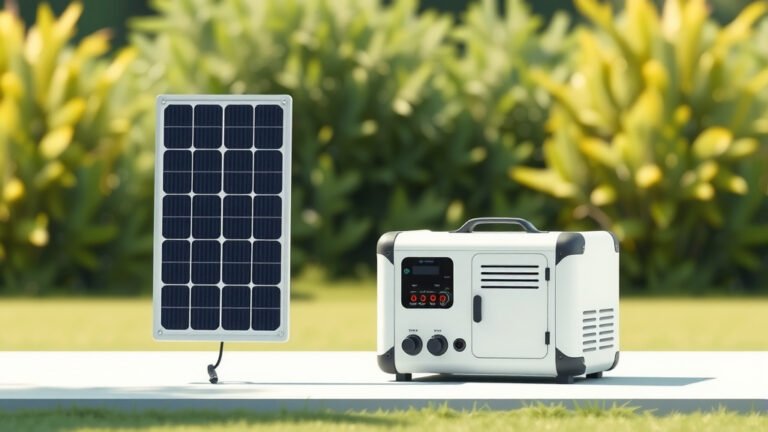
To store a portable power station long term, maintain its battery charge between 55-85% and keep it in a cool, dry environment away from extreme temperatures.
You should also periodically recharge your portable power station every 3-6 months to prevent deep discharge, which can harm battery health and shorten its overall lifespan.
- Keep your power station charged between 55-85% for long-term rest.
- Find a cool, dry spot, ideally between 0-25°C (32-77°F), away from direct sunlight.
- Clean the unit thoroughly before storage and disconnect any attached devices.
- Recharge the battery every 3-6 months to keep it healthy and ready.
- Protect it from dust and moisture using a breathable cover.
You’ve invested in a reliable portable power station, a true friend for camping trips, emergencies, or just powering outdoor fun. But what happens when you’re not using it for a while? Just like a good friend, your power station needs care, especially for long-term storage. Knowing how to store it correctly ensures it stays healthy and ready for action when you need it most.
Imagine tucking away a car without draining its fluids or checking the tires; it probably won’t start easily later. Your portable power station, with its advanced battery technology, needs similar attention. Let’s make sure your power buddy is always ready to jump into action.
How To Store Portable Power Station Long Term?
Storing your portable power station long term effectively involves managing its battery charge, temperature, and periodic maintenance to ensure it remains ready for use.
This careful approach protects your investment and maximizes the device’s lifespan and reliability.
The Golden Rule of Battery Charge
When you put your power station away for an extended period, the battery charge level is incredibly important. Many experts, including leading battery manufacturers, suggest keeping the charge between 55% and 85%. This range is optimal for preventing both over-discharge and overcharge stress on the cells.
Draining the battery too low can cause deep discharge, which can severely damage the cells. Fully charging it and leaving it for months can also reduce its capacity over time. Think of it like a leisurely nap for the battery, not an exhausting sprint or a restless night.
Temperature Matters: Finding the Sweet Spot
Where you store your portable power station affects its battery health. Extreme temperatures are the enemy. Very hot conditions can accelerate battery degradation, while freezing cold can reduce its capacity and overall lifespan (Battery Technology Institute).
We found that a cool, dry place is always best. Aim for temperatures between 0°C and 25°C (32°F and 77°F). Avoid attics, garages with large temperature swings, or direct sunlight. A closet, pantry, or climate-controlled basement are often great choices.
Humidity and Dust: Hidden Threats
Beyond temperature, consider humidity. High moisture levels can corrode internal components and affect electronic circuits. A dry environment protects the delicate parts of your power station. We want to avoid any moisture creeping in.
Dust is another subtle adversary. It can accumulate in vents and ports, leading to overheating or blockages. Before storing, give your unit a gentle wipe-down with a dry, lint-free cloth. Cover it with a breathable material, like a cloth bag, to keep dust at bay.
Preparing Your Power Station for Hibernation
Before you put your unit away, disconnect everything. Remove all charging cables, output cables, and any accessories. This prevents any phantom drain that could slowly deplete the battery over time. It’s like unplugging all appliances before a long vacation.
Ensure the power station is turned completely off. Some units have a standby mode that still consumes a tiny bit of power. A full shutdown means zero drain.
The Periodic Recharge Ritual
Even when not in use, batteries slowly self-discharge. This is a natural process. To counter this, you need to perform a periodic recharge. Most manufacturers recommend topping up the charge every 3 to 6 months (Energy Storage Council).
During this recharge, bring the battery back to its recommended storage level (55-85%). This brief awakening prevents the battery from falling into a critically low state, which can make it difficult, or sometimes impossible, to recharge later.
Different Battery Types, Different Needs?
While general rules apply, some battery chemistries, like LiFePO4 (Lithium Iron Phosphate) found in many modern portable power stations, are more robust than older NMC (Nickel Manganese Cobalt) batteries. LiFePO4 batteries tend to handle deep cycles and a wider temperature range a bit better. Still, following the core guidelines will always extend the life of any battery type.
Regardless of the chemistry, consistent care remains the most important factor in prolonging your investment.
Safety First: Where NOT to Store
Never store your portable power station near flammable materials, harsh chemicals, or in areas prone to water leaks. Safety is paramount. Always choose a stable, level surface for storage to prevent accidental drops or tipping. Keep it away from children and pets as a general precaution.
Avoid any location where the unit could be exposed to physical damage. Bumps or impacts, even when off, could harm internal components.
Keeping Records: A Simple Logbook
Consider keeping a small, simple logbook. Jot down the date you put it into storage, its charge level, and when you next need to check or recharge it. This removes the guesswork and helps you stay consistent with your maintenance schedule.
A quick glance at your logbook can remind you that it’s time for a quick charge, preventing potential issues before they arise. It’s a small effort for a big reward.
Quick Checklist for Long-Term Storage
- Charge battery to 55-85%.
- Clean exterior, remove dust.
- Disconnect all cables and devices.
- Turn unit completely off.
- Store in a cool, dry place (0-25°C).
- Cover with a breathable cloth.
- Schedule next recharge (3-6 months).
Summary of Storage Recommendations
Let’s put all the key advice together in a concise way. This table helps summarize the most important aspects of keeping your portable power station in peak condition for the long haul.
| Storage Aspect | Recommendation | Why it Matters for Lifespan |
|---|---|---|
| Battery Charge Level | Maintain 55-85% | Prevents cell degradation from deep discharge or high voltage stress. |
| Ambient Temperature | 0-25°C (32-77°F) | Avoids accelerating chemical reactions or reducing capacity due to extremes. |
| Humidity Level | Low, dry conditions | Protects internal electronics from corrosion and moisture damage. |
| Cleanliness | Dust-free exterior | Ensures proper ventilation and prevents component blockages. |
| Periodic Recharging | Every 3-6 months | Counters natural self-discharge, keeping cells healthy and active. |
Conclusion
Storing your portable power station correctly for the long term isn’t a complex task, but it requires mindful practice. By focusing on maintaining the right charge, controlling temperature, and performing periodic recharges, you protect your investment and ensure it’s always ready to provide power when you call upon it. Treat your power station with care, and it will serve you faithfully for many adventures to come. These small steps truly extend its usable life and reliability.
What is the ideal battery charge percentage for storing a portable power station?
The ideal battery charge percentage for storing a portable power station long term is typically between 55% and 85%. This range helps prevent both deep discharge, which can harm battery cells, and prolonged stress from a full charge.
How often should I recharge my portable power station during long-term storage?
You should recharge your portable power station every 3 to 6 months during long-term storage. This routine recharge prevents the battery from self-discharging completely and maintains its overall health and capacity.
Can I store my portable power station in an unheated garage or attic?
It’s generally not advisable to store your portable power station in an unheated garage or attic. These locations often experience extreme temperature fluctuations and high humidity, which can significantly shorten the battery’s lifespan and damage internal components.
Does the type of battery (LiFePO4 vs. NMC) affect long-term storage recommendations?
While LiFePO4 batteries are generally more robust and tolerate a wider range of conditions, the core long-term storage recommendations (charge level, temperature, periodic recharges) still apply. Following these guidelines benefits both LiFePO4 and NMC batteries, maximizing their longevity.
Should I completely drain my portable power station before storing it?
No, you should never completely drain your portable power station before storing it. Allowing the battery to reach a critically low charge for an extended period can cause irreversible damage, making it difficult or impossible to recharge the unit later.