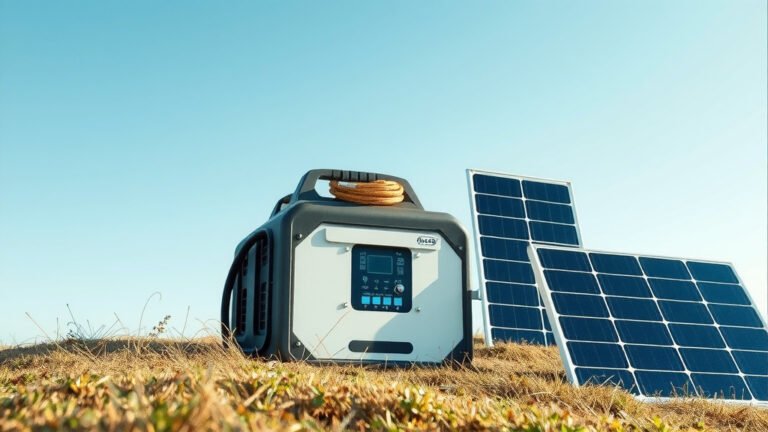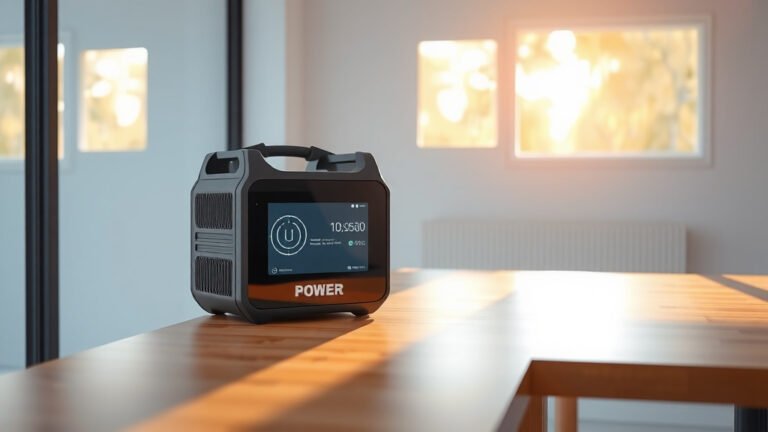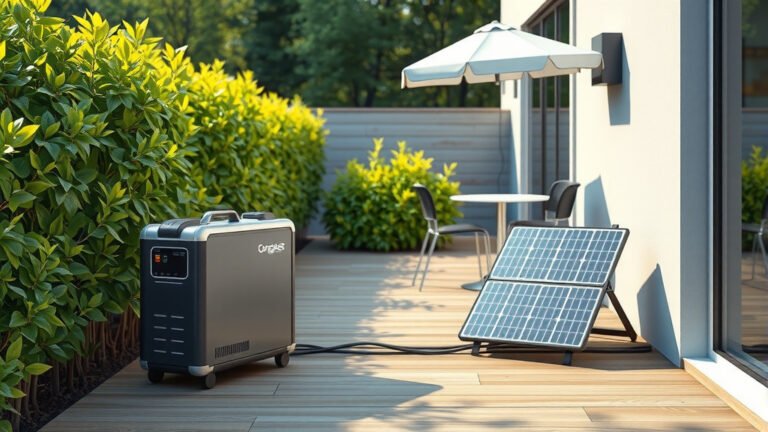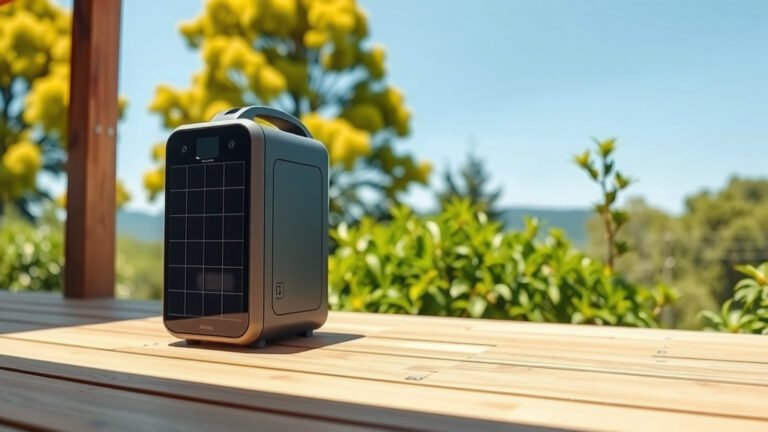
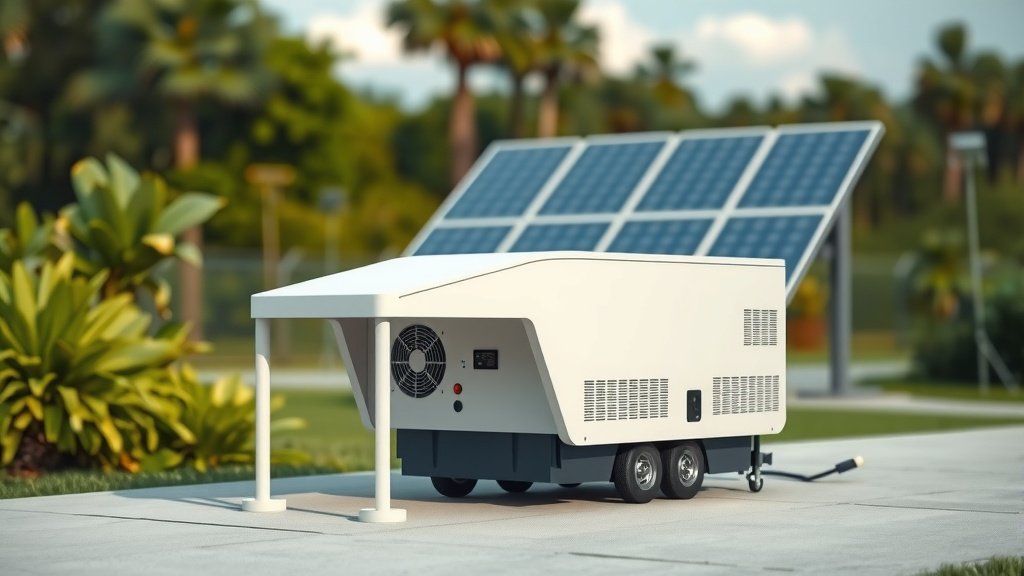
A portable power station is a rechargeable battery pack that provides electricity for your devices when you’re away from wall outlets. It works like a giant power bank that can run laptops, phones, small appliances, and even medical equipment for hours or days.
These compact generators use lithium batteries instead of gas engines, making them silent, clean, and safe to use indoors. You can charge them from wall outlets, car chargers, or solar panels.
How Portable Power Stations Work
Think of a portable power station as your home’s electrical system in a suitcase. It stores energy in lithium-ion batteries and converts that stored power into the electricity your devices need.
The magic happens through an inverter inside the unit. This component changes the battery’s direct current (DC) into alternating current (AC) that powers your household items. Most units also have USB ports and DC outlets for different device types.
Main Components Inside Your Power Station
Every portable power station contains four key parts. The battery pack stores your energy. The inverter converts power types. The charge controller manages incoming electricity. The display screen shows you what’s happening.
Battery Technology Explained
Most modern units use lithium iron phosphate (LiFePO4) batteries. These last longer than older lithium-ion types and handle more charge cycles. From what I read, quality LiFePO4 batteries can work for over 3,000 charge cycles before losing significant capacity.
Types of Portable Power Stations
You’ll find three main categories when shopping for portable power. Each serves different needs and budgets.
Small Personal Units (Under 500Wh)
These lightweight options weigh under 15 pounds. They’re perfect for camping trips, outdoor events, or emergency phone charging. You can power small devices for 1-2 days typically.
- Phones and tablets for multiple days
- Small laptops for 5-8 hours
- LED lights for 20-40 hours
- Small fans for 6-12 hours
Medium Home Backup Units (500-1500Wh)
These mid-size stations handle most home emergencies. They can run your essential devices during short power outages. Many families choose this size for their first backup power solution.
What Medium Units Can Power
You can run a full-size refrigerator for 8-15 hours. Your internet router and modem will work for days. Small appliances like coffee makers work for several cycles. Laptops and phones charge dozens of times.
Large Whole-Home Systems (1500Wh+)
These powerful units can run your entire home for hours or days. Some expandable models grow to 10,000Wh or more with extra battery packs. They’re getting popular as home energy storage systems.
Key Features to Look For
Shopping for portable power can feel overwhelming. Focus on these essential features first, then consider the extras.
Power Capacity (Watt-Hours)
This number tells you how much energy the unit stores. More watt-hours mean longer runtime for your devices. Calculate your daily power needs before choosing a size.
Here’s a simple way to estimate: Add up the watts of devices you want to run. Multiply by hours of use per day. That gives you daily watt-hours needed.
Output Power (Watts)
This measures how much power flows out at once. Higher output lets you run bigger appliances. Make sure the continuous output exceeds your largest device’s needs.
Surge vs Continuous Power
Many appliances need extra power when starting up. Refrigerators, power tools, and motors create power surges. Look for surge ratings 2-3 times higher than continuous output.
Charging Options Available
The best units charge multiple ways. Wall charging is fastest for home use. Car charging works during travel. Solar charging provides unlimited off-grid power.
| Charging Method | Typical Speed | Best Use Case |
|---|---|---|
| Wall Outlet | 2-6 hours | Home preparation |
| Car Adapter | 4-12 hours | Road trips |
| Solar Panels | 6-20 hours | Off-grid camping |
Benefits Over Traditional Generators
Gas generators have powered homes for decades. But portable power stations offer clear advantages for modern life.
Silent Operation
You can run a power station inside your bedroom at night. No engine noise means better sleep during outages. Your neighbors won’t complain about generator noise either.
Zero Emissions
No gas means no carbon monoxide risk. You can safely use these indoors during storms. There’s no fuel to store or engines to maintain.
Environmental Impact
When paired with solar panels, these systems produce clean energy. Even when charged from the grid, they’re more efficient than small gas generators. Research from the EPA shows gas generators produce significant local air pollution.
Instant Power
Press one button and you have electricity immediately. No pull-starting engines or warm-up time. This matters when you need power fast during emergencies.
Common Uses and Applications
People buy portable power stations for many reasons. Here are the most popular uses I found online.
Emergency Home Backup
Power outages happen more often now. Extreme weather, grid failures, and maintenance outages leave homes dark. A portable power station keeps your essential devices running.
During Hurricane Ian in 2022, many Florida families relied on battery power stations when gas generators failed or ran out of fuel. The silence and safety made them perfect for sheltering indoors.
Essential Devices for Outages
- Internet routers for communication
- Phone chargers for emergency calls
- Refrigerators for food safety
- Medical devices like CPAP machines
- LED lights for safety and comfort
Outdoor Recreation
Camping doesn’t mean giving up modern conveniences. Portable power brings comfort to the wilderness without disturbing nature’s peace.
RV travelers love the flexibility these units provide. You can camp without hookups and still enjoy your devices. They supplement or replace noisy RV generators.
Remote Work Setups
Working from anywhere requires reliable power. Whether you’re at a beach cafe or mountain cabin, portable power keeps you connected. Digital nomads and remote workers increasingly rely on these systems.
Choosing the Right Size
Size selection makes or breaks your portable power experience. Too small and you’ll run out of juice quickly. Too large and you’ll pay for capacity you never use.
Calculate Your Power Needs
Start by listing devices you want to power. Find their wattage ratings on labels or manuals. Estimate daily usage hours for each device.
A basic emergency kit might need 300-500 watt-hours daily. Heavy users or whole-home backup might need 2,000+ watt-hours. Plan for 2-3 days of runtime without recharging.
Real-World Power Consumption
Here’s what common devices actually use in daily operation:
- Smartphone: 10-15 watt-hours per day
- Laptop computer: 30-60 watts while running
- LED light bulb: 8-12 watts per hour
- Small refrigerator: 40-100 watts continuously
- Coffee maker: 800-1200 watts for 10 minutes
Weight vs Power Trade-offs
More power means more weight. Small units weigh 10-20 pounds. Large systems can weigh 50+ pounds. Consider how you’ll move and store your unit.
If you plan to carry it hiking, weight matters more than capacity. For home backup that stays in one place, choose power over portability.
Safety Considerations
Portable power stations are generally safe when used properly. But any electrical device requires basic precautions.
Battery Safety
Modern lithium batteries include protection circuits. These prevent overcharging, overheating, and short circuits. Quality units from reputable brands have multiple safety layers.
Avoid cheap units without proper certifications. Look for UL, FCC, and CE safety marks. These show the unit passed independent safety testing.
Temperature Management
Don’t leave your power station in hot cars or direct sunlight. Extreme heat damages batteries and reduces lifespan. Most units work best between 32-104°F.
Proper Ventilation
Even though they don’t produce fumes, power stations generate heat during operation. Don’t cover vents or use them in completely sealed spaces. Good airflow helps them run efficiently.
Maintenance and Longevity
Taking care of your portable power station helps it last years longer. Most maintenance is simple and takes just minutes.
Battery Care Best Practices
Charge your unit every 3-6 months if stored long-term. Don’t let the battery completely drain and sit empty. Keep charge levels between 20-80% for longest battery life.
Many experts recommend charging to 100% monthly, then letting it drain to 20% before recharging. This keeps the battery management system calibrated.
Storage Tips
Store your unit in cool, dry places. Basements and closets work well. Avoid attics, garages, or anywhere temperatures swing dramatically. Clean the exterior with damp cloths occasionally.
Cost Considerations
Portable power stations cost more upfront than gas generators. But total ownership costs often favor battery systems long-term.
Initial Investment
Small units start around $200-400. Medium home backup systems cost $800-2000. Large whole-home systems run $2000-5000+. Solar panel additions cost extra but provide fuel-free operation.
Operating Costs
Electricity for charging costs pennies compared to generator fuel. No oil changes, spark plugs, or engine maintenance needed. Quality batteries last 3000+ cycles before significant degradation.
Conclusion
Portable power stations have revolutionized backup power and off-grid living. They offer clean, quiet, safe electricity anywhere you need it. From emergency preparedness to outdoor adventures, these versatile units meet modern power needs without the hassles of traditional generators.
The technology keeps improving while prices drop. Battery capacity increases and charging speeds get faster each year. Whether you need basic emergency backup or complete energy independence, there’s likely a portable power station that fits your needs and budget.
Start by calculating your essential power needs, then choose a unit with 20-30% extra capacity for future growth. Your investment in portable power will pay dividends in comfort, safety, and peace of mind for years to come.
How long do portable power stations last?
Quality units with lithium iron phosphate batteries typically last 3,000-6,000 charge cycles before losing significant capacity. With normal use, this translates to 8-15 years of reliable service. Cheaper units with basic lithium-ion batteries may only last 500-1,000 cycles.
Can I use a portable power station while it’s charging?
Most modern power stations support pass-through charging, meaning you can use them while plugged into wall power. This feature is especially useful during extended outages when you have intermittent grid power or are using solar panels during cloudy conditions.
Are portable power stations worth it for camping?
For car camping and RV trips, they’re excellent investments. They power lights, fans, devices, and small appliances silently without disturbing other campers. For backpacking, they’re usually too heavy unless you need power for medical devices or professional equipment.
What size power station do I need for my refrigerator?
A standard home refrigerator uses 100-200 watts continuously and needs 400-600 watts for startup surge. Choose a power station with at least 800 watts output and 1,200+ watt-hours capacity for 12+ hours of runtime. Newer Energy Star fridges use less power and run longer.
Can portable power stations power my whole house?
Large expandable systems can power essential circuits in average homes for hours or days. However, they cannot replace your electrical panel or run central air conditioning, electric heat, or other high-power systems. Professional installation may be required for whole-home integration.