
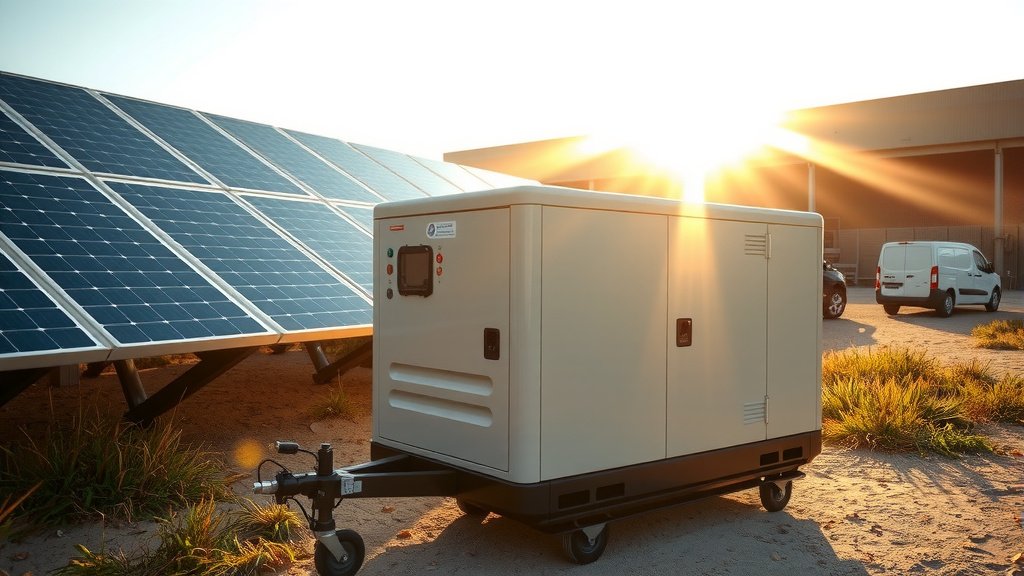
Solar generators typically take 5-8 hours to charge fully using solar panels, but charging time varies based on panel wattage, battery capacity, and weather conditions.
You can also charge a solar generator faster using AC wall outlets (2-4 hours) or car chargers (6-12 hours) when solar charging isn’t practical.
What Affects Solar Generator Charging Time?
Think of charging a solar generator like filling a bathtub. The size of your tub (battery capacity) and the water flow rate (solar panel power) determine how long it takes.
Several key factors control your charging speed. Let’s break them down so you can plan better.
Solar Panel Wattage Makes the Biggest Difference
Higher wattage panels charge your generator faster. A 200W panel will charge twice as fast as a 100W panel under the same conditions.
Most portable solar generators work with panels ranging from 60W to 400W. The sweet spot for most people is 100-200W panels.
Common Panel Sizes and Their Speed
- 60-100W panels: Best for small generators, slower charging
- 100-200W panels: Good balance of portability and charging speed
- 200-400W panels: Fastest charging, but heavier to carry
Battery Capacity Determines Total Charge Time
Larger batteries take longer to fill up, just like bigger gas tanks. A 1000Wh battery needs more time than a 500Wh battery with the same solar panel.
Battery capacity is measured in watt-hours (Wh). Common sizes range from 300Wh to 3000Wh for portable units.
Typical Battery Sizes and Usage
- 300-500Wh: Phones, laptops, small devices
- 500-1000Wh: Mini fridges, lights, medical devices
- 1000Wh+: Power tools, larger appliances
Weather and Sun Conditions Impact Charging
Perfect sunny days give you maximum charging power. Cloudy skies can cut your charging speed by 50-80%.
Research shows that solar panels produce peak power when they get direct sunlight between 10 AM and 2 PM (National Renewable Energy Laboratory).
How Different Weather Affects Charging
| Weather Condition | Charging Efficiency | Expected Time Increase |
|---|---|---|
| Full Sun | 100% | Normal speed |
| Partly Cloudy | 70-80% | 25% longer |
| Overcast | 30-50% | 2-3x longer |
| Heavy Clouds | 10-20% | 5x longer |
Time of Day and Season Matter Too
You get the best charging between 10 AM and 3 PM when the sun is highest. Early morning and late afternoon give you less power.
Winter days are shorter and the sun sits lower in the sky. This can double your charging time compared to summer.
Different Charging Methods and Their Speed
Solar isn’t your only option. Most generators offer multiple charging methods for different situations.
AC Wall Charging: The Fastest Option
Plugging into a wall outlet charges your generator fastest. Most units charge fully in 2-4 hours this way.
Use AC charging when you need power quickly or when solar conditions are poor. It’s perfect for preparing before trips.
AC Charging Benefits
- Consistent power regardless of weather
- Fastest charging method available
- Works day or night
- No setup required
Car Charging: Good for Road Trips
Most solar generators can charge from your car’s 12V outlet while driving. This typically takes 6-12 hours for a full charge.
Car charging works well on long drives or when camping without access to solar panels.
Solar Charging: Free but Weather Dependent
Solar charging costs nothing after your initial panel purchase. But you need good weather and patience.
Many people combine methods. They use solar during the day and top off with AC power when needed.
Real-World Charging Time Examples
Let me walk you through some common setups so you know what to expect.
Small Generator Setup
A 500Wh generator with a 100W solar panel takes about 6-8 hours in full sun. Add 2-3 hours on partly cloudy days.
This setup works great for camping trips where you charge phones, lights, and small electronics.
Medium Generator Setup
A 1000Wh generator with 200W of solar panels needs 6-7 hours in good conditions. Cloudy weather extends this to 10-12 hours.
This size handles mini fridges, CPAP machines, and laptop charging for several days.
Large Generator Setup
A 1500Wh generator with 300W of panels takes 7-9 hours in peak sun. You might need two days of partial sun to fully charge.
These units can run power tools, larger appliances, and support whole-home backup for short periods.
Tips to Charge Your Solar Generator Faster
Want to speed things up? Here are proven strategies that work.
Position Your Panels Correctly
Angle your panels toward the sun and adjust them throughout the day. This can boost your charging speed by 20-30%.
Clean panels work better too. Dust and dirt can reduce efficiency by 15-25%.
Best Panel Positioning Tips
- Face panels south (in Northern Hemisphere)
- Tilt at your latitude angle
- Adjust every 2-3 hours if possible
- Keep panels cool when possible
Use Multiple Panels
Many generators accept multiple solar panels connected together. Two 100W panels charge twice as fast as one.
Check your generator’s maximum solar input before adding panels. Don’t exceed the limit or you might damage your unit.
Charge During Peak Sun Hours
Start charging by 9 AM to catch the best sun. You’ll get 80% of your daily solar energy between 9 AM and 4 PM.
Avoid charging during early morning or late evening when solar output is weak.
Common Charging Mistakes to Avoid
I’ve seen people make the same charging errors over and over. Don’t let these slow you down.
Using Undersized Solar Panels
A tiny 50W panel on a 1000Wh generator is like using a garden hose to fill a swimming pool. It works but takes forever.
Match your panel size to your battery. Aim for panels that can charge your battery in 6-8 hours of good sun.
Not Checking Compatibility
Solar panels need to match your generator’s input voltage and connector type. Wrong specs mean no charging at all.
Always check your manual before buying panels. Look for voltage range and maximum input power.
Expecting Perfect Performance in Bad Weather
Cloudy days cut solar power dramatically. Don’t plan critical power needs around questionable weather.
Have backup charging methods ready when solar conditions look poor.
Planning Your Charging Strategy
Smart planning prevents power emergencies. Here’s how to stay ahead.
Know Your Daily Power Needs
Calculate how much power you use each day. Then make sure you can generate that much plus a buffer.
Most phones use 10-15Wh per charge. Laptops need 50-100Wh. Small fridges use 300-500Wh daily.
Have Multiple Charging Options
Don’t rely only on solar. Keep a car charger and AC adapter handy for emergencies.
The best setup combines solar for daily use with faster methods for quick top-offs.
Start Charging Early
Begin charging as soon as the sun comes up. Even weak morning sun adds to your daily total.
Every hour of sunlight counts, especially on short winter days.
Seasonal Charging Considerations
Your charging times change dramatically with the seasons. Plan for these differences.
Summer Charging Advantages
Long days and strong sun make summer ideal for solar charging. You might get 10-12 hours of usable sunlight.
Hot panels are less efficient though. Try to keep them cool with airflow when possible.
Winter Charging Challenges
Short days and low sun angles cut your charging time significantly. You might only get 4-6 hours of good solar.
Snow reflects light onto panels, which helps. But covering snow blocks charging completely.
Maintenance Tips for Faster Charging
Well-maintained equipment charges faster and lasts longer.
Keep Everything Clean
Dirty panels and corroded connections slow charging. Clean your panels monthly and check connections regularly.
Use soap and water on panels. Avoid harsh chemicals that might damage the surface.
Store Batteries Properly
Batteries that sit completely empty for months lose charging capacity. Keep them at 50-80% charge during storage.
Extreme temperatures hurt battery life. Store your generator in moderate temperatures when possible.
Conclusion
Charging time for solar generators depends on several factors you can control. Panel size, battery capacity, weather, and your charging method all play important roles.
Most people find that 5-8 hours of good sun provides a full charge with properly sized panels. Bad weather extends this significantly, so having backup charging options makes sense.
The key is matching your panel size to your battery capacity and understanding your local weather patterns. With smart planning and proper equipment, you’ll always have the power you need when you need it.
How long does it take to charge a 1000Wh solar generator?
A 1000Wh solar generator takes 5-8 hours with 200W of solar panels in full sun, 2-3 hours with AC charging, or 8-12 hours with a car charger. Cloudy weather can double solar charging time.
Can I charge my solar generator while using it?
Yes, most solar generators support pass-through charging, letting you use power while charging. The charging time will be longer since some incoming power goes to your devices instead of the battery.
What happens if I connect too many solar panels?
Connecting panels that exceed your generator’s maximum solar input can damage the charging system. Always check your manual for the maximum wattage and voltage limits before adding panels.
Why does my solar generator charge slower in hot weather?
Solar panels become less efficient as temperature rises above 77°F. Very hot panels can lose 10-20% efficiency. Try to provide airflow around panels or position them where they stay cooler.
Is it better to charge with one large panel or multiple small panels?
Multiple smaller panels often work better because partial shading affects each panel separately. If one panel gets shaded, the others continue producing power. One large panel stops working efficiently if any part gets shaded.
