
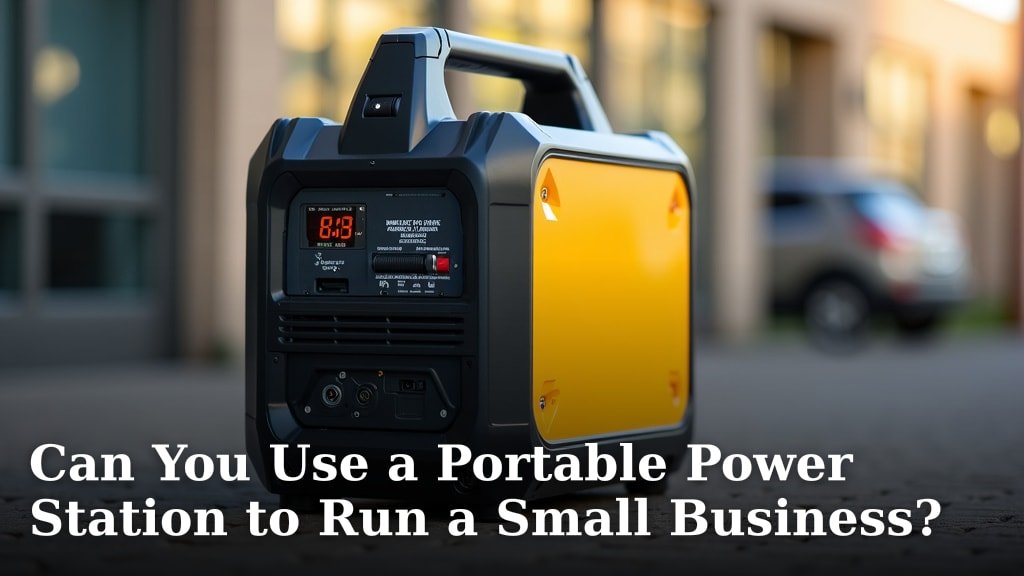
Yes, you absolutely can use a portable power station to run a small business, especially if your needs are modest. These portable powerhouses offer a reliable backup power solution or even a primary power source for certain operations. Think of it as your mobile electrical outlet on the go!
Many small business owners are discovering the flexibility these devices provide. Whether you’re a mobile vendor, a remote worker, or need to keep essential equipment running during an outage, a power station can be a smart investment. We found that selecting the right size and capacity is key to success.
- Portable power stations are a yes for powering small businesses.
- They offer flexibility for mobile operations.
- Choose the right capacity for your specific needs.
- They can act as a backup or primary power source.
Let’s break down exactly how a portable power station can support your business operations and help you make the best choice.
You’re likely wondering if a portable power station can truly step up to the plate for your small business. The short answer is a resounding yes, especially if your business operates on a smaller scale or requires mobile power solutions. Think of these units as your personal, portable grid, ready to deliver electricity wherever your business takes you.
We’ve seen many entrepreneurs find success using these devices. They offer a way to keep operations running smoothly, whether you’re facing a power outage or setting up shop at a farmer’s market. It’s about gaining independence from unreliable power sources and adding a layer of security to your business.
Powering Your Business: Portable Power Station Capabilities
Portable power stations can indeed support a variety of small business needs. They are designed to be versatile and powerful. You can use them to charge devices, run small appliances, and even power specialized equipment.
What Kind of Business Equipment Can It Power?
The key is understanding your equipment’s power draw. Most portable power stations can easily handle tasks like:
- Charging laptops and tablets.
- Running point-of-sale (POS) systems.
- Powering small refrigerators or coolers for food vendors.
- Operating lighting for events or mobile setups.
- Running audio equipment for presentations or small performances.
- Powering small tools for on-site repairs or craft demonstrations.
We found that for many mobile businesses, like food trucks or pop-up shops, a power station is becoming an essential piece of gear. It eliminates the need for noisy, fuel-guzzling generators and offers cleaner, quieter operation. Plus, many can be recharged via solar panels, adding an eco-friendly dimension to your business operations.
Understanding Wattage and Capacity: The Core Metrics
When selecting a power station for your business, two numbers are critical: wattage and capacity. Wattage tells you how much power the station can deliver at any given moment. Capacity, measured in watt-hours (Wh), tells you how much energy it can store over time.
Continuous vs. Surge Wattage
Your equipment will list its power needs. Look for continuous wattage, which is the power an appliance needs to run steadily. Also, check for surge wattage, which is the extra power needed for a moment to start up devices like motors or compressors. Your power station needs to meet both these requirements.
Calculating Your Energy Needs
To figure out what you need, list all the devices you plan to run. Find their wattage and estimate how many hours you’ll need them on. Multiply the wattage by the hours for each device to get its watt-hour (Wh) requirement. Sum these up to get your total daily Wh need. Then, choose a power station with enough Wh capacity to cover that total, with a little extra buffer for efficiency.
For example, if your laptop uses 50W and you need it for 4 hours, that’s 200Wh. If your lights use 20W for 6 hours, that’s 120Wh. Your total need would be 320Wh. A power station with a 500Wh capacity would comfortably cover this, allowing for inefficiencies and longer run times.
Portable Power Stations as a Business Solution
Using a portable power station can offer your business distinct advantages. It’s not just about having power; it’s about having it reliably and flexibly.
Reliable Backup Power
Power outages happen, and they can be disastrous for business. A portable power station acts as a dependable backup. It can keep your essential systems running, like your internet router, phone chargers, or even a small server. This ensures you don’t lose valuable customer data or miss important communications.
We found that many small businesses are investing in these for peace of mind. The ability to continue operations, even for a short while, during an unexpected blackout can be the difference between a minor inconvenience and a major business disruption. It’s a smart safety net.
Mobility and Flexibility for Mobile Businesses
If your business takes you to different locations, a portable power station is a game-changer. Think of farmers’ market vendors, food trucks, mobile repair services, or even event photographers. You need power wherever you set up.
A power station provides this power independence. You’re not tied to an electrical outlet. This freedom allows you to choose the best locations for your business, reaching more customers and increasing your potential for sales. Many units are designed to be lightweight and portable, making them easy to transport.
Environmentally Friendly Operation
Many portable power stations can be recharged using solar panels. This offers a Many portable power stations can be recharged using solar panels, offering a cleaner energy alternative.cleaner energy alternative to traditional generators. If your business values sustainability, this can be a significant selling point for your customers. It aligns your business practices with eco-conscious values.
We found that businesses that highlight their green practices often attract a loyal customer base. Using solar power to keep your operations running can be a great talking point and a way to differentiate your brand. Plus, it reduces your carbon footprint.
Choosing the Right Portable Power Station for Your Business
Selecting the perfect power station requires careful consideration of your business’s unique needs. Don’t just grab the biggest one you see; tailor your choice to your requirements.
Assessing Your Power Needs (A Quick Checklist)
Before you buy, run through this quick checklist:
- List every electronic device you need to power.
- Note the wattage for each device (continuous and surge).
- Estimate how many hours each device will be in use daily.
- Calculate your total daily watt-hour (Wh) consumption.
- Consider any future expansion of your business needs.
- Prioritize devices that are critical for your operations.
Key Features to Look For
Beyond wattage and capacity, other features can enhance your business use:
- Portability: How heavy is it? Does it have comfortable handles?
- Rechargeability: Can it be charged by AC, car adapter, and solar? Solar charging offers the most flexibility for on-the-go businesses.
- Outlets: Does it have the types and number of outlets you need (AC, USB-A, USB-C)?
- Durability: Is it built to withstand the bumps and jostles of business travel?
- Safety Features: Look for overload protection, temperature control, and short-circuit prevention.
Comparing Different Models and Brands
The market offers a wide range of power stations. We found that it’s helpful to compare specifications directly. Some brands excel in high capacity, while others focus on extreme portability or rapid recharging.
Consider your budget as well. While a higher capacity unit might cost more upfront, it could save you money in the long run if it eliminates the need for multiple smaller units or frequent recharging. Many experts say that investing in a slightly larger capacity than you immediately need can future-proof your purchase.
Here’s a simplified comparison table. Remember to check the latest specs, as models are updated frequently:
| Feature | Smaller Business Needs (e.g., charging devices, lights) | Medium Business Needs (e.g., POS, small fridge, tools) | Larger Mobile Operations (e.g., multiple appliances, extended use) |
|---|---|---|---|
| Capacity (Wh) | 200-500 Wh | 500-1000 Wh | 1000+ Wh |
| Continuous Wattage | 150-300W | 300-1000W | 1000W+ |
| Typical Use Cases | Laptop charging, phone charging, basic lighting | Running POS systems, small coolers, power tools, music equipment | Operating multiple appliances, small refrigerators, coffee makers, extended event power |
| Portability | Very High (under 10 lbs) | High (10-25 lbs) | Moderate (25+ lbs, often with wheels) |
When you’re looking at specific models, read reviews from other business owners. Their real-world experiences can offer valuable insights into how a power station performs under demanding conditions. Many sources suggest looking for units with multiple AC outlets, as this is often a bottleneck for business applications.
Conclusion
You’ve seen that a portable power station can be a real asset for your small business. It offers the flexibility you need for mobile operations and a reliable safety net during outages. By carefully calculating your power needs and choosing the right unit, you can gain power independence. Don’t let unreliable electricity hold your business back. Start by listing your essential equipment and their power demands to find the perfect power solution for you.
Frequently Asked Questions
How long will a portable power station run my business equipment?
The run time depends on the power station’s capacity (Wh) and your equipment’s wattage. We found that you can estimate this by dividing the power station’s Wh by your device’s wattage. For example, a 500Wh station running a 50W laptop could last about 10 hours, minus inefficiencies.
Can I recharge a portable power station while it’s powering my business?
Yes, many power stations allow pass-through charging. This means you can plug in your devices to the power station and charge the power station itself simultaneously. We recommend checking the manufacturer’s specifications for this feature, as it’s very handy for continuous operation.
Are portable power stations safe to use indoors for my business?
Absolutely. Unlike gas generators, portable power stations are silent and produce no fumes. This makes them perfectly safe for indoor use at your office, shop, or mobile setup. Always ensure proper ventilation, though, especially if charging the unit itself in a confined space.
What happens if my business equipment requires more wattage than the power station provides?
If your equipment’s continuous or surge wattage exceeds the power station’s output, it simply won’t power on, or it might shut down. We found it’s essential to match your equipment’s needs to the power station’s capabilities, paying close attention to both continuous and surge wattage ratings.
Can I use solar panels to keep my portable power station charged all day for my business?
Yes, many portable power stations are solar-rechargeable. Pairing your unit with compatible solar panels allows you to replenish power throughout the day, especially useful for outdoor or mobile businesses. The charging speed will depend on the panel size and sunlight intensity, but it can offer a sustainable solution.
