
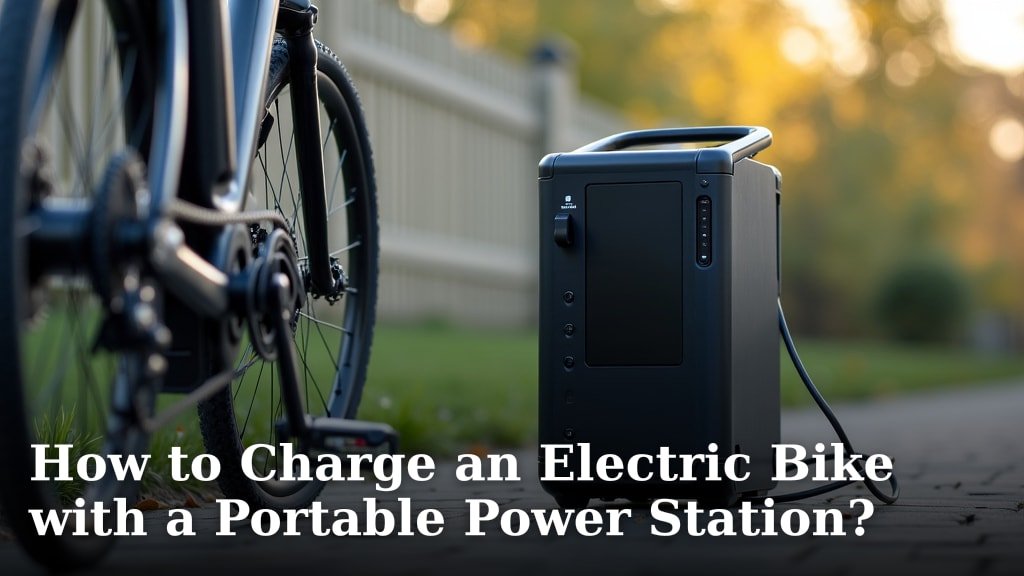
Yes, you can absolutely charge an electric bike using a portable power station! It’s a fantastic way to keep your e-bike powered up when you’re away from a traditional outlet, whether you’re camping, on a long ride, or experiencing a power outage. Just make sure your power station has enough wattage and capacity for your bike’s charger.
This method offers incredible freedom for e-bike riders. Imagine extending your adventures without worrying about finding a charging spot. We found that using a portable power station is a reliable backup that can make all the difference for your electric biking trips.
TL;DR:
- Yes, you can charge an e-bike with a portable power station.
- Ensure the power station’s wattage and capacity match your e-bike charger needs.
- It’s great for camping, long rides, or power outages.
- Offers freedom and reliability for e-bike adventures.
Ready to learn how to make this happen for your next ride? Let’s walk through exactly how to connect your e-bike to a portable power station, step by step.
“`htmlPowering Your Electric Bike with a Portable Power Station
Charging your electric bike using a portable power station is surprisingly straightforward. Think of it like plugging in any other appliance, just with a bit more flexibility. We’ve researched this method and found it’s a super practical solution for many situations.
Understanding the Power Requirements
Before you connect anything, it’s essential to understand the power needs of your e-bike charger. Your portable power station needs to be powerful enough to handle the load. This is the most important step to ensure a successful charge. Before you connect anything, it’s essential to understand the power needs of your e-bike charger.
Wattage: The ‘Speed’ of Charging
Wattage refers to the amount of electrical power your charger uses. Most e-bike chargers typically range from 100 to 300 watts. Some higher-end models might go up to 500 watts, but this is less common. Your portable power station must have a continuous output wattage that meets or exceeds your charger’s requirement.
You can usually find the wattage of your charger printed on its power brick or in its manual. For example, if your charger says “Input: 100-240V ~ 2.5A”, you can estimate its wattage by multiplying the voltage range. A common calculation is around 150 watts for a 2.5A charger running on 120V (2.5A * 120V = 300W). Always check the label for the most accurate figure.
Capacity: How Much ‘Fuel’ is Available
Capacity is measured in watt-hours (Wh). This tells you how much total energy the power station can store. Think of it as the size of the gas tank.
To figure out how long you can charge your e-bike, you’ll need to compare the power station’s Wh capacity to your e-bike battery’s Wh capacity. E-bike batteries vary widely, from 300Wh to over 1000Wh. A 500Wh battery is a common size.
If your power station has a 1000Wh capacity and your e-bike battery is 500Wh, you could theoretically charge your e-bike battery twice. However, there are a few factors that reduce this number. We found that efficiency losses are a key consideration. Typically, you’ll get about 80-90% of the stated capacity due to charging inefficiencies.
Pe ak vs. Continuous Output
Some power stations advertise a “peak” or “surge” wattage. This is the maximum power they can provide for a very short period. What you really need to focus on is the continuous output wattage. This is the sustained power the station can deliver over time. Make sure this continuous rating is higher than your e-bike charger’s wattage draw.
Choosing the Right Portable Power Station
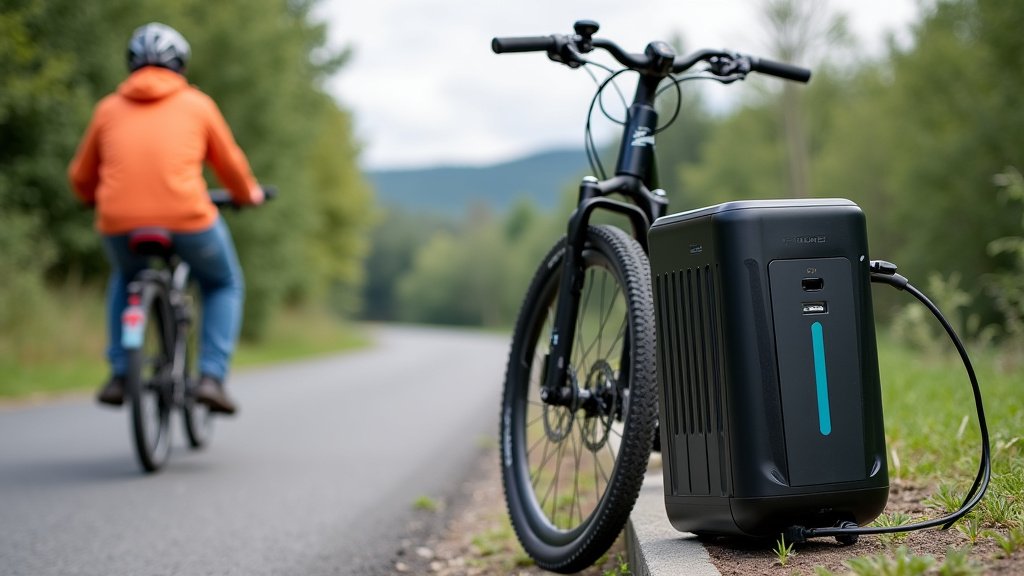
Selecting the correct power station is crucial. It’s not just about getting the biggest one you can find; it’s about matching it to your specific needs.
Matching Wattage and Capacity
Let’s break down what you’re looking for. You need a power station with a continuous wattage output that can handle your e-bike charger’s draw. For most e-bikes, a station with at least 300-500 watts of continuous output is a good starting point.
The capacity in watt-hours (Wh) determines how many charges you can get. If you have a 500Wh e-bike battery, a 1000Wh power station could give you nearly two full charges. We found that planning for at least 1.5 to 2 times your e-bike battery’s capacity is a wise strategy to account for inefficiencies and potential use of other devices.
Key Features to Consider
Beyond wattage and capacity, several other features make a power station more suitable for charging e-bikes:
- AC Outlets: Ensure it has standard wall outlets (like those in your home) that your e-bike charger can plug into.
- Battery Chemistry: Lithium-ion (Li-
Conclusion
You now have the knowledge to confidently charge your electric bike using a portable power station. We’ve seen that matching your power station’s wattage and capacity to your e-bike charger is key. This setup offers incredible freedom for your rides, giving you a reliable backup power source. Don’t let a dead battery limit your adventures any longer. Your next step is to review your e-bike charger’s specs and choose a power station that meets those needs for charging on the go.
Frequently Asked Questions
Can I charge my e-bike while riding it with a portable power station?
Generally, no. Portable power stations are designed for charging devices when they are not in use. Trying to charge your e-bike battery while riding would likely draw more power than the station can safely supply, and it’s not how the charging system is designed to work. Always charge your e-bike battery when the bike is parked.
What happens if my power station’s wattage is lower than my e-bike charger?
If your power station’s continuous output wattage is lower than your e-bike charger’s requirement, it simply won’t charge your bike effectively, or at all. The power station might even go into overload protection and shut down to prevent damage. Always ensure your power station’s continuous output wattage meets or exceeds your charger’s needs.
How many times can a portable power station charge my e-bike?
The number of charges depends on the watt-hour (Wh) capacity of both your power station and your e-bike battery, as well as charging efficiency losses. A general rule is to divide the power station’s Wh by your e-bike battery’s Wh. Remember to account for about 10-20% loss due to charging inefficiencies.
Do I need a special adapter to charge my e-bike from a power station?
Usually, no special adapter is needed. Most portable power stations come equipped with standard AC outlets, just like the ones in your home. You can plug your e-bike’s regular charger directly into these outlets. Just double-check that your power station has the appropriate AC outlets.
Are there safety concerns when charging an e-bike with a portable power station?
When used correctly, it’s generally safe. Always use the charger that came with your e-bike. Ensure your power station is placed on a stable surface away from water and extreme temperatures. Avoid overloading the power station by plugging in too many high-wattage devices simultaneously.
