
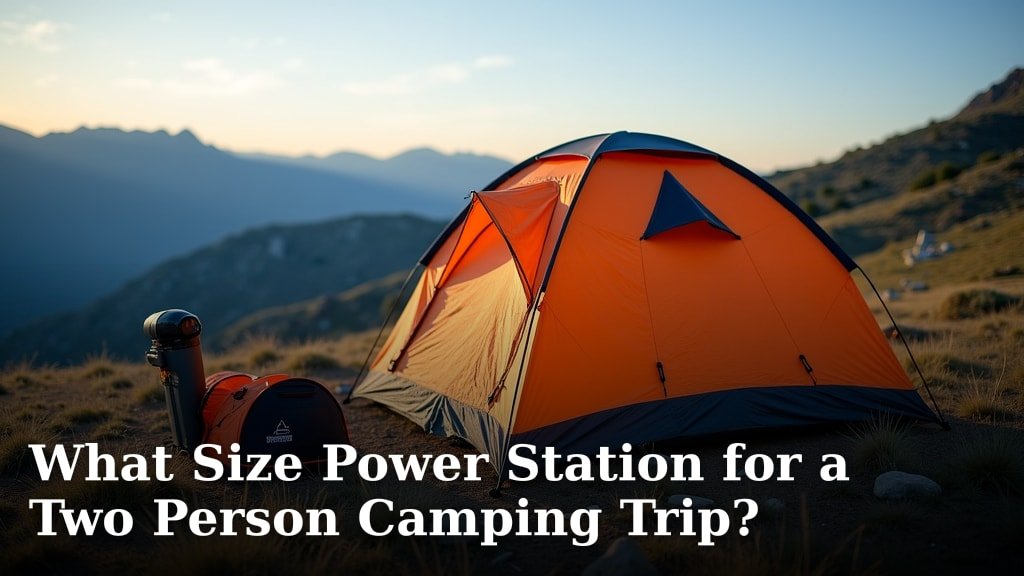
For a two-person camping trip, a power station in the 200-500 Wh range is generally sufficient. This size balances portability with enough power for essential devices like phones, lanterns, and maybe a small fan. You don’t usually need a massive unit unless you plan on running power-hungry electronics for extended periods. It really depends on what you need to charge and for how long.
When choosing your portable power station, think about your typical camping activities. Will you be mostly sleeping and enjoying nature, or do you need to power laptops for work or even a small portable fridge? Understanding your device power draw and how often you’ll use them is key. Many campers find that a mid-range unit offers the best combination of capacity and travel-friendliness.
- Most two-person trips need 200-500 Wh.
- Consider your devices: phones, lights, fans, laptops?
- Check your device’s wattage and expected run time.
- Portability is a big factor for camping trips.
Let’s get into the specifics so you can pick the perfect power station for your next adventure together.
Choosing the Right Portable Power for Two Campers
So, you’re planning a camping trip for two and wondering about the right size power station. It’s a smart question to ask! You want enough juice for your gadgets without lugging around a brick. We’ve found that the sweet spot for most two-person trips falls within the 200 to 500 watt-hour (Wh) range.
This capacity generally covers your basic needs. Think charging phones, powering LED lanterns, and maybe even running a small, quiet fan on a warm night. It’s about balancing convenience with capability. Let’s break down how to figure out what works best for your specific adventure.
Understanding Your Power Needs: Watt-Hours Explained
Before we dive into sizes, let’s quickly cover what watt-hours (Wh) actually means. It’s the total amount of energy a power station can store and deliver. Think of it like the size of your fuel tank. A higher Wh number means more stored energy and longer run times for your devices.
For a two-person setup, you’re usually not powering a whole household. You’re likely looking to keep a few essential items topped up. This makes understanding your devices’ power draw incredibly important.
Calculating Your Daily Energy Consumption
To get a good estimate, we need to look at each device you plan to bring. Most electronic devices have their power consumption listed in watts (W). You can usually find this on a small label on the device itself or its charger. If it’s not obvious, a quick online search for your specific device model should tell you.
Once you know the wattage, you need to estimate how long you’ll use that device each day. For example, if your phone charger is 10W and you charge your phone for 2 hours a day, that’s 20 watt-hours (10W x 2 hours = 20 Wh) you’ll use for your phone each day.
Common Camping Gadgets and Their Power Draw (Estimates)
Here’s a general idea of what some common camping items use. Remember, these are estimates, and your specific devices might vary slightly.
- Smartphone Charging: 5W – 15W
- LED Camping Lantern: 3W – 10W
- Portable Fan (small): 10W – 25W
- Laptop Charging: 45W – 100W
- Portable Bluetooth Speaker: 5W – 20W
- Electric Cooler/Small Fridge: 30W – 100W (intermittent draw)
Bringing It All Together: Your Total Wh Needs
Let’s say you and your camping buddy both need your phones charged for 3 hours a day (10W x 3 hours x 2 people = 60 Wh). You’ll use a lantern for 5 hours (5W x 5 hours = 25 Wh). And maybe you want to run a small fan for 4 hours (15W x 4 hours = 60 Wh). Your estimated daily need would be 60 Wh + 25 Wh + 60 Wh = 145 Wh.
It’s a good idea to add a buffer. Things like temperature and battery age can affect performance. We often recommend adding at least 20-30% extra to your calculated needs. So, for our example, 145 Wh x 1.25 = about 181 Wh. This is where a power station around 200 Wh starts looking pretty good.
Power Station Sizes and What They Can Handle
Power stations come in a range of sizes, typically from under 100 Wh to over 2000 Wh. For a two-person trip, you’re unlikely to need anything at the very high end unless you’re doing something quite specific.
The “Tiny” Power Stations (Under 200 Wh)
These are great for very minimalists. They can typically charge your phones multiple times and power a small LED light for a whole weekend. If your only goal is to keep your smartphones alive and have a bit of light, a unit in this range might work. However, for two people, it can feel a bit tight very quickly.
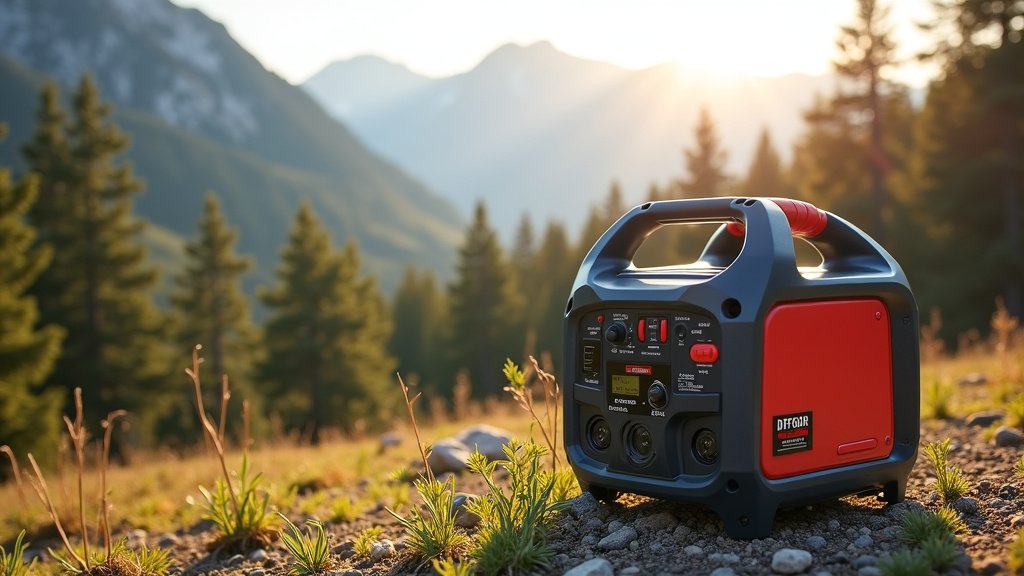
The “Sweet Spot” Power Stations (200-500 Wh)
This is where we see the most versatility for two campers. A 200-500 Wh unit can usually handle charging multiple phones, running lanterns and fans, and even power a small laptop for a few hours. Some of the larger ones in this range could even keep a very small, efficient electric cooler running intermittently.
Many experts suggest this range as ideal because it provides a good balance between capacity and portability. You get enough power for comfort without a unit that’s too heavy to easily carry into your campsite.
The “Larger” Power Stations (500+ Wh)
If you plan to run more power-hungry devices like a portable refrigerator, a CPAP machine, or multiple laptops for extended periods, you might look into sizes above 500 Wh. For a typical two-person camping trip focused on relaxation and essential device charging, this is usually overkill. These units are heavier and bulkier, which can be a drawback when you’re moving camp. If you need to power a CPAP machine, our guide explains the specific requirements.
Key Features to Consider for Your Two-Person Trip
Beyond just the watt-hour capacity, a few other things matter when picking out a power station for two.
Portability and Weight
This is huge for camping, right? You’ll likely be carrying your gear from the car to your campsite. A power station that weighs 5 lbs is much easier to manage than one that weighs 30 lbs. We found that for most two-person trips, keeping the weight under 10-15 lbs is a good goal if possible, which often aligns with the 200-500 Wh range.
Output Ports: What Can You Plug In?
Check the types and number of ports. You’ll want standard AC outlets for things like laptop chargers, USB-A ports for older devices, and USB-C ports for newer phones and tablets. For two people, having at least two AC outlets and multiple USB ports is highly recommended so you can both charge your gear simultaneously.
Recharging Options
How will you recharge the power station itself? Most can be recharged from a wall outlet, but when you’re camping, you’ll likely use a car charger or a solar panel. Solar charging is great for off-grid trips, but remember that solar charging speed depends heavily on sunlight and panel size. A unit that can be recharged via solar is a smart addition for longer trips.
For a two-person trip, having a power station that can be topped up using your car’s 12V outlet while you drive can be a lifesaver. This ensures you arrive at your campsite with a full charge.
A Quick Checklist for Your Power Station Choice
To help you make the final decision, here’s a quick checklist. Ask yourself these questions:
- Do you have a list of all devices you need to power?
- Have you estimated the daily watt-hour (Wh) usage for each device?
- Does your total estimated daily Wh need (plus a buffer) fall between 200-500 Wh?
- Is the weight of the power station manageable for your camping style?
- Does it have enough ports (AC, USB-A, USB-C) for your gadgets?
- Can it be recharged conveniently while camping (e.g., solar, car)?
By considering these points, you’ll be well on your way to selecting a power station that keeps you and your companion connected and comfortable throughout your outdoor adventures.
Conclusion
You’ve got the basics now for choosing the perfect power station for your two-person camping trip. Remember, it’s all about matching the power station’s capacity to your actual needs. We found that the 200-500 Wh range typically offers the best blend of power and portability for most couples. Don’t forget to consider device compatibility and recharging options.
Your next step? Grab a pen and paper, list your essential gadgets, and estimate your daily power usage. This simple calculation will guide you to a power station that keeps you charged up and enjoying nature, not worrying about a dead battery. Happy camping!
Frequently Asked Questions
What if I only need to charge my phone and a lantern?
If your needs are that minimal, a power station under 200 Wh might be sufficient. This size is usually enough to charge smartphones multiple times and power LED lights for a full weekend. You’ll want to do a quick calculation to be sure, but you might not need a larger unit.
How do I know if my devices are compatible with a power station?
Most modern power stations have standard AC outlets, USB-A ports, and USB-C ports. Check the ports on your devices and compare them to the power station’s output options. For laptops, ensure the power station has an AC outlet capable of handling its wattage.
Is a 500 Wh power station too big for two people?
A 500 Wh power station is generally on the larger end for a typical two-person trip. It’s great if you plan to run more power-hungry items like a small fridge or multiple laptops. For just charging phones and lights, it might be more capacity than you need, making it heavier to carry.
Can I recharge my power station while driving to the campsite?
Yes, many power stations offer car chargers that plug into your vehicle’s 12V outlet. This is a fantastic way to top up your power station on the drive, ensuring you arrive at your campsite with a full charge and ready to go.
How often do I need to recharge the power station on a trip?
This depends entirely on your usage and the power station’s capacity. For a 200-500 Wh unit, if you’re only charging phones and using a lantern, you might only need to recharge it once or twice over a 3-4 day trip, especially if you use car charging during travel days.
