
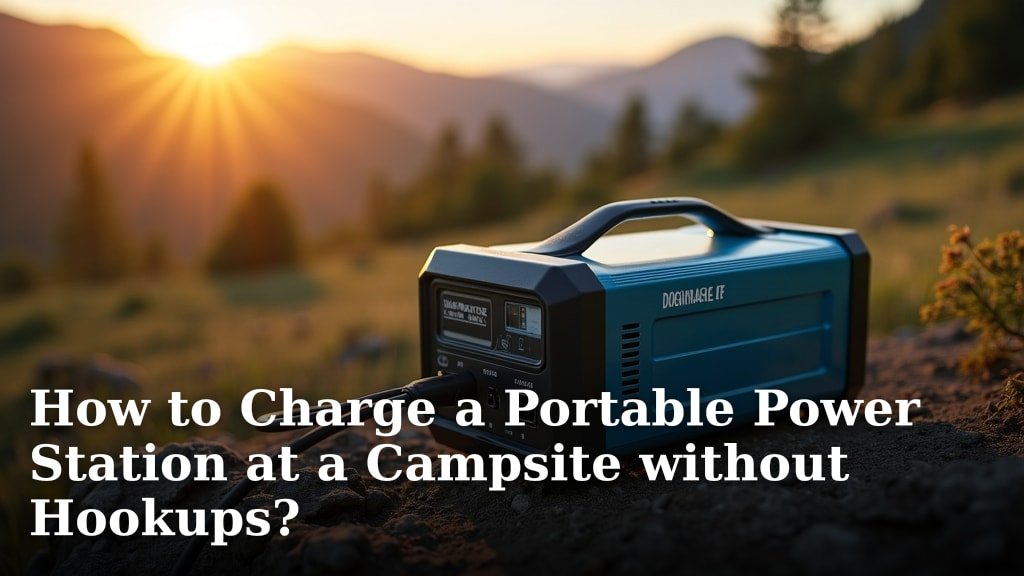
You can absolutely charge your portable power station at a campsite without hookups using solar panels or your car’s 12V outlet. These methods let you keep your devices powered up when you’re off the grid. We found that solar is often the most convenient for extended trips.
Being able to recharge your power station is key to enjoying your camping trip. You don’t want your phone or lights to die when you need them most. We researched ways to maintain battery life and found that these off-grid charging solutions are surprisingly effective for many campers.
- Charge with portable solar panels.
- Use your car’s 12V outlet.
- Plan your charging time.
- Know your power station’s needs.
- Consider a backup option.
Let’s walk through exactly how you can keep your portable power station charged while enjoying the great outdoors.
Keeping Your Power Station Charged While Camping Off-Grid
So, you’re heading out to enjoy nature, and you want to keep your essential devices powered up without a traditional campsite hookup. It’s totally doable! We’ve researched the best ways to keep your portable power station alive and kicking, even when you’re miles from the nearest outlet. The good news is you have a couple of reliable options.
Harnessing the Sun: Charging with Solar Panels
Solar panels are a camper’s best friend when it comes to off-grid power. They turn sunlight directly into electricity. It’s like having a mini power plant that runs on sunshine!
Choosing the Right Solar Panel Setup
Not all solar panels are created equal. You’ll want to consider the wattage of the panels. Higher wattage means faster charging. For most portable power stations, panels ranging from 100W to 200W are a sweet spot. This offers a good balance of power and portability.
Portable vs. Fixed Panels
For camping, portable solar panels are your go-to. These fold up nicely and are easy to transport. They often come with built-in stands to angle them towards the sun. Fixed panels are usually for RVs or permanent installations and aren’t practical for your situation.
Understanding Panel Efficiency
The efficiency of a solar panel affects how much power it can generate from a given amount of sunlight. Newer, more efficient panels can produce more power in less space or in less-than-ideal lighting conditions. Look for panels with high efficiency ratings if you want to maximize your charging speed.
Positioning Your Panels for Maximum Sun Exposure
This is where the magic happens. Your panels need direct sunlight to work effectively. Think of it like this: the sun is the fuel, and your panel is the engine.
Finding the Sunny Spots
When you set up camp, take a moment to scout out the sunniest areas. Your campsite might have shady trees or tall bushes. You’ll want to find an open spot that gets direct sunlight for as many hours as possible. Mornings and late afternoons are often great times to catch those rays.
Angle Matters!
Don’t just lay your panels flat on the ground. Angle them to face the sun directly. Many portable panels come with kickstands. You want the panel to be perpendicular to the sun’s rays. A good rule of thumb is to set the angle roughly equal to your latitude. You might need to adjust them a few times a day as the sun moves across the sky.
Obstructions are the Enemy
Even a small shadow can significantly reduce your power output. Keep an eye out for leaves, branches, or even your own tent casting shadows on the panels. Clear any obstructions. We found that campers who regularly check and reposition their panels get the best results.
Connecting Your Solar Panels to Your Power Station
Most portable power stations come with the necessary ports. You’ll typically use an adapter or a specific solar input port. Always check your power station’s manual to make sure you’re using the correct connection.
Matching Voltage and Amperage
It’s crucial that your solar panel’s output matches your power station’s input requirements. Most panels and power stations are designed to work together, but it’s wise to double-check the voltage (V) and amperage (A). Mismatching can prevent charging or, worse, damage your equipment. Your power station’s manual will list its acceptable input range.
Using Charge Controllers (Sometimes Built-In)
Some solar panel kits include a charge controller. This device regulates the power coming from the panels to prevent overcharging your power station. Many modern power stations have this protection built into the unit itself, simplifying the setup. If yours doesn’t, you might need a separate controller.
Charging on the Go: Using Your Car’s 12V Outlet
Your car is a mobile generator! You can use its 12V outlet (the cigarette lighter socket) to trickle-charge your power station. This is a great option for shorter trips or when you need a quick top-up.
The Process Explained
Most power stations come with a 12V car charging cable. You simply plug one end into your power station and the other into your car’s 12V outlet. Easy peasy!
Engine Running vs. Engine Off
Here’s a critical point: always run your car’s engine when charging from the 12V outlet. The car battery alone can’t provide enough sustained power, and running the engine prevents you from draining your car battery. Plus, the engine provides a more consistent power flow.
Charging Speed Considerations
Charging via the 12V outlet is generally slower than using solar panels or a wall outlet. The output from a car’s 12V socket is typically limited to around 100-150 watts. This method is best for maintaining a charge or slowly replenishing it, rather than fully charging a depleted battery quickly.
Important Precautions for Car Charging
Safety and efficiency are key here. A few simple steps can make a big difference.
Don’t Overdo It
Avoid running your car engine solely for charging your power station for extended periods, especially if you’re parked in an enclosed space, like a garage. This is primarily for use when you’re already using your car for transportation or need a charge while at a campsite.
Check Your Car’s Manual
Your car’s owner’s manual might have specific information about using the 12V outlet for charging devices. Some vehicles have systems that shut off the outlet after a certain time to conserve the car battery, even when the engine is running. Consult your manual to understand your car’s capabilities.
Planning Your Charging Strategy: Timing is Everything
Whether you’re using solar or your car, a little planning goes a long way. You don’t want to be caught with a dead power station when you need it most.
Understanding Your Power Station’s Needs
Before you even leave home, take a look at your power station’s capacity (measured in watt-hours, Wh) and its input wattage limit. This tells you how much energy it can hold and how quickly it can accept a charge. A larger capacity means it can power devices for longer, but it will also take longer to recharge.
Solar Charging: Weather and Time of Day
Solar power is dependent on the sun! On a clear, sunny day, you can expect decent charging. Cloudy days will significantly reduce the output. Early mornings and late afternoons are good for positioning panels, but midday usually offers the strongest sun. Many campers find that charging during the peak sun hours (roughly 10 AM to 3 PM) is most effective.
Car Charging: When and How Long?
Car charging is useful for topping up while you’re driving between locations or if you have a few hours of downtime. You can’t rely on it for a full recharge if your power station is completely depleted, but it’s great for maintenance. Don’t leave your car running unnecessarily for long periods solely for charging.
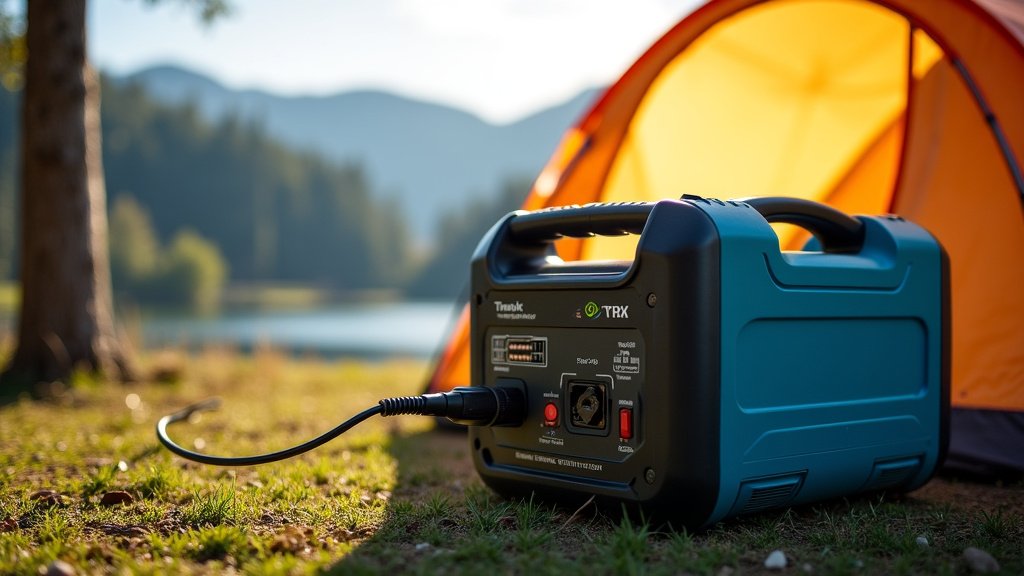
Know Your Gear: Power Station Inputs and Outputs
Understanding your specific power station is key to efficient charging and usage. Every unit is a little different.
Input Ports Explained
Most power stations have multiple ways to accept a charge. You’ll commonly see an AC adapter port (for wall outlets), a 12V car port, and often a dedicated solar input port. Ensure you’re using the correct port for your charging method.
Output Ports and Your Devices
Likewise, check the output ports. Are they USB-A, USB-C, or AC outlets? This will dictate what devices you can charge directly. Knowing your power station’s wattage output for each port is also helpful so you don’t try to run something that requires more power than it can deliver.
Is a Backup Charging Solution Wise?
Sometimes, plans change. Weather turns sour, or an unexpected power need arises. Having a backup can save your trip.
Consider a Second Solar Panel
If you rely heavily on solar, bringing a second, smaller solar panel can be a good insurance policy. If your main panel isn’t performing well due to weather, the second panel can provide a little extra juice.
Hand-Crank Generators (for Emergencies)
While not ideal for full charging, a hand-crank generator can be a lifesaver in a true emergency. It allows you to generate a small amount of power by manual effort. It takes a lot of cranking, but it can provide enough power for a short text message or a quick flashlight boost. Many campers keep one for emergency preparedness.
Portable Battery Packs
Think of these as smaller, very portable power banks. You can charge these at home before your trip. They can then be used to give your main power station a small boost, or to charge essential devices like your phone directly if your main station runs low.
Conclusion
You’re now equipped to keep your portable power station charged on your next camping trip without hookups. We found that solar panels offer excellent flexibility and power, especially for longer stays. For quick top-ups or shorter trips, your car’s 12V outlet is a handy resource. Remember to plan your charging times based on weather and sun exposure. By understanding your gear and its needs, you can ensure your devices stay powered up, making your off-grid adventure even more enjoyable. Your next step is to choose the charging method that best suits your camping style and get ready for a powered-up escape!
Frequently Asked Questions
How many watts of solar panels do I need for my power station?
For most portable power stations, panels between 100W and 200W offer a good balance of charging speed and portability. Check your power station’s manual for its maximum input wattage to avoid damage.
Can I charge my power station from my car while the engine is off?
No, you should always run your car’s engine when charging from the 12V outlet. Running the engine provides a stable power flow and prevents you from draining your car’s battery.
How often should I adjust my solar panels throughout the day?
It’s best to adjust your solar panels every few hours to keep them facing the sun directly. This maximizes their exposure and charging efficiency as the sun moves across the sky.
Will clouds completely stop my solar panels from working?
Clouds will significantly reduce the power output of your solar panels, but they won’t stop them entirely. You’ll still get some charge, just at a much slower rate than on a clear day.
Is it safe to leave my power station connected to solar panels overnight?
Yes, most modern power stations have built-in charge controllers that prevent overcharging. However, it’s still a good idea to disconnect them if there’s a risk of rain or extreme weather.
