
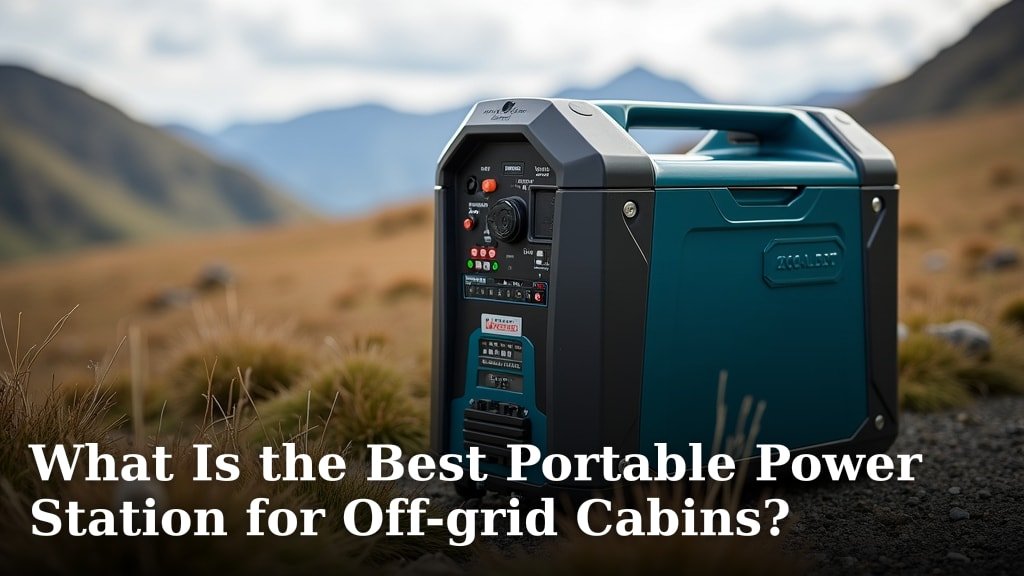
The best portable power station for an off-grid cabin isn’t a one-size-fits-all answer, but rather depends on your specific power needs. Generally, you’ll want a station with a high watt-hour capacity and at least a 1500W output to comfortably run essential appliances like a mini-fridge, lights, and charging devices. Look for models offering multiple outlets and fast recharging capabilities.
Choosing the right power station means considering your cabin’s lifestyle and what you absolutely can’t live without. Powering a few lights and charging phones is very different from running a microwave or a small heater. We found that understanding your average daily energy consumption is key to avoiding power outages and ensuring comfort.
- Determine your daily electricity needs in watt-hours.
- Consider the peak wattage required by your appliances.
- Look for reliable brands with good warranties.
- Factor in portability and charging times.
- Think about the types of outlets you’ll need.
Let’s walk through how to find the perfect power station that fits your off-grid cabin life.
Choosing the Right Portable Power Station for Your Off-Grid Cabin
Finding the ideal portable power station for your off-grid cabin is all about matching its capabilities to your lifestyle. It’s not just about having power; it’s about having the *right* amount of power when you need it most. We’ve researched what makes a power station a good fit for cabin living.
Understanding Your Cabin’s Power Needs: The Watt-Hour Equation
Before you even look at models, you need to know how much energy your cabin truly uses. Think of watt-hours (Wh) as the size of your power station’s fuel tank. The higher the Wh number, the longer it can power your devices.
Calculating Your Daily Energy Consumption
This is your most important first step. You’ll need to list every electrical item you plan to use in your cabin. Then, find the wattage for each item. You can usually find this on a sticker on the device itself or in its manual. Multiply the wattage by the number of hours you expect to use that device each day. This gives you the watt-hours for that single appliance.
For example, a 10-watt LED light used for 5 hours a day consumes 50 Wh (10W * 5h = 50Wh). A small fan that uses 30 watts for 8 hours a day uses 240 Wh (30W * 8h = 240Wh).
Summing It All Up
Add up the watt-hours for all your devices. This total is your estimated daily energy consumption. For instance, if your lights, phone chargers, a small fan, and a water pump add up to 1000 Wh per day, you’ll want a power station that can reliably provide at least that much energy.
Many experts recommend adding a buffer of 20-30%. This accounts for inefficiencies and ensures you don’t drain the battery completely, which can shorten its lifespan. So, for our 1000 Wh example, aim for a power station with at least 1200-1300 Wh capacity.
Wattage Output: Can It Handle Your Appliances?
While watt-hours tell you how much energy is stored, the wattage output tells you how much power the station can deliver at any given moment. This is crucial for appliances that need a burst of power to start.
Understanding Continuous vs. Surge Wattage
Power stations have two key wattage ratings: continuous and surge. Continuous wattage is the amount of power the station can supply steadily. Surge wattage (or peak wattage) is the higher amount it can provide for a short period, typically to start motors in appliances like refrigerators or pumps.
You need to consider the peak wattage of your appliances. A mini-fridge might run on 50 watts continuously, but it could need 150-200 watts to start its compressor. Your power station’s surge rating must be higher than the highest surge requirement of any single appliance you plan to run.
Recommended Wattage for Cabin Essentials
For a typical off-grid cabin setup, we found that a continuous output of 1500 watts is a good starting point. This will comfortably handle charging devices, running LED lights, and powering small appliances. If you plan to run larger items like a microwave, a small electric heater, or a more robust water pump, you’ll need to look for units with higher continuous and surge ratings, often 2000W or more.
Capacity: How Much Energy Can It Hold?
This brings us back to watt-hours (Wh). It’s the total amount of energy a power station can store. Think of it like the size of the gas tank in your car.
Matching Capacity to Your Usage Habits
If you only plan to use your cabin on weekends and for short periods, a smaller capacity might suffice. However, for longer stays or if you want more peace of mind, a larger capacity is essential. We found that many cabin dwellers benefit from capacities ranging from 1000 Wh to 3000 Wh or even higher.
A common rule of thumb: your power station’s Wh capacity should be at least equal to your calculated daily energy consumption, ideally with that 20-30% buffer we discussed. If you use 1000 Wh daily, a 1000 Wh battery will get you through one day. A 2000 Wh battery will get you through two days without recharging.
Battery Chemistry Matters
Most portable power stations use Lithium-ion (Li-ion) batteries, which are known for their energy density and longevity. Within Li-ion, you’ll find variations like Lithium Iron Phosphate (LiFePO4). LiFePO4 batteries are often preferred for off-grid use because they offer a longer lifespan (more charge cycles) and are considered safer due to their thermal stability (Mayo Clinic).
Recharging Your Power Station: Getting Back to Full
A power station is only useful if you can recharge it. For off-grid cabins, solar is the most common and sustainable method. However, the speed and method of recharging are important considerations.
Solar Charging Capabilities
Most portable power stations can be recharged via solar panels. Look at the maximum solar input wattage the station supports. Higher wattage means faster solar charging. For example, a station that accepts 400W of solar input will recharge much faster than one that only accepts 100W, especially on a sunny day. Check that the solar panels you buy are compatible with the power station’s voltage and connector type.
Other Recharging Options
While solar is ideal for off-grid, many stations can also be recharged from a car’s 12V outlet or a standard AC wall outlet. This is useful for topping up before heading to the cabin or if you have a generator available. Fast AC charging is also a bonus if you have access to shore power periodically.
Portability vs. Capacity: Finding Your Balance
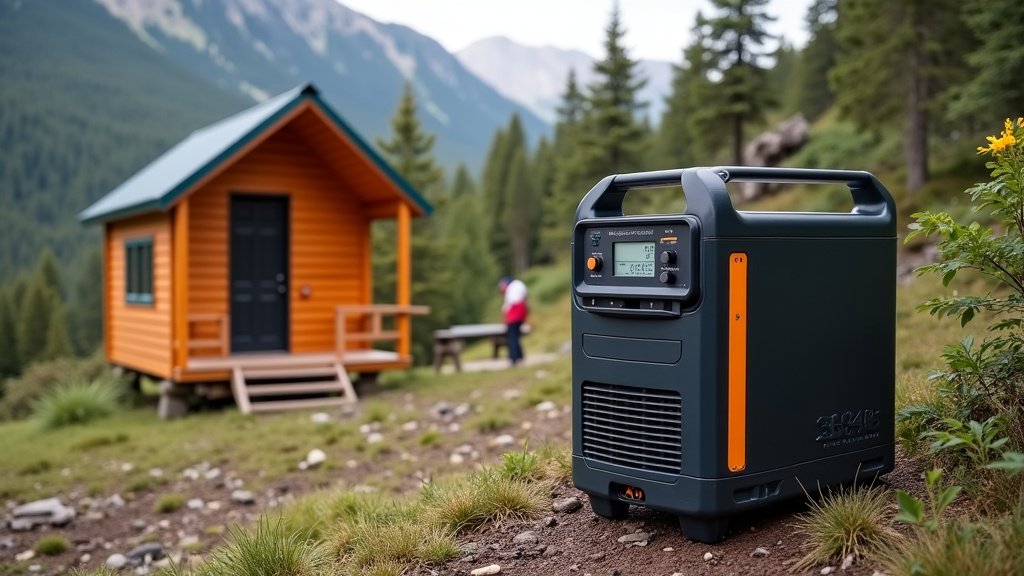
Portable power stations vary greatly in size and weight. While you want a large capacity, you also need to be able to move it if necessary. Consider how you’ll get the power station to your cabin and if you’ll need to move it around once you’re there.
A 3000 Wh unit can be quite heavy, sometimes over 50 pounds. If you have mobility issues or need to carry it far from your vehicle, this might be a challenge. Many larger units do come with wheels or sturdy handles, but it’s worth considering.
Essential Features for Cabin Life
Beyond the core specs, certain features can significantly enhance your experience.
Outlet Types and Number
Ensure the station has the outlets you need. This typically includes standard AC outlets (like your home outlets), USB-A ports for charging phones and other gadgets, and USB-C ports, which are becoming standard for modern electronics. Some units also offer a 12V DC car port, which can be handy for specific devices.
Having multiple AC outlets is a big plus. It means you can power more than one appliance at a time without needing complex adapters.
Bypass Mode and Pass-Through Charging
Some power stations offer a bypass mode. This allows you to plug appliances directly into the wall (if you have AC power available) and have the power station act as a surge protector and UPS (Uninterruptible Power Supply). This isn’t as relevant for pure off-grid but is a nice feature for dual-use units. Pass-through charging means you can use and charge the power station simultaneously.
Durability and Build Quality
Your cabin environment might be dusty, damp, or experience temperature fluctuations. Look for power stations with a robust build. Metal casings often offer better protection than plastic ones. Some manufacturers provide IP ratings for dust and water resistance, which can be a helpful indicator.
What to Look for in a Checklist
Here’s a quick rundown to help you narrow down your choices:
- Confirm your daily watt-hour (Wh) needs.
- Check the continuous and surge wattage output.
- Consider the battery type (LiFePO4 is great for longevity).
- Evaluate solar charging input and speed.
- Ensure enough AC and USB outlets for your devices.
- Think about the weight and portability for your situation.
Conclusion
Choosing the best portable power station for your off-grid cabin comes down to understanding your unique energy needs. By carefully calculating your daily watt-hour consumption and considering appliance surge requirements, you can find a unit that offers reliable power. Prioritize models with adequate capacity, robust wattage output, and efficient recharging options like solar. This thoughtful approach ensures your cabin remains comfortable and functional, letting you fully enjoy your off-grid escape.
Your next step is to make that energy calculation. Start listing your essential cabin devices and their power needs today to find your perfect power companion.
Frequently Asked Questions
How often will I need to recharge my power station?
The frequency of recharging depends on your daily energy usage and your power station’s capacity. If your daily needs are 1000 Wh and your station is 2000 Wh, you could get two days of use before needing a recharge. Consistent heavy use will require more frequent charging.
Can I run a small refrigerator and lights at the same time?
Yes, many portable power stations with a 1500W continuous output or higher can run both a mini-fridge and LED lights simultaneously. You’ll need to check the surge wattage for the fridge’s compressor startup, ensuring your station can handle that brief power spike.
What’s the difference between watt-hours and wattage?
Watt-hours (Wh) measure the total energy stored, like the size of your fuel tank. Wattage measures the power output at any given moment, indicating how many appliances you can run simultaneously. You need both for a balanced system.
Is LiFePO4 battery chemistry really better for cabins?
LiFePO4 batteries are often preferred for off-grid cabins because they offer a longer lifespan with more charge cycles. They are also known for their improved safety and thermal stability compared to some other lithium-ion chemistries. This means greater reliability over time.
How do I protect my power station from the elements in a cabin?
While most units are built for durability, you should avoid exposing them to extreme temperatures, direct rain, or excessive dust. Storing it in a dry, protected spot inside your cabin when not in use will help extend its life. Look for units with higher IP ratings if your cabin environment is particularly harsh.
