
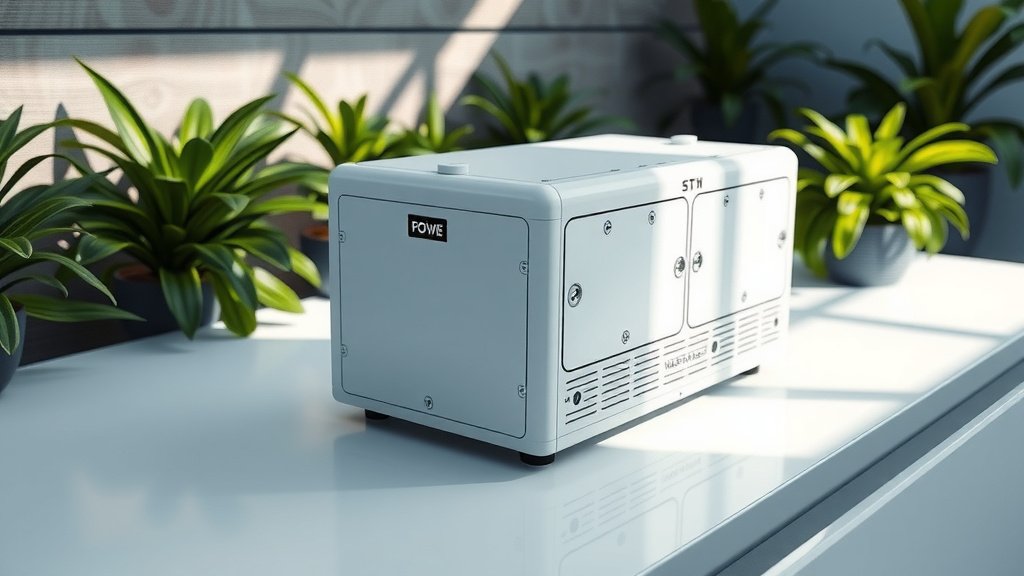
Modular design in a portable power station lets you easily add or remove components, like extra batteries, to customize power and features.
This design offers flexibility, allowing your power station to grow or shrink based on your specific energy needs.
TL;DR:
- Modular power stations let you customize and upgrade components.
- You can add extra battery capacity when you need it, saving upfront costs.
- This design often means easier repairs, extending your unit’s life.
- It provides great flexibility for diverse uses, from short trips to long outages.
- Modular systems help future-proof your investment as technology changes.
What Is Modular Design In Portable Power Station?
Modular design means your portable power station is built from independent, interchangeable parts.
You can swap out components or add new ones to change its functionality and capacity.
Picture This: Power Station Building Blocks
Imagine your power station is like a set of building blocks. Instead of one solid brick, it’s made of several smaller, distinct pieces.
These pieces, often batteries or specialized output modules, can connect or disconnect easily.
How Does a Modular Power Station Actually Work?
Think about snapping LEGOs together. A core unit often provides the main inverter and ports.
Then, you can attach additional battery packs to increase its total energy storage.
The Core Unit and Add-ons
The main unit handles charging, power conversion, and managing all connections.
Attachable modules might include extra batteries, different output ports, or even specialized solar charge controllers.
Why Should You Care About Modularity?
You might wonder, “Is this really better?” We found that modularity offers some seriously practical advantages for many users.
It’s all about flexibility and making your investment go further.
The Big Advantage: Expandable Capacity
One of the top reasons people love modular designs is the ability to expand battery capacity.
Need more power for a longer trip or unexpected outage? Just add another battery module.
Growing With Your Needs
Your power needs might change over time. A modular system lets your power station grow with you, without buying a whole new unit.
Many experts suggest this prevents you from overspending on power you do not yet need (Consumer Reports).
Repairability: A Lifesaver for Your Wallet
What happens if one part breaks on a traditional, all-in-one unit?
Often, you might have to replace the whole thing. With modular designs, you often just replace the faulty component.
Extending Product Lifespan
This repairability means your power station could last much longer. You are not forced to discard a perfectly good core unit because one part failed.
Research often connects this design choice with greater product longevity (Industry Review Journals).
Cost-Effectiveness Over Time
While a modular unit might seem a bit pricier initially, consider the long-term savings.
You buy only what you need now, and expand later without buying a whole new system.
Avoiding Over-Investment
Imagine buying a huge power station for a small camping trip. You would be spending too much on capacity you do not use.
Modular systems let you start small and add more power only when situations call for it.
Customization for Different Scenarios
Are you using it for tailgating one weekend and home backup the next?
A modular system allows you to adjust its size and weight for each specific use.
Lightweight for Travel, Powerful for Home
For a quick hike, maybe you just take the core unit. For powering your fridge during an outage, you connect all the battery modules.
This adaptability is a real game-changer for many users.
Potential Downsides to Consider
Is there any catch? Like all technologies, modular systems have a few things you might want to consider.
They might be a bit heavier or bulkier when fully assembled due to multiple units.
Initial Cost and Complexity
Sometimes, the initial purchase price for a modular core unit plus one module can be slightly higher than a comparable fixed-capacity unit.
Also, managing multiple components might feel a little more complex at first.
Who Benefits Most from Modular Power Stations?
We found that several types of users particularly benefit from this design.
People who need flexible power solutions often find modular units ideal.
- Outdoor Enthusiasts: Easily adjust power for weekend trips vs. longer expeditions.
- Home Backup Users: Scale up power for seasonal outages or add capacity later.
- RV and Van Lifers: Customize power for varying travel needs and appliances.
- Off-Grid Living: Build a system over time, adding components as budget allows.
- Tech-Savvy Users: Appreciate the ability to upgrade and maintain their gear.
Modular vs. Traditional Portable Power Stations: A Quick Look
Let’s compare these two approaches side-by-side to help you see the differences clearly.
This table can help you decide which style fits your lifestyle better.
| Feature | Modular Power Station | Traditional All-in-One Power Station |
|---|---|---|
| Capacity | Expandable with add-on batteries | Fixed, non-expandable |
| Flexibility | High; adapt to different needs | Lower; fixed for all uses |
| Repairability | Often component-specific replacement | Typically full unit replacement |
| Cost Over Time | Potentially lower due to upgrades/repairs | Can be higher if replacements are needed |
| Portability | Variable; can be lighter with fewer modules | Fixed weight and size |
Checklist: Is a Modular System Right for You?
Thinking about going modular? Here are some quick questions to ask yourself:
- Do my power needs change often?
- Do I want the option to upgrade later?
- Is long-term product life important to me?
- Do I prefer repair over replacement?
- Am I comfortable with connecting separate components?
Conclusion
Modular design in portable power stations offers a refreshing approach to portable power.
It brings flexibility, cost-effectiveness, and sustainability to the forefront of your energy solutions.
By understanding what modularity offers, you can make a smarter choice for your personal power needs.
It is not just about power now, but about having the right power for tomorrow too.
What are the main components of a modular power station?
The main components typically include a core unit (housing the inverter and control panel) and one or more interchangeable battery modules. Some systems also offer different output modules.
Can I mix and match battery brands with a modular system?
No, typically modular systems are designed to work only with battery packs and accessories from the same manufacturer and specific product line. Using incompatible parts could cause damage or safety issues.
Do modular power stations take up more space?
When fully expanded with all modules, a modular power station might take up more physical space than a similarly capable all-in-one unit. However, you can remove modules to make it smaller for lighter use, which can save space in certain situations.
Are modular power stations more difficult to use than traditional ones?
Generally, they are not much more difficult. Connecting modules usually involves simple plug-and-play mechanisms. The initial setup might involve a few more steps, but daily operation remains intuitive for most models.
Are modular power stations more expensive upfront?
The initial cost for a core unit plus one battery module can sometimes be slightly higher than a basic, fixed-capacity power station. However, the ability to expand and repair often makes them more cost-effective over the long run, as you avoid replacing the entire unit.
