
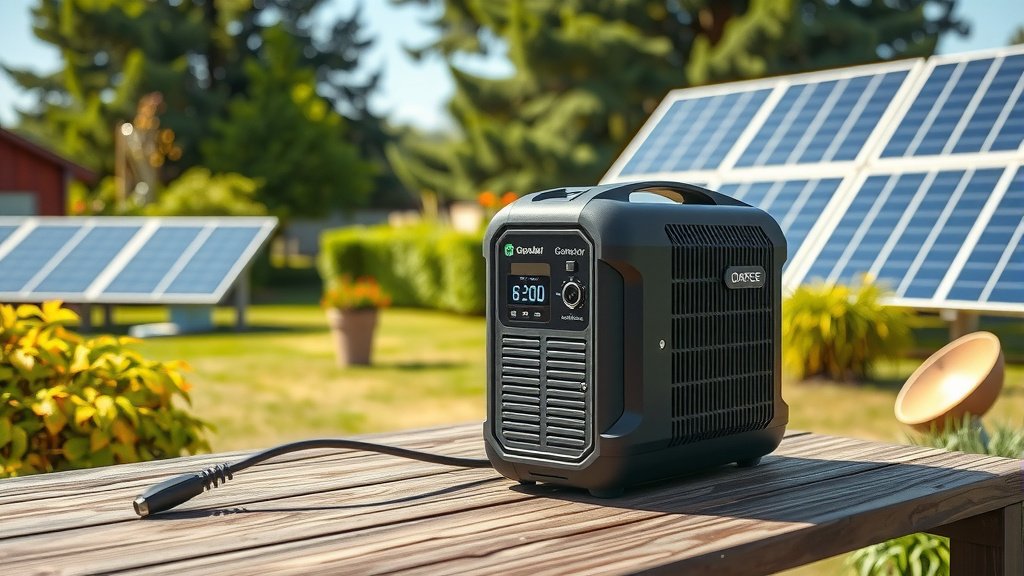
A solar generator works by capturing sunlight with solar panels, converting it to electricity, and storing that power in a built-in battery for later use.
The system combines photovoltaic panels, a charge controller, battery storage, and an inverter to create clean, portable electricity anywhere the sun shines.
What Is A Solar Generator?
Think of a solar generator as a portable power station that eats sunlight for breakfast. It’s not really a “generator” in the traditional sense. You won’t hear any rumbling engine or smell gasoline fumes.
Instead, it’s a quiet, clean power system that turns sunshine into usable electricity. You can charge your phone, run a small fridge, or power lights during a camping trip.
Why People Call It A Generator
The name sticks because it generates power. But unlike gas generators, solar generators store energy instead of making it on demand. You charge them up during sunny days, then use that stored power whenever you need it.
The Four Main Parts Of A Solar Generator
Every solar generator has four key components working together. Let me break down what each part does for you.
Solar Panels: Your Energy Collectors
Solar panels are like energy sponges. They soak up photons from sunlight and convert them into direct current (DC) electricity through photovoltaic cells.
Most portable solar generators use monocrystalline or polycrystalline panels. Monocrystalline panels cost more but work better in low light. Polycrystalline panels offer good value for sunny conditions.
How Solar Cells Create Electricity
Here’s the simple science: When sunlight hits a solar cell, it knocks electrons loose from silicon atoms. These free electrons create an electric current that flows through the panel.
Charge Controller: Your Power Traffic Cop
The charge controller manages power flow from your solar panels to the battery. Without it, your battery could get damaged from too much voltage or current.
Two main types exist: PWM (Pulse Width Modulation) and MPPT (Maximum Power Point Tracking). MPPT controllers cost more but can boost efficiency by 20-30% in many conditions.
Why You Need Power Protection
Batteries hate being overcharged or undercharged. Your charge controller prevents both problems by regulating power flow and cutting off charging when the battery is full.
Battery Storage: Your Power Bank
The battery stores all that solar energy for when you actually need it. Most modern solar generators use lithium-ion batteries because they’re lighter and last longer than lead-acid options.
Battery capacity gets measured in watt-hours (Wh) or amp-hours (Ah). A 1000Wh battery can theoretically run a 100-watt device for 10 hours.
Different Battery Chemistry Options
Lithium Iron Phosphate (LiFePO4) batteries are becoming popular in solar generators. They’re safer than regular lithium-ion and can handle more charge cycles. Some can last 3,000-6,000 cycles before losing capacity.
Inverter: Your Power Translator
Solar panels and batteries create DC power, but your household devices need AC power. The inverter translates DC into the AC electricity your laptop, coffee maker, and other gear can use.
Pure sine wave inverters produce cleaner power that works with sensitive electronics. Modified sine wave inverters cost less but might cause issues with some devices.
How The Solar Generator Process Works Step By Step
Let’s walk through what happens when you set up your solar generator on a sunny morning.
Step 1: Sunlight Hits The Panels
You unfold your solar panels and point them toward the sun. Photons from sunlight strike the photovoltaic cells and create DC electricity. Even on cloudy days, some power gets generated.
Step 2: Power Flows To The Charge Controller
That raw DC power heads to the charge controller first. The controller checks the battery’s current charge level and decides how much power to send through.
Step 3: Battery Gets Charged
The charge controller sends clean, regulated power to charge your battery. Modern lithium batteries charge faster than older lead-acid types. Some can reach 80% capacity in just a few hours of good sunlight.
Step 4: You Use The Stored Power
When you plug something in, the inverter converts stored DC power back to AC power. Your devices get the electricity they need, just like plugging into a wall outlet at home.
Types Of Solar Generators Available
Not all solar generators work the same way. You’ll find different styles designed for different needs.
Portable Solar Generator Kits
These all-in-one units pack everything into a single case or box. You get the battery, inverter, and charge controller in one package, plus separate foldable solar panels.
Popular brands like Goal Zero and Jackery make these systems. They’re perfect for camping, RV trips, or emergency backup power at home.
Pros And Cons Of Portable Units
Portable solar generators offer convenience and mobility. You can carry them anywhere and set up quickly. But they usually have smaller batteries and less solar panel capacity than larger systems.
DIY Solar Generator Systems
Some people build their own solar generators using separate components. You buy a battery, inverter, charge controller, and panels individually, then wire everything together.
This approach costs less and lets you customize capacity. But you need basic electrical knowledge to build safely.
Solar Generator Power Stations
Larger units designed for home backup power or RV living. These might have 2000Wh or more of battery capacity and can run major appliances like refrigerators.
Solar Generator Efficiency Factors
Several factors affect how well your solar generator works. Understanding these helps you get the most power from your system.
Weather And Sunlight Conditions
Direct, bright sunlight produces the most power. Clouds reduce output by 50-90% depending on thickness. Even on overcast days, some power gets generated, just not very much.
Temperature affects panel efficiency too. Very hot weather actually reduces panel output, while cold, sunny days can boost performance.
Optimal Panel Positioning
Angle your panels toward the sun for maximum power. In most of the US, panels work best tilted at your latitude angle. You can also adjust throughout the day to follow the sun’s path.
System Component Quality
Each component affects overall efficiency. High-quality MPPT charge controllers can boost power harvest by 30% compared to basic PWM controllers. Better inverters waste less power during conversion.
Common Solar Generator Applications
People use solar generators for many different situations. Here are the most popular uses I found online.
Emergency Home Backup Power
When the grid goes down, a solar generator can keep essential devices running. Charge phones, power LED lights, run a small fridge, or operate medical devices.
Camping And Outdoor Adventures
Solar generators let you bring modern conveniences to remote locations. Power cameras, charge GPS devices, run portable fridges, or light up your campsite.
RV And Van Life Power
Many RV owners use solar generators as their primary power source. You can run 12V and 120V devices without needing hookups or running a loud gas generator.
Solar Generator Limitations To Consider
Solar generators aren’t perfect for every situation. Here are some limits you should know about.
Power Output Constraints
Most portable solar generators can’t run high-power devices like electric heaters, hair dryers, or power tools. Check the inverter’s continuous power rating before buying.
Charging Time Requirements
Recharging a depleted battery takes time. A large solar generator might need 8-12 hours of good sunlight to fully recharge. Plan your power usage accordingly.
Weather Dependency
No sun means no charging. Extended cloudy periods can leave you without power if you don’t have backup charging options like AC or car charging.
Conclusion
Solar generators work by capturing sunlight and converting it to stored electricity you can use anywhere. The process involves solar panels, a charge controller, battery storage, and an inverter working together seamlessly.
While they can’t replace gas generators for high-power needs, solar generators excel at providing clean, quiet power for electronics, lights, and smaller appliances. They’re perfect for camping, emergency backup power, and off-grid living situations where you want reliable electricity without noise or emissions.
Can a solar generator work at night?
Solar generators can power devices at night using stored battery power, but they cannot generate new electricity without sunlight. You’ll be running off whatever energy was stored during the day.
How long does it take to charge a solar generator?
Charging time varies based on battery size and solar panel capacity. Small units might charge in 4-6 hours, while large generators could need 8-12 hours of strong sunlight for a full charge.
Can you use a solar generator while it’s charging?
Yes, most solar generators allow pass-through charging, meaning you can use stored power while the panels simultaneously charge the battery. This is called solar pass-through or charge-while-using mode.
What appliances can run on a solar generator?
Solar generators can typically run LED lights, phones, laptops, small fridges, CPAP machines, and low-power electronics. High-power devices like space heaters, hair dryers, and power tools usually exceed their capacity.
Do solar generators work in winter?
Solar generators work in winter but produce less power due to shorter days and lower sun angles. Cold temperatures can actually improve panel efficiency, but snow cover will block power generation completely.
