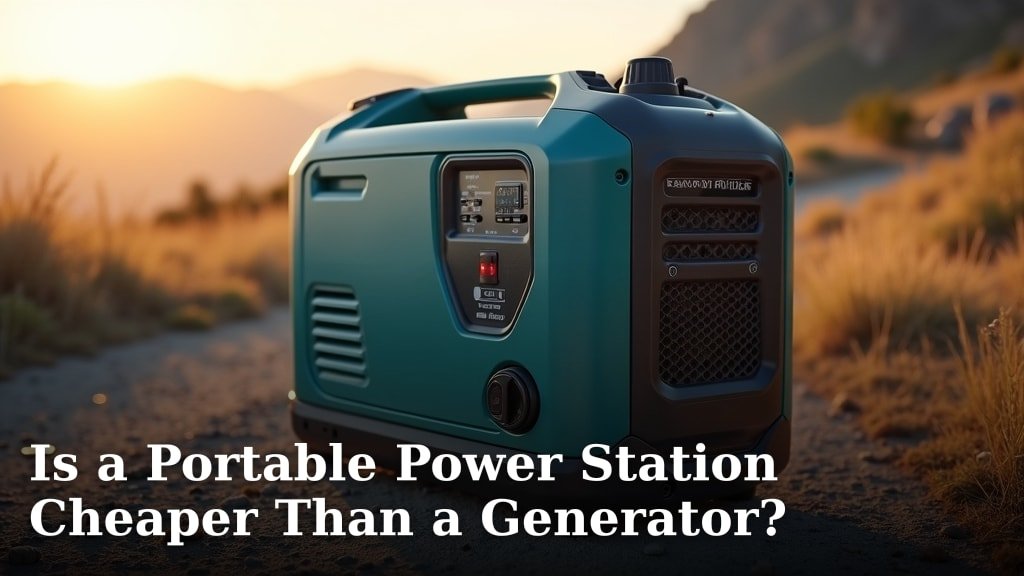
When asking if a portable power station is cheaper than a generator, the answer depends on your specific needs and how often you’ll use it. Generally, a portable power station often has a lower upfront cost than a traditional gas generator, especially for smaller power requirements.
You’ll find that while initial prices favor power stations, gas generators can sometimes be more cost-effective for heavy-duty, continuous use due to their fuel flexibility. We found that considering ongoing fuel and maintenance costs is key to truly comparing their overall expense over time.
- Portable power stations often cost less upfront.
- Gas generators can be cheaper for long-term, heavy use.
- Fuel and maintenance impact total cost significantly.
- Consider your power needs and usage frequency.
Let’s look closer at the costs and benefits of each option to help you make the best choice for your power needs.
Comparing the Costs: Portable Power Stations vs. Gas Generators
Deciding between a portable power station and a gas generator often comes down to your budget and how you plan to use it. Both have initial purchase costs and ongoing expenses.
We’ll break down these costs. This helps you see the true financial picture over time.
Initial Purchase Price: What Hits Your Wallet First?
Let’s start with what you pay upfront. This is often the first thing people consider.
Portable Power Station Upfront Cost
Portable power stations typically have a lower entry price. You can find smaller units for just a few hundred dollars. These are great for charging phones or powering a laptop.
Mid-range models for camping or home backup might cost $500 to $1,500. Larger, high-capacity units can go up to $3,000 or more. The price usually reflects the battery capacity and output power.
Think of it like buying a new smartphone. There’s a range of prices for different features (Consumer Reports).
Gas Generator Upfront Cost
Gas generators, especially those for significant home backup, often start at a higher price point. A small, portable gasoline generator might cost $400 to $800. These are often used for job sites or camping.
Larger home backup generators, capable of running multiple appliances, can easily range from $1,000 to $5,000. Industrial-sized units can cost even more. The engine size and power output greatly affect the price.
So, for casual, light use, power stations often win on initial cost.
Fuel and Energy Costs: The Ongoing Expense
The purchase price is just the beginning. What about keeping them running? This is where the comparison gets interesting.
Fueling Your Gas Generator
Gas generators need fuel. Usually, that’s gasoline, but some run on propane or natural gas. You’ll need to buy fuel regularly when using the generator. The cost of gasoline can add up quickly, especially during extended power outages.
Consider storing fuel safely. This also adds to your effort. Fuel prices can change, making your operating costs unpredictable.
We found that a typical 5,000-watt gas generator can burn about 0.5 to 1 gallon of gasoline per hour. If gas is $4 a gallon, that’s $2 to $4 per hour of use. For a 10-hour outage, that’s $20-$40 (U.S. Energy Information Administration).
Charging Your Portable Power Station
Portable power stations use electricity. You charge them from a wall outlet, a car, or solar panels. The cost to charge them is usually much lower than buying gasoline.
The average residential electricity rate in the US is about $0.16 per kilowatt-hour (EIA). Charging a 1,000 Wh (1 kWh) power station would cost around $0.16. That’s a tiny fraction of gas costs.
If you use solar panels, your charging cost can be almost zero! This makes them very appealing for off-grid living or long-term outages. Think of it like paying pennies versus dollars per hour.
Maintenance and Longevity: Keeping Them Running
Both devices need care. How much effort and money will you spend over their lifespan?
Maintaining a Gas Generator
Gas generators have engines. Engines need maintenance. This includes oil changes, spark plug replacements, and air filter cleaning. You might also need to replace fuel filters or carburetors.
Regular maintenance is crucial for generator longevity. Skipping it can lead to costly repairs. We found that annual generator servicing can cost anywhere from $50 to $200. These are recurring costs.
Generators also have a limited lifespan. Many last 1,000 to 3,000 hours of use before needing major repairs or replacement.
Maintaining a Portable Power Station
Portable power stations are much simpler. They don’t have engines, so there are no oil changes or spark plugs. Maintenance is minimal. Keep them clean and charge them periodically.
Their main component is the battery. Modern lithium-ion batteries are durable. They can last for hundreds or thousands of charge cycles. We found that many portable power stations are rated for 500 to 2,000 cycles to 80% capacity (Battery University).
Their lifespan can be 5 to 10 years or more with proper care. This means fewer unexpected repair costs.
Hidden Costs and Benefits: What Else Should You Consider?
Sometimes, the biggest cost isn’t on the price tag. Let’s look at other factors that influence your wallet and peace of mind.
Noise and Emissions: The Environmental & Social Impact
Gas generators are loud. They also produce exhaust fumes (carbon monoxide). You can’t use them indoors. This means buying long extension cords and finding a safe outdoor spot.
The noise might bother neighbors. The fumes require careful ventilation. These are hidden inconveniences and safety risks (CDC).
Portable power stations are silent. They produce no fumes. You can use them indoors safely. This offers much more flexibility. No need to worry about noise complaints or carbon monoxide alarms.
Portability and Convenience
Many gas generators are heavy. They can be hard to move. You also need to transport fuel for them. This limits where you can take them.
Portable power stations are often lighter. Many have built-in handles. Some are small enough to fit in a backpack. They are much easier to transport and use on the go. Imagine taking power to a remote picnic spot!
Depreciation and Resale Value
Like cars, both devices lose value over time. Gas generators with many hours on them might fetch less. Their engines wear out.
Portable power stations can hold their value better if the battery is well-maintained. The technology is also rapidly improving, which can make older models less desirable eventually.
Cost Comparison Summary: A Quick Look
Let’s put some numbers side-by-side. This table shows typical costs over 5 years. This is a simplified example, of course.
| Cost Category | Portable Power Station (e.g., 1 kWh) | Gas Generator (e.g., 5 kW) |
|---|---|---|
| Initial Purchase | $800 – $1,500 | $1,000 – $2,500 |
| Fuel/Electricity (500 hrs use) | $80 (charging at $0.16/kWh) | $1,000 – $2,000 (at $4/gallon) |
| Maintenance (5 years) | $0 – $50 (minimal) | $250 – $1,000 (oil, spark plugs, etc.) |
| Total Estimated 5-Year Cost | $880 – $1,550 | $2,250 – $5,500 |
As you can see, the long-term cost difference can be substantial. Even with a higher upfront cost for some power stations, the lack of fuel and maintenance often makes them cheaper over time.
Making Your Decision: What Fits Your Life?
Choosing the right power source is a personal decision. Think about your habits and needs.
- Emergency Preparedness: How often do you lose power? For short outages, a power station might be enough. For multi-day events, a generator could be better.
- Outdoor Activities: Do you camp, tailgate, or work remotely? Portability and silence are key here.
- Budget: What can you comfortably spend upfront? How much can you afford for ongoing costs?
- Power Needs: What appliances do you need to run? Just small electronics, or a refrigerator and AC?
- Environmental Concerns: Do you prefer clean, silent power? Or is fuel economy your priority?
Consider these questions carefully. They will guide you to the most cost-effective choice for your situation.
Your Power Checklist: Before You Buy
Before making a purchase, ask yourself these key questions:
- What is your maximum power requirement (in watts)?
- How many hours will you need power for continuously?
- Do you need indoor use, or only outdoor?
- What is your budget for the initial purchase?
- What is your budget for ongoing fuel/charging and maintenance?
- How important are noise and portability to you?
Answering these helps clarify your needs. It makes the choice much clearer. You’re now equipped to compare apples to apples, or rather, watts to gallons!
Conclusion
Deciding if a portable power station or a gas generator is cheaper truly comes down to your individual situation. We’ve seen that while gas generators can offer raw power for intense, continuous needs, their fuel and maintenance costs quickly add up. For most typical uses, like home backup during short outages or powering outdoor adventures, the lower long-term operating costs and convenience of a portable power station often make it the more economical choice over time. Consider your power needs, usage frequency, and desired comfort to make the best investment for you.
Frequently Asked Questions
Are portable power stations cheaper to run daily than gas generators?
Yes, significantly. Portable power stations typically cost only pennies per charge, using standard household electricity. Gas generators, however, require gasoline, which can cost several dollars per hour of operation, especially for larger models. Your daily running costs will be much lower with a power station.
Do portable power stations require maintenance like oil changes?
No, portable power stations have very minimal maintenance requirements. They lack engines, so there’s no need for oil changes, spark plug replacements, or fuel filter cleaning. You mainly just need to keep them charged and clean, which contributes to their lower overall cost of ownership.
Can a portable power station power a whole house during an outage?
For most whole-house backup scenarios, especially running major appliances like central AC or an electric water heater, a gas generator is usually more suitable due to its higher sustained output. Portable power stations are generally better for powering essential circuits, charging devices, and running a few critical appliances like a refrigerator or lights for several hours.
Is the lifespan of a portable power station comparable to a gas generator?
Modern portable power stations with lithium-ion batteries are designed for thousands of charge cycles, often lasting 5 to 10 years or more with proper care. Gas generators typically have a shorter operational lifespan, often rated for 1,000 to 3,000 hours of use before major engine overhauls or replacement, making power stations potentially more durable in the long run.
Why are portable power stations considered more environmentally friendly than gas generators?
Portable power stations produce zero emissions during operation, as they run on electricity. Gas generators burn fossil fuels, releasing carbon monoxide and other pollutants into the atmosphere. This makes power stations a much cleaner and safer option, particularly for indoor use or in areas sensitive to air quality.