Best 3000-Watt Solar Generators: Top 8 Picks (November 2026)
The best 3000 watt solar generators include the Jackery Solar Generator 1000 v2 and 200W for lighter portable backup, the EF ECOFLOW Solar Generator Delta 3 Classic for fast home charging, and the Jackery Solar Generator 300 and 40W Solar for compact camping power.
On this page (4 sections)
The best 3000 watt solar generator for heavy home backup is the PECRON F3000LFP, with 3,600W output and 3,072Wh of LiFePO4 battery capacity. That pairing suits households that want to run several essential appliances at once rather than only phones and lights.
Choose the Dabbsson 3000L for a true 3,000W rating and RV connection. Its built in TT-30 outlet gives compatible RV setups a direct connection point.
Choose Anker for a larger expandable system. The Anker SOLIX F3000 starts at 3,072Wh and can expand to 24kWh, which changes the decision from a single outage to a longer home setup.
A solar generator is a battery power station paired with solar charging. The battery capacity, measured in watt hours, affects runtime.
The inverter output, measured in watts, controls which appliances it can run at the same time. A station can have a large battery and still be limited by its output rating.
That is why names and surge figures need care. Rated output is the safer figure for planning normal loads.
Surge or boost figures relate to short startup demand. They do not extend how long the battery will run a heavy load.
Weight also shapes who should buy which model. A compact Jackery suits camping and road trips, while a 63.3 lb PECRON suits a fixed backup location.
The Anker at 91.5 lb suits a planned storage spot rather than casual carrying. Moving a large station into place is part of daily use, not an afterthought.
Before choosing, list the appliances you need together. Add their running watts and check startup needs for motors or compressors.
Then estimate hours of use for each key device. That gives a clearer view of whether 1,024Wh or 3,072Wh fits your plan.
If you are unsure how much capacity you need, use our guide to What Size Portable Power Station Do I Need?. Buyers who need less output can also compare a best 2000 watt solar generator roundup.
Our picks at a glance
-
1
 Best for lighter portable backup
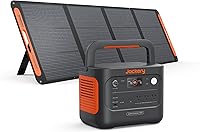
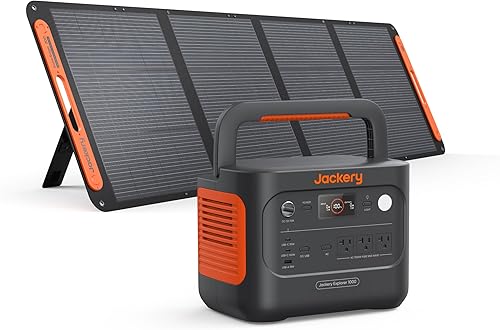
Jackery Solar Generator 1000 v2 and 200W
9.7/10 our score
See it on Amazon -
2
 Best for fast home charging
EF ECOFLOW Solar Generator Delta 3 Classic
9.6/10 our score
See it on Amazon -
3
 Best for compact camping power
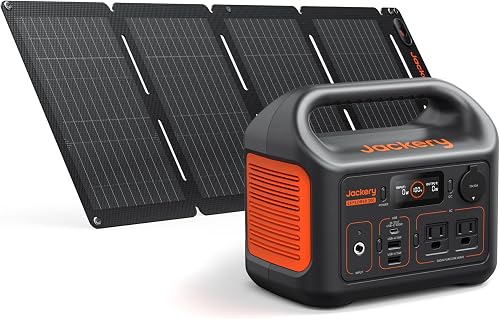
Jackery Solar Generator 300 and 40W Solar
9.5/10 our score
See it on Amazon
- 4
 Check it
PECRON Portable Power Station F3000LFP
Best for heavy-duty home backup - 5
 Check it
PECRON Portable Power Station F3000LFP with Cart
Best for moving a large station - 6
 Check it
OUPES Mega 1 Solar Generator with 100W
Best for expandable weekend backup - 7
 Check it
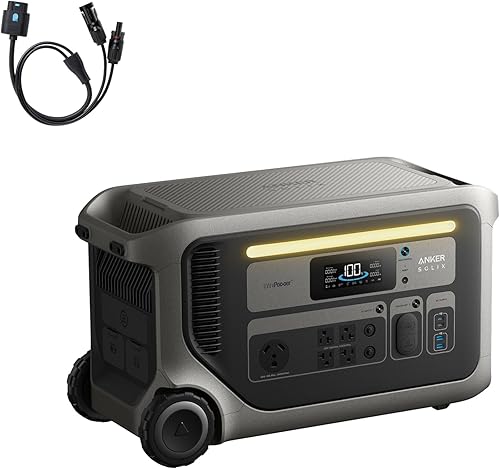
Anker SOLIX F3000 Portable Power Station
Best for 120/240V home systems - 8
 Check it
DABBSSON Portable Power Station 3000L
Best for RV-ready 3,000W output
The best 3000 watt solar generators for different uses
The best choice depends on whether you need a true 3,000W output, a larger battery, a built-in RV connection or a station you can carry by hand. Our highest scores go to products that fit the search intent, but the smaller Jackery and EcoFlow models remain useful for lighter loads.
The scores weigh specs, features and buyer feedback against what you're shopping for. We did not treat a higher wattage as the only deciding factor.
Jackery Solar Generator 1000 v2 and 200W: Best for lighter portable backup
- 1,070Wh capacity
- 1,500W AC output
- 3,000W surge peak
- 200W solar panel included
This Jackery is smaller than a true 3,000W-class station, but its 1,500W output, 1,070Wh battery and included 200W panel suit lighter emergency and outdoor loads.
Pros
- Lightweight 23.8 lb build
- 200W solar panel included
- 1,500W AC output
Cons
- Lower output than the larger stations
- Smaller battery capacity
The Jackery Solar Generator 1000 v2 and 200W is the lightest full-size option in this group at 23.8 lb. Its 1,070Wh capacity and 1,500W AC output work for lighter emergency loads, camping equipment, road trips and residential use.
The 3,000W surge peak gives short startup headroom, while the 1,500W running output is the limit to keep in mind during normal use. The system includes a 200W solar panel, and that panel can charge the station to 80% in 6 hours under the stated conditions.
Three pure sine wave AC ports sit alongside 2 USB-C ports, 1 USB-A port and a DC car port. The 100W USB-C output is useful for compatible laptops and devices without carrying separate power adapters.
Jackery gives this model a LiFePO4 battery rated to retain more than 70% of its original capacity after 4,000 cycles. The app includes emergency, quiet overnight and energy efficiency charging modes.
Choose it when portability matters more than 3,000W output. If your devices include large heating appliances or multiple high-draw tools, move up to a larger station.
EF ECOFLOW Solar Generator Delta 3 Classic: Best for fast home charging
- 1,024Wh capacity
- 1,800W output
- 3,600W surge
- 220W solar panel included
The DELTA 3 Classic pairs a 1,024Wh battery with 1,800W output, fast AC charging and a 220W panel. Its under-10ms UPS mode adds protection for supported electronics.
Pros
- 0–80% AC charge in 45 minutes
- 220W panel included
- Under-10ms UPS
Cons
- Not a 3,000W-rated station
- Smaller capacity than the heavy-duty picks
The EF ECOFLOW DELTA 3 Classic is a fast-charging option for home, camping and commercial use. It has a 1,024Wh battery, 1,800W output and 3,600W surge output, so it sits below the 3,000W class by rated output.
EcoFlow states that X-Boost can expand output to 2,600W for heavier compatible loads. AC charging reaches 80% in 45 minutes, while the included 220W bifacial panel can recharge it in about 5.8 hours under the stated conditions.
Its under-10ms UPS mode is designed for supported PCs, servers and medical devices. That makes it more useful for sensitive electronics than a basic battery box, but the connected equipment and setup still need to match the station's limits.
The 220W panel uses N-Type solar cells and has a stated conversion rate of up to 25%. The DELTA 3 Classic and panel may arrive separately.
Pick EcoFlow for quick recharge and UPS support. Pick PECRON or Anker when your priority is sustained output above 3,000W.
Jackery Solar Generator 300 and 40W Solar: Best for compact camping power
- 292Wh capacity
- 300W AC output
- 600W peak surge
- 40W panel included
The Explorer 300 is a compact battery system for laptops, cameras and other loads within its 300W output. It is easy to carry, but it does not replace a 3,000W backup station.
Pros
- 12.9 lb weight
- 40W panel included
- 600W peak surge
Cons
- Lowest output in this roundup
- 292Wh capacity limits runtime
The Jackery Solar Generator 300 and 40W Solar is the compact pick for small electronics. Its 292Wh capacity and 300W AC output suit laptops, cameras and drones within the station's limits.
The 600W peak surge rating helps with brief startup demand, but it does not turn this into a heavy-appliance station. Jackery states that the Explorer 300 powers devices under 300W total and shuts off if overloaded.
The included SolarSage 40W Air panel can maintain the station during outdoor use. The package also includes an AC adapter, car charger cable and user guide.
At 12.9 lb, this is the easiest model here to carry on a hike or place beside a small campsite setup. It is not a substitute for a 3000 watt solar generator when you need a refrigerator, power tools or several large appliances.
Choose it for portable device charging. For more output without moving to a 60 lb station, consider the OUPES Mega 1.
PECRON Portable Power Station F3000LFP: Best for heavy-duty home backup
- 3,072Wh capacity
- 3,600W pure sine wave output
- 13 ports
- 1,800W AC charging
PECRON gives you the closest match to a 3000 watt solar generator search, with 3,600W output, 3,072Wh capacity, 13 ports and a 120V system.
Pros
- 3,600W output
- 3,072Wh LiFePO4 battery
- 13 total ports
Cons
- 63.3 lb weight
- 120V output, not 240V
The PECRON F3000LFP is the strongest match for buyers searching for a 3000 watt solar generator with a large battery. It provides 3,600W pure sine wave output, 3,072Wh capacity and 13 ports.
Six AC outlets, 2 USB-C ports, 2 USB-A ports, 1 car port and 2 DC 5525 outputs let you spread devices across the station. The USB-C ports provide 100W PD, while the USB-A ports provide 18W.
PECRON states that the station can power heavy appliances such as refrigerators, air conditioners and power tools. Its 1,800W AC input can recharge the battery from 0% to 100% in 2 hours under the stated conditions.
Solar input supports up to 1,600W across a 25–120V input range. Check that your panels provide at least 25V working voltage before connecting them.
The station is a 120V system, not a 240V system.
The F3000LFP weighs 63.3 lb and measures 19.3 x 11.6 x 11.1 in. Choose it for a large battery and high output in a home, commercial, camping or RV setup.
PECRON Portable Power Station F3000LFP with Cart: Best for moving a large station
- 3,072Wh capacity
- 3,600W output
- Cart included
- 13-port F3000LFP station
This is the F3000LFP with a cart included, making the same 3,600W and 3,072Wh setup easier to move around a home, campsite or RV area.
Pros
- Cart included
- 3,600W output
- 13 ports
Cons
- Station weighs 63.3 lb
- 120V output, not 240V
The PECRON F3000LFP with Cart has the same 3,072Wh capacity and 3,600W output as the standard F3000LFP, but the package includes a cart. That matters when a 63.3 lb power station needs to move between storage, a vehicle and a backup location.
It has the same 13-port layout: 6 AC outlets, 2 USB-C ports, 2 USB-A ports, 1 car port and 2 DC 5525 outputs. The 100W USB-C ports can serve compatible laptops, while the 18W USB-A ports suit smaller devices.
PECRON states that the station supports AC, solar and car charging. Solar input accepts 25–120V and up to 1,600W, so check panel voltage before connecting a solar array.
The cart is the key difference from the standard package. The station itself remains a 120V unit, not a 240V unit, and the cart has its own 1-year warranty description.
Choose this version when moving the station is part of your normal backup plan. Choose the standard F3000LFP if you already have a safe way to transport 63.3 lb.
OUPES Mega 1 Solar Generator with 100W: Best for expandable weekend backup
- 1,024Wh capacity
- 2,000W output
- 4,500W surge
- 100W solar panel included
The OUPES Mega 1 offers 2,000W output in a 27.8 lb body, with a 100W panel included and expansion up to 5,120Wh using 2 B2 extra batteries.
Pros
- 4,500W surge rating
- Expandable to 5,120Wh
- 100W panel included
Cons
- Below 3,000W rated output
- Initial capacity is 1,024Wh
The OUPES Mega 1 is the most portable station here with 2,000W output, a 4,500W surge rating and a 27.8 lb weight. It starts with 1,024Wh and can expand to 5,120Wh with 2 B2 extra batteries.
The package includes a 100W portable solar panel. OUPES states that the Mega 1 can accept up to 800W of solar input and can use AC and solar charging at the same time.
Thirteen ports cover 4 AC outlets, 2 USB-C PD ports rated at 100W, 4 USB-A ports rated at 18W, 2 DC5521 outputs and 1 car socket. A sub-20ms UPS mode is intended for compatible computers and medical devices.
The Mega 1 is below the 3,000W target, but its 2,000W output is enough for many microwave, mini-fridge and power-tool loads. Its expansion path is more useful than its starting capacity if you plan to add batteries later.
Pick it for weekend trips, RV travel and lighter emergency backup. Pick PECRON, Anker or Dabbsson for higher sustained output.
Anker SOLIX F3000 Portable Power Station: Best for 120/240V home systems
- 3,072Wh starting capacity
- 3,600W output
- 2,400W solar input
- Expandable to 24kWh
Anker SOLIX F3000 is built for large backup setups, with 3,600W output, 2,400W solar input and expansion to 24kWh. Pairing 2 stations can provide 240V output.
Pros
- 2,400W solar recharging
- Expandable to 24kWh
- 120/240V output options
Cons
- Heaviest pick at 91.5 lb
- More setup than a small portable station
The Anker SOLIX F3000 is the best fit for a large home backup system with 3,600W output and 3,072Wh starting capacity. Its battery can expand to 24kWh, and Anker states that pairing 2 power stations can provide 240V output.
The station accepts up to 2,400W of solar input through its 165V or 60V ports. It also supports generator charging, including 3,600W pass-through charging with a 120V generator.
Anker states that the F3000 can run a 190W refrigerator for 42 hours. Actual runtime changes with the refrigerator's cycling, temperature, connected devices and power conversion.
At 91.5 lb, this is the heaviest pick. Its 25.6 x 11.8 x 14.8 in size also calls for a planned storage spot rather than casual carrying.
Choose it when solar input, battery expansion and 120/240V planning matter more than portability. For a station you can move more often, the PECRON cart kit is easier to manage.
DABBSSON Portable Power Station 3000L: Best for RV-ready 3,000W output
- 3,072Wh capacity
- 3,000W AC output
- 3,600W Power Boost
- Built-in TT-30 outlet
Dabbsson is the direct 3,000W-rated choice here, with 3,072Wh capacity, a 3,600W Power Boost mode and a built-in TT-30 outlet for compatible RV setups.
Pros
- True 3,000W rated output
- Built-in TT-30 outlet
- 5-year warranty
Cons
- Solar panels sold separately
- 59.5 lb weight
The DABBSSON 3000L is the most direct match for a 3,000W solar generator because its rated AC output is 3,000W. Its 3,072Wh capacity supports home backup, camping and RV use, while Power Boost reaches 3,600W for compatible appliances.
A built-in TT-30 outlet provides a dedicated connection for compatible RV setups. Keep the connected load within the station's total output and each outlet's limits.
Solar panels are sold separately, and Dabbsson lists a 12–60V compatible solar input. The package includes the power station, AC charging cable, car charging cable and user manual.
The Dabbsson app shows battery level and input and output power, and it supports supported setting changes. Built-in overload and short-circuit protection are included among the listed features.
At 59.5 lb, it is lighter than the PECRON and Anker options but still needs careful lifting. Choose it for the exact 3,000W rating and RV outlet.
Choose PECRON when 3,600W output and 13 ports matter more.
How do you choose a 3000 watt solar generator?
Start with the appliances you need to run together. Then compare their running watts with the station's rated output.
Motors, compressors and heating devices may need extra startup power. So check both running and surge requirements before you plug them in.
Make a simple list for a normal outage evening. Include the fridge, lights, router, phones and any tool or kitchen device you expect to use.
Add the running watts for items that will overlap. Leave room above that total for startup demand and for devices that draw more than their label suggests.
Battery capacity controls runtime. A 3,072Wh station stores more energy than a 1,024Wh model.
But usable runtime is lower than the simple watt hour figure. Inverter and device losses reduce what the battery can deliver in practice.
A fridge also cycles on and off. Its average draw over an hour will differ from its peak draw at startup.
That cycling can make estimates rough. It also means a larger battery gives more margin for overnight use.
Consider where the station will live. A lighter station suits a garage shelf or vehicle, while a large unit needs a stable floor spot.
Check port types as part of the choice. Count AC outlets and USB ports against the devices you actually carry.
Check solar input limits if panels matter to you. The right panel depends on voltage range and maximum input, not wattage alone.
Check expansion if you plan to grow capacity later. Added batteries change cost and storage needs.
Check voltage if you need 240V in a home system. Some stations are 120V only, while others support larger setups.
For a deeper comparison, see our best 4000 watt solar generator roundup if your appliances need more headroom than these models provide.
What output should a solar generator have?
Choose a 3,000W-rated station when your connected appliances can approach that level or when you want more room for startup demand. Dabbsson provides 3,000W rated output, while PECRON and Anker provide 3,600W.
The Jackery Explorer 300, Jackery Solar Generator 1000 v2 and EcoFlow DELTA 3 Classic are better for lighter loads. Their lower weight can be a benefit if you do not need to power large appliances.
How much battery capacity do you need?
A 1,024Wh station suits shorter use and smaller devices. A 3,072Wh station gives you a larger energy reserve for refrigerators, lights, routers and other essential loads.
List each device's wattage and estimated hours of use. Add a safety margin, because actual draw changes as refrigerators cycle and devices switch between active and standby states.
Should you buy a solar panel bundle?
A bundled panel gives you a clear starting point, but panel wattage and station input limits still control recharge speed. Jackery includes a 200W panel with the Solar Generator 1000 v2, while OUPES includes a 100W panel with the Mega 1.
PECRON and Dabbsson require closer attention to panel voltage and input limits. PECRON's solar input range is 25–120V, and Dabbsson lists 12–60V compatibility.
If you specifically want a station and panels together, compare our best 2000 watt solar generator with panels guide for smaller systems.
How should you set up and care for a solar generator?
Set the station on a stable, dry surface with room around its vents. Keep papers, bedding and fuel away from the airflow path.
Before connecting a load, check the appliance's running watts. Also check startup demand, voltage and plug type.
Read the device label where you can. That check is faster than dealing with an overload shutdown later.
Use the correct cable for AC, car or solar charging. Keep each cable matched to the station input it was made for.
Do not connect panels until their voltage falls within the station's input range. Mismatched voltage is a common setup mistake.
Keep the station and panels protected from moisture. Do so unless the instructions state otherwise.
Charge the battery before an expected outage. A storm warning is a good time to top it up.
Then check the display for input, output and battery level. Learn those readings before you need them under pressure.
Keep emergency devices within the station's output limit. Do not add loads until the inverter shuts down.
Prioritise the fridge, lights and communications gear. Leave nonessential heating or cooking for when capacity is clearer.
Test the setup in daylight before an emergency. Run one appliance at a time and watch the display.
That test shows how the station responds to real loads. It also shows which outlets and cables you will reach for most.
Store the station according to its instructions. Inspect cables before use and keep connectors clean and dry.
For larger units such as the PECRON and Anker, plan the storage position before an emergency. That planning avoids moving them while carrying a full load.
Keep the path to the station clear. A heavy unit behind stored boxes is harder to use when the power goes out.
Read How Does A Solar Generator Work? for a simple explanation of the battery, inverter, solar input and output process.
Which 3000 watt solar generator should you buy?
Choose the PECRON F3000LFP if you need the strongest blend of 3,600W output, 3,072Wh capacity and many ports. Its 13 port layout suits households with mixed AC and USB devices.
Choose the cart version if moving 63.3 lb is part of your setup. The cart helps when the station must move between storage, a vehicle and a backup spot.
Choose Dabbsson 3000L for a true 3,000W rating and built-in TT-30 RV outlet. That pick suits RV users who want a direct connection for compatible setups.
Choose Anker SOLIX F3000 if you want up to 2,400W solar input. It also offers expansion to 24kWh and a path to 240V with 2 stations.
That Anker route suits a larger home system. It suits buyers who plan storage and panel setup in advance.
For lighter outdoor power, the Jackery and EcoFlow models are easier to carry. They suit camping, road trips and smaller emergency loads.
The OUPES Mega 1 sits between those compact stations and the large 3,000W-class systems. It has 2,000W output and capacity expansion to 5,120Wh.
That middle position helps weekend and RV use. It gives more output than compact units without the weight of the largest stations.
Match the pick to placement as well as power. A station you can move safely is more useful than one left in an awkward store cupboard.
Match the pick to charging plans too. Bundled panels, input limits and expansion options all affect daily use.
If your budget and load point toward a high-capacity portable station, compare Best Portable Power Station Under 3000 dollars next.
Our top 3 picks at a glance
-
1
Best for lighter portable backup
Jackery Solar Generator 1000 v2 and 200W
9.7/10 our score
See it on Amazon -
2
Best for fast home charging
EF ECOFLOW Solar Generator Delta 3 Classic
9.6/10 our score
See it on Amazon -
3
Best for compact camping power
Jackery Solar Generator 300 and 40W Solar
9.5/10 our score
See it on Amazon
Frequently asked questions
What is the best 3000 watt solar generator?
The PECRON F3000LFP is the strongest match for most buyers who need high output and a large battery. It has 3,600W output, 3,072Wh capacity, 13 ports and 120V AC input and output.
Choose Dabbsson for a 3,000W-rated station with a built-in TT-30 outlet, or Anker for a larger expandable home system.
Is a 3000 watt solar generator really 3000 watts?
A 3,000W solar generator can usually supply up to 3,000W of rated AC output, but the battery capacity controls how long it runs. Dabbsson has 3,000W rated output, while PECRON and Anker provide 3,600W.
Check both running watts and startup watts for each appliance.
How long will a 3000 watt solar generator run?
Runtime depends on the appliance load and battery capacity. A 3,072Wh station has more stored energy than a 1,024Wh station, but conversion losses and the device's actual power draw reduce usable runtime.
Add the wattage of connected devices and avoid exceeding the station's rated output.
Can a solar generator power an RV?
Yes, if the station has the right output and connection for your RV. Dabbsson includes a built-in TT-30 outlet for compatible RV setups, while other stations may require a suitable connection method.
Check your RV's voltage, plug type and total load before connecting it.
What size solar panel do I need for a 3000 watt solar generator?
Panel size depends on the station's solar input limits and how quickly you want to recharge. Anker accepts up to 2,400W of solar input, while PECRON F3000LFP accepts up to 1,600W.
Confirm voltage and connector requirements before adding panels.