Which BLUETTI Power Stations Support 240V in the US?
A BLUETTI power station must explicitly provide 120/240V split-phase output to run US 240V loads. Confirm the exact model and connection method before buying, since 240V units made for other countries may use a different electrical system.
On this page (7 sections)
- Which BLUETTI power station supports 240V in the US?
- Why does US split-phase output matter?
- What should you check before buying a 240V power station?
- Which alternatives include stated 120/240V output?
- Can an overseas 240V power station work in the US?
- Is a 240V model necessary for home backup?
- How do you choose a BLUETTI power station for US 240V loads?
A BLUETTI power station needs US 120/240V split-phase output to power both ordinary 120V circuits and compatible 240V appliances. Check the exact model's output details and required accessories; the word “240V” alone doesn't confirm that it matches US home wiring.
This distinction matters for equipment such as well pumps, dryers and some air conditioners. A station designed for a different country's 230V system may not provide the two hot legs used for US split-phase power.
Which BLUETTI power station supports 240V in the US?
Choose a BLUETTI model only when its specifications explicitly confirm 120/240V split-phase output for the intended setup. The information available for this guide doesn't tell you which BLUETTI models currently meet that requirement, so verify the model with BLUETTI before ordering.
Look for clear details about the output voltage, split-phase configuration, continuous wattage, surge capacity and any expansion or accessory requirements. Ask BLUETTI whether that exact configuration can power your specific 240V load in the US.
A 240V outlet by itself may not answer the question. The output arrangement and supported connection method determine whether the unit can serve a particular appliance or home panel.
For a wider comparison of home backup choices, see our best portable power station for whole home backup guide.
Why does US split-phase output matter?
US split-phase service gives you 120V between either hot leg and neutral, and 240V between the two hot legs. A station must be designed to provide the output arrangement your appliance or transfer equipment needs.
Many small appliances use 120V. Some larger household equipment uses 240V, and may also require a particular current, circuit or startup surge.
A 230V or 240V rating can describe a different electrical arrangement from US split-phase output. Match the system and connection details, not just the voltage number.
Check the appliance nameplate or manual for its voltage, current, wattage and startup requirements. If you aren't sure how those requirements map to a station's output, ask an electrician or the manufacturer before using it.
What does 120/240V split phase mean for a power station?
A 120/240V split-phase station supplies both common US household voltages in a coordinated setup. That can let it serve supported 120V loads and compatible 240V loads, subject to its capacity and connection method.
Don't assume that two separate 120V outlets can be combined to make 240V. The manufacturer must specify that the station supports split-phase output and explain how to configure it.
Also distinguish output voltage from charging input voltage. A station that accepts 240V for charging doesn't necessarily provide 240V power to appliances.
What should you check before buying a 240V power station?
Confirm voltage, output configuration, wattage, surge capacity and connection method for the exact model. Then compare those details with the appliance or circuits you intend to power.
| Check | What to confirm |
|---|---|
| Output voltage | The exact unit supports US 120/240V split-phase output |
| Continuous power | The station can supply the appliance's running watts |
| Surge capacity | Startup demand falls within the unit's stated limit |
| Connections | The outlet or approved accessory matches the intended load |
| Runtime | Usable capacity suits how long you need to run the load |
| Panel connection | Compatible transfer equipment and installation requirements are clear |
| Expansion | Any required second unit, battery or accessory is identified |
Capacity and output power answer different questions. Watt-hours help estimate how long a load might run, while watts describe how much power the station can deliver at once.
For example, a station with enough stored energy may still be unable to start a motor if its output or surge capacity is too low. Ask the appliance maker or an electrician about the starting demand when it isn't clear.
How do you check whether a station can start a 240V appliance?
Compare the appliance's running watts and startup demand with the station's continuous and surge ratings. Motors and compressors can draw more power briefly at startup than they use while running.
Use the appliance manual or nameplate to identify voltage and current. If it gives amps instead of watts, ask the manufacturer or an electrician to help interpret the requirement for your setup.
Don't size a station based only on its battery capacity or the appliance's normal running draw. The output configuration must also match the load.
Can a 240V station connect to a home panel?
A panel connection requires a compatible transfer method and correct installation. Have a qualified electrician confirm the station's support, the transfer equipment and the panel wiring before connecting anything.
Never backfeed a home through a standard wall outlet. A direct connection without suitable transfer equipment can energize utility lines and create a serious hazard.
Our guide to how to connect a portable power station to a home panel covers the questions to settle before planning a panel setup. For model-specific whole-home trade-offs, see is a BLUETTI good for whole-home backup?.
Which alternatives include stated 120/240V output?
The three products below are alternatives to compare, not BLUETTI models. Their stated output details can help you understand what to look for, but confirm that each product's setup suits your load and installation.
EF ECOFLOW DELTA Pro Ultra 6144Wh Power
The DELTA Pro Ultra description specifies 120V and 240V output from one inverter, with 7200W output. It also describes expandable capacity, but you should confirm the system configuration and connections needed for your planned loads.
For a closer look at its whole-home features and trade-offs, read our EcoFlow DELTA Pro Ultra review.
EF ECOFLOW Solar Generator 3.6KWh DELTA Pro
The DELTA Pro product details identify 120V output, not 240V split-phase output. It may suit compatible 120V loads, but don't treat this version as a 240V option without confirmation from EcoFlow.
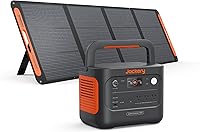
Jackery HomePower 3600 Plus Power Station
The HomePower 3600 Plus description says it supports 120V and 240V in parallel, with 3600W output and 7200W in parallel. For another high-capacity Jackery system, see the Jackery Solar Generator 5000 Plus review.
Confirm what parallel setup is required, which outlets provide each voltage and whether it fits your appliance before buying.
Can an overseas 240V power station work in the US?
An overseas 240V station may not work as expected with US household circuits. Check its frequency, grounding, plug and output arrangement, along with voltage, before connecting appliances or wiring.
Frequency matters because the US power grid uses 60 Hz, while some product specifications include 50 Hz. A 50 Hz rating doesn't tell you whether the unit also supports 60 Hz or whether a particular appliance will operate correctly.
Don't rely on a plug adapter to resolve an electrical mismatch. Adapters change plug shape, not the station's voltage, frequency or split-phase arrangement.
Is a 240V model necessary for home backup?
You need 240V output only if your backup plan includes a compatible 240V appliance or a supported split-phase panel setup. If your essential loads are all 120V and can connect through approved outlets, a 240V feature may not be necessary.
List the circuits or appliances you want to run during an outage. Check each one's voltage, running power, startup demand and expected hours of use.
A smaller 120V setup may cover lights, communications and other compatible essentials. A split-phase system may be needed for selected larger appliances, but it must match the equipment and installation.
Compare best BLUETTI portable power stations for home backup and best BLUETTI portable power stations for power outages after you identify the loads you need to support.
How do you choose a BLUETTI power station for US 240V loads?
Choose a BLUETTI model only after confirming US split-phase output, appliance capacity and a compatible connection path for the exact configuration. If BLUETTI can't confirm those details, keep comparing before you buy.
Pick a 120V-only setup when your planned loads and connection method are all 120V. Pick a confirmed split-phase system when your plan includes compatible 240V loads, then have an electrician review any panel connection.
Frequently asked questions
Does a 240V power station work with every US appliance?
No. Check the appliance's voltage, startup demand and running power, then confirm the station supports the required 120V or 240V output and enough watts.
Some 240V equipment also needs a specific connection or circuit setup, so ask a qualified electrician before connecting a station to home wiring.
Is 240V the same as split-phase power?
Not always. In the US, household split-phase service provides 120V from either hot leg to neutral and 240V across both hot legs.
A device labeled 240V may use a different arrangement, so confirm that the station specifies US 120/240V split-phase output.
Can I connect a power station to my breaker panel?
A panel connection needs compatible transfer equipment and correct wiring to prevent backfeeding utility lines. Don't connect a station through a regular outlet or improvise an adapter.
Have a qualified electrician confirm the station, transfer method and panel are compatible.
Can I use a 240V power station in an RV?
Possibly, but confirm the RV's shore-power voltage, plug, wiring and the station's output configuration first. A 240V rating alone doesn't tell you that the station matches an RV inlet or supports the way its circuits are wired.