Can You Run RV Air Conditioning on Batteries?
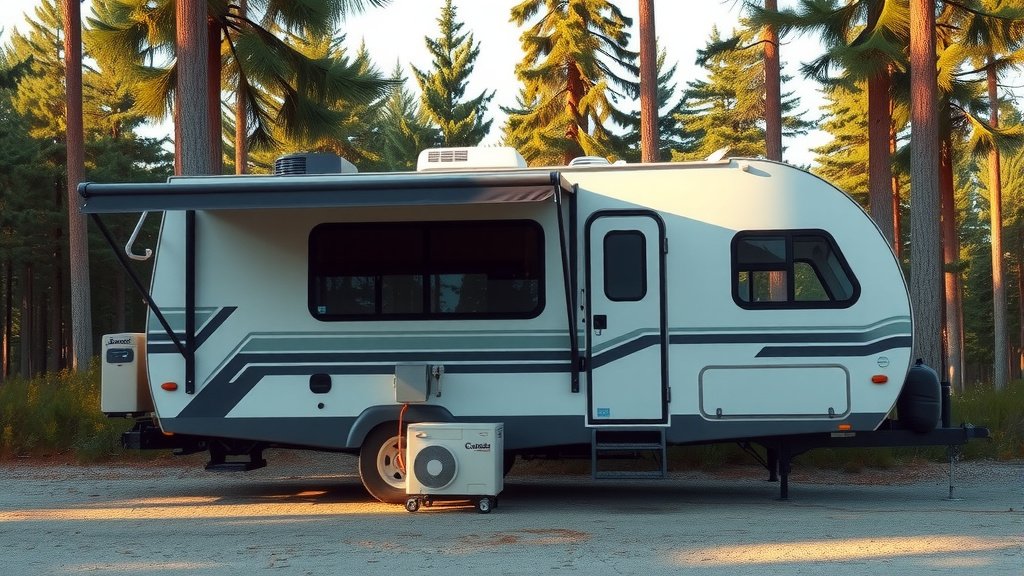
Yes, you can run RV air conditioning on batteries if the inverter can handle the AC unit's startup and running loads and the battery bank can supply enough energy. Runtime depends on the air conditioner's draw, usable battery capacity, and other loads.
On this page (8 sections)
- Can you run RV AC on battery power?
- What battery capacity do you need?
- Can a portable power station run an RV air conditioner?
- How do you estimate RV air conditioner runtime?
- Is a battery setup different from a portable power station?
- Can solar panels keep RV AC running?
- What should you check before running RV AC on batteries?
- Can you run RV AC on battery all night?
Yes, you can run RV air conditioning on batteries if your battery bank has enough usable energy and your inverter can handle both startup surge and running power. Runtime depends on the AC unit’s draw, the battery capacity available to the inverter, conversion losses, and other devices sharing the system.
A battery setup can run an air conditioner for a short stop or several hours, depending on its size and the load. A small power station may have enough output to start some units but not enough stored energy for long cooling.
Can you run RV AC on battery power?
Yes, an RV air conditioner can run from batteries through a properly sized inverter. The inverter changes the battery’s DC power into the AC power the rooftop unit uses.
The two key limits are inverter output and battery energy. The inverter needs enough continuous power for the running load and enough surge capacity for startup; the batteries need enough usable watt-hours for the time you want to cool.
A 120V AC unit’s label or manual may give amperage rather than watts. As a rough conversion, multiply volts by amps to estimate watts, but use the manufacturer’s instructions and actual system measurements when available.
What battery capacity do you need?
Battery capacity determines how long the AC can run, while inverter capacity determines whether it can run at all. Find the air conditioner’s running draw, decide how many hours you want, and account for losses and other loads.
A simple first estimate is:
Usable battery watt-hours ÷ average AC watts = approximate runtime in hours.
For example, if the AC averages 1,000W and you have 2,000Wh of usable battery energy, the simple estimate is about 2 hours before allowing for inverter losses or other devices. Actual runtime can be shorter because the compressor cycles, temperatures change, and batteries may not deliver their full rated capacity under every condition.
If the battery capacity is given in amp-hours, multiply amp-hours by battery voltage to estimate watt-hours. Use the battery maker’s usable capacity guidance, since rated capacity and energy available to an inverter may differ.
How does inverter size affect RV air conditioning?
The inverter must support both the unit’s steady draw and its startup surge. A unit that runs below the inverter’s continuous rating can still trip it if its compressor needs more power at startup than the inverter’s surge rating allows.
Check the AC unit’s electrical label and manual for startup and running requirements. Compare those figures with the inverter’s continuous and surge ratings, and leave room for other AC devices that may turn on at the same time.
A soft starter can lower startup demand on compatible air conditioners, but it does not reduce the energy needed to keep the unit running. Confirm compatibility with the air conditioner and inverter makers before installing one.
For a portable power station setup, see what size power station you need for an RV air conditioner. The same startup, output, and runtime checks apply.
What other loads reduce battery runtime?
Every device drawing from the same battery system leaves less energy available for the air conditioner. Include lights, a refrigerator, fans, pumps, chargers, and electronics in your estimate.
The total load can also affect inverter sizing. Add the loads that may run together, especially devices with motors or heating elements, and check whether their combined demand stays within the inverter’s ratings.
If your goal is to run only the AC, switch off nonessential loads and check the battery monitor during use. This gives you a clearer picture of the air conditioner’s actual demand in your RV.
Can a portable power station run an RV air conditioner?
It can, if its AC output and battery capacity match the RV unit’s startup and running needs. Check the power station’s continuous and surge output as well as its watt-hour capacity before connecting the air conditioner.
A power station may connect through the RV’s shore-power inlet with the right cable and setup, but verify that the connection is compatible and safe. Avoid connecting a power station to an RV inlet while another source is connected unless the RV system is designed for that arrangement.
The [BLUETTI AC180] is a compact option to compare for lower-demand setups. It has a 1,152Wh battery and 1,800W AC output, so confirm that the AC unit’s startup requirement fits its output and plan for limited runtime.
The [Jackery Solar Generator 1000 v2 and 200W] has a 1,070Wh capacity, 1,500W AC output, and a 3,000W surge peak. Those ratings can help with a compatible lower-draw AC unit, but available runtime still depends on the unit’s average watts.
For a larger battery reserve, the [EcoFlow DELTA Pro] has a 3,600Wh battery and 3,600W AC output. Its 99 lb weight makes it better suited to a setup where you can manage the unit’s size and weight.
How do you estimate RV air conditioner runtime?
Start with usable battery watt-hours and the air conditioner’s average running watts. Divide the first by the second, then reduce the result to allow for conversion losses and other loads.
Use this checklist:
- Find the air conditioner’s running watts or running amps.
- Find its startup requirement and verify inverter surge capacity.
- Identify usable battery watt-hours, not just the battery’s nominal rating.
- Account for inverter losses and devices running at the same time.
- Check the battery monitor while the AC runs to refine the estimate.
Power station makers sometimes provide their own runtime formula. For instance, BLUETTI describes an estimate that applies an 85% conversion rate to AC180 capacity before dividing by device power; the company notes actual runtime can vary.
Solar charging may extend use when conditions and charging equipment support it, but panels do not guarantee continuous operation. See whether a solar generator can run an RV AC for the additional capacity and charging considerations.
Is a battery setup different from a portable power station?
A built-in battery bank and a portable power station use the same basic checks: energy capacity, inverter output, and safe connections. A built-in system may be easier to integrate with RV wiring, while a portable unit can be moved or removed.
Before choosing either option, check how the RV routes shore power, inverter output, and battery charging. Follow the RV and inverter manuals, and use a qualified installer if you are unsure about wiring or grounding.
If you’re comparing other cooling setups, read whether you can run an air conditioner on a portable power station. For a smaller portable AC unit, see how to run a portable AC unit on a power station.
Can solar panels keep RV AC running?
Solar panels can recharge batteries while the air conditioner runs, but whether they keep up depends on available sun, panel output, and the AC load. The battery typically fills gaps when solar production falls below demand.
Clouds, shade, panel angle, and heat can change solar output. Compare expected daily energy production with the air conditioner’s daily energy use, and keep enough battery capacity for periods with weak sunlight.
Check the charge controller and power station input limits before connecting panels. A panel array that produces more than the device accepts will not make it charge faster.
What should you check before running RV AC on batteries?
Confirm the AC unit, inverter, batteries, and wiring are rated to work together. Review manuals and labels before relying on battery power away from shore power.
Check these points before a trip:
- The inverter’s continuous and surge output meet the AC requirements.
- The battery bank’s usable capacity matches your planned runtime.
- Wiring, fuses, and connections are sized for the current and installed correctly.
- The RV’s transfer or shore-power arrangement prevents unsafe backfeed.
- Ventilation and temperature limits follow the equipment manuals.
Stop if the inverter repeatedly shuts down, wiring or connectors get hot, or the battery system shows a fault. Ask a qualified RV electrician to inspect a setup that trips breakers or has signs of overheating.
Can you run RV AC on battery all night?
Possibly, but an overnight run needs enough usable battery capacity for the full period plus a margin for other loads and conversion losses. Estimate with the AC’s average draw over time, since cycling can make average demand lower than its full running draw.
Hot weather, poor insulation, open doors, and a low thermostat setting can keep the compressor running longer. Test the setup while you can monitor battery use, and have a backup plan if the battery reaches its low limit.
Choose a power station for portability and a modest, compatible load. For longer cooling or a larger RV AC unit, size a dedicated battery and inverter system around the unit’s documented requirements and the runtime you need.
Frequently asked questions
Can I run my RV air conditioner from a battery?
Yes, if the battery system and inverter can supply the air conditioner's startup surge and ongoing AC load. Check the air conditioner and inverter manuals, then estimate runtime from usable battery energy and measured or documented draw.
A battery that can start the unit may still run low quickly.
How many batteries do I need to run an RV air conditioner?
There isn't one battery count for every RV air conditioner. First find the unit's running watts, startup requirement, desired hours, and the usable energy of each battery.
Add capacity for inverter losses and other loads, then size the bank to that total.
What size inverter runs an RV air conditioner?
Choose an inverter whose continuous output meets the air conditioner's running demand and whose surge rating can handle startup. Compare both ratings with the air conditioner and inverter manuals.
A soft starter may reduce startup demand on some systems, but check compatibility and confirm the inverter can still support the load.
How long can an RV AC run on batteries?
Runtime depends on usable battery watt-hours divided by the air conditioner's average watt draw, with a reduction for inverter losses and other devices. Cycling, outdoor temperature, insulation, and thermostat settings also affect the average.
Treat a simple calculation as an estimate, not a guaranteed number of hours.