
Yes, you can often use a camping power station while it’s raining outside, but you need to be smart about it. The key is to keep the unit and its ports **protected from direct water exposure**. Most power stations are not fully waterproof, so protecting them from the elements is essential for safe operation and longevity.
While a little drizzle might not immediately harm a well-built unit, prolonged rain or submersion can cause serious damage. Think of it like your phone; it might survive a few splashes, but you wouldn’t want to leave it out in a downpour. Understanding the IP rating of your power station can give you a clue about its water resistance.
- Keep your power station dry during rain.
- Avoid direct water contact with ports and the unit.
- Consider using a tarp or waterproof cover.
- Check your power station’s IP rating for water resistance info.
Below, we’ll break down exactly how to safely use your camping power station in wet weather without risking damage or electrical hazards.
Using your camping power station when it’s raining can feel a bit dicey, right? You’ve got your gear ready for some outdoor fun, but the clouds roll in. The good news is, you don’t necessarily have to pack it all up. With a little caution and some smart protective measures, you can often keep your power station running, even when the skies open up.
Keeping Your Power Station Safe from Rain
So, can you use a camping power station in the rain? The short answer is: yes, with careful planning and protection. Think of your power station like any other sensitive electronic device. It needs to stay dry. Direct exposure to rain is its biggest enemy.
Understanding Water Resistance Ratings (IP Codes)
Have you ever looked at product specs and seen something like “IPX4”? That’s an Ingress Protection (IP) rating. It tells you how well a device is protected against solids (like dust) and liquids (like water). The second digit in the IP code is the one to watch for water. A higher number means better protection.
- IPX0: No special protection.
- IPX1: Protected against vertically falling water drops.
- IPX2: Protected against water drops falling at a 15-degree tilt.
- IPX3: Protected against water sprayed at an angle up to 60 degrees from vertical.
- IPX4: Protected against water splashed from any direction. This is a common rating for devices that can handle light spray.
- IPX5: Protected against water jets from any direction.
- IPX6: Protected against powerful water jets.
- IPX7: Protected against temporary immersion (up to 1 meter for 30 minutes).
- IPX8: Protected against continuous immersion (depth and time specified by manufacturer).
Most camping power stations fall into the lower IPX ratings, often around IPX4. This means they can handle some splashes, like a light drizzle. But they are definitely not waterproof. You can’t just leave them out in a downpour or submerge them. Always check your specific model’s manual for its IP rating. Many manufacturers don’t prominently display this, so you might need to dig a little.
Why Direct Water Contact is Bad
Water and electricity are a famously bad combination. When rain gets into the ports, vents, or internal components of your power station, it can cause short circuits. This is like a tiny electrical traffic jam that can fry the delicate electronics inside. It can damage the battery, the inverter, and the control board. Even if it seems to work after drying, internal corrosion can cause problems later on. It’s best to avoid any risk. Protect your investment!
Practical Ways to Shield Your Power Station
Don’t let a little rain stop your adventure! With some simple setup, you can keep your power station safe and functional. It’s all about creating a protective barrier.
Using Tarps and Shelters
This is your first line of defense. If you have a camping canopy, an awning on your RV, or even a large, sturdy tarp, use it! Position your power station under the shelter. Make sure it’s not directly under any drips that might form from the tarp or canopy. You want it to be completely dry, not just partially protected. A well-placed tarp can keep a surprising amount of rain off your gear.
Creating a DIY Waterproof Cover
No canopy? No problem! You can fashion a makeshift cover. A large plastic storage bin with the lid slightly ajar can work. Or even a sturdy plastic bag carefully placed over the unit, ensuring the vents aren’t completely blocked. You can also use a piece of waterproof fabric or a heavy-duty garbage bag. The key is to keep the rain off the main body and, most importantly, away from the charging ports and outlets.
When using a DIY cover, be mindful of ventilation. Power stations can generate heat when in use or charging. Covering them too tightly can lead to overheating, which is also bad for the electronics. Leave a small gap for air to circulate. Think of it as giving your power station a little breathing room, even while it’s sheltered.
Strategic Placement is Key
Where you put your power station matters. If you’re in a tent, keep it away from the tent walls, especially if they might be damp. Place it on a raised surface if possible, like a small folding table or a sturdy cooler. This prevents it from sitting in puddles if the ground gets soaked. Avoid low-lying areas where water tends to collect. Think like a water droplet – where would it go? You want to place your power station where it won’t.
Elevating Your Power Station
Raising your power station off the ground is a simple yet effective strategy. This keeps it above any standing water that might form. A small portable table is ideal. Even a sturdy plastic crate or a stack of firewood (if it’s dry!) can work in a pinch. This small elevation can save your device from a potential waterlogged disaster.
Protecting Ports and Outlets
The charging ports (AC, USB, DC) are the most vulnerable entry points for water. If your power station has covers for these ports, make sure they are securely closed. If they don’t have covers, you might need to get creative. Small pieces of waterproof tape can seal them temporarily, but be careful not to leave sticky residue behind. Some users have even found small rubber stoppers that fit snugly into the ports. Just remember to remove them before use!
We found that many people overlook the vents. These are necessary for cooling, but they can also be an entry point for moisture. While you shouldn’t block them entirely, try to position the power station so that rain isn’t directly hitting these vents. If you’re using a tarp, ensure it doesn’t sag directly over the vents, creating a channel for water to drip in.
Using Your Power Station Safely in Wet Conditions
Once your power station is protected, you can proceed with using it. But there are still a few important safety checks to perform.
Inspecting Before and After Use
Before you even plug anything in during rainy weather, give your power station a quick visual inspection. Look for any signs of moisture around the ports or casing. If you see any, dry it thoroughly with a soft cloth. After you’re done using it, especially if it was exposed to any mist or dampness, wipe it down again. Make sure it’s completely dry before storing it.
Checking Connected Devices
The devices you plug into your power station also need to be protected from the rain. Keep your phone, tablet, or other electronics under shelter. Don’t let the cords trail through puddles or sit in wet grass. The power station might be protected, but a wet charging cable can still cause issues.
Understanding Charging vs. Discharging in Rain
It’s generally safer to use your power station to discharge power (charge your devices) when it’s raining, as long as it’s protected. Charging the power station itself (from solar panels or AC) while it’s raining can be more risky. Solar panels have their own weatherproofing, but the connection point to the power station can be a weak spot. AC charging also involves potential electrical hazards. If you must charge, ensure the connection is extra secure and well-protected from any water ingress.
What to Do if it Gets Wet
Accidents happen, and sometimes despite your best efforts, your power station might get wet. If this happens, the absolute first thing you should do is **unplug it immediately**. Do not try to turn it on or use it. Then, disconnect any devices that are plugged into it. Dry the exterior with a soft cloth. Open any port covers and let it air dry completely. Many experts suggest letting it dry for at least 24-48 hours in a well-ventilated area. Do not use heat to speed up the drying process, as this can damage components. Once you believe it’s thoroughly dry, you can try turning it on. If it behaves strangely or doesn’t turn on, contact the manufacturer. You might have caused irreparable damage. If your power station gets wet, unplug it immediately and disconnect any devices, and consult our guide on how to troubleshoot portable power station issues.
We found that many users recommend placing the wet device near a dehumidifier or in a dry, warm (not hot) room. Patience is key here. Trying to power it up too soon is the most common mistake, leading to permanent damage. Think of it as giving it a chance to recover. Following manufacturer guidelines for water damage is always the best course of action.
Considerations for Different Weather Scenarios
Light drizzle is one thing, but a full-blown thunderstorm is another. If the rain is accompanied by strong winds, heavy downpours, or lightning, it’s best to err on the side of caution. Pack up your power station and store it in a dry, safe place, like inside your vehicle or tent. Safety always comes first. No amount of phone charging is worth risking a lightning strike or severe equipment damage. Many safety guidelines for outdoor electrical use strongly advise against operating devices in severe weather conditions (National Weather Service).
Wind and Heavy Downpours
High winds can blow rain sideways, making your protective measures less effective. Heavy downpours can overwhelm even a well-pitched tarp. In these situations, it’s better to be safe than sorry. Find a more secure indoor location for your power station until the weather clears.
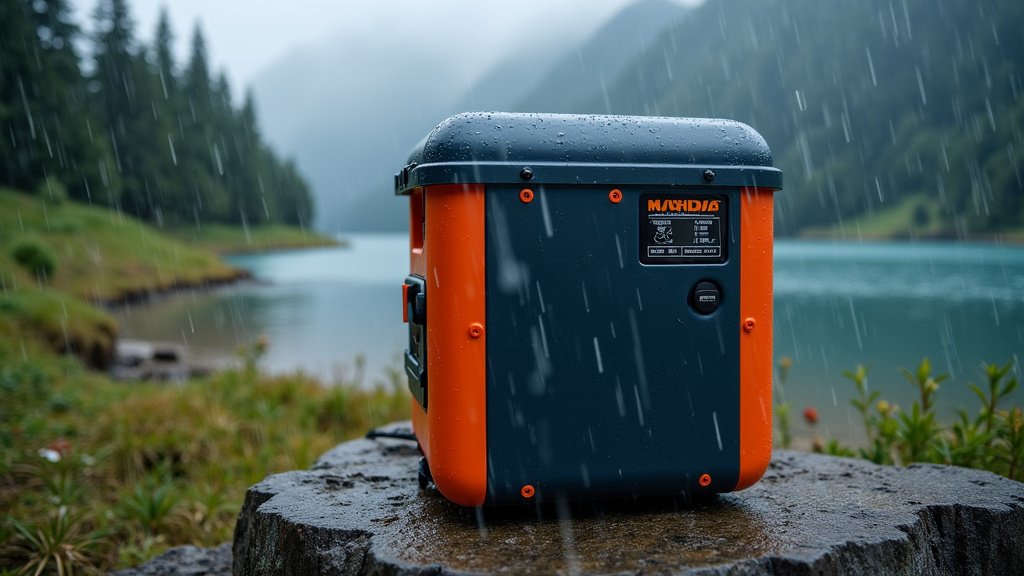
Quick Checklist for Rainy Day Power Station Use
Before you brave the rain with your power station, run through this quick checklist. It’s designed to make sure you’re covering the essentials:
- Check your power station’s IP rating. Know its limits.
- Set up a tarp or waterproof shelter. Ensure it’s stable and effective.
- Elevate the unit. Keep it off wet ground.
- Protect all ports and vents. Seal or position them away from direct rain.
- Inspect for moisture before powering on.
- Keep connected devices dry too.
Conclusion
So, can you use your camping power station in the rain? Absolutely, but never without protection. We’ve covered that keeping your unit dry, especially its ports, is non-negotiable. Think of IP ratings as your first clue to water resistance, but don’t rely on them alone. Your best bet is always a physical barrier like a tarp or a DIY cover, combined with smart placement to avoid puddles and drips. Always inspect your gear before and after use, and remember to prioritize safety above all else. Ready to brave those drizzles? Make sure you’ve got your shelter plan ready before the clouds roll in!
Frequently Asked Questions
What’s the biggest risk of using a power station in the rain?
The biggest risk is water ingress causing short circuits. This can permanently damage the internal electronics, including the battery and inverter. Even if it seems to work after drying, internal corrosion can lead to future problems.
Can I charge my power station while it’s raining?
Charging your power station in the rain is generally riskier than using it to discharge power. While solar panels are designed for outdoor use, the connection point to the power station can be a vulnerability. AC charging also presents electrical hazards. Ensure any charging connection is extra secure and well-protected from water.
How important is it to protect the vents on my power station?
Protecting the vents is very important. While they are necessary for cooling and shouldn’t be completely blocked, they can be an entry point for moisture. Position your power station so rain isn’t directly hitting the vents, and ensure your tarp or cover doesn’t sag over them, creating a drip channel.
What should I do if my power station accidentally gets wet?
If your power station gets wet, unplug it immediately and disconnect any connected devices. Dry the exterior thoroughly with a soft cloth. Open all port covers and let the unit air dry in a well-ventilated area for at least 24-48 hours. Do not try to turn it on until you are certain it is completely dry.
Does a higher IP rating mean my power station is fully waterproof?
No, a higher IP rating does not mean a power station is fully waterproof. Ratings like IPX4 indicate resistance to splashes, but not submersion or heavy rain. Always check your specific model’s manual and treat it as water-resistant, not waterproof.
